Beyond the sun-drenched beaches and the remnants of Minoan palaces that draw millions to Crete each year, the island hides a wild, vertical secret. Carved by the relentless forces of water and time, the Samaria Gorge—known to locals as Farangas—stands as the crowning jewel of the White Mountains (Lefka Ori). Stretching 16 kilometers from the high-altitude plateau of Omalos to the shimmering Libyan Sea, this geological masterpiece is more than just a tourist destination; it is an ecological sanctuary and a powerful symbol of Cretan resilience.

Main Facts: A Geological and Historical Monument
The Samaria Gorge is a protected National Park, designated in 1962 to preserve its unique biodiversity and historical integrity. Geologically, it is a tectonic rift, an immense scar in the Earth’s crust that drops from an elevation of 1,250 meters at the Xyloskalo trailhead to sea level at the coastal village of Agia Roumeli.

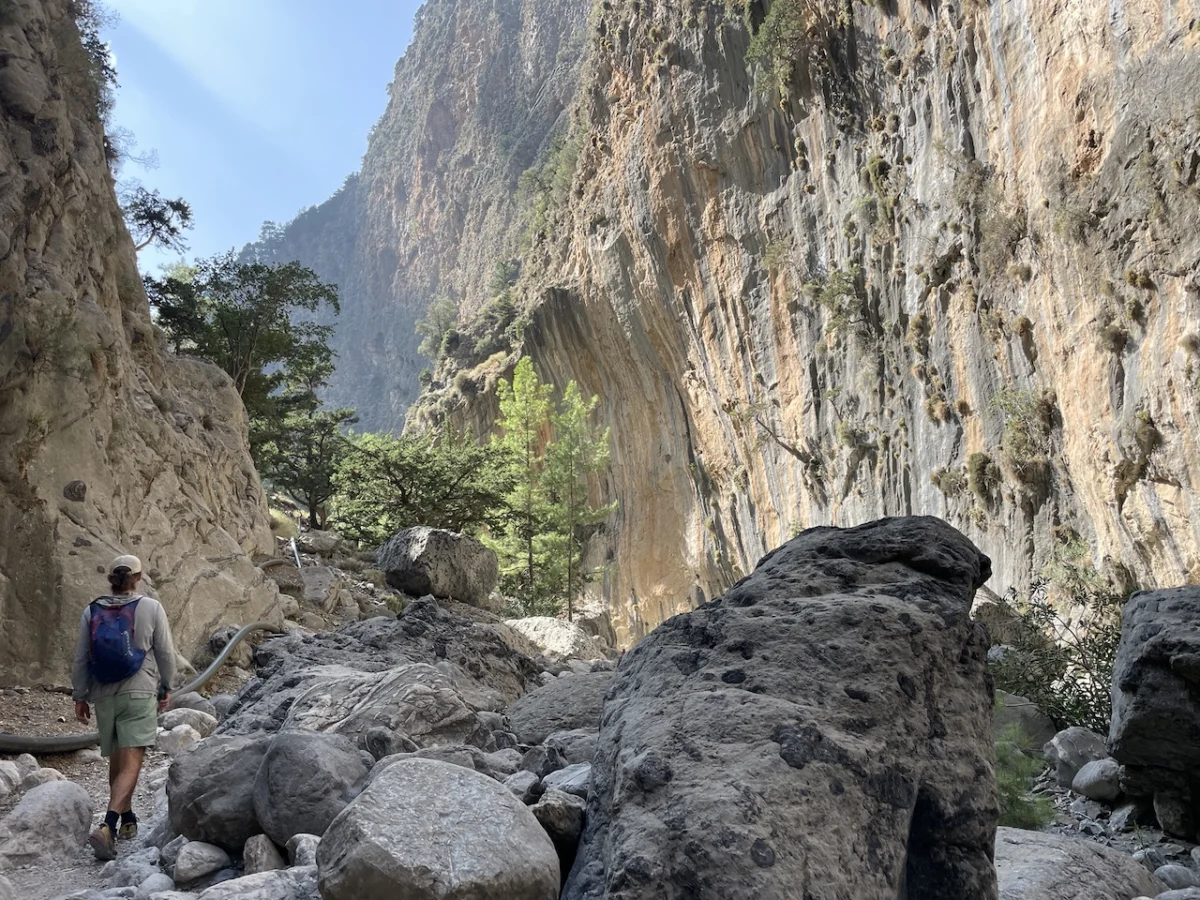
The gorge is defined by its dramatic limestone walls, which soar to heights of up to 300 meters, creating a sense of profound isolation. Its most famous section, the "Iron Gates" (Sideroportes), narrows to a width of less than three meters, forcing the sky into a thin sliver of blue above the heads of hikers.

Historically, the gorge has been a refuge. During centuries of occupation—most notably the Ottoman era—the difficult, treacherous terrain served as a natural fortress. Families and freedom fighters alike utilized the deep, hidden ravines to evade capture, transforming the landscape into a living monument of liberty.

Chronology: A Journey Through Time and Terrain
The trek through Samaria is an odyssey through changing ecosystems and historical layers. A standard descent begins at Xyloskalo, where the trail immediately plunges via a series of steep, engineered switchbacks.

The Descent and the Temple of Apollo
The first four kilometers lead hikers into the lush heart of the forest. Near the rest area of Ayios Nikolaos, the environment shifts to include ancient cypress groves. This site is of significant historical interest, housing the remains of a temple dedicated to the god Apollo, dating back to the 1st century B.C. The proximity of such ancient ruins to the present-day trail serves as a reminder that the gorge has been a transit point for human civilization for millennia.

The Abandoned Village of Samaria
At the seven-kilometer mark lies the namesake village of Samaria. Once a vibrant mountain community, the village was vacated in 1962 when the area was declared a National Park. Today, the stone structures, though worn by the elements, remain intact. They serve as a vital administrative and medical hub for park rangers and environmental researchers. For the modern hiker, it marks the psychological and physical midpoint of the journey, offering a space to rest before the canyon walls begin to tighten.

The Iron Gates
After traversing the riverbed and crossing numerous seasonal streams, the landscape reaches its climax at the Iron Gates. This narrow passage is a testament to the power of erosion. For those navigating the trail, it is a moment of awe, where the immense verticality of the White Mountains is felt most acutely. It is here that the legend of the 1770 battle—where 4,000 refugees were shielded by a small band of fighters—feels most visceral.

Supporting Data: The Logistics of the Trail
For those planning to traverse this Mediterranean icon, understanding the physical requirements is essential.

- Distance: 14.5 km (8.9 miles) one way.
- Total Elevation Loss: 2,327 meters (7,635 feet).
- Total Elevation Gain: 1,099 meters (4,285 feet).
- Average Duration: 5 to 6 hours for the standard one-way descent.
- Water Access: Multiple natural springs along the route provide constant access to fresh, potable water, making it unnecessary to carry excessive weight.
While the descent is categorized as "Easy" for experienced hikers, the sheer volume of elevation loss can take a significant toll on the knees and ankles. Proper footwear and trekking poles are strongly recommended.

The Guardians of the Gorge: Wildlife and Conservation
Central to the ecology of the gorge is the Kri-kri, or Cretan Goat. These agile, brownish ruminants, distinguished by their backward-curving horns, are iconic to the White Mountains.

By 1960, the population of Kri-kri had dwindled to fewer than 200 individuals due to overhunting and habitat loss. The protection afforded by the establishment of the National Park proved to be a turning point. Today, the population exceeds 2,500. While they are often spotted scaling seemingly vertical rock faces with effortless grace, it is important to remember they are wild animals; visitors are encouraged to observe them from a distance to ensure their continued integration into the ecosystem.

Official Responses and Perspectives: The "Out-and-Back" Challenge
While the vast majority of visitors choose the one-way descent—finishing with a boat ride from Agia Roumeli—the "out-and-back" traverse represents a significant physical challenge.

During an endurance-focused traverse of the gorge, hikers are frequently met with skepticism by park officials. Because the park operates on strict closing times (typically 6:00 PM), officials are tasked with the safety of all visitors. Consequently, anyone attempting to climb back up the gorge—an undertaking that involves over 1,000 meters of elevation gain—is often warned of the physical impossibility of the feat.

This interaction with authority highlights the protective nature of the park’s administration. The goal of the staff is not to discourage exploration but to ensure that visitors do not become stranded as the sun sets behind the massive limestone walls, causing temperatures to drop and the terrain to become hazardous. For those who are well-prepared and maintain a steady, disciplined pace, the return journey offers a rare opportunity to witness the changing light on the cliffs, transforming the gorge into a completely different visual landscape than the one encountered during the morning descent.

Implications for Future Exploration
The Samaria Gorge remains a masterclass in the balance between tourism and conservation. As climate change impacts Mediterranean ecosystems, the preservation of the gorge’s water sources and the protection of the Kri-kri habitat become increasingly critical.

Furthermore, the gorge continues to serve as a pedagogical tool for travelers. It forces a connection with the physical environment, stripping away the digital noise of modern life and replacing it with the rhythmic crunch of gravel and the scale of geological time.

Whether one is a casual hiker looking to experience the beauty of the Mediterranean or an endurance athlete testing their limits against the mountain, the Samaria Gorge offers an experience that is both humbling and transformative. As noted in the latest Wanderlust Mediterranean series, the gorge is not merely a path to be checked off a list, but a historical, ecological, and personal journey that requires respect, preparation, and a willingness to be dwarfed by the majesty of the natural world.

For those who venture into the Iron Gates, the reward is more than just a physical achievement; it is an invitation to witness the enduring spirit of Crete—a place where history is written in stone and freedom is carved into the very landscape.