Introduction: The Great Wicking Myth
For decades, outdoor enthusiasts have been sold a simple narrative: wear a "moisture-wicking" base layer, and your sweat will magically vanish, leaving you dry and comfortable. We are told that synthetic fabrics "push" moisture away, while natural fibers "manage" it. Yet, anyone who has slogged up a steep mountain trail with a heavy pack knows the reality: even the most expensive, high-tech garments often end up soaking wet, clammy, and heavy against the skin.
During periods of intense physical exertion, the human body produces sweat at a rate that frequently outpaces the evaporative capacity of our clothing systems. When evaporation fails, liquid sweat accumulates. The critical, yet largely unexamined, question is not just how a fabric wicks, but how it facilitates the movement of liquid water from the skin into the secondary layer.
To peel back the layers of marketing hype, I developed a proprietary "Liquid Transfer Test" designed to track the mechanical movement of sweat through a multi-layer clothing system. By measuring exactly how much water remains on the "skin" versus how much is sequestered in the base layer or successfully passed to the layer above, we can finally answer the question that has long plagued outdoor athletes: When skin is wet, where does the water actually go?
Chronology of the Investigation
The journey to this conclusion began several months ago during a standard evaluation of three popular base-layer garments. While performance discrepancies were immediately apparent, the mechanism behind them remained elusive. I transitioned from a simple comparison to a rigorous, controlled study involving eight distinct base-layer designs.
As the scope of testing expanded, distinct patterns began to emerge, moving beyond anecdotal "feel" and into the realm of fluid dynamics. The testing protocol was established to simulate the "tug-of-war" between skin, base layer, and secondary layer.
- Initial Phase: Establishing baseline water retention rates for three standard synthetic base layers.
- Expansion Phase: Incorporating a broader spectrum of fabrics, including both hydrophobic meshes and hydrophilic knits, to identify if fiber chemistry dictates performance.
- Data Synthesis Phase: Correlating microscopic pore analysis and contact-angle measurements with the actual observed transfer rates.
Supporting Data: The Science of Breakthrough Pressure
The findings from this study are rooted in foundational physics, specifically the work of Young and Laplace (1805) and Washburn (1921), which detail capillary flow. These principles prove that the "wicking" process is not a passive event, but a complex interaction governed by pressure, pore size, and surface chemistry.
The Hydrophobic Paradox
Hydrophobic base layers—garments made from materials like polypropylene or polyester treated with DWR—are marketed on the premise that they do not absorb water. While technically true, the reality is more nuanced. Fabrics are predominantly empty space. When sweat production exceeds the fabric’s ability to move moisture, that liquid pools within the interstitial spaces of the weave.
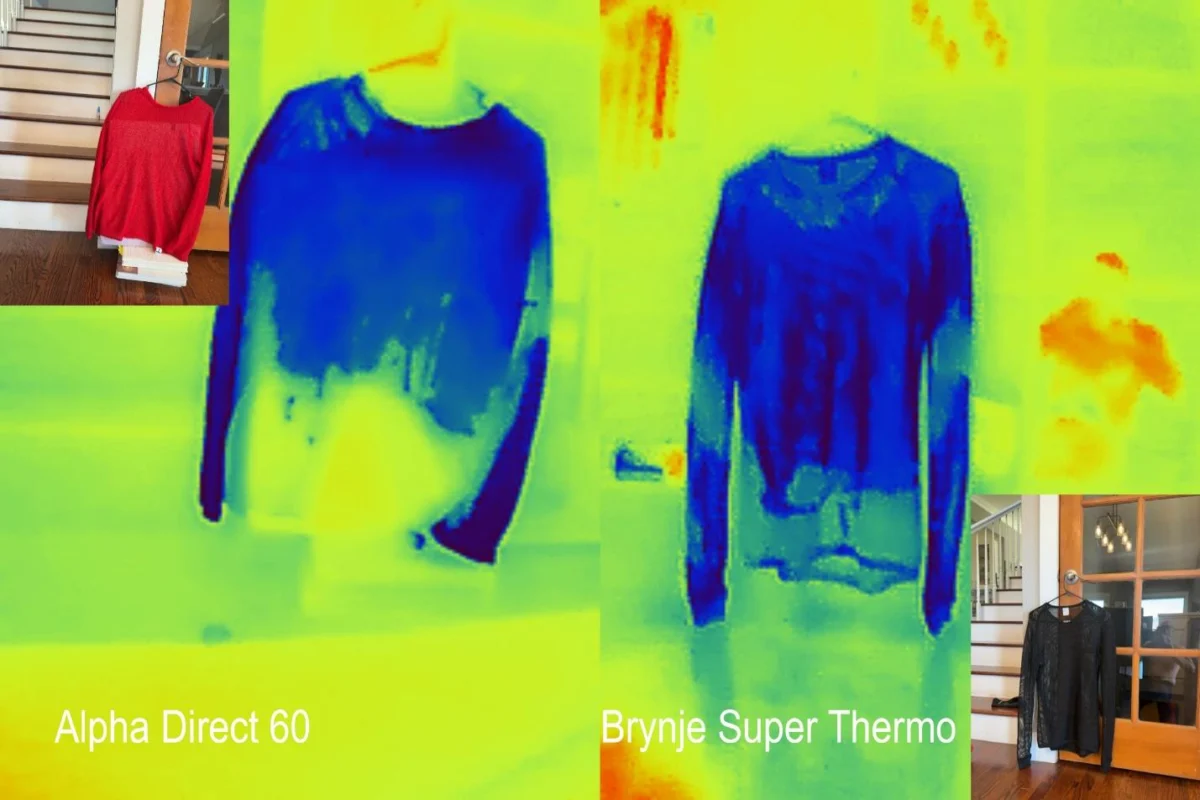
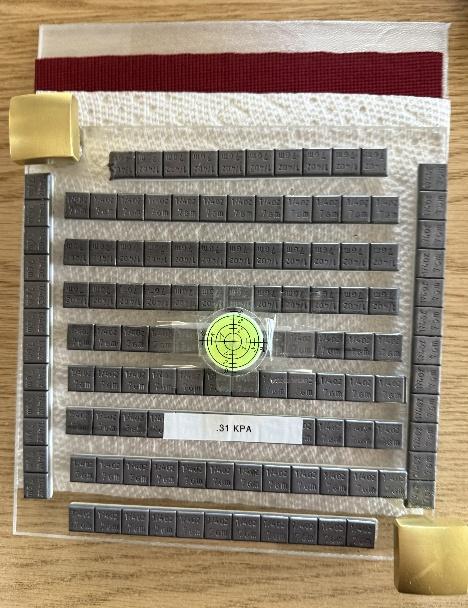
In our infrared thermal imaging (Figure 2), we observed that "dry" hydrophobic shirts could retain up to 87g of liquid sweat—roughly 65% of their dry weight. The fiber itself remained dry, but the garment became a saturated sponge. The movement of water through these garments requires "breakthrough pressure." Without sufficient external force—such as the pressure from a backpack strap or the tension of a tight-fitting garment—the fabric can actually act as a barrier, trapping sweat against the skin.
The Hydrophilic Trap
Conversely, hydrophilic fabrics (like wool or treated nylon) possess hydrogen bonding sites that actively pull water into the fiber structure. While this provides excellent initial wicking, it creates a "retention trap." Because the fibers themselves are designed to hold onto water, they are inherently resistant to releasing that moisture to a secondary layer.
Our data shows that once a hydrophilic layer is saturated, it enters a state of equilibrium. It will only transfer water to an outer layer if that outer layer has a stronger "pull" (lower capillary potential). If the outer layer is also damp, the system stalls, leaving the base layer effectively waterlogged.
Official Responses and Theoretical Implications
While this study is an independent investigation, the implications for the textile industry are profound. Current industry standards for "moisture management" often rely on static tests that do not account for the high-exertion, high-pressure environments of alpine climbing or backcountry trekking.
The "breakthrough pressure" threshold, as identified in our testing, suggests that garment fit is just as important as fabric chemistry. A loose-fitting hydrophobic shirt may fail to move sweat simply because it lacks the contact pressure required to initiate capillary transfer. Conversely, a tight-fitting hydrophilic shirt may move moisture well initially, but will inevitably saturate and lose its ability to transfer once it hits a capacity limit.
Implications for the Modern Hiker
For the consumer, these findings mandate a shift in how we choose our layering systems. The goal should not be to find a "miracle fabric," but to optimize for the conditions:
- For High-Intensity/Stop-and-Go: Favor hydrophobic fabrics with open, mesh-like architectures. These require less breakthrough pressure to move moisture, allowing for quicker drainage when you stop moving.
- For Steady-State Endurance: Hydrophilic fabrics are often more comfortable, provided the system includes a highly breathable, moisture-wicking secondary layer capable of pulling water away from the base.
- The Pressure Variable: Recognize that your pack straps, belt, and the tightness of your outer layers are active participants in your moisture management system. They are the "pumps" that help force sweat through the fabric.
Conclusion
The "tug-of-water" is a battle between the fabric’s architecture and the forces of the environment. While marketing departments often simplify these complex physical processes into catchy slogans, the data is clear: no single garment is a panacea.
Hydrophobic fabrics function as a mechanical filter that requires pressure to operate, while hydrophilic fabrics function as a sponge that requires a concentration gradient to release moisture. By understanding the underlying physics—the breakthrough pressures and the capillary limits—hikers can make more informed decisions about their kit. We are no longer relying on the vague promises of "wicking"; we are now looking at the movement of moisture through the lens of thermodynamics.
As we move forward, future testing will focus on how different knit densities impact the breakthrough pressure threshold, providing even greater clarity for those who push their gear to the limits in the world’s most demanding environments. This is the new standard for understanding base-layer performance: moving beyond the label, and into the physics of the fiber.