By: Sari Rautio, Marika Uusi-Illikainen, and Karoliina Ketola
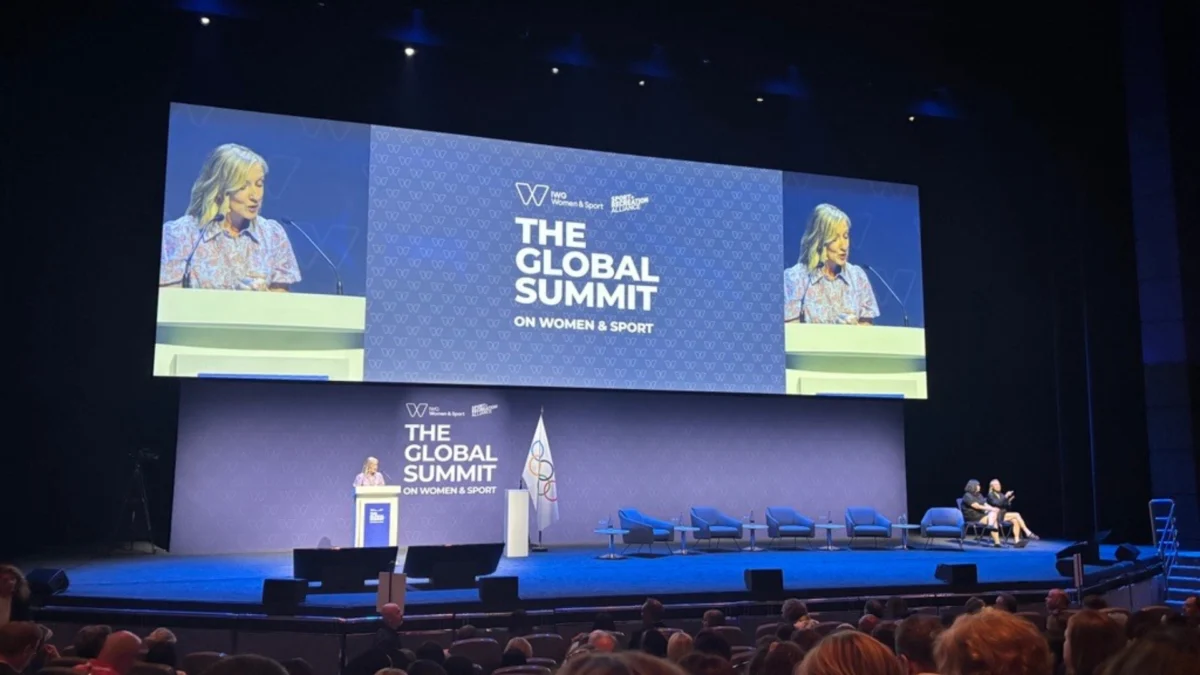
In July 2026, the city of Birmingham played host to a watershed moment in the history of international athletics. The International Working Group on Women and Sport (IWG) World Conference brought together 900 delegates from 80 countries to confront a singular, pressing reality: the era of simply identifying gender-based barriers in sports is over. The new, far more complex challenge lies in the radical restructuring of sport itself.
As the global sporting community looks toward the future, the consensus is clear. The "breakthrough" phase—characterized by awareness-raising and the breaking of glass ceilings—has concluded. We have entered the era of structural transformation, where policy, finance, and organizational culture must be dismantled and rebuilt to reflect a truly equitable ecosystem.
Main Facts: The New Frontier of Equity
The IWG World Conference, held under the banner "Beyond the Breakthrough," served as a global laboratory for institutional change. For the Finnish delegation and international stakeholders alike, the takeaway was definitive: equity is no longer a peripheral human rights issue; it is a fundamental pillar of athletic performance, economic growth, and organizational health.
The central thesis of the conference was that the current sporting structures were largely designed by and for men, based on the historical trajectory of male athletes. Consequently, these systems are inherently ill-equipped to support the realities of women’s lives, bodies, and professional pathways. True progress requires shifting from "helping women adapt" to "changing the system so it no longer excludes them."
Chronology: A Path to the 2026 Summit
The journey to the Birmingham conference was not a sudden event but the result of decades of persistent advocacy.
- The Foundation: For years, the Brighton Plus Helsinki Declaration has served as the bedrock of international cooperation. In Finland, 34 major sports organizations have signed the declaration, committing to the systemic integration of gender equality.
- The Growth Phase (2020–2025): The global sports market witnessed a massive surge in popularity for women’s sports. Media rights deals, sponsorship revenue, and live attendance figures began to defy traditional industry skepticism, proving that the demand was not a niche trend but a significant market force.
- The 2026 Birmingham Summit: 900 delegates converged to synthesize the lessons of the growth phase. The focus shifted from celebration to critical evaluation.
- The Post-Conference Future: The discourse now moves to the national level, where organizations are tasked with auditing their internal power structures, data collection methods, and long-term financial commitments to equality.
Supporting Data: The Economic and Biological Case
The Market Misconception
Trinh Tu, representing the market research firm Ipsos, presented compelling data during the conference. The numbers confirm a tectonic shift: stadiums are filling, commercial partners are aggressively seeking entry, and audiences are engaging with women’s competitions in ways previously thought impossible.
However, a critical strategic error persists: measuring women’s sports through the lens of male sporting metrics. Investor Michele Kang, a vocal proponent for a paradigm shift, argued that women’s sports must be treated as a distinct, independent market. By attempting to copy the men’s model, organizations are limiting their own potential. Instead, stakeholders must recognize the unique audience demographics, different growth levers, and distinct business foundations that characterize the women’s sports market.
The Biological Imperative
A significant portion of the conference was dedicated to the "science of the female athlete." Currently, the lack of research into female physiology—including hormonal cycles, pregnancy, and postpartum recovery—remains a major barrier.
Historically, research has excluded women under the assumption that hormonal fluctuations "complicate" data. This is not only a gender equality issue; it is a failure of sports science. Without comprehensive data on female physiology, training regimens cannot be optimized, and athlete health cannot be guaranteed. This gap in knowledge is a direct threat to competitive fairness and long-term athlete welfare.
Official Responses and Perspectives
On Leadership and Governance
The conference featured prominent voices, including UEFA Vice-President Laura McAllister, who emphasized the importance of "gentle challengers." These are individuals and organizations that possess the courage to question entrenched traditions without inciting unproductive conflict. Culture change, McAllister noted, is a slow, incremental process that requires patience and persistence.
The Case for Binding Commitments
World Athletics President Sebastian Coe provided a pragmatic view on governance. Reflecting on his own organization’s journey, Coe noted that while aspirational goals are necessary, they are insufficient. The turning point for World Athletics was the implementation of binding quotas and systemic rule changes. By ensuring equality from the boardroom to the coaching staff and measuring progress through hard data, the organization was able to move beyond rhetoric. Coe’s message was clear: if the goal is better decision-making, it can only be achieved through diverse representation in positions of power.
Design Fiction: Imagining the Impossible
Professor Fiona Chambers introduced the concept of "design fiction" as a tool for the future of sport. This involves the conscious design of future scenarios to place the human being at the center of development. The key question for leaders is no longer "what sport are we building?" but "for whom are we building it, and why?" This approach encourages leaders to step outside the constraints of current limitations and imagine a fully equitable ecosystem.
Implications: The Road Ahead for National Organizations
The aftermath of the IWG conference demands immediate action from national sports federations. The "Beyond the Breakthrough" theme serves as a directive: the work begins now.
Critical Institutional Audit
Organizations must perform an internal diagnostic:
- Power Dynamics: Who holds the decision-making authority?
- Resource Allocation: Is funding distributed based on tradition or current impact?
- Coaching and Mentorship: Are the pathways for female coaches as clear and supported as those for their male counterparts?
- Inclusivity: Are we collecting data on all athletes, including those with diverse needs, or are we perpetuating a "standardized" view of the athlete that excludes marginalized groups?
The Responsibility of the Ecosystem
Equality is not the responsibility of a single diversity officer or a women’s committee. It is a fundamental management responsibility that rests with boards, financial directors, media partners, and local club organizers. In Finland, the focus is shifting toward practical application. The 34 organizations signed to the Brighton Plus Helsinki Declaration are now expected to move from the signing of documents to the implementation of structural changes.
A Window of Opportunity
We are currently in a unique "window of opportunity." Global interest in women’s sports is at an all-time high, even as broader political climates have, in some regions, become more conservative. The convergence of commercial interest, media attention, and a new generation of empowered athletes creates an environment ripe for change.
The challenge is to ensure that this momentum is not wasted. If the last decade was about proving the value of women’s sports, the next decade must be about embedding that value into the bedrock of society. We must move past the idea that we are "accommodating" women, and toward a future where the structure of sport is, by definition, universal.
Continuing the Conversation
The insights gathered at the IWG conference will be central to upcoming Finnish initiatives. Stakeholders are invited to participate in the "Tasa-arvotyön etäkahvit" (Equality Work Virtual Coffees) held on the second Friday of every month. These sessions serve as a space for sharing knowledge, discussing the practical implementation of the IWG findings, and preparing for the conclusion of the "Yhteinen matka" (Common Journey) project later this autumn.
As we look toward the future, the goal is not merely to sustain the progress made but to accelerate it. The structures of the past have served their time; the architecture of the future must be built with intent, data, and a commitment to shared power. The breakthrough was only the beginning.