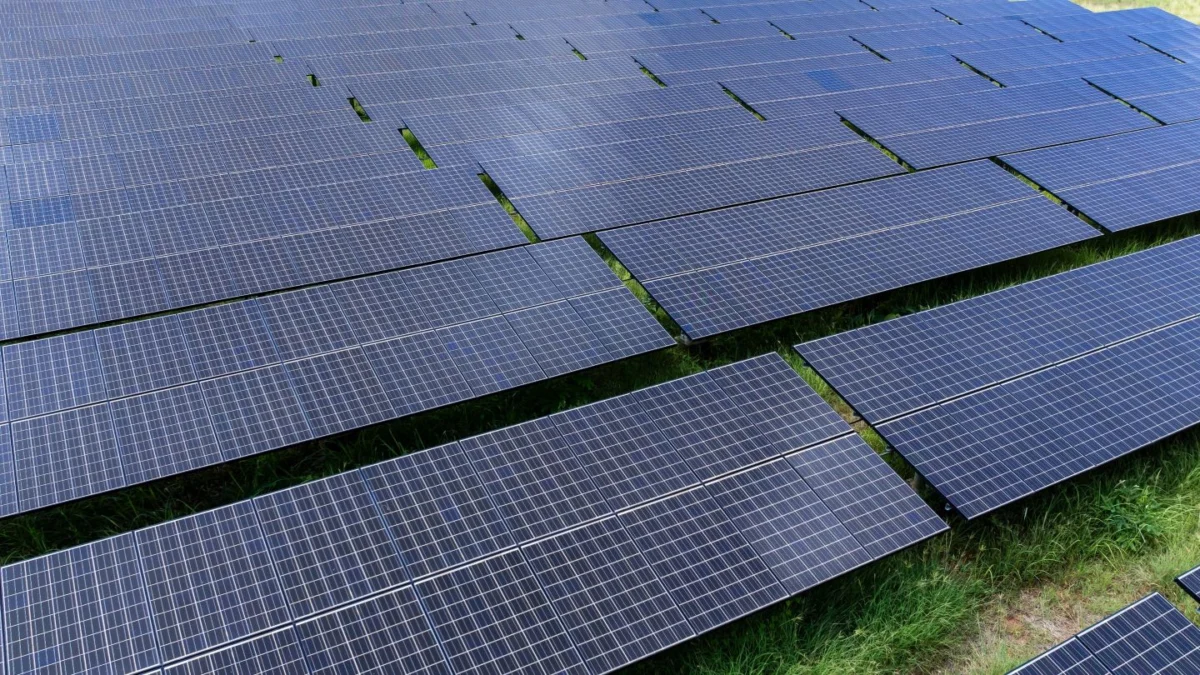
In a significant stride toward bolstering India’s renewable energy landscape, Hindustan Power has successfully achieved financial closure for its ambitious 435MW-peak (MWp)/300MW solar power project located in the Lalitpur district of Uttar Pradesh. The milestone, backed by a substantial debt facility from the Indian Renewable Energy Development Agency (IREDA), marks a pivotal moment in the state’s transition toward sustainable energy and underscores the growing viability of large-scale solar infrastructure in northern India.
The project, which is currently under active construction, represents one of the largest solar developments in Uttar Pradesh, signaling the state’s aggressive pivot toward green energy to meet the burgeoning electricity demands of its industrial and domestic sectors.
Main Facts: A Strategic Energy Injection
The project, awarded to Hindustan Power following a highly competitive bidding process in 2025, is designed to serve as a cornerstone of Uttar Pradesh’s clean energy portfolio. By utilizing a 435MWp capacity, the plant is optimized to deliver 300MW of consistent power to the grid.
The financial bedrock of this initiative is a debt facility of Rs11.35bn ($118.6m) sanctioned by IREDA. This financial backing not only validates the project’s economic viability but also highlights the critical role state-backed financial institutions play in de-risking large-scale renewable infrastructure. The electricity generated will be supplied directly to the Uttar Pradesh Power Corporation Limited (UPPCL) under a long-term Power Purchase Agreement (PPA), ensuring a stable revenue stream for the developer while providing the state utility with a predictable, green energy supply for years to come.
Chronology: From Tender to Construction
The journey toward this project’s realization has been marked by methodical planning and strategic execution:
- 2025 (Competitive Bidding): Hindustan Power participated in a rigorous competitive tender process. The company’s ability to offer a competitive tariff, combined with its operational track record, led to the project being awarded to them.
- Late 2025 – Early 2026 (Pre-development): Following the tender win, the company focused on land acquisition in the Lalitpur district, environmental clearances, and grid connectivity planning.
- August 2026 (Financial Closure): The successful finalization of the Rs11.35bn debt facility from IREDA allowed the project to move from the planning phase to full-scale construction.
- Current Status: Construction is currently in full swing, adhering to the project’s original timeline. Engineering, procurement, and construction (EPC) teams are working to install high-efficiency solar modules, with the goal of connecting the plant to the state grid at the earliest possible date.
Supporting Data: The Scale of the Lalitpur Initiative
The Lalitpur project is not merely an isolated installation; it is part of a macro-economic strategy to transform the energy mix of India’s most populous state.
Technical Specifications
- Installed Capacity: 435MWp (MegaWatt-peak), ensuring high output during peak sunlight hours.
- Grid Capacity: 300MW (MegaWatt-AC).
- Location: Lalitpur, Uttar Pradesh, a region identified for its high solar insolation levels.
- Off-taker: Uttar Pradesh Power Corporation Limited (UPPCL).
Market Context
Uttar Pradesh, historically reliant on coal-fired thermal power, has faced mounting pressure to decarbonize. With the state’s energy demand growing at a rate that often outpaces national averages, projects like the one in Lalitpur are essential. By replacing or supplementing traditional power with 300MW of solar energy, the project will significantly reduce the carbon footprint associated with the state’s power generation, aligning with India’s broader commitment to reach "Net Zero" emissions by 2070.
Official Responses: The Vision of Hindustan Power
The leadership at Hindustan Power has framed this project as a reflection of the company’s broader mission to balance energy security with environmental stewardship.
Ratul Puri, Chairman of Hindustan Power, emphasized the importance of the project during the financial closure announcement:
"The 435MWp solar project in Uttar Pradesh marks an important milestone in our renewable energy expansion. Uttar Pradesh is experiencing growing energy demand alongside an increasing focus on renewable energy, and projects of this scale will play an important role in strengthening the state’s clean energy capacity."
Puri further highlighted the strategic importance of timely delivery, stating:
"We are pleased to contribute to this journey through a project of this scale and remain focused on its timely execution. The project reflects our long-term commitment to developing large-scale renewable energy infrastructure that can support India’s evolving energy needs. As the country accelerates its energy transition, our focus remains on building reliable, efficient, and sustainable generation capacity while contributing to long-term energy security."
The company has indicated that this project serves as a template for their future operations, confirming that their development strategy is increasingly pivoting toward integrated energy solutions that span both renewable and transitional energy sectors.
Implications: A Catalyst for Regional Development
The impact of the Lalitpur solar project extends far beyond the production of electricity. Its success has multi-dimensional implications for the energy sector, the state of Uttar Pradesh, and the national economy.
1. Strengthening Grid Stability
By integrating 300MW of solar power, the project helps diversify the energy mix in Uttar Pradesh. Solar energy is particularly effective at meeting peak daytime power demand, which is when most industrial and commercial activities in the state are at their highest. This reduces the stress on the conventional power grid during critical hours.
2. Economic Multiplier Effect
The construction and maintenance of a 435MWp facility generate significant employment in the Lalitpur region. From skilled engineering roles to local construction and site management, the project acts as a catalyst for local economic development. Furthermore, the long-term PPA with UPPCL provides the state with a stable, inflation-hedged electricity price, which is beneficial for the state’s overall fiscal health.
3. Setting a Precedent for IREDA and State Partnerships
The role of IREDA in this project cannot be overstated. By facilitating the debt financing, IREDA has demonstrated the effectiveness of focused financial support for renewable projects. This "success story" is likely to encourage further investments in Uttar Pradesh’s solar sector, signaling to other developers that the state is a stable and profitable destination for large-scale infrastructure capital.
4. Advancing the Energy Transition
For India, the Lalitpur project is a tangible step toward meeting the ambitious goals set by the Ministry of New and Renewable Energy (MNRE). As the country aims to achieve 500GW of non-fossil fuel-based energy capacity by 2030, individual projects of this magnitude are the essential building blocks of the national target.
Conclusion: A Future-Forward Outlook
Hindustan Power’s progress in Lalitpur is a clear indication that the renewable energy sector in India has moved past the stage of infancy and into an era of massive, utility-scale deployment. With the financial closure secured, the focus now shifts to the mechanical and electrical completion of the plant.
As the global community watches India’s energy transition, the success of the Lalitpur project will be closely monitored. It serves as a benchmark for how integrated power companies can navigate the complexities of long-term PPA commitments and large-scale financing to deliver reliable, green electricity to millions. For Hindustan Power, this project is not just a commercial win; it is a declaration of intent to remain at the forefront of the technological and infrastructural shifts defining the future of global energy.
Through its commitment to operational excellence and sustainable generation, the company is playing a vital role in ensuring that India’s path to growth is powered by clean, efficient, and locally generated energy.