If you are serious about building horseshoe-shaped triceps or shattering your bench press personal bests, the JM press is arguably the most effective weapon in your arsenal. Named after powerlifting legend JM Blakley, this movement bridges the gap between a close-grip bench press and a skull crusher, creating a unique stimulus that maximizes triceps recruitment while minimizing the risk of shoulder strain.
However, the JM press is frequently misunderstood and poorly executed. Because it is a hybrid movement, it demands a high degree of technical proficiency. Small deviations in elbow tracking, bar path, or touch points can transform a world-class mass builder into an elbow-aggravating nightmare. This guide provides an exhaustive, step-by-step breakdown to help you master the lift, protect your joints, and maximize your gains.
The Mechanics of the JM Press: Why It Works
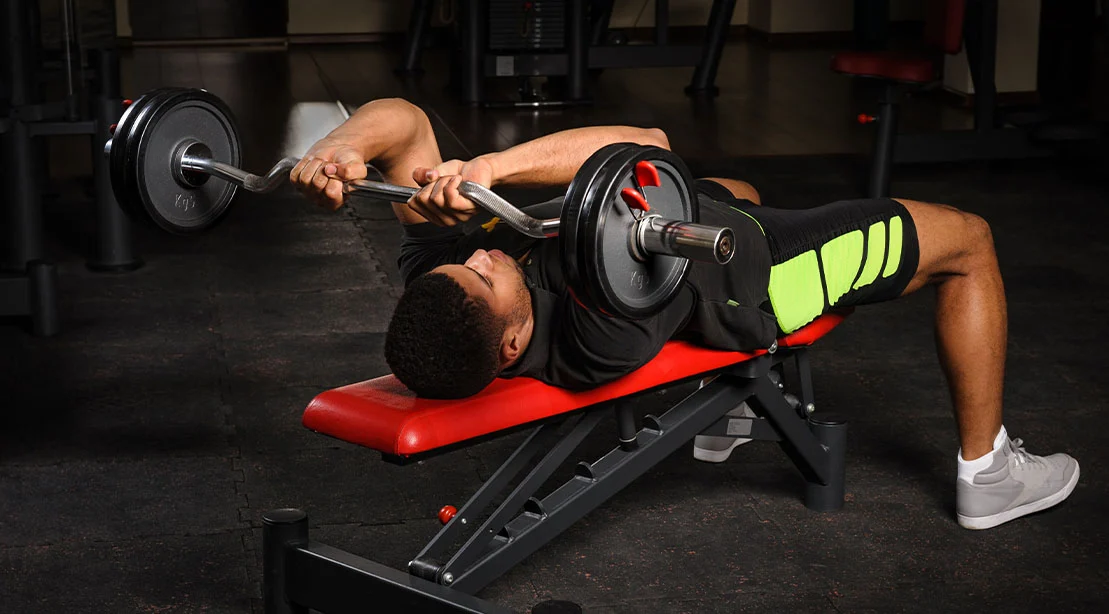
The JM press is a technical outlier in the lifting world. By design, it requires the lifter to keep the elbows pointed forward and the bar path angled toward the upper chest/throat area. This specific positioning forces the triceps to perform the lion’s share of the work during the lowering (eccentric) phase. Unlike a standard bench press, which relies heavily on pectorals and anterior deltoids, the JM press isolates the triceps by limiting the involvement of the chest muscles through a reduced range of motion at the shoulder joint.
Chronology of the Lift
To understand the JM press, one must visualize it as a three-phase operation:
- The Controlled Descent: The bar is lowered not to the sternum, but to the upper chest or throat, with the elbows hinging forward.
- The Transition Point: This is the "sweet spot" where the triceps are fully stretched under load.
- The Explosive Lockout: The bar is driven back up in a diagonal path, targeting the explosive power required for heavy bench pressing.
The Ultimate JM Press Technical Checklist
Achieving proficiency requires a systematic approach. If you are struggling to feel the movement in your triceps, it is likely because your setup is failing you.
Step 1: Body Position on the Bench
Stability is the foundation of every great lift. Your upper back must be firmly anchored to the bench to prevent energy leaks.
- Internal Cue: Feel your traps and rhomboids "screwed" into the bench.
- External Cue: Position your eyes directly under the bar to ensure you are not reaching too far forward or backward.
- Coach’s Tip: Once you have set your scapular retraction, do not shift. If you feel like you are sliding, reset your entire position.
Step 2: Foot Position and Leg Drive
While the JM press is an upper-body isolation movement, your lower body serves as the anchor. You do not need the explosive, hips-off-the-bench drive used in powerlifting, but you do need "rootedness."
- Internal Cue: Feet planted firmly, knees pushed outward.
- External Cue: "Drive the floor away" to create full-body tension.
- Coach’s Tip: If your hips start to lift or your feet slide, you are over-relying on leg drive. Tone it down; this is about the triceps, not a maximal bench effort.
Step 3: Grip Width and Hand Position
Grip is the primary determinant of elbow stress. A grip that is too wide forces the pecs to take over; a grip that is too narrow creates excessive wrist torque.
- Internal Cue: "Crush" the bar to generate forearm activation.
- External Cue: Imagine you are trying to bend the bar inward.
- Coach’s Tip: If your wrists are hyperextending, your grip is either too wide or your setup lacks the necessary forearm tension.
Step 4: Upper-Body Tension and The "Squeeze"
You must create a "controlled stiffness." You need enough tension to guide the bar, but not so much that you restrict the necessary hinge at the elbow.
- Internal Cue: Tighten the lats and core as if you are preparing for a punch.
- External Cue: "Squeeze the oranges" in your armpits to keep the lats engaged.
Step 5: Breath and Bracing
The Valsalva maneuver is essential here. By filling your abdominal cavity with air, you create a rigid torso that supports the triceps during the transition.
- Internal Cue: Inhale deep into the belly before the bar leaves the rack.
- External Cue: "Lock it in" until the rep is completed.
Step 6: The Critical Elbow Position
This is where most lifters fail. If your elbows flare out, you lose the triceps tension. If they move too far back, you are simply doing a skull crusher.
- Internal Cue: Hinge strictly at the elbows.
- External Cue: Keep your elbows pointed toward your feet throughout the entire movement.
Step 7: Bar Path and Touch Point
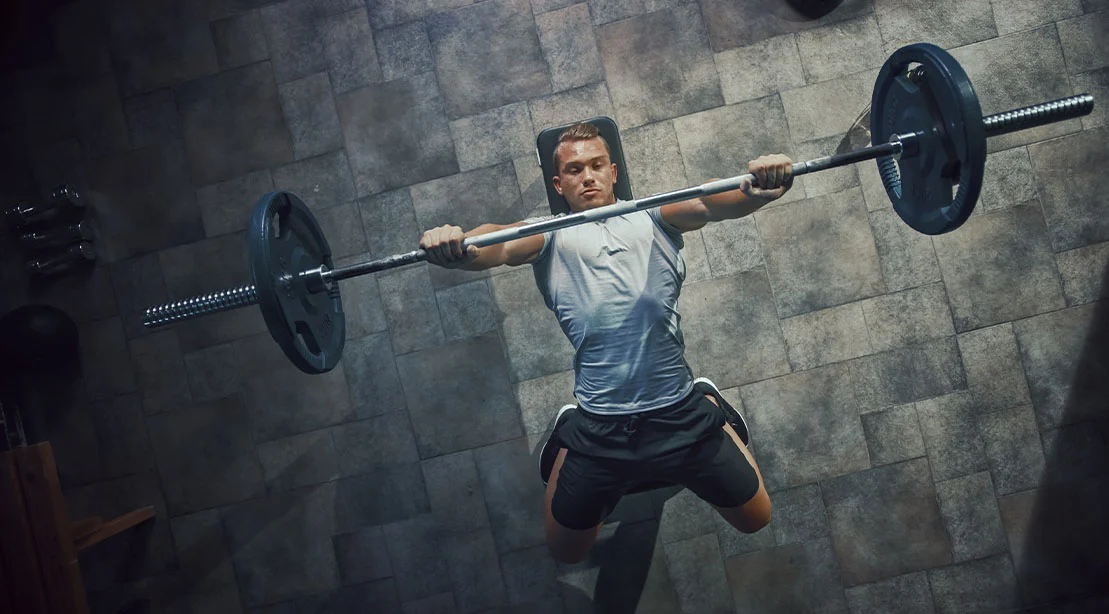
The bar should travel in a diagonal line. It should descend toward the throat/upper chest and rise back toward the face/shoulders.
- Internal Cue: Feel the tension build in the long head of the triceps.
- External Cue: "Bring the bar to the throat."
Supporting Data: Why Technique Trumps Weight
Clinical observations and powerlifting data consistently show that the JM press is safer for the elbows when the eccentric phase is controlled. Because the exercise creates a high mechanical disadvantage at the bottom of the movement, the triceps are placed under extreme tension. Attempting to "bounce" the weight or use momentum leads to an exponential increase in shearing forces on the ulnar collateral ligament.
The "Green Light" Checklist:
Before each set, verify:
- Scapulae retracted and locked.
- Feet anchored.
- Grip width optimized (slightly narrower than shoulder-width).
- Core braced.
- Elbows tucked and pointed forward.
Troubleshooting Common Mistakes
The "Skull Crusher" Error
Symptoms: The bar travels too far back behind the head.
The Fix: You are treating this as a skull crusher. Focus on bringing the bar to the upper chest, not the forehead. Keep the elbows forward.
The "Close-Grip Bench" Error
Symptoms: The bar drops straight down to the sternum.
The Fix: You have removed the "hybrid" element. Reset your touch point higher toward the throat.
The "Flare" Error
Symptoms: Elbows drift outward at the bottom of the movement.
The Fix: Lower the weight. Your triceps are not strong enough to stabilize the load at that angle. Flare is a sign of compensation.
The "Lack of Eccentric" Error
Symptoms: The bar drops too fast.
The Fix: "Own the way down." The eccentric phase is where the hypertrophy happens. Use a 2-second descent to ensure full control.
Implications for Your Training Routine
Integrating the JM press into your routine requires careful programming. Because it is highly taxing on the elbow joints, it should be treated as a primary accessory movement.
- For Hypertrophy: 3-4 sets of 8-12 reps with a moderate, controlled tempo.
- For Strength: 3-5 sets of 3-6 reps, prioritizing perfect form over maximal weight.
Conclusion:
The JM press is not a "feel-good" exercise; it is a "do-it-right" exercise. It requires patience and a commitment to technical precision. By mastering the setup, controlling the bar path, and honoring the eccentric phase, you will unlock a level of triceps development and lockout strength that traditional movements simply cannot provide. If you treat the JM press with the respect its complexity demands, it will reward you with the results you seek.