The landscape of home automation is shifting rapidly, and Dyson—a brand synonymous with vacuum innovation—is doubling down on its commitment to the robot floor-care market. Following a flurry of product announcements throughout September, including high-tech dental care tools, the British technology giant has officially launched its highly anticipated Nurovi series of robot vacuums.
This new lineup represents a significant departure from Dyson’s previous forays into autonomous cleaning. By moving away from camera-only navigation and embracing a suite of advanced features—including lidar precision and UV-assisted stain detection—Dyson is signaling that it is ready to compete with the industry’s most sophisticated players.
Main Facts: The Nurovi Trio
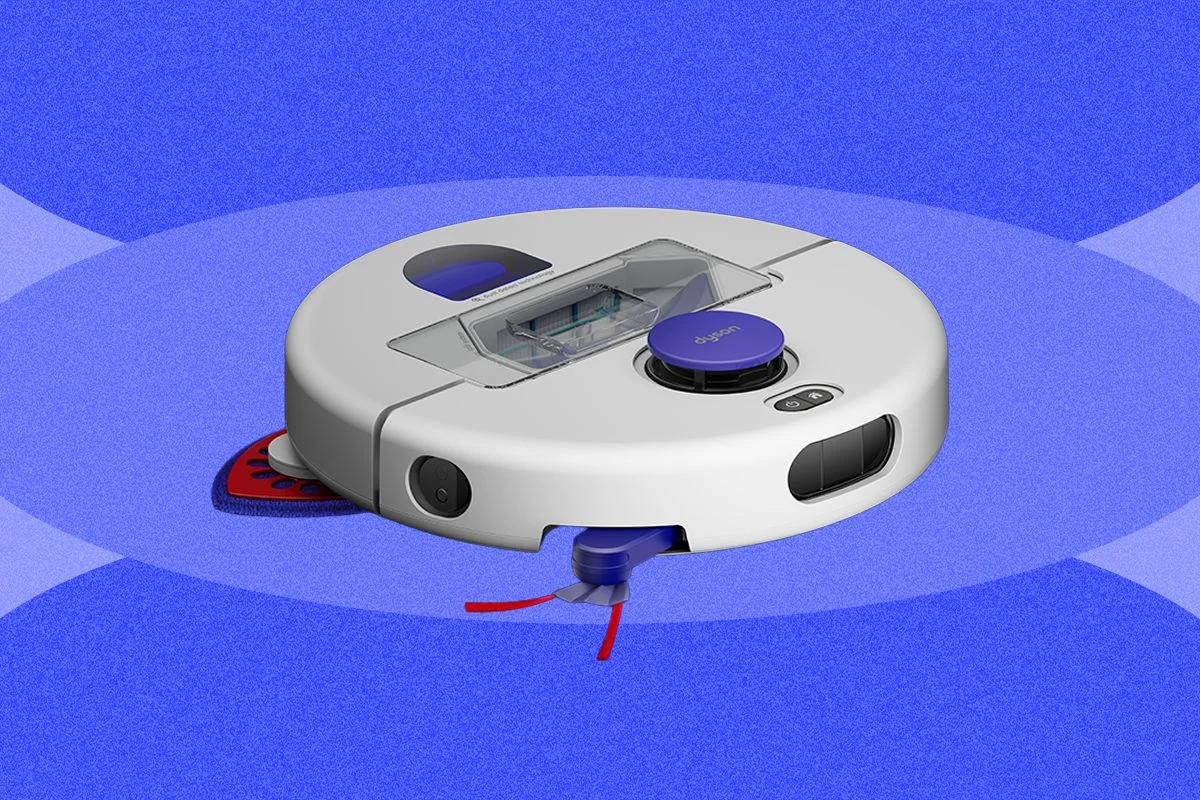
The Nurovi series consists of three distinct models, each tailored to different cleaning needs and price points. The lineup is unified by a sleek, light-gray aesthetic that distinguishes the units from the previous generation, while retaining the signature Dyson canister-style base station.
The Dyson R1 Nurovi Dry ($550)
The entry-level model, the R1, is designed for households that primarily utilize carpeting or hard flooring that does not require wet-mopping. Despite being the "base" model, it does not skimp on intelligence; it utilizes the new lidar navigation system to map homes with high accuracy, moving away from the purely optical sensors used in previous Dyson iterations.
The Dyson R2 Nurovi Wash + Dry ($700)
Exclusively available through Costco, the R2 serves as the middle ground for those seeking a hybrid solution. It combines powerful vacuuming with an integrated mopping system. Notably, it features a unique triangle-pad mopping configuration, designed to reach into corners—a traditional weak point for circular robot vacuums. With 21,000 Pa of suction, it offers a robust performance-to-price ratio.

The Dyson R3 Nurovi Spot+Scrub UV ($1,200)
The flagship of the series, the R3, is designed for the high-end market. It integrates advanced AI-driven substance identification, capable of recognizing up to 200 distinct types of household debris. The standout feature is its UV-light integration, which is designed to identify and target stains that are invisible to the naked eye. With a massive 30,000 Pa of suction, it is currently the most powerful model in the Dyson autonomous fleet.
A Chronology of Dyson’s Robotic Evolution
Dyson’s path to the Nurovi series has been a decade-long exercise in trial and error.
- 2014–2016: Dyson enters the robot vacuum market with the 360 Eye, a product praised for its suction power but hampered by a tall, bulky form factor and short battery life.
- 2020–2022: The company releases the Vis Nav series, which leaned heavily into computer vision (camera-based navigation). While it was a step forward, reviewers noted that the reliance on cameras occasionally led to navigation stumbles in low-light environments.
- September 2024: Dyson pivots its strategy. Alongside a range of home-lifestyle products—including an electric toothbrush equipped with a built-in camera—the company announces the Nurovi line, marking a strategic shift toward a multi-tier product strategy.
- Late 2024: The Nurovi R1, R2, and R3 become available to consumers, representing the first time the company has offered a clear "Good-Better-Best" hierarchy in its robotic vacuum lineup.
Supporting Data: Technology Under the Hood
The transition to lidar laser-precision navigation is perhaps the most critical technical update in the Nurovi series. Unlike camera-only systems, which can struggle with depth perception in dark rooms or under furniture, lidar provides a constant, 360-degree topographical map of the home.
The Twin-Capture System
All three models utilize Dyson’s new "Twin-Capture" technology. This system uses a dual-airflow path to ensure that suction is applied simultaneously to the front and rear of the brush bar. In practice, this means the robot captures debris on both the forward and backward passes, effectively doubling the efficiency of the sweep.
AI and Substance Recognition
The R3 model takes this further by employing a machine-learning algorithm. According to Dyson, the robot is trained to categorize stains, allowing it to adjust its mopping intensity, duration, and water flow based on whether it is tackling a dry spill, a liquid mess, or a stubborn stain. The inclusion of UV light is intended to act as a "secondary check," illuminating organic residues that might otherwise be missed by optical sensors.

Official Responses and Strategic Positioning
Dyson’s representatives have emphasized that the Nurovi line is the result of thousands of hours of testing in "real-world" home environments rather than laboratory settings. The shift to a Costco-exclusive model for the R2 indicates a new retail strategy for the company—aiming to capture the "middle-market" consumer who prioritizes value alongside performance.
"We wanted to bridge the gap between our high-end engineering and the everyday needs of a busy household," a Dyson spokesperson noted during the launch. By separating the vacuum-only (R1) and the hybrid (R2/R3) models, the company is attempting to appeal to different demographics: the pure-performance enthusiast and the convenience-focused family.
Implications for the Industry
The release of the Nurovi series poses a significant challenge to incumbents like iRobot (Roomba) and Roborock. For years, these companies have dominated the hybrid vacuum-mop market. By entering this space with the "Dyson name"—and the brand’s reputation for superior suction power—Dyson is forcing the entire sector to re-evaluate what constitutes a "premium" robot vacuum.
Impact on Consumer Expectations
The success of these units will likely hinge on whether the AI-driven stain detection and lidar mapping can outperform the established algorithms of its competitors. If the R3’s UV-stain detection proves as effective as Dyson claims, it could set a new industry standard for "intelligent" cleaning. Conversely, the high price point of the R3 ($1,200) places it in a bracket where consumers expect flawless performance; any navigation errors or software bugs could significantly damage the brand’s reputation in the robotics sector.
The Future of "Smart" Cleaning
The inclusion of AI that can identify 200 substances is a precursor to a more autonomous home. As these robots become more adept at identifying what they are cleaning, the next logical step will be autonomous maintenance, where the robot not only identifies a spill but also determines the correct chemical solution or mop-pad texture required to clean it.

The Nurovi series is not just a collection of new vacuums; it is a declaration that Dyson has moved past its experimental phase in robotics. Whether this iteration will finally secure Dyson’s spot at the top of the smart-home hierarchy remains to be seen, but the industry is certainly watching. As these units make their way into living rooms, the data gathered from real-world usage will determine if Dyson’s hardware-first approach can finally conquer the software-heavy world of robotics.
For those interested in the ongoing evolution of home technology, the Nurovi series is available now via Dyson’s website and authorized retailers. We will be conducting comprehensive, real-world tests on all three models in the coming weeks to determine if the hardware lives up to the manufacturer’s bold claims.