Accidents in the backcountry are rarely convenient, but on the river, they are often unforgiving. When a raft wraps around a rock—a scenario known as a “pin”—the difference between a successful extraction and a catastrophic loss of gear or life often comes down to the contents of a single, dry-bagged kit.
For many river runners, the solution is simple: walk into an outfitter, purchase a pre-packaged "commercial pin kit," and stash it in the boat, trusting that it will suffice when the current turns against them. However, industry experts and veteran rescue technicians warn that these off-the-shelf solutions are often woefully inadequate for the realities of modern river navigation. If your pin kit is for show, it is effectively useless. It is time to audit your gear, understand the physics of the river, and build a system designed for the worst-case scenario.
The Anatomy of a Failure: A Middle Fork Case Study
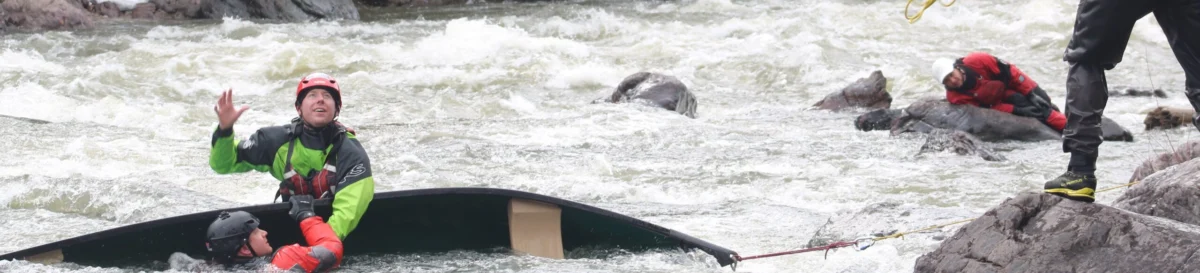
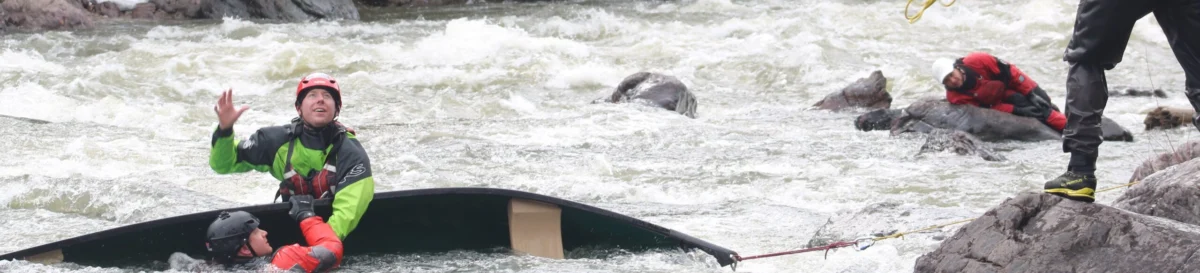
To understand why standard kits fail, consider a standard multi-day expedition on the Middle Fork of the Salmon River. Your group is navigating the technical, high-consequence water of the Haystack Rapid. A crew member breaks an oar, misses their line, and drives the raft directly onto a mid-stream rock. The boat is pinned at a 45-degree angle, loaded with the kitchen, the group’s food supply, and essential emergency provisions.
The river at this location is broad—over 250 feet wide. The pinned boat sits a daunting 100 feet from the nearest bank. Your team is prepared; they pull the group’s commercial pin kit from the sweep boat. You manage to toss a throw-bag line to the pinned raft, secure it, and trek upstream to find a solid anchor point.
As you begin rigging a Z-drag—the industry-standard mechanical advantage system—you reach the end of your rope. Panic sets in. The kit you purchased came with 150 feet of line, the industry standard for commercial kits. Why did you run out?
The math of river rescue is punishing. In a wide river, your anchor points are rarely where you want them to be. Furthermore, a Z-drag system inherently consumes line length; by the time you account for the mechanical advantage loops, the redirects, and the anchor, you have lost nearly one-third of your total rope length. Additionally, tying a standard Figure-8 on a bight at the anchor and the raft consumes roughly four feet of rope per knot. Suddenly, that 150-foot spool is effectively reduced to a fraction of its length, leaving your team stranded with an unmoving boat and no mechanical reach.
Essential Components: Engineering a Robust Kit
The lesson is clear: a "standard" kit is merely a baseline. To be truly prepared, you must curate a kit based on the specific hydrology, terrain, and vessel size of the rivers you frequent. Below are the critical components required to transform a basic kit into a professional-grade rescue system.
1. Rethinking the Haul Line
The obsession with ½-inch (12.5mm) static rope is often misplaced. While these ropes are rated for impressive loads—some up to 10,000 lbs (40 kN)—they are bulky, heavy, and limited in length. In practice, if a raft is so severely pinned that it requires 40 kN of force to move, pulling harder is rarely the answer; changing the vector of the pull or utilizing multiple mechanical systems is.
Instead, many professionals are shifting to 9mm static rope. With a breaking strength of approximately 5,000 lbs (22 kN), these ropes are more than sufficient for standard rescue operations. More importantly, they allow you to carry 330 feet of rope in the same space and weight as 150 feet of ½-inch line. In a scenario like the Middle Fork, that extra 180 feet of reach is the difference between success and failure.
2. Advanced Anchor Systems
Webbing is the most overlooked failure point in a rescue. Ten feet of tubular webbing is rarely enough to wrap a substantial tree or a large, irregular boulder. Relying on short lengths of webbing forces the rescuer to build weak, compromised anchors.
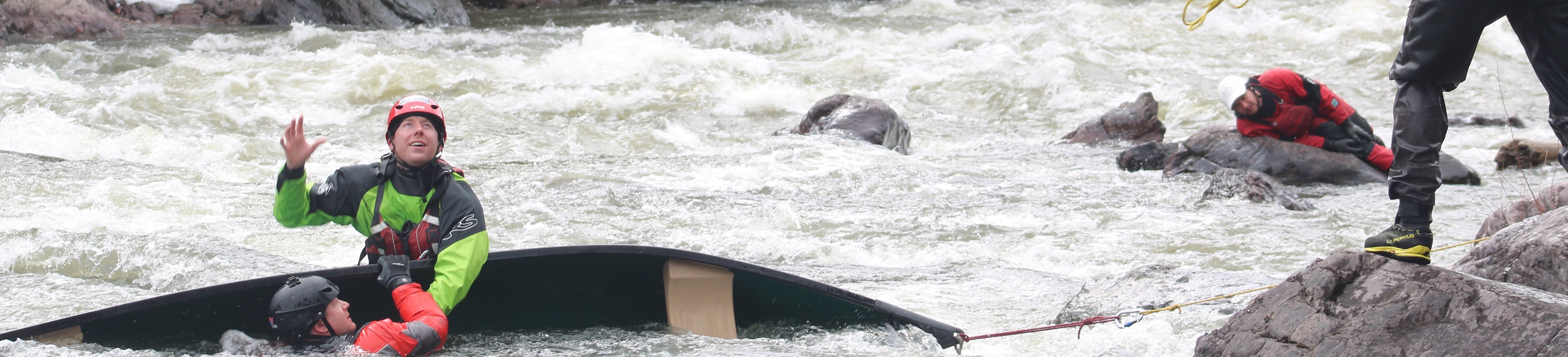
Modern rescue kits should include:
- 25 feet of 1-inch tubular webbing for versatility.
- 13mm Dynex “Rabbit Runners”: These are high-strength, lightweight, and incredibly durable.
- 240 cm Dynex Slings: These provide the necessary length to reach behind large obstacles to create secure, load-distributing anchors.
3. Mechanical Advantage and Pulleys
A Z-drag is only as effective as the friction it overcomes. Many commercial kits include low-quality pulleys that drag or seize under load. You must ensure your kit features high-efficiency Prusik Minding Pulleys (PMP). These pulleys are designed to allow a Prusik knot to pass through without jamming, which is vital for resetting your mechanical advantage. A minimum of three pulleys is recommended, allowing for complex redirects that can move a boat laterally rather than just pulling it directly into the rock—a crucial tactic for freeing a wrap.
4. Prusiks: The Unsung Heroes
Prusik loops, used for gripping the haul line to create mechanical advantage, should be 70–80% the diameter of your main rope. While many kits provide raw cordage, it is highly recommended to use pre-sewn Prusik loops. These are stronger, more consistent, and eliminate the risk of a poorly tied knot slipping during a high-tension pull.
5. Dedicated Hardware
The "water bottle carabiner" has no place in a rescue kit. All carabiners used for rigging must be locking, load-rated, and dedicated exclusively to the pin kit. Cross-loading or using non-rated hardware can lead to catastrophic failure under the intense forces of a river rescue.
Maintenance and Storage: The Lifecycle of Safety Gear
Even the finest gear will fail if it is neglected. The river environment is hostile to synthetic fibers and aluminum.
- Drying Protocols: Never store your gear wet. Prolonged exposure to moisture and UV light degrades the nylon and polyester fibers in your ropes, significantly reducing their tensile strength.
- Sand and Debris: Fine river silt acts as an abrasive, grinding away at the internal mechanisms of pulleys and the sheath of your ropes.
- The Dedicated Dry Bag: Investing in a high-quality, submersible dry bag—such as those produced by Watershed—is not a luxury; it is a critical component of your rescue system. A dry bag ensures that your rope remains bone-dry, free of sand, and, most importantly, buoyant. If your kit floats, it remains accessible in the event of a capsize.
Official Guidance and Industry Implications
Professional river guides and rescue instructors emphasize that the “pre-built” label on a kit is a starting point, not a certification of adequacy. Organizations like the Rescue 3 International and various whitewater safety associations suggest that every lead guide should perform a “gear audit” before every season.
The industry is moving toward a philosophy of modular preparedness. Rather than buying a one-size-fits-all kit, guides are encouraged to build systems that reflect the specific river sections they operate on. If the river is wide and the banks are vegetated, prioritize length and anchoring gear. If the river is rocky and technical, prioritize high-efficiency pulleys and redundant carabiners.
Conclusion: Preparedness as a Mindset
The goal of a pin kit is not just to have equipment; it is to have the capability to resolve a crisis without escalating it. When a boat is wrapped, the clock is ticking, and the adrenaline of the crew is high. That is not the time to realize your rope is too short or your carabiner is non-rated.
Take the time to evaluate your kit against the real-world conditions you encounter on the water. If your current setup cannot handle the realities of your favorite stretch of river, it is time to upgrade. As the saying goes in the rescue community: you don’t rise to the occasion; you sink to the level of your training and your gear. Ensure both are up to the task.
For those seeking assistance in configuring a professional-grade rescue kit or for guidance on specific components, reach out to certified rescue equipment suppliers or contact local wilderness rescue instructors.