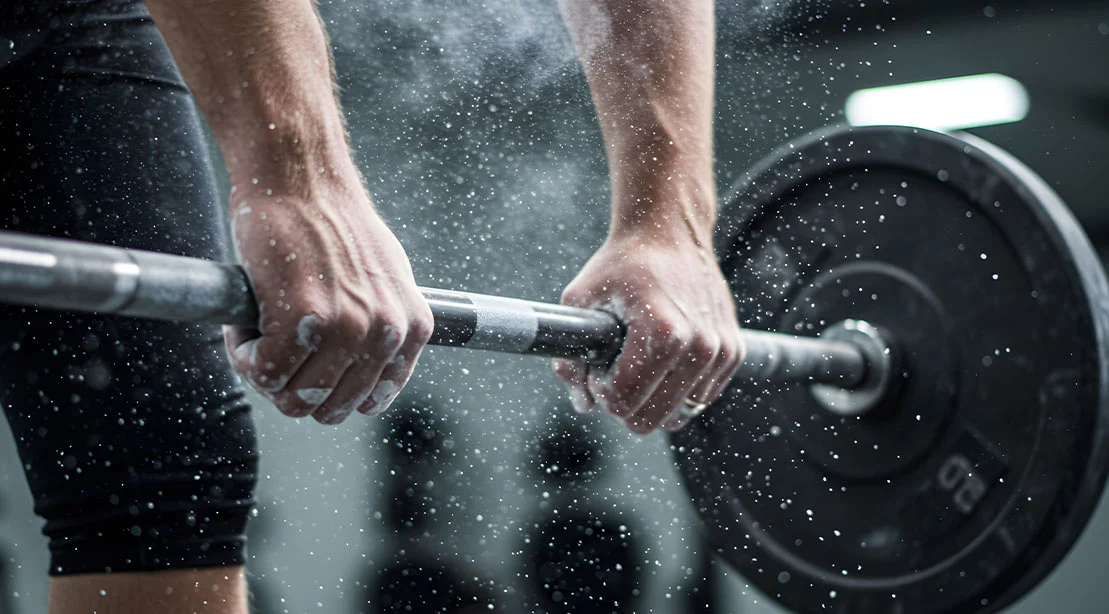
In the iron game, the mantra "grip it and rip it" is often treated as a dismissive instruction to simply get the weight off the ground. However, for elite athletes and seasoned powerlifters, the handshake with the barbell is where the lift is won or lost. Your grip is not merely a means of attachment; it is the kinetic foundation upon which force production, joint stability, and muscle recruitment are built.
Failing to optimize your grip is akin to building a skyscraper on a shifting foundation. By neglecting wrist alignment, bar placement, and grip width, lifters often find their joints "tapping out" long before their primary movers—the back, chest, or legs—reach fatigue. To maximize performance and longevity, it is time to stop treating the grip as an afterthought and start treating it as a technical skill.
Main Facts: The Anatomy of a Perfect Hold
The mechanics of grip science revolve around the transfer of force. When the bar is positioned correctly in the hand, it creates a rigid line of force from the implement through the wrist and forearm, into the shoulder girdle.
The Pressing Protocol
For pressing movements—such as the bench press or overhead press—the primary goal is vertical alignment. The bar should sit toward the "heel" of the palm, directly over the radius and ulna bones of the forearm. If the bar drifts toward the fingers, the wrist is forced into hyperextension. This creates a "leaky" kinetic chain where energy is lost, and the risk of acute wrist injury skyrockets.
The Pulling Paradigm
Pulling movements, such as deadlifts and rows, require a different approach. Placing the bar too deep in the palm often results in the weight rolling toward the fingers as the set progresses. This rolling motion pinches the skin, accelerating the formation of painful calluses and tears. Instead, a more secure position is found by holding the bar between the distal transverse crease and the proximal digital crease. This "finger-hook" placement provides a mechanical advantage that locks the bar in place, allowing you to focus on pulling rather than just holding.
Chronology of Grip Development
The evolution of grip training in modern strength sports has moved from simple brute force to sophisticated biomechanical optimization.
- Early Era: Emphasis was placed primarily on hand size and forearm size, with little attention paid to the specific nuances of bar placement. The "Double Overhand" was the standard, and failure was simply seen as a lack of grit.
- The Technical Shift: As Olympic weightlifting gained popularity in the mid-20th century, the "Hook Grip" was popularized as a way to maintain security on the bar during the high-velocity transition of the snatch and clean, effectively neutralizing the bicep’s tendency to roll the bar.
- Modern Optimization: Today, we see a granular approach. Athletes now select grips based on individual anthropometry (arm length and palm width), injury history (such as previous wrist sprains), and specific training goals (hypertrophy vs. maximal strength).
Supporting Data: Understanding the Six Primary Grip Styles
To master your training, you must understand the toolset at your disposal. Each of these six styles alters the leverage of the joints involved.
- Pronated Grip: Palms facing away. This is the bedrock of deadlifts and rows, providing a balanced distribution of load across the hands.
- Supinated Grip: Palms facing toward you. Commonly used in chin-ups and bicep curls, this grip forces the biceps into a position of mechanical advantage for elbow flexion.
- Neutral Grip: Palms facing each other. This is the most joint-friendly option for many, particularly those with shoulder impingement issues, as it allows for a more natural humeral rotation.
- Mixed Grip: One hand pronated, one supinated. The gold standard for heavy deadlifts, as it prevents the bar from rolling out of the hands.
- Hook Grip: Thumb tucked under the fingers. While initially uncomfortable, it is the most secure grip for explosive movements.
- False Grip: Thumbs on the same side as the fingers. While popular in some gymnastics circles for bar muscle-ups, it is generally discouraged for heavy pressing due to the risk of the bar slipping.
Implications for Muscle Recruitment
Grip width and style act as a "tuning knob" for muscle recruitment. By altering your hand position, you change the path of your elbows and the rotation of your shoulders, which dictates which muscle fibers are recruited most heavily.
The Case of the Row
Widening your grip on a barbell row shifts the demand to the upper back and rear deltoids, whereas a narrow, neutral grip places the primary stimulus on the lats. If your goal is back thickness, your grip width should be dictated by where you feel the most "stretch" and contraction in the target musculature, rather than just where it is easiest to hold.
The Dynamics of Curls
The biceps are not just elbow flexors; they are also the primary supinators of the forearm. Therefore, a supinated grip allows for maximal biceps activation. A neutral (hammer) grip shifts the load to the brachioradialis and the brachialis, which are crucial for overall arm thickness. Understanding this allows a lifter to "target" specific areas of the arm simply by rotating the wrists.
Official Perspectives: When Should You Change Your Grip?
Expert strength coaches and sports physiologists generally agree that there is no "universal" perfect grip. However, there is a consensus on how to evaluate if your current setup is working.
- The Pain Threshold: If a grip causes sharp pain in the wrist or elbow, it is not a "toughness" issue—it is a biomechanical mismatch. The grip should be adjusted immediately to preserve joint health.
- The Strength Test: If you are consistently failing lifts because the bar is slipping, but your target muscles (e.g., your hamstrings in a deadlift) are fresh, you have a mechanical weakness that requires a grip adjustment—or targeted grip strength training.
- The Positional Check: A good grip must allow for full range of motion. If a wider grip on the bench press prevents you from touching the bar to your chest, you have sacrificed range of motion for stability, which may be counterproductive to hypertrophy.
Final Synthesis: The Grip Checklist
Before you begin your next heavy set, run through this brief audit to ensure you are positioned for success:
- Comfort: Are there any immediate sharp pains?
- Stability: Is the bar "locked in," or does it feel like it might shift?
- Wrist Alignment: Is your wrist straight, or is it bent backward under the load?
- ROM (Range of Motion): Does your hand width allow you to move through the full intended arc of the exercise?
- Force Transfer: Does the weight feel like a natural extension of your body, or are you fighting to keep it stable?
Ultimately, your hands are your only point of contact with the external load. By treating your grip as an active, deliberate component of your lifting technique, you transform from a passive participant into a precise operator. The goal of the grip is to serve the lift, ensuring that your muscles—not your connective tissues—are the limiting factor in your growth. Remember: the preparation for the rep begins the moment your skin touches the steel. Master that, and the weight will follow.