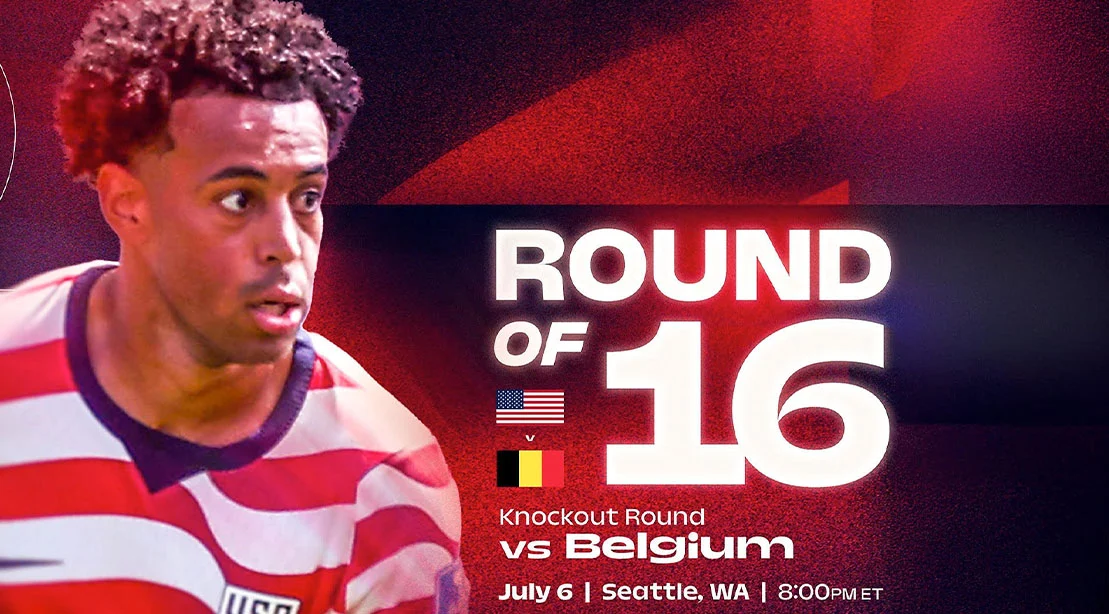
The 2026 FIFA World Cup has been a tournament of seismic shifts, tactical masterclasses, and national pride. As the competition moves into the high-stakes intensity of the Round of 16, all eyes are turned toward Seattle’s Lumen Field. On July 6, the United States Men’s National Team (USMNT) will face off against a formidable Belgian side in a match that represents far more than a simple advancement to the quarterfinals. It is a defining moment for American soccer, a test of tactical resilience, and a chance to exorcise nearly a century of historical ghosts.
The Stakes: A Path to the Quarterfinals
For the United States, the upcoming match against Belgium is a "do-or-die" scenario that carries the weight of a 24-year drought. Since their impressive run to the quarterfinals in the 2002 World Cup—where they were narrowly edged out by Germany—the U.S. has struggled to navigate the treacherous waters of the knockout stages.
Victory on Sunday would not only secure a spot in the final eight but would also signal the arrival of a new era for the sport in North America. With the tournament hosted on home soil, the pressure on the squad is unprecedented. Fans have responded with fervor; the demand for tickets has pushed secondary market prices to staggering heights, with average seat costs reportedly hovering around the $2,500 mark. The atmosphere at Lumen Field is expected to be electric, providing the "12th man" advantage that the home side will desperately need against the European giants.
Chronology: From 1930 to 2026
To understand the gravity of this fixture, one must look at the historical narrative between these two nations. The rivalry, while intermittent, is steeped in dramatic chapters.
The 1930 Dawn
The history of this matchup began at the very inception of the FIFA World Cup. In 1930, during the inaugural tournament in Uruguay, the United States delivered a resounding 3-0 thrashing of Belgium. It remains the high-water mark of their head-to-head World Cup history, a result that fans hope can be mirrored nearly a century later.
The 2014 Heartbreak
The most painful memory for American supporters came during the 2014 World Cup in Brazil. In a Round of 16 match that pushed both teams to their physical limits, the U.S. fought valiantly, eventually falling 2-1 after extra time. Despite the loss, the match became legendary due to the heroics of U.S. goalkeeper Tim Howard, who recorded an astounding 16 saves—a record that still stands as a testament to the U.S. team’s ability to defy the odds through sheer grit and defensive discipline.
The Recent Struggles
Outside the World Cup stage, the reality of international soccer has been harsh. Earlier this year, Belgium dismantled the U.S. in a 5-2 exhibition, highlighting the tactical gap that still exists between the two programs. However, knockout football is a different beast entirely. Momentum, psychology, and the unique pressure of a home crowd often bridge gaps that might otherwise appear insurmountable on paper.
Tactical Developments and the "Balogun Boost"
A significant development in the lead-up to this match has been the status of star forward Folarin Balogun. After receiving a red card during the team’s clinical 2-0 victory over Bosnia and Herzegovina in the group stage, many feared the U.S. would be without their primary offensive weapon. However, following a successful appeal and a subsequent suspension of his one-match ban, Balogun is confirmed to be available for the starting XI against Belgium.
His presence provides Mauricio Pochettino with a lethal outlet. Balogun’s ability to stretch the defensive line and capitalize on transitional play will be critical if the U.S. is to bypass the sturdy Belgian midfield.
The Pochettino Era: Defining a Legacy
Mauricio Pochettino, the architect of this current USMNT iteration, understands that his legacy is inextricably linked to the result in Seattle. Known for his intense high-pressing style and demand for physical excellence, Pochettino has sought to instill a "winning mentality" that has occasionally been lacking in previous American generations.
In the days leading up to the match, Pochettino has leaned heavily into the psychological aspect of the game. Drawing inspiration from sports history, he famously invoked the spirit of the 1980 "Miracle on Ice," quoting the iconic speech from the film Miracle: "Great moments are born from great opportunity."
Pochettino knows that a win against a top-tier European side like Belgium would elevate him from a successful club manager to a monumental figure in American sports history. It would validate the investment in the USMNT program and prove that the American squad can thrive under the brightest spotlight in global sports.
Supporting Data: By the Numbers
The statistical breakdown of this match illustrates the mountain the U.S. must climb:
- Historical Gap: 96 years since the U.S. last defeated Belgium in the World Cup.
- Defensive Metric: The U.S. defense has conceded only one goal in their last three matches, showing a level of cohesion that will be tested by Belgium’s creative playmakers.
- Attendance Demand: Ticket prices at Lumen Field have reached record-breaking levels, underscoring the cultural significance of the fixture.
- Key Statistic: In 2014, the U.S. faced 39 shots from Belgium. The tactical mandate for the 2026 squad is to control possession more effectively to prevent a repeat of that defensive siege.
Official Responses and Team Sentiment
The mood within the U.S. camp is one of focused determination. While the media frenzy surrounding the match continues to grow, the players have largely maintained a "business-as-usual" approach.
"We respect Belgium, they are a world-class team with elite individual talent," a team spokesperson noted during the pre-match press conference. "But we are playing on home soil, and we have the backing of 70,000 fans. The history books don’t play the game—we do. We are focused on executing our game plan and taking our opportunities when they arise."
On the Belgian side, the tone has been one of cautious confidence. Their technical staff has acknowledged the improvement in the American squad’s tactical awareness and their ability to transition quickly from defense to attack.
Implications: What a Victory Would Mean
A victory for the United States would have far-reaching consequences:
- Cultural Impact: Soccer in the U.S. is currently in a state of rapid growth. A quarterfinal berth would likely trigger a massive spike in viewership, youth participation, and commercial interest, potentially accelerating the sport’s path to becoming a mainstream American pastime.
- Tactical Validation: It would prove that the "Pochettino System"—a high-intensity, physically demanding approach—can compete with the tactical sophistication of European footballing powers.
- Future Prospects: Reaching the final eight creates a platform for the U.S. to challenge for even greater honors in the latter stages of the tournament. The confidence gained from knocking out a European heavyweight would be palpable, setting the stage for a potential Cinderella run.
Conclusion: A Moment of Truth
As the sun sets over Seattle on July 6, the narrative of this World Cup will reach a critical juncture. For the U.S. National Team, the game against Belgium is not merely a Round of 16 fixture; it is an audition for greatness.
Whether the U.S. can summon the spirit of 1930 or if they will fall to the tactical prowess of Belgium remains to be seen. However, one thing is certain: the world will be watching. Regardless of the final score, the 2026 World Cup has already succeeded in igniting the American imagination, proving that in the beautiful game, even the most daunting history can be rewritten in 90 minutes of magic.
As the players take the pitch at Lumen Field, they do so not just as representatives of a team, but as the standard-bearers for a nation’s sporting future. The stage is set, the fans are ready, and the opportunity for a "great moment" is within reach.