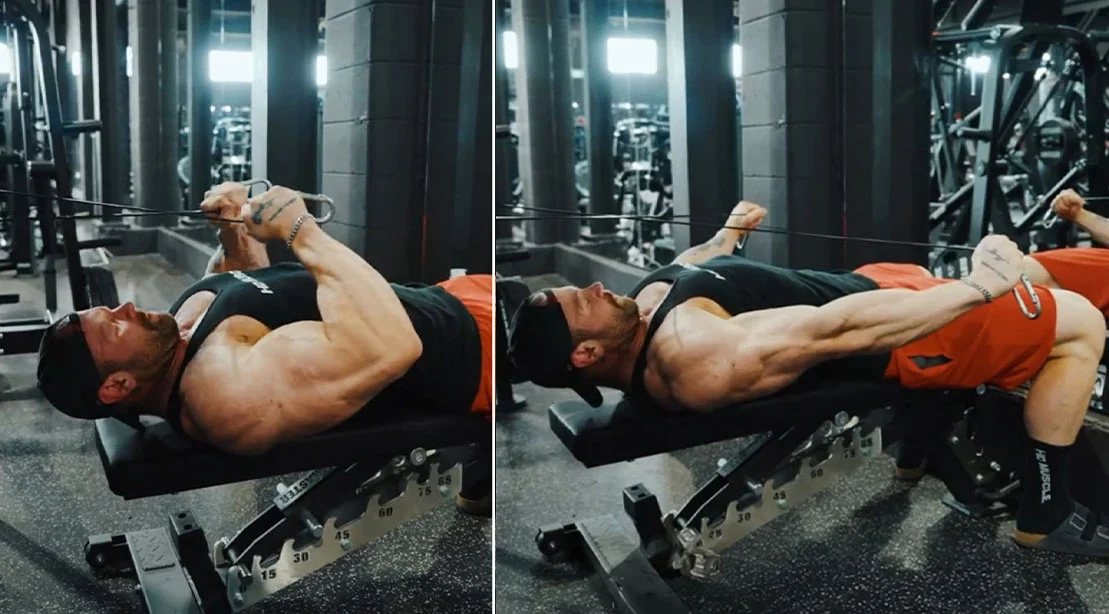
Even after stepping away from the competitive stage, Erin Stern remains a titan in the fitness industry. As a two-time Ms. Olympia Figure champion (2010, 2012), Stern built her career on the foundation of heavy iron, strict discipline, and aesthetic perfection. However, in her post-competitive era, her focus has shifted from the pursuit of a trophy to the pursuit of something far more valuable: longevity.
Recently, the fitness icon took to Instagram to share a specialized, free-weight-free routine designed to cultivate the physical traits that often diminish with time. For Stern, the goal is clear: maintaining agility, mobility, bounce, and core strength to ensure that "getting older" doesn’t mean losing the ability to move with speed, flow, and control.
The Philosophy of Aging: Why "Bounce" Matters
Understanding the Physiological Decline
As we age, the human body undergoes a series of subtle, often overlooked changes. Research consistently shows that by the fourth decade of life, individuals begin to experience a gradual decline in power, balance, and proprioception. This isn’t just about muscle mass—it’s about the nervous system’s ability to fire rapidly and the joints’ capacity to navigate complex ranges of motion.
Stern identifies the primary culprits of this decline: the loss of "bounce"—or elastic energy—and the tightening of the thoracic spine. When we stop training for agility and mobility, our movement patterns become rigid, increasing the risk of injury during daily activities. Stern’s philosophy is that longevity isn’t just about "staying active"; it’s about training specifically to preserve the athletic qualities that keep us functional in our 60s, 70s, and beyond.
The Role of Elasticity
"Agility, mobility, bounce, and core—these are the traits that we lose with age," Stern emphasizes. By incorporating exercises that challenge the "fast-twitch" muscle fibers, she argues that we can effectively reverse the sedentary patterns that lead to frailty. Her approach is a departure from traditional "bodybuilding-style" training, opting instead for movements that prioritize nervous system efficiency.
Chronology of the Longevity Routine: A Step-by-Step Guide
Stern’s routine is meticulously structured to flow from joint preparation to explosive power, finishing with core stabilization. Whether you are a seasoned athlete or a beginner looking to improve your quality of life, this sequence offers a blueprint for functional movement.
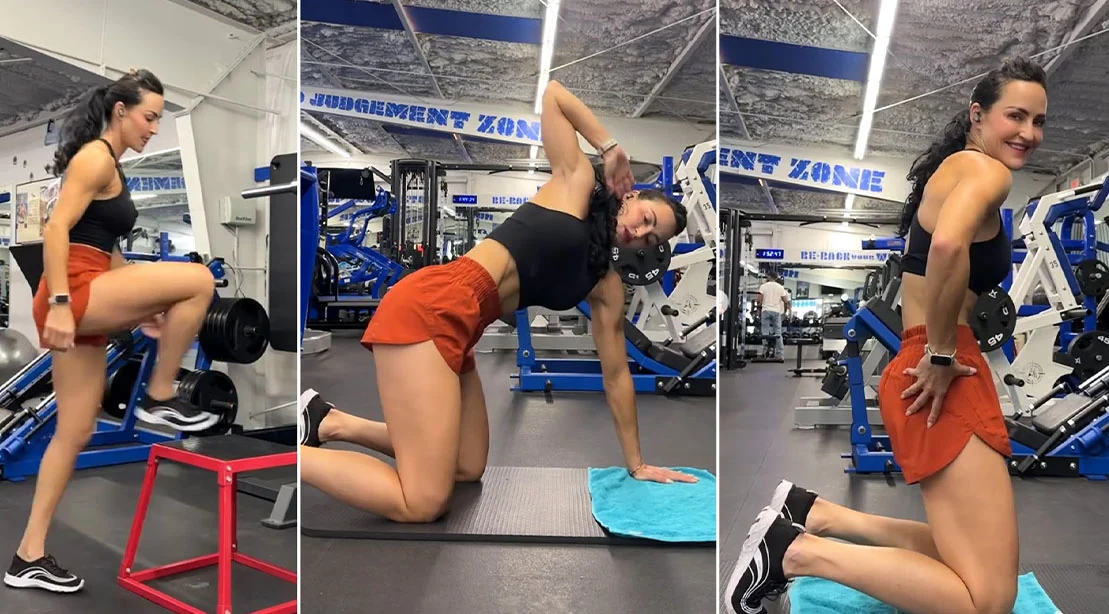
1. Hip Flexor Health: Cable-Assisted High Knees
Stern begins by focusing on the hips. Using a cable station with a foot cuff, she performs controlled high knees. This exercise targets the hip flexors, which are often tight and weak in office-bound professionals. By adding slight resistance, she ensures that the hip joint remains mobile and strong, which is essential for gait efficiency and preventing lower back strain.
2. Explosive Power: Pogo Box Jumps
The centerpiece of her routine involves Pogo box jumps. This is a deliberate exercise for fast-twitch muscle fiber recruitment and bone density. Stern stresses the importance of precision: both feet must touch the box simultaneously. This movement teaches the body to manage impact forces, a critical skill for maintaining bone mineral density as we age.
3. Reaction Time: Depth Jumps
Building on the pogo jumps, Stern introduces depth jumps. These are specifically designed to improve reaction time. Learning how to land under pressure is not just an athletic feat—it is a proactive measure against future falls. By training the mind-muscle connection to handle deceleration, the practitioner becomes significantly more resilient in real-world environments.
4. Thoracic Mobility: T-Spine Rotations
Moving to the floor, Stern addresses the upper back. Modern life, characterized by hunching over screens, often leads to a "locked" thoracic spine. T-spine rotations act as a reset button for the posture, ensuring that the upper back can rotate freely. This prevents the compensation patterns that usually result in neck and shoulder pain.
5. Spinal Decompression: The Cat-Cow Stretch
A staple of physical therapy, the cat-cow stretch is used by Stern to release tension. By moving through spinal flexion and extension, the athlete activates the musculature of the arms and legs while simultaneously decompressing the lumbar spine. It serves as an active recovery period within the workout.
6. Core Control: The Stomach Vacuum
The routine concludes with a classic bodybuilding staple: the vacuum. While often associated with the "Golden Era" of bodybuilding, Stern highlights its functional utility for core control and waist management. A strong transverse abdominis—the body’s natural corset—is the key to spinal stability and an aesthetic midsection.
Supporting Data: Why Free Weights Aren’t the Only Answer
While the fitness community often debates the hierarchy of training modalities, the consensus among exercise scientists is shifting toward a hybrid approach.
The Argument for Resistance Training
It is important to note that Stern does not advocate for abandoning free weights. "Free weights undoubtedly have a place in longevity training," she clarifies. The combination of resistance, coordination, and stabilization required to manage a dumbbell or a barbell is peerless when it comes to hypertrophy and structural integrity.
The Case for Mobility-First Training
However, for individuals with joint pain, those recovering from injury, or those who find heavy lifting intimidating, the "mobility-first" approach provides a low-barrier entry point. Studies published in the Journal of Aging and Physical Activity suggest that exercises focusing on agility and reaction time (like the ones Stern performs) are significantly more effective at reducing fall rates than pure strength training alone. By combining these two—using Stern’s routine as a warm-up or a standalone mobility session—practitioners can achieve a more comprehensive profile of physical health.
Implications: The Shift Toward Functional Aging
The implications of Stern’s routine are significant for the broader fitness industry. We are seeing a move away from the "no pain, no gain" mentality toward a "movement for life" philosophy.
The Mental Aspect of Longevity
Beyond the physical, there is a strong psychological component to this routine. Stern’s emphasis on "breath work" and "slowing things down" highlights the importance of the mind-body connection. Longevity is not just about the number of years lived, but the quality of movement within those years. By taking the time to focus on breath and controlled execution, the practitioner reduces cortisol levels and enhances neuromuscular coordination.
Professional Guidance and Accessibility
The beauty of this protocol is its accessibility. It requires minimal equipment—a cable machine, a box, and a mat—making it feasible for those with busy schedules or limited gym access. As Stern notes, for those just starting, it is best to focus on the quality of the movement. "Concentrate on your breath work and slow things down," she advises. "As you become more confident with crushing your gym goals, add these exercises as a warm-up before a free-weight session."
Conclusion: A Lifetime of Performance
Erin Stern’s transition from Olympia champion to longevity coach is a testament to the fact that fitness is a journey, not a destination. By prioritizing agility and mobility, she is teaching her clients that they don’t have to sacrifice their athletic identity as they grow older.
Whether you are looking to improve your performance in the weight room or simply want to walk with more confidence and ease, Stern’s routine offers a scientifically grounded and highly practical approach. In an industry obsessed with the next "quick fix," Stern reminds us that the best investment we can make is in the longevity of our own movement. By staying agile, protecting our spine, and maintaining our "bounce," we ensure that we can continue to move through life with the same vigor that we had in our youth.
For those interested in following her ongoing journey, Stern continues to document her training and coaching insights on her Instagram, providing a continuous feed of inspiration for anyone looking to master the art of aging well.