In the modern fitness landscape, the "core" has long been synonymous with static holds. From the relentless endurance of the plank to the isometric tension of the hollow-body hold, the prevailing philosophy has been to teach the midsection to resist force. While stability is indeed the foundation of human movement, it is only half of the equation. To truly unlock athletic potential, one must learn to generate, transfer, and decelerate force.
The Cable Push-Pull Rotation stands as the bridge between traditional strength training and the dynamic, multi-planar reality of athletic movement. By integrating the ground-up power of the lower body with the rotational capacity of the torso, this exercise transforms the core from a static anchor into a high-performance transmission system.
The Mechanics of Force: Understanding the Kinetic Chain
At its core, the Cable Push-Pull Rotation is a standing, rotational movement that demands seamless coordination. One arm pushes while the other pulls, forcing the hips and thoracic spine to rotate as a unified system. Unlike isolation exercises that target individual muscle groups, this movement is a masterclass in kinetic chain efficiency.
Chronology of the Movement
To understand why this movement is so effective, one must analyze the sequence of force production:
- Ground Reaction Force: The movement initiates as your feet drive into the floor, establishing a stable base.
- Hip Initiation: The hips provide the "engine" for the rotation. As the hips rotate, they generate the torque necessary for the movement.
- Core Transfer: The core acts as the transmission, accepting the power from the hips and channeling it upward.
- Upper Body Completion: The arms and shoulders serve as the delivery system, translating the stored kinetic energy into a push-pull motion.
This sequence mimics the bio-mechanics of a baseball pitch, a golf swing, or a knockout punch. In all these scenarios, the athlete is not just resisting motion; they are purposefully creating it.
Supporting Data: The Anatomy of Rotation
The efficacy of the Cable Push-Pull Rotation lies in its complex recruitment of the posterior and anterior chains. Under the surface, this exercise forces several key muscle groups to perform in harmony.
The Primary Drivers
- The Obliques: These are the stars of the show. Responsible for creating, controlling, and decelerating rotational force, the obliques act as the primary link between the pelvis and the rib cage. During the rotation, they move concentrically to generate speed, and during the return phase, they work eccentrically to brake the movement safely.
- The Glutes: Rotation begins at the ground. The glutes are the primary stabilizers of the pelvis; they provide the initial thrust that powers the rotation, ensuring that the movement is driven by the hips rather than the vulnerable lumbar spine.
- The Transverse Abdominis (TVA): Acting as the body’s internal weight belt, the TVA provides the necessary spinal stiffness to prevent energy leaks. By maintaining a neutral spine, it ensures that the force generated by the hips is transferred efficiently rather than dissipated through poor posture.
- The Lats and Upper Back: Often overlooked in core training, the lats are essential for the "pull" component. They facilitate the transfer of power from the lower body through the shoulders, acting as a bridge for force delivery.
Official Coaching Protocol: How to Execute with Precision
Achieving technical mastery requires more than just moving the weight; it requires intent. Follow these steps to ensure you are maximizing the movement’s potential.
Step-by-Step Execution
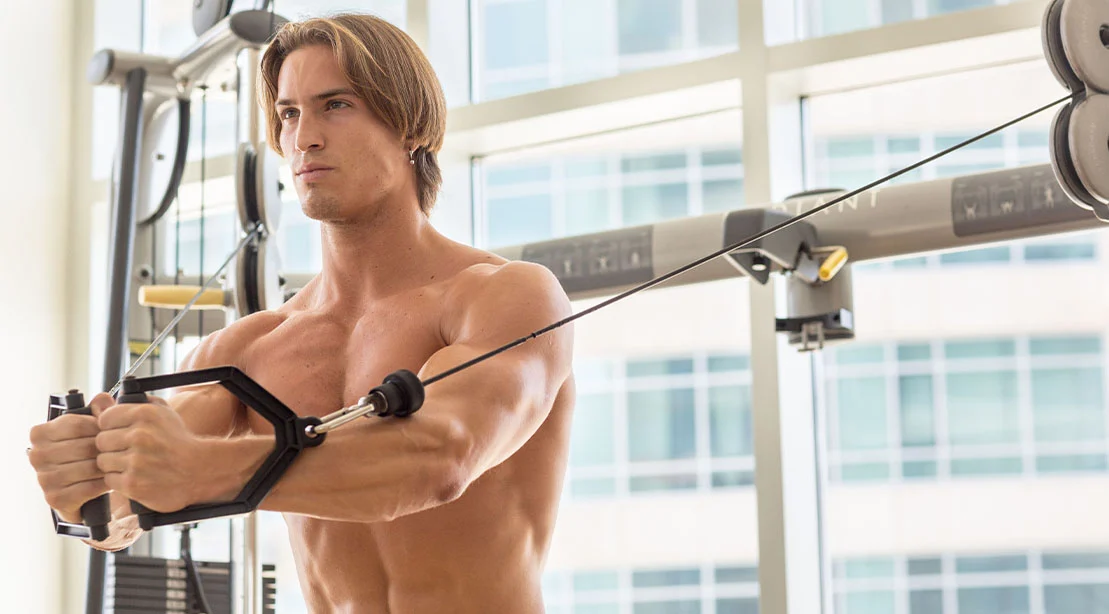
- Stance: Set the cable machine to chest height. Stand perpendicular to the machine with a shoulder-width stance. Soften your knees to engage your lower body.
- The Grip: Hold one handle with the arm closest to the machine and the other with the arm furthest away.
- Initiation: Begin by pushing with the inside hand and pulling with the outside hand. As you do this, rotate your hips and pivot on the ball of your foot.
- The Pivot: Ensure your hips, torso, and head rotate in unison. The movement should not be confined to the arms.
- The Return: Control the weight on the way back. Do not allow the cable stack to "snap" you back. Use your obliques to decelerate the load.
Visual and Sensory Checkpoints
- The "Hips First" Rule: If you feel the movement primarily in your shoulders, you are missing the point. If you feel it in your hips and obliques, you are performing it correctly.
- The Sternum-to-Navel Alignment: Imagine a rod connecting your belly button to your sternum. If they do not rotate together, you are likely shearing your lumbar spine.
- The Deceleration Phase: You know you are doing it right if the return phase feels just as "heavy" as the push-pull phase. Controlling the eccentric is where the real athletic gains are made.
Common Pitfalls and Professional Fixes
Even experienced lifters often fall into the trap of treating this as a simple upper-body exercise. Here is how to troubleshoot the most common errors.
1. The Ego-Lifting Trap
The Error: Using too much weight.
The Consequence: The movement becomes sloppy, the hips stop firing, and the arms take over. This effectively turns a high-level rotational exercise into a mediocre chest press.
The Fix: Prioritize velocity and control over poundage. If you cannot maintain a smooth, rhythmic tempo, drop the weight by 20%.
2. The "Arm-Dominant" Myth
The Error: Standing perfectly still and only using the arms to pull and push.
The Consequence: Zero rotational training and potential shoulder strain.
The Fix: Think "hips first, arms second." If your feet aren’t pivoting, the exercise isn’t happening.
3. Lumbar Compensation
The Error: Trying to "force" rotation by twisting the lower back while the feet stay planted.
The Fix: The lumbar spine is designed for stability. Focus on rotating through the thoracic spine and the hips. Keep your core braced as if preparing to take a punch.
Implications for Athletic Performance and Daily Life
The Cable Push-Pull Rotation is not merely a tool for aesthetic development; it is a functional investment. The implications of regular practice are significant for both the elite athlete and the general fitness enthusiast.
Enhanced Rotational Power
For athletes, the ability to generate force quickly is the difference between winning and losing. By training the body to rotate as a unit, this exercise improves the "transfer of power"—the hallmark of elite performance in sports like tennis, boxing, and golf.
Improved Injury Prevention
Most sports injuries occur during the deceleration phase of a movement. Because this exercise requires you to control and "brake" the load during the return, it builds robust, resilient tissues in the obliques and glutes, significantly reducing the risk of strains and tears during sudden changes of direction.
Functional Longevity
In everyday life, we rarely move in a single plane. We reach across our bodies, pick up groceries, and twist to look behind us. The Cable Push-Pull Rotation reinforces the movement patterns required for these daily tasks, ensuring that as we age, our bodies remain capable of handling rotational loads safely.
Programming the Movement
To integrate this into your routine, view it as a pillar of your power-training block.
- As a Warm-Up: 2 sets of 10 repetitions per side at a light weight to prime the nervous system and mobilize the thoracic spine.
- As a Core Accessory: 3 sets of 10-12 repetitions per side after your heavy compound lifts (like squats or deadlifts).
- For Power Development: 4 sets of 6-8 explosive repetitions per side, focusing on maximal intent during the push-pull, followed by a controlled 3-second return.
Progression Strategies
- Increase Velocity: Once you master the technique, increase the speed of the push-pull to improve power output.
- Unstable Surfaces: Move to a split stance or a half-kneeling position to further challenge your stability and force the core to work harder to maintain alignment.
- Tempo Variation: Incorporate a 3-second hold at the end of the rotation to build extreme endurance in the rotational stabilizers.
The Cable Push-Pull Rotation is a reminder that the core is not meant to be a static brick, but a dynamic engine. By moving with intent and focusing on the connection between the ground and the upper body, you can unlock a level of performance that static planks simply cannot reach. Stop resisting movement and start mastering it.