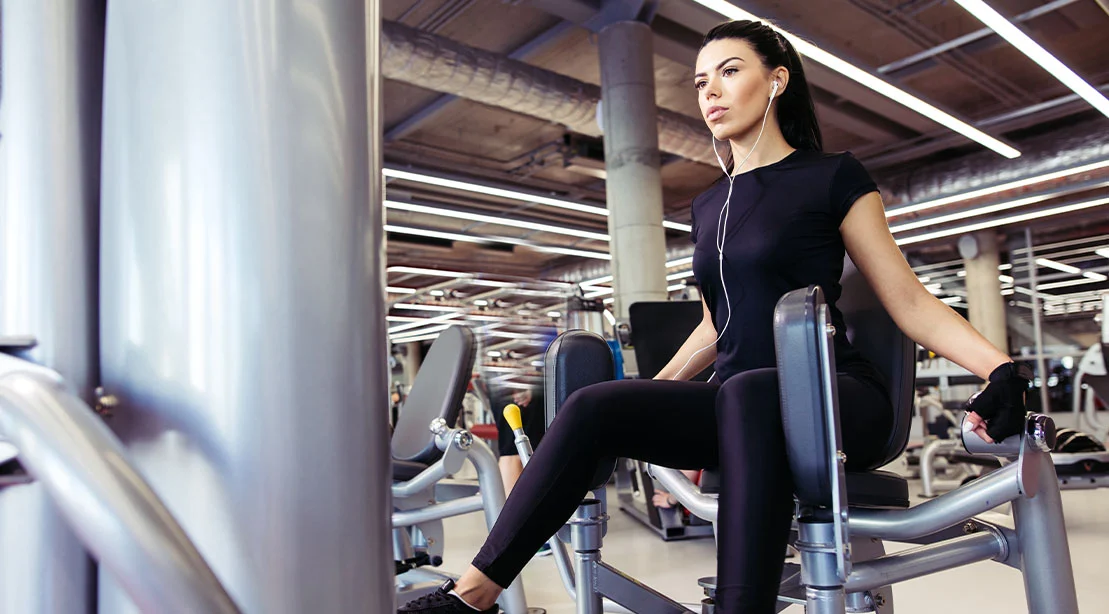
In the landscape of modern fitness, few pieces of equipment elicit as much quiet disdain as the seated hip abductor machine. It is the gym’s perennial wallflower: tucked away in the corner, shrouded in an aura of "don’t look at me," and frequently dismissed by the hardcore training crowd as a frivolous, "fluff" exercise. To the purists who worship at the altar of the barbell—where plates crash and bars bend—sitting down to push your knees against a padded lever feels like an admission of defeat.
Yet, despite the mockery, the machine remains a permanent fixture in gyms worldwide. Why? Because muscles do not possess an ego. They do not care about "cool" points or whether an exercise looks athletic on social media. They respond to tension, volume, and mechanical stress. As we peel back the layers of gym culture, we find a fascinating divide between the "functional" fitness elite and the biomechanical reality of muscle hypertrophy. With insights from leading physical therapists Dr. Bo Babenko and Dan Swinscoe, we explore whether this much-maligned piece of steel is a waste of space or an underutilized secret weapon for lower-body development.
The Evolution of the "Functional" Argument
The skepticism surrounding the hip abductor machine is rooted in the rise of functional training—a philosophy that prioritizes movements that mimic real-world activities. Critics argue that because we rarely find ourselves sitting in a chair pushing our legs apart in daily life, the machine is essentially non-functional.
"My main problem with this machine," explains physical therapist Bo Babenko, "is that it is a completely unnatural way to use these muscles in a seated position."
This sentiment is echoed by Dan Swinscoe, who points to the lack of ground reaction forces. "It trains the leg with the foot off the ground," Swinscoe notes. "In daily activities, the foot is on the ground, and pressure through the foot is a key trigger for coordinated muscle activation."
For those who equate training with athleticism, this is a fatal flaw. However, this perspective creates a false dichotomy: it assumes that an exercise must be "functional" to be valuable. In reality, a balanced training program requires a hybrid approach. While compound lifts like squats and lunges build the foundation of human movement, isolation machines serve a specific, targeted purpose that compound lifts cannot always fulfill.
Supporting Data: What the Science Says
To move beyond anecdotal gym banter, we must look at the electromyography (EMG) data. A review of existing literature suggests that the hip abductor machine is, in fact, remarkably effective at its primary task: isolating the hip abductors.
One pivotal study highlighted in the research found that the seated machine produced high levels of gluteus medius activation, with some participants achieving approximately 80% of maximal voluntary isometric contraction. For the aesthetics-focused lifter, this is a goldmine. Swinscoe admits, "That makes it useful for muscle development for aesthetics."
Perhaps more importantly, a 2022 study provided a compelling argument for the machine’s efficiency. Researchers compared various single-joint hip abduction exercises and discovered that the seated machine produced superior gluteus medius activity while significantly minimizing the involvement of the tensor fasciae latae (TFL). This is crucial; the TFL is a smaller muscle that often compensates when the glutes are weak. By isolating the gluteus medius and minimus, the machine allows lifters to target the "side glutes" without the TFL taking over, which is a common source of hip pain and aesthetic imbalances.
The Case for Isolation: Why Compound Lifts Aren’t Enough
A common refrain among fitness purists is, "If you squat and lunge, you don’t need the abduction machine." While squats and deadlifts are undeniably the kings of the weight room, they are not perfect.
Compound movements distribute work across a wide array of joints and muscle groups. Because of this, the glutes—while heavily involved—are often limited by the strength of the lower back, the quads, or the hamstrings. By the time a lifter finishes a heavy set of back squats, they may have hit their systemic fatigue limit, even if their gluteus medius has more "gas in the tank."
This is where the machine provides its primary implication for training efficiency: it allows for high-volume, targeted glute work with negligible systemic fatigue. You can push the gluteus medius to failure without taxing your central nervous system or overworking your spinal erectors, making it an ideal accessory for the end of a workout.
Implications: Risk vs. Reward
The hip abductor machine occupies a unique space in the risk-to-reward ratio. It is a low-risk, moderate-to-high reward tool.
The Benefits
- Direct Training Stimulus: Unlike compound lifts that share the workload, this machine forces the glutes to be the primary movers.
- TFL Management: By reducing TFL dominance, it helps correct common imbalances that lead to knee or hip discomfort.
- Recovery-Friendly Volume: Because the movement is seated and stable, it adds hypertrophy volume without creating the systemic exhaustion associated with heavy squats or heavy rack pulls.
- Targeted Stability: While it doesn’t teach you how to sprint, it strengthens the musculature (gluteus medius and minimus) that stabilizes the pelvis during every step you take. As Babenko notes, "It has benefits for someone who needs to manage tendinopathy or is improving walking patterns post-op."
The Limitations
The primary drawback remains the lack of transfer to athletic performance. Using this machine will not turn you into a faster sprinter or a more explosive jumper. It is an accessory tool, not a foundational one. If a user approaches it expecting it to replace the complexities of unilateral stability training, they will be disappointed.
Who Should (and Should Not) Use It?
The divide between users is often based on goals rather than ability level.
The Ideal Candidates:
- Hypertrophy Seekers: Individuals looking to build the "shelf" or width of the glutes.
- Rehabilitation Patients: Those recovering from lower-body injuries who need to strengthen the hip stabilizers in a controlled, low-impact environment.
- Busy Lifters: Those who have limited time and want to hit the glutes hard at the end of a session without needing a long recovery period.
Those Who Should Skip It:
- Sport-Specific Athletes: If your goal is purely to improve running mechanics or explosive cutting, your limited training time is better spent on unilateral movements like split squats, step-ups, or lateral lunges.
- The "Minimalist" Lifter: If you only have two days a week to train, focus on compound movements that offer the most "bang for your buck."
How to Integrate the Machine for Maximum Results
If you decide to incorporate the hip abductor machine into your routine, treating it with the same respect as a barbell movement is essential. Do not treat it as a "junk volume" exercise where you bounce through reps while scrolling on your phone.
- Placement: Schedule this as the final movement of your lower-body workout. Use it to exhaust the glutes after your main compounds.
- Volume: Aim for 2 to 4 sets of 12 to 20 reps. The higher rep range is ideal for maximizing the metabolic stress on the gluteus medius.
- Tempo: Control the eccentric (the closing phase). Don’t let the weight stack slam back down. The stability of the machine allows you to focus on the mind-muscle connection.
- Progression: As with any lift, practice progressive overload. Increase the weight only once you have mastered the top end of the rep range with perfect, controlled form.
The Final Word: Moving Beyond the Stigma
The hip abductor machine is neither a magic pill for hip health nor a useless piece of junk. It is a specialized tool that performs one specific job: it isolates the hip abductors.
When we strip away the "functional" snobbery and the judgmental stares from the squat rack, we find that the machine is an effective instrument for filling gaps in a physique and supporting the muscles that keep our pelvis stable in motion. The stigma against it is largely a product of ego—a desire to be seen doing "hard" work rather than "effective" work.
If your goal is glute development or targeted hip health, stop worrying about how it looks. In the right program, the hip abductor machine is not just acceptable—it is an essential asset. Sometimes, the most "un-cool" thing you can do in the gym is the thing that actually gets you results.