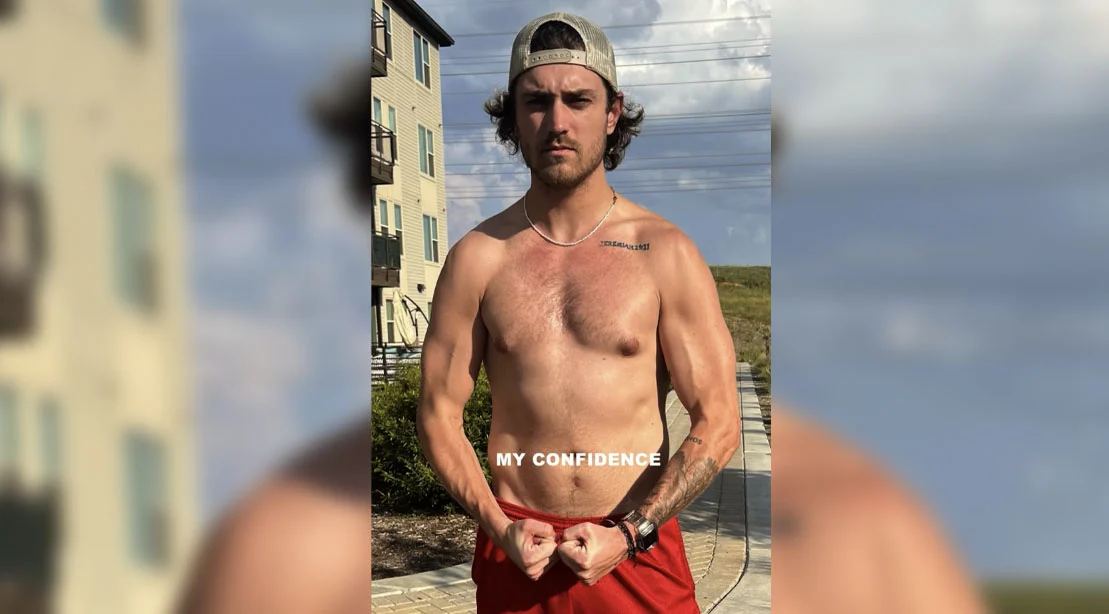
For the better part of a decade, the narrative surrounding 31-year-old JB Copeland was one of athletic inevitability. A 6’3”, 230-pound powerhouse with a rare blend of speed and instinct, he seemed destined for the bright lights of the NFL. Yet, today, Copeland is not remembered for his tackles or his sack totals. Instead, he has emerged as one of the most prominent, vulnerable, and influential voices in the modern mental health advocacy space.
Copeland’s journey—a harrowing descent from elite collegiate athlete to the depths of substance dependency, followed by a profound reclamation of self—serves as a cautionary tale for high-performers and a beacon of hope for those trapped in the silent struggle of identity crisis.
The Architecture of an Athlete: A Chronology of Promise
Born on December 6, 1994, in Southlake, Texas, John Byron Copeland was a product of a culture that prizes athletic excellence. At Southlake Carroll High School, he began to craft the persona that would eventually define his early life. By his junior year, he was already a force, recording 90 total tackles. His trajectory was steep, moving from a local standout to a national prospect.
Following his graduation, he took his talents to Navarro College, where his performance reached a fever pitch. During the 2015 season, he recorded 116 total tackles in just 10 games—averaging an astounding 11.6 per game. His five sacks and seven tackles for loss cemented his status as the No. 10 outside linebacker prospect in the country. This momentum carried him to New Mexico State University and eventually to the University of North Carolina (UNC) at Chapel Hill, where he was granted a coveted scholarship.
However, the "Plan A" that had driven him since he was six years old hit an immovable object during his junior year at UNC. Back-to-back concussions did more than just sideline his season; they dismantled his sense of purpose. For an athlete whose entire internal architecture was built around the gridiron, the sudden, forced retirement was not merely a career change—it was an existential death.
The Downward Spiral: The Cost of Identity
When the roar of the stadium faded, what remained was a silence that Copeland was ill-equipped to handle. With his identity inextricably tied to football, the loss of his career triggered a "complete mental downward spiral."
"Football had been my life since I was 6 years old," Copeland told Muscle & Fitness. "There was no Plan B. I’d made up my mind that this is why I’m here and this is what I’m going to do."
Without the structure of training, the classroom, and the singular goal of the NFL, the suppressed anxieties of his youth—long buried beneath the pursuit of excellence—began to surface. Within three months of stepping away from the game, his physical health mirrored his mental state; he dropped 55 pounds, his frame whittled away by the physiological toll of chronic, paralyzing anxiety.
In an effort to numb the agony, Copeland turned to substance abuse. He began using Xanax, initially prescribed to manage his anxiety, but he quickly bypassed medical oversight. The situation escalated to a point of profound desperation; he began soliciting prescription medications from former teammates who were recovering from surgeries. By his senior year at UNC, the fallout was absolute: he lost his scholarship and ultimately flunked out of school. He was adrift, using various substances as his only mechanism for "internal safety."
The Breaking Point: A Reckoning with Reality
The facade finally shattered in April 2022. A severe, life-altering panic attack sent Copeland to the emergency room, marking the end of his attempts to maintain the illusion of control. It was the moment he realized that the "Band-Aid" approach to his trauma was no longer effective.
"One day, the parts of you that you buried alive begin to revolt," he explained. "The Band-Aid doesn’t work anymore, and the journey into the darkness within must begin."
This hospitalization served as the catalyst for his recovery. Recognizing he could no longer fight the war alone, he had a candid, life-saving conversation with his wife and made the courageous decision to check into an addiction rehab facility in a small town outside of Dallas.
Healing in Motion: The Science of Recovery
The 90 days Copeland spent in rehab fundamentally reconfigured his approach to existence. Faced with the void of his former life, he turned to the one thing he knew: discipline. However, this time, the discipline was not for the sake of a sport, but for the sake of his survival.
"At the time, my mind and emotions felt out of control. I couldn’t find balance, so I decided to focus on the one thing I knew I could control: my body," Copeland noted.
He leaned into a rigorous routine of clean eating and intense physical activity. For Copeland, the physical act of building muscle and sweating became a "portal" to deeper emotional work. This holistic integration of the physical, mental, and emotional became the foundation for his future advocacy. He realized that for many men, especially those who grew up in the "tough it out" culture of competitive sports, the physical can often serve as the bridge to the psychological.
Implications for Modern Masculinity
Since emerging from rehab, Copeland has transitioned from a former athlete to a digital thought leader, amassing millions of followers across Instagram, TikTok, and YouTube. His content is not about the highlight reel of the past, but the messy, nonlinear reality of healing.
The Rise of "Whatever Works"
In 2026, he launched the social series Whatever Works, a platform dedicated to raw, unfiltered conversations about emotional awareness and identity. His debut book, Sappy Medium: The Rough Draft, further solidified his mission. The book functions as a "self-feel" manual, offering readers an intimate look at his own letters, journals, and reflections on grief, self-trust, and the art of "living in the middle."
Bridging the Gap: The Role of Community
Despite his success, Copeland is remarkably honest about his ongoing challenges. He remains vocal about the struggle of isolation—a common trait among men who are used to being "the man" who handles things alone.
"I tend to isolate and stay in my head," he admits. "But over the last few years, I’ve realized that I can’t do it alone. We need accountability, and we can’t have it when we hold secrets."
He champions the necessity of deep, honest male friendships. According to Copeland, the act of simply being honest with another man is a radical, growth-oriented move that breaks the cycle of shame. He argues that secrecy is the greatest enemy of progress, and that the "truth will set you free" is not just a platitude, but a practical survival strategy.
A Legacy of "Living in the Middle"
Copeland is currently developing an app designed to bridge the gap between mental, emotional, spiritual, and physical health, aiming to provide others with the structure he had to build from scratch. His training regimen has also evolved; while he still prioritizes physical health, he has moved away from the heavy, ego-driven lifting of his past toward a functional approach focused on long-term longevity, including cardio and core stability.
His advice to the next generation of athletes is poignant and direct: "When something becomes who you are, that thing will always let you down. I’m a big believer in giving it everything you have but not letting it become who you are. It’s a sport. Your life is bigger than a game."
JB Copeland’s story is a testament to the fact that the most impressive "tackle" one can make is the one that brings them back to themselves. By reframing his narrative from one of athletic failure to one of human triumph, he is proving that while the game may end, the work of building a meaningful life is just beginning.
If you or someone you know is struggling or in a crisis, call or text the Suicide & Crisis Lifeline at 988 for free, confidential, 24/7 support.
If you or someone you know is struggling with substance abuse, please contact the SAMHSA helpline at 1-800-662-HELP.