By Editorial Staff
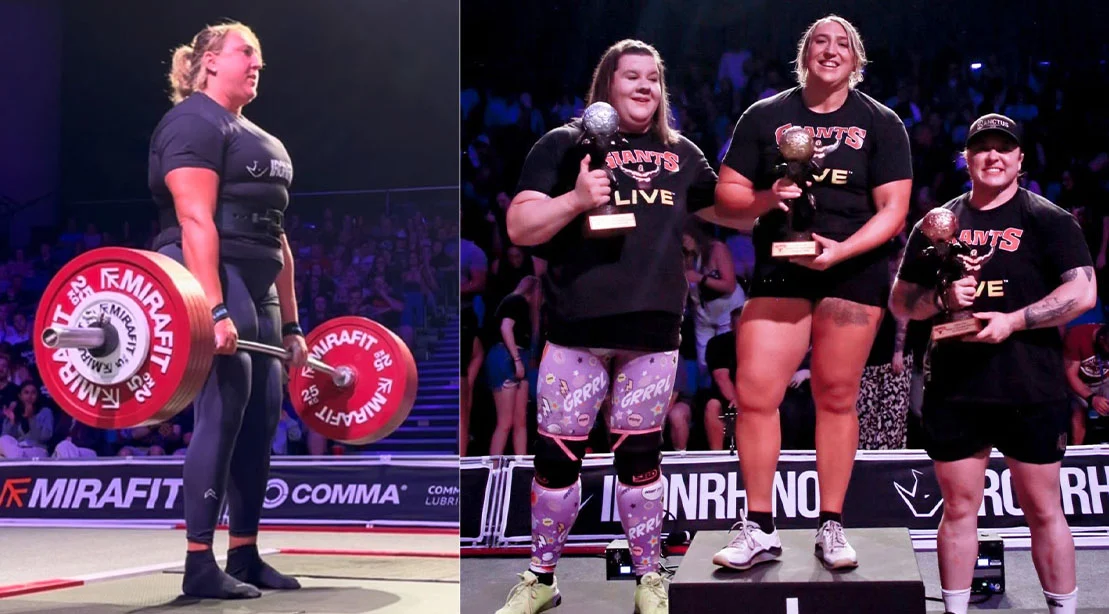
In the high-stakes, adrenaline-fueled world of professional strongwoman competition, few athletes have managed to blend sheer physical dominance with the kind of unflappable mental fortitude displayed by Lucy Underdown. On July 25, 2026, at the historic York Barbican, Underdown once again etched her name into the annals of strength sports history, securing her third consecutive "Britain’s Strongest Woman" title.
For the 36-year-old athlete, who balances the grueling demands of a career as a serving police officer in Kent with the physical toll of elite-level training, this latest victory is more than just a trophy. It is a testament to an evolution in her approach to competition—a transition from a powerhouse athlete who relies on raw strength to a tactical, calm, and methodical master of the sport.
The Main Facts: A Display of Unrivaled Dominance
The 2026 Britain’s Strongest Woman competition was billed as one of the most competitive in recent memory. However, Underdown’s performance served as a stark reminder of why she remains the woman to beat. Dominating the field with a commanding 4.5-point lead over runner-up Rebecca Roberts, Underdown’s path to victory was paved with technical precision and explosive power.
The event saw Underdown claim outright victories in the Deadlift and the Stone to Shoulder events—two disciplines that have become synonymous with her competitive identity. Her ability to execute under pressure was the defining narrative of the day, as she navigated the challenges of a world-class lineup of competitors without ever appearing to lose her focus.
A Chronology of a Champion: From Discus Circle to Powerlifting Podium
To understand the magnitude of Underdown’s 2026 victory, one must look back at her trajectory. Before she became a household name in the strength world, Underdown was a highly decorated discus thrower, reaching a career high of No. 3 in the United Kingdom. This background in track and field instilled in her the explosive hip drive and kinetic awareness that now serves as the foundation for her incredible pulling power.
- 2024: Underdown makes her major breakthrough, securing her first Britain’s Strongest Woman title. The victory signaled a changing of the guard in the UK strongwoman circuit.
- 2025: She successfully defends her title, proving that her initial win was no fluke, but rather the start of a sustained period of dominance.
- 2026: At the York Barbican, she cements her legacy with a third consecutive win, effectively turning the competition into a showcase of her own personal growth as an athlete.
Throughout this period, she has consistently shattered barriers, most notably in the deadlift. As the first woman to pull 300 kilograms (661 pounds), she has continued to push the envelope, holding female world records for the standard bar at 717 pounds (325 kilograms) and the elephant bar at 701 pounds (318 kilograms).
Supporting Data: The Science of the Lift
Underdown’s victory at the 2026 games was not merely a matter of willpower; it was a matter of math. Her performance in the Deadlift, in particular, highlighted the "spare capacity" she possesses—the ability to perform at a world-class level while maintaining energy for the events that follow.
During the competition, Underdown hit a 280kg (617 pounds) lift for four repetitions. While this weight is staggering to the layperson, Underdown noted that the set was "comfortable with loads left in the tank." This efficiency is the result of years of rigorous programming under her coach, Shane Reece. The data from her training cycles, combined with her ability to replicate those results in the high-stress environment of a packed arena, confirms that she is currently operating at the peak of her physical potential.
Official Responses and Internal Reflections
In the immediate aftermath of the event, Underdown took to social media to provide a rare glimpse into the psychological state of a champion.
"What a great competition!" she wrote in a candid Instagram post. "I knew exactly what I needed to do and when it came down to the competition, I had a sense of calm I have never felt before. I knew each event, what was needed, and I executed everything perfectly."
This "sense of calm" is a significant departure from her earlier competitive years. Underdown has been transparent about her struggles with performance anxiety and the weight of public expectation, particularly the "negative voices" that can permeate social media. Her ability to quiet that noise and focus on the mechanics of the event—the grip, the bracing, the lockout—was the silent catalyst for her three-peat.
She was also quick to deflect the praise, highlighting the role of her support system. "Thanks also to my coach @mstsystems for putting up with me for another year, and helping to keep me at the top of the game," she stated. "We did it again."
Implications for the Sport: The "Underdown Era"
The victory at the York Barbican has profound implications for the future of the sport. First, it establishes a new benchmark for longevity. In a sport that is notoriously hard on the joints and nervous system, maintaining a three-year winning streak at the national level is an outlier event.
Furthermore, Underdown’s success as a full-time police officer challenges the notion that elite strength athletes must be "professional" in the sense of dedicating 24 hours a day to the craft. By balancing the high-stress environment of law enforcement with the physiological demands of strongwoman training, she has become an icon for working professionals who aspire to compete at the highest levels.
The Rise of the Female Strength Community
The growing popularity of the Britain’s Strongest Woman competition—evidenced by the caliber of athletes like Rebecca Roberts and the rising star Claire Myler—suggests that the sport is entering a golden age. Underdown is not just a competitor; she is an ambassador. Her openness regarding her mental health, her training methods, and the difficulties of balancing a career has helped demystify the "strongwoman" archetype, making the sport more accessible and relatable to a new generation of fans and athletes.
Looking Ahead: What’s Next?
With the 2026 title secured, the question now turns to the future. Does Underdown have her eyes on international dominance? Given her world record-holding status in the deadlift, the international stage is the logical next step. However, for now, the champion is taking a moment to appreciate the fruits of her labor.
As she returns to her duties in Kent, she leaves behind a blueprint for success that others will undoubtedly attempt to emulate. She has proven that strength is not just about the weight on the bar; it is about the consistency of the routine, the quality of the coaching, and, perhaps most importantly, the ability to find stillness in the midst of a roar.
Lucy Underdown’s three-peat is not just a chapter in a history book—it is a masterclass in athletic excellence. Whether she is patrolling the streets or locking out a 700-pound deadlift, she remains a force to be reckoned with, a pillar of the community, and an inspiration to anyone who believes that with enough determination, the heaviest burdens can be lifted with ease.
For more information on the latest in strength sports, training methodologies, and athlete profiles, continue to follow our coverage of the competitive powerlifting and strongman circuits.