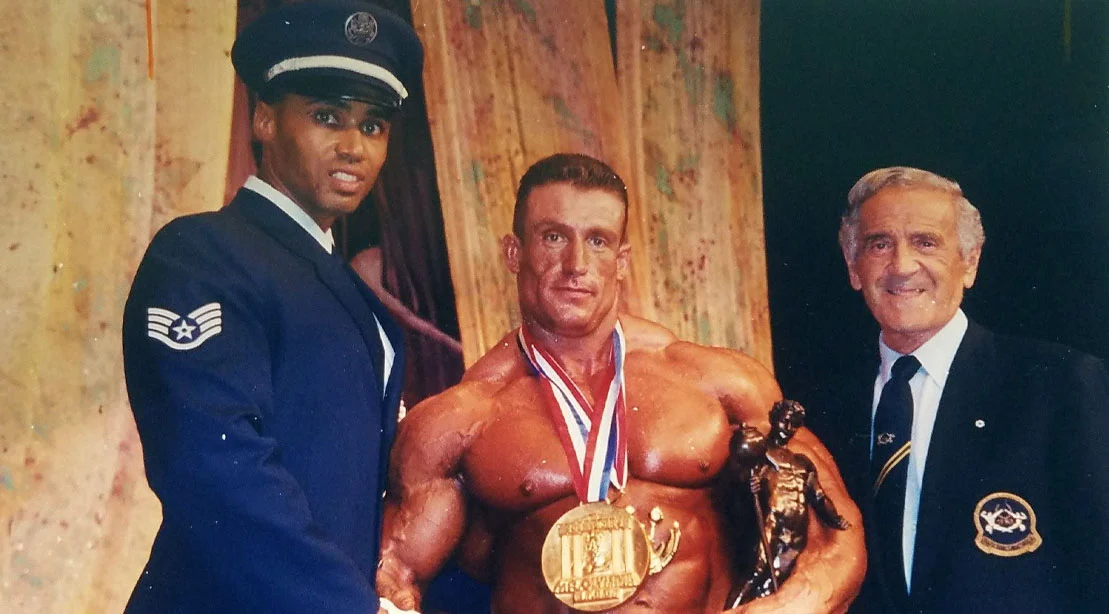
Every year since 2001, the lights dim at the Mr. Olympia finals, the thunderous roar of the crowd momentarily fades, and a profound silence descends upon the arena. This silence is not born of apathy, but of reverence. As members of a United States Honor Guard unit march onto the stage to present the colors, followed by the stirring notes of the national anthem, the bodybuilding world pauses to pay homage to the nation’s defenders.
This tradition, established by the inaugural IFBB Pro League President Ben Weider, serves as more than a ceremonial prelude. It is a powerful reminder that the pinnacle of physique sports thrives on the foundation of the very freedom protected by those who wear the nation’s uniform. While the stage at the Olympia is synonymous with peak physical development, the event has become an unlikely, yet perfectly natural, home for the military community—a bridge built on the common values of discipline, sacrifice, and the relentless pursuit of human potential.
The Architecture of a Tradition: From 2001 to the Present
The origins of this partnership are rooted in the aftermath of a national tragedy. Following the terrorist attacks of September 11, 2001, the American spirit was tested, and the nation was searching for symbols of unity and strength. Ben Weider, a man whose life was defined by both global sports diplomacy and his own military service, recognized an opportunity to bring two worlds together.
Weider consulted with his inner circle, including Air Force veteran and Muscle & Fitness Military Editor Rob Wilkins, about a gesture of solidarity. The initial ambition was modest: provide 200 tickets to service members at local Las Vegas military bases. However, the response was overwhelming. By the time the event commenced, over 1,200 tickets had been distributed to active-duty personnel.
"To this day, there was never anything more electrifying for me than when they would chant ‘USA, USA,’" recalls Wilkins. What began as a spontaneous response to a national crisis blossomed into a permanent fixture of the Olympia weekend. As 2026 marks the 25th anniversary of this tradition, it stands as a testament to the vision of a leader who believed that sports should serve a higher purpose.
The Life and Legacy of Ben Weider: A Soldier’s Perspective
To understand why the military occupies such a central place in the Olympia’s ethos, one must look at the man who founded it. Ben Weider’s Wikipedia page lists many titles—philanthropist, author, historian, and sports executive—but the first is simply "Canadian soldier."
Born in Montreal, Quebec, Weider enlisted in the Canadian Army in 1942 at the height of the Second World War. He served in the 6th Duke of Connaught’s Royal Canadian Hussars, utilizing his sharp intellect within the Canadian Intelligence Corps. This experience forged a lifelong respect for the military, which he carried with him as he and his brother, Joe, built the global bodybuilding empire that defined the modern fitness industry.
Weider’s commitment to service did not end with his discharge. Throughout his life, he was a decorated public figure, serving as a Member of the Order of Canada, a Knight of the National Order of Quebec, and an Honorary Colonel of the 62nd (Shawinigan) Field Artillery Regiment, RCA. In 1984, he was even nominated for the Nobel Peace Prize for his work in youth fitness and global sports diplomacy. For Weider, the discipline required to build an elite physique was inextricably linked to the discipline required to serve one’s country.
Common Ground: The Philosophy of the Iron and the Uniform
Observers often note that while serving one’s country is a uniquely noble path, there are striking psychological and physical parallels between those who serve and those who compete on the Olympia stage.
Uncompromising Discipline
Both the soldier and the bodybuilder operate within a framework of extreme self-regulation. A service member must be ready at a moment’s notice, requiring a constant state of physical and mental readiness. Similarly, the Olympia athlete lives a life of rigid schedules, precise nutrition, and grueling training. Both groups understand that success is not an accident; it is the result of thousands of hours of "invisible labor."
Attention to Detail
In the military, a misplaced detail can have life-altering consequences. In the Olympia, the difference between first and second place is often found in the most minute details of conditioning, symmetry, and presentation. This shared focus on perfectionism makes the two worlds highly compatible.
The Pursuit of Potential
Perhaps the most significant commonality is the commitment to self-improvement. Both the military and the fitness industry function as ambassadors for wellness and character development. They teach individuals that they are capable of far more than they initially believe, turning raw potential into refined capability.
Supporting Data and Institutional Growth
The relationship between the Olympia and the military has matured into a sophisticated, year-round program. Under the current leadership of Olympia President Dan Solomon and owner Jake Wood, the bond has been fortified rather than left to stagnate.
"Ben laid the groundwork for a meaningful connection between bodybuilding and the military," Solomon notes. "Since his passing, we have welcomed thousands of active-duty men and women to Olympia Weekend, while continuing to tell their stories in our ‘Fit to Serve’ section. We’re always exploring new ways to show our gratitude."
The "Fit to Serve" column, co-founded by Solomon and Wilkins, has become the world’s premier military-fitness-focused platform. Since 2021, it has documented nearly 140 stories of service members and first responders, providing a voice to those who often work in silence. This digital presence ensures that the support for the military is not limited to a single weekend in Las Vegas, but is a consistent, year-long commitment to the community.
Official Responses and Future Outlook
The longevity of this tradition is a point of pride for those who steward the legacy of the Olympia. Rob Wilkins, who served as an executive assistant to Ben Weider for years, remains a vital link in this chain. He emphasizes that the support of the current ownership is essential to keeping the mission alive.
"I’m honored that they still recognize the importance of continuing the tradition," Wilkins says. "It’s not just about the tickets; it’s about the culture. We are fostering a space where service is acknowledged and honored."
The implications of this relationship are profound. By consistently highlighting the military on the biggest stage in bodybuilding, the IFBB Pro League and the Olympia organizers are shaping the culture of the fitness industry. They are signaling that bodybuilding is not just about vanity or physical vanity; it is about honoring the values that allow society to function.
The Path Forward: A Lasting Legacy
As the 25th anniversary of the Olympia’s military tradition approaches in 2026, the partnership continues to evolve. What began as a gesture of sympathy in 2001 has transformed into a core tenet of the sport’s identity.
The story of Ben Weider, the soldier-turned-mogul, serves as a bridge between the past and the future. By maintaining this connection, the Olympia ensures that the next generation of athletes understands the value of service. It reminds the audience that the freedom to train, to compete, and to pursue one’s passion is protected by the very men and women who sit in the audience every year, watching the sport they love.
In the end, no gesture—be it a free ticket, a standing ovation, or an anthem—can truly match the weight of the devotion offered by service members. However, by bringing their honor to the Olympia stage, the industry does something equally important: it affirms a shared ideal. It tells the world that whether in a combat zone or in the gym, the pursuit of greatness is a noble endeavor, and that the strongest individuals are those who dedicate themselves to the service of others.
The bond between the military and bodybuilding is one of silent sacrifice and loud, resounding respect. As long as the Olympia continues to draw the best athletes in the world, it will remain a place where the colors are presented, the anthem is sung, and the sacrifice of the few is celebrated by the many. This is the enduring legacy of Ben Weider, and it is a tradition that, like the iron itself, will remain unbreakable for generations to come.