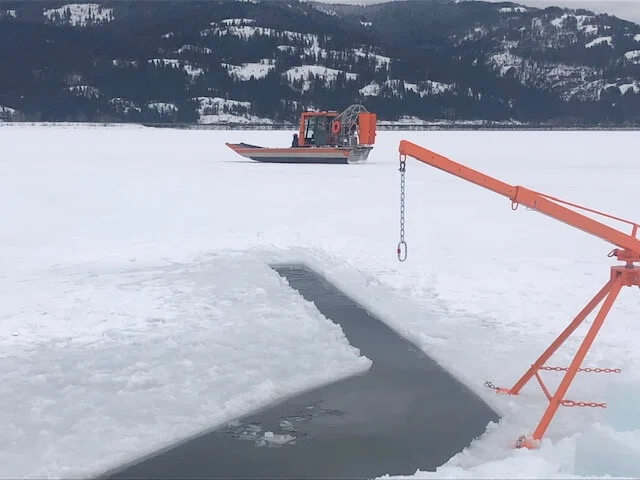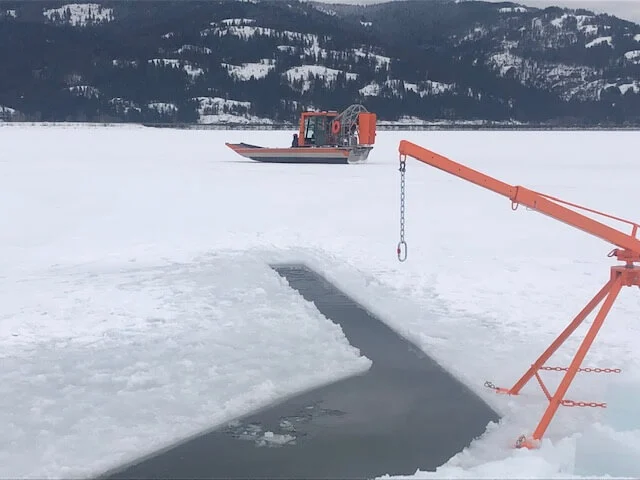
In the high-stakes environment of inland spill response, every second counts. For specialized teams like Whitewater Rescue Institute (WRI), the objective is clear: contain the hazard, mitigate environmental impact, and execute the operation with absolute safety. However, the physical realities of fastwater environments—characterized by unpredictable currents, uneven terrain, and remote access—have long hampered the efficiency of traditional containment strategies.
Recent field trials on Montana’s Clark Fork River have shed light on a transformative shift in this sector. By integrating next-generation technologies like the Harbo Technologies boom system, responders are beginning to overcome the historical limitations of labor-intensive, heavy-duty equipment. This report examines the implications of these advancements for the future of environmental protection and industrial emergency response.
The Physicality of Failure: Challenges in Traditional Containment
To understand the necessity of innovation, one must first understand the traditional limitations of inland spill response. Historically, containment booms have been cumbersome, heavy, and physically demanding to deploy.
A standard response operation typically requires teams to transport 50-to-100-foot lengths of heavy-duty containment boom from staging areas to the water’s edge. This process involves navigating treacherous, uneven, and often slippery riverbanks while lugging equipment that can weigh hundreds of pounds in total. For responders, this is arguably the most strenuous phase of the operation.
The Dynamics of Fastwater
Deploying equipment into moving water is not merely a logistical challenge; it is a tactical risk management exercise. When a river is flowing at high velocity, the pressure exerted on a containment boom is immense. Any failure in deployment—whether due to improper angling, anchor failure, or structural weakness in the boom itself—can lead to "entrainment," where the spilled substance flows beneath or around the containment system, rendering the entire operation ineffective.
WRI teams treat every deployment as a controlled experiment. By constantly drilling on the Clark Fork River, they test the limits of equipment, learning how different geometries and anchoring systems interact with the raw energy of mountain-fed currents.
Chronology of a Field Test: Testing the Harbo System
In a recent series of drills, the WRI team conducted two distinct deployments on the Clark Fork River. The first focused on high-velocity collection techniques using traditional boom vanes, while the second introduced the Harbo Technologies boom—a system that challenges the conventional wisdom regarding weight and structural integrity.
Initial Skepticism
The introduction of the Harbo boom was met with professional skepticism. Given that the system appeared lightweight and highly compact, responders were concerned that it would lack the "heft" required to maintain its shape and position in fast-moving water. There was a legitimate fear that the system would succumb to the current or fail to create an effective seal against the water’s surface.
The Deployment Process
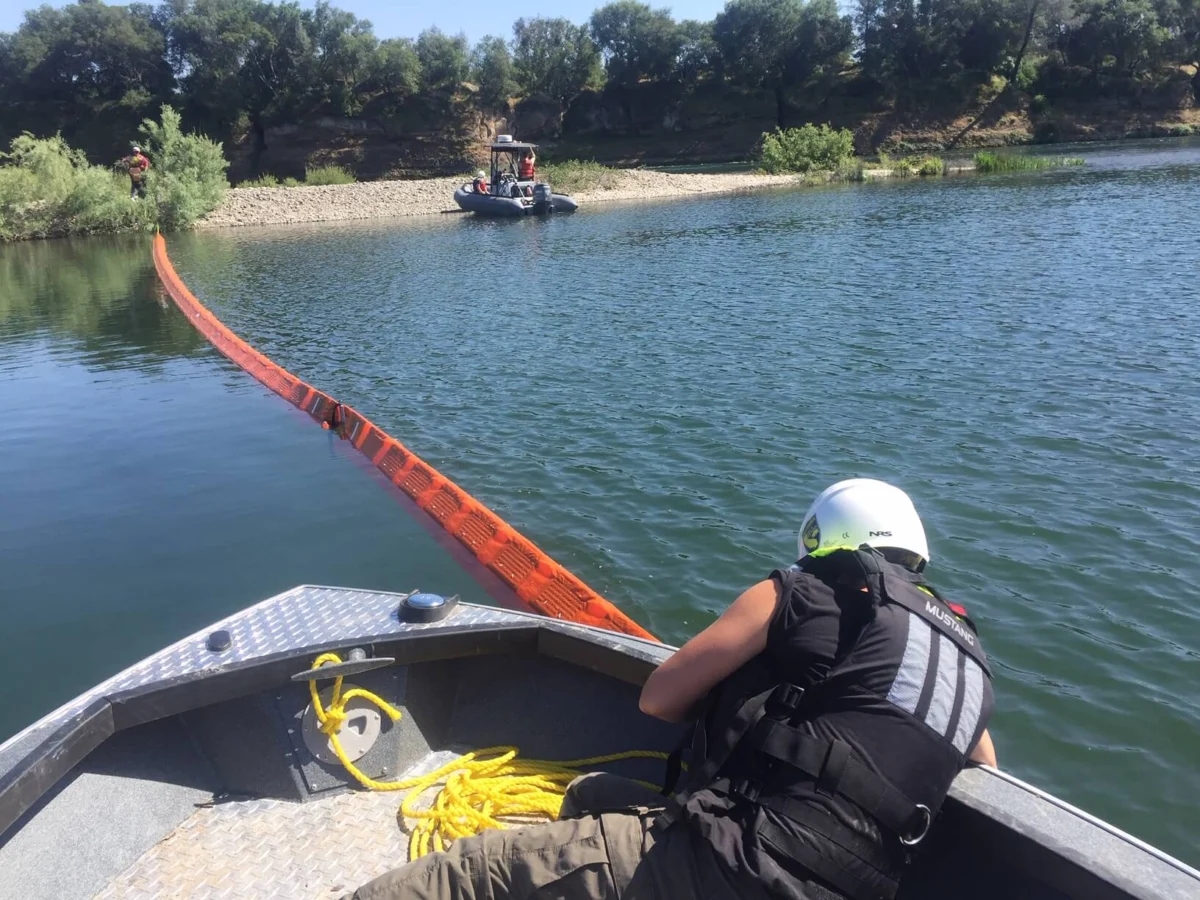
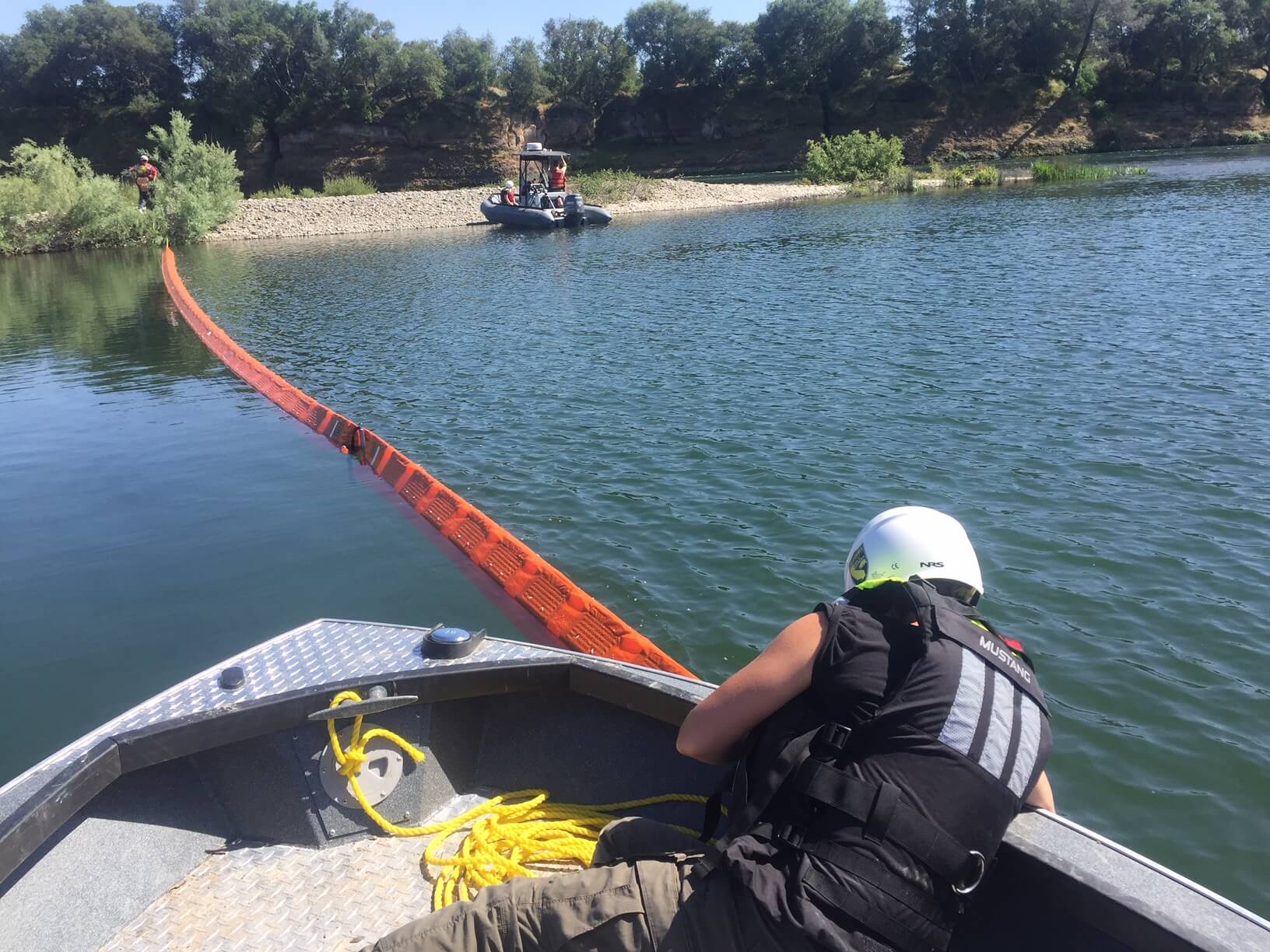
The field trial quickly disproved these concerns. The Harbo system is designed for rapid, "first-responder" utility. Approximately 80 feet of boom is stored in a compact, 20-by-36-inch dry box. The mechanics of the system are ingenious:
- Deployment: A single responder can easily lay out 82 to 164 feet of boom along a shoreline.
- Inflation: The boom is stored flat and compact. Once it contacts the water, internal sponges automatically inflate the structure into a square, stable configuration featuring both a float and a vertical curtain.
- Hydraulic Stability: As water flows through the hollow structure, it creates a self-stabilizing effect. The current actually aids in holding the curtain upright and firm, provided the anchoring is secure.
The WRI team deployed the system as a shoreline protection barrier, as well as part of a collection strategy integrated with a highline and a boom vane. The performance was, by all accounts, remarkable.
Supporting Data and Technical Specifications
The effectiveness of the Harbo boom lies in its material science and engineering. Rather than relying on rigid, heavy materials, the system utilizes high-strength nylon webbing that runs the entire length of the boom, allowing it to be towed or anchored without tearing.
Performance Metrics Observed:
- Weight Reduction: Dramatically lower than traditional 12-inch containment booms.
- Deployment Time: Reduced by an estimated 60-70% compared to traditional manual deployment.
- Personnel Requirements: Can be deployed by a single individual, whereas traditional booms often require teams of three or more to manage weight and prevent tangling.
- Connection System: Utilizes universal connectors with a single-pin locking mechanism, ensuring that multiple segments can be daisy-chained in seconds.
The absence of entrainment during the Clark Fork trials suggests that the system is not merely a "convenience" tool but a robust piece of emergency equipment capable of performing at parity with heavier, legacy systems.
Industry Implications and Official Perspectives
The implications for stakeholders—ranging from municipal water authorities to private rail yards and refineries—are profound.
Improving Response Times
For facilities located near water, such as refineries, chemical plants, or rail lines, the ability to deploy containment in minutes rather than hours is the difference between a minor cleanup and an ecological disaster. Because the Harbo system is so lightweight, it can be staged in multiple, easily accessible locations throughout a facility, rather than being confined to a centralized, heavy equipment trailer.
Limitations and Future Development
While the initial results were overwhelmingly positive, the WRI report highlights two critical limitations currently hindering the adoption of this technology as an industry standard:
- Single-Use Design: Currently, the internal sponges that facilitate the inflation process do not recover their structural integrity after being used and dried. This makes the unit effectively a "single-use" product, which is prohibitive for training purposes.
- Shelf Life: The product currently has a five-year shelf life, necessitating a replacement cycle that facilities must account for in their capital expenditure budgets.
However, Harbo Technologies is already responding to these industry requirements. They are reportedly developing a "training version" of the boom that would allow for repeated deployment and recovery, addressing the cost concerns of training centers like WRI.
Conclusion: A Shift in Strategy
The integration of lightweight, rapid-deployment technologies represents a maturing of the spill response industry. For years, the industry relied on the principle that "bigger and heavier is better." While durability remains essential, the Clark Fork River trials demonstrate that "smart" engineering—which leverages the environment (such as using current to stabilize the boom) rather than fighting against it with brute force—can yield superior results.
As WRI continues to integrate this technology into its response protocols, the broader industry is likely to follow suit. The ability to minimize response time while reducing the physical strain on responders is not just an operational win; it is a fundamental improvement in how we protect our inland waterways.
Whether for shoreline protection, rapid containment, or strategic collection, the Harbo system offers a glimpse into a future where technology allows for faster, safer, and more effective environmental stewardship. As the industry awaits the release of the reusable training versions, one thing remains clear: the days of relying solely on heavy, manual-intensive booms are numbered. Innovation, when field-tested and validated by experts, is successfully shifting the tide in inland spill response.