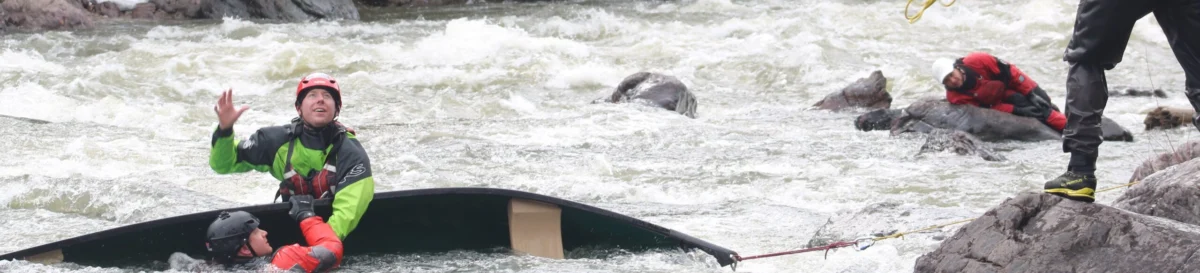
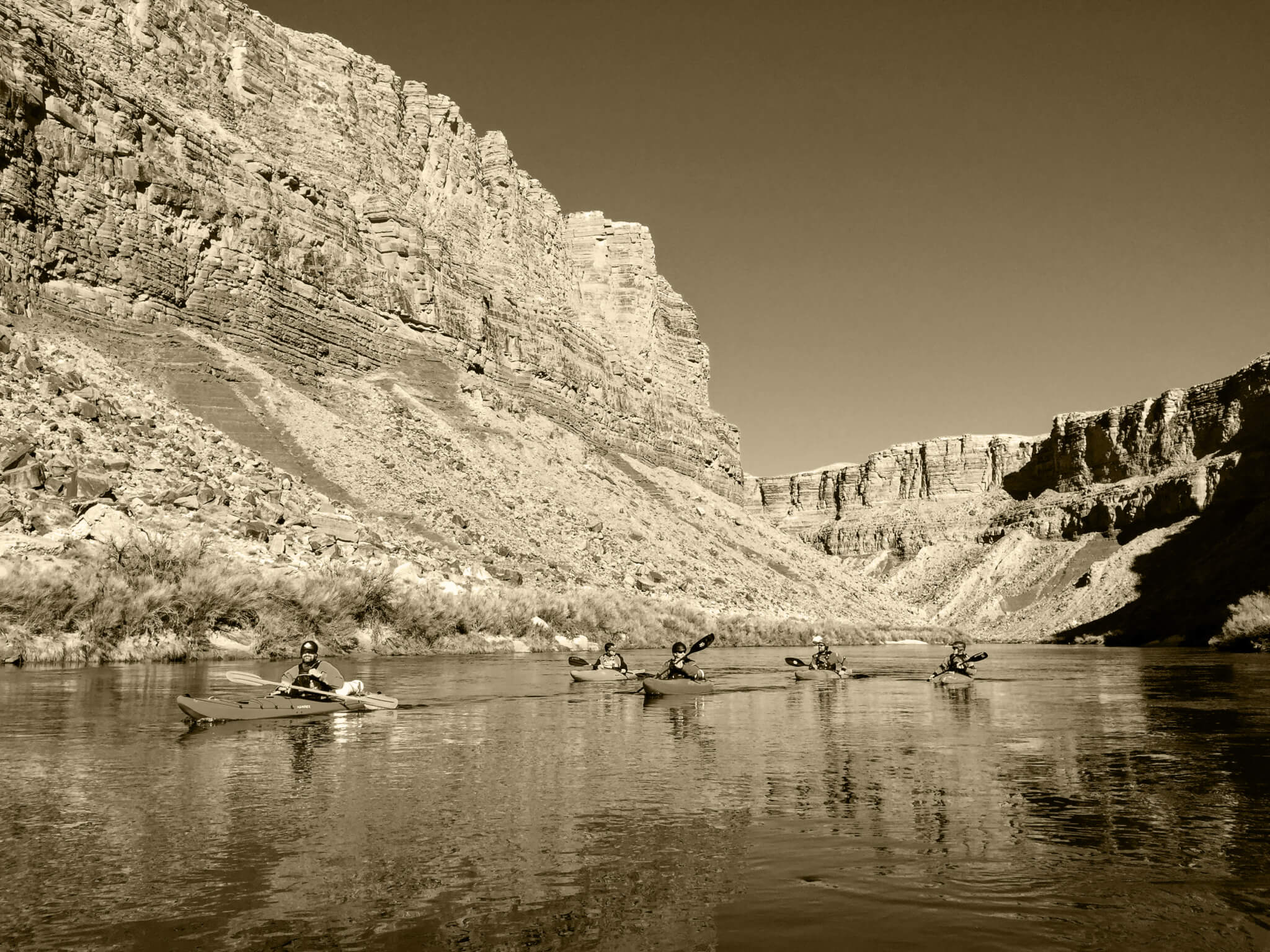
On January 26, a team of four seasoned instructors from Whitewater Rescue Institute (WRI)—Paul Heffernan, Matt O’Reilly, Frank Preston, and Cody Harris—embarked on one of the most grueling and rewarding challenges in the world of paddling: a 10-day self-support kayak expedition through the Grand Canyon of the Colorado River.
Accompanied by a group of ten paddlers, the expedition sought to navigate the full stretch from Lees Ferry to Pearce Ferry. What emerged from this journey was more than just a successful transit of one of the world’s most iconic waterways; it was a testament to human resilience, logistical ingenuity, and the humbling power of the natural world. Following the expedition, a series of handwritten letters and candid photographs were discovered in the bottom of a drybag. These artifacts, penned by an anonymous participant affectionately referred to as "Little Spoon," provide a rare, intimate, and highly educational look at the realities of self-supported canyon paddling.
The Logistical Challenge: Self-Support in the Wilderness
A "self-support" trip, in the parlance of elite kayakers, means carrying every piece of equipment, food, and waste-management system within the confines of the kayak itself. Unlike commercial raft trips where gear is hauled by large vessels, these paddlers operated with a strict ethos of self-reliance.
Each of the ten participants was responsible for their own nutrition, cooking equipment, and shelter. The group carried only essential collective gear: a fire pan, a primary first-aid kit, and a basic repair kit. For the paddlers, this meant navigating boats that, upon departure, weighed between 175 and 200 pounds—a massive load that fundamentally altered the handling of their kayaks. As noted in the journals, the boats responded to the current with the sluggishness of a "hungry burro," requiring the team to adapt their paddling techniques immediately to compensate for the sheer inertia of their craft.

Chronology of the Descent
Days 1–3: The Learning Curve and the "Roaring 20s"
The expedition began at Lees Ferry with a mandatory gear inspection by the National Park Service. After a delayed 1 p.m. launch, the group navigated the first 21 miles to North Canyon. The initial day served as a baptism by fire, resulting in one swimmer and the loss of a GoPro camera—a stark reminder of the river’s unforgiving nature.
By Day 2, the group had entered the "Roaring 20s," a section of the river defined by a rapid succession of whitewater. The contrast between these technical challenges and the subsequent flat water provided a rhythm that the team quickly learned to respect. The expedition utilized this time to explore landmarks like the Red Wall Cavern and Shinumo Wash, illustrating that the Grand Canyon is as much a journey of discovery as it is a feat of endurance. By Day 3, the group reached the Cardenas campsite, noting that those who opted for lightweight inflatable sleeping pads were already experiencing equipment failure, forcing them to improvise by sleeping on spare clothing.

Days 4–7: The Inner Gorge and the Power of the River
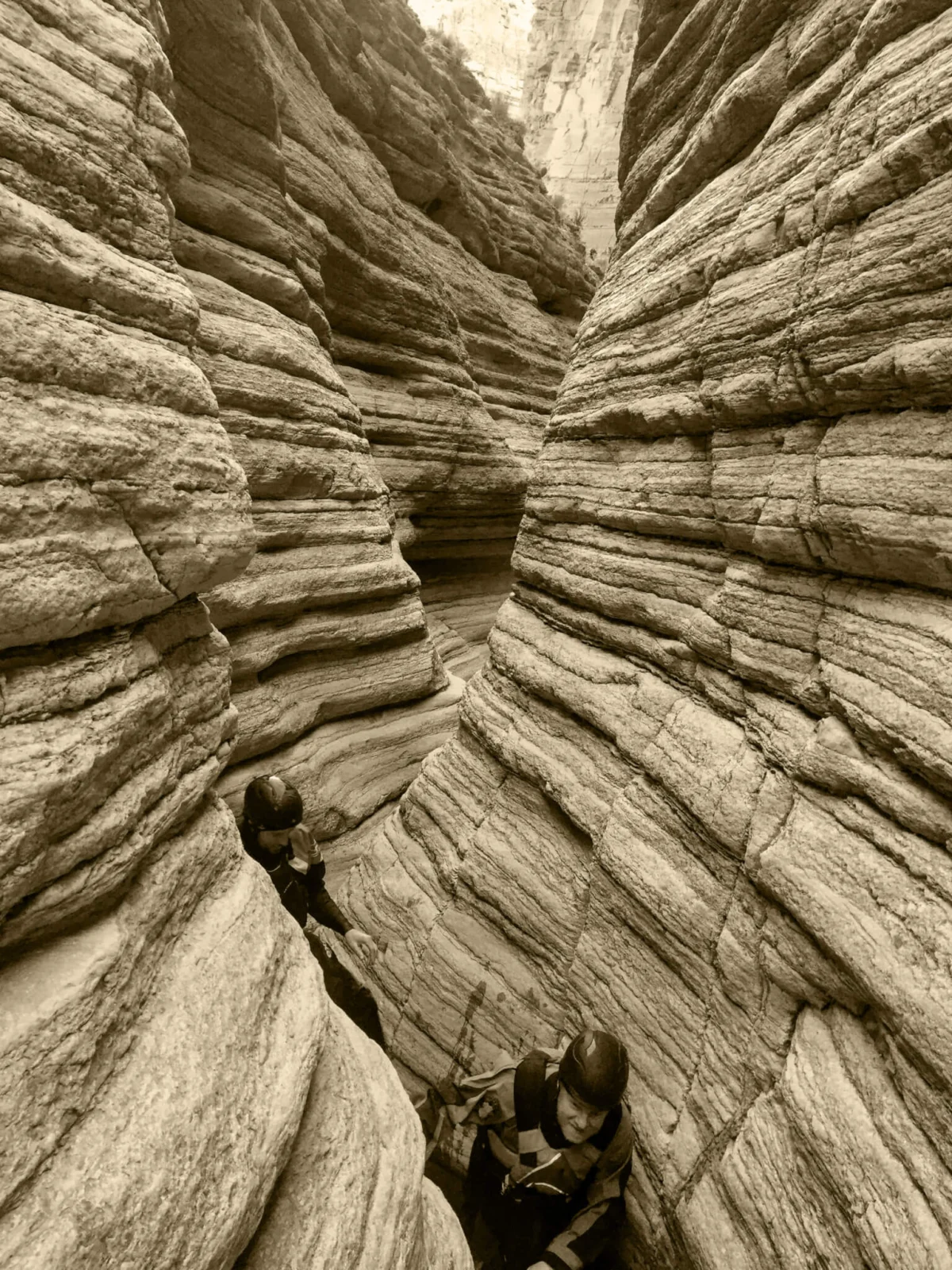
As the expedition entered the inner gorge, the geological character of the canyon shifted to ominous schist and granite. Day 4 was a highlight, with the team navigating legendary rapids such as Hance, Sockdolager, Horn Creek, and Crystal. The journals emphasize the leadership displayed during this phase; while some paddlers chose to skirt the "meat" (the most violent section) of the rapids, the lead instructor provided a masterclass in reading and charging through the most powerful waves.
Day 6 brought a shift toward the practical realities of long-term wilderness survival, specifically the "groover" system—a mandatory portable waste-management requirement. The logistics of the trip were perfectly timed; the group’s reliance on freeze-dried food versus fresh produce created a clear divide in camp management, with the freeze-dried contingent finding more success in maintaining manageable pack weights.

Days 8–10: The Legacy of Powell and the Return to Civilization
The final days of the trip were defined by introspection. At Separation Canyon—the site where members of the historic John Wesley Powell expedition famously chose to hike out rather than face the unknown rapids ahead—the modern paddlers felt the weight of history. The "Little Spoon" journal captures the internal struggle of the adventurer: the temptation to abandon the journey when faced with the unknown, and the critical role of mentorship in overcoming that impulse.
The final 40-mile stretch to Pearce Ferry provided a sobering lesson in environmental change. Due to drought and the impact of the Hoover Dam, Lake Mead has receded, leaving the river to carve through ancient silt deposits. The transition from the narrow, high-walled canyon to the open plains of the Lake Mead delta served as a poignant conclusion to the expedition.

Supporting Data and Observations
| Metric | Detail |
|---|---|
| Expedition Duration | 10 Days |
| Total Distance | ~280 Miles |
| Average Boat Weight | 175–200 lbs |
| Group Size | 10 Paddlers |
| Key Gear | Individual cooking kits, PVC-based waste systems |
The primary takeaway from the team’s data is that self-support in the Grand Canyon is not merely a test of paddling skill, but a test of weight distribution and physical endurance. The ability to maintain a consistent mileage (averaging 27–34 miles per day in the latter half) was contingent on the team’s ability to refine their packing systems and caloric intake.
Professional Insights: The Value of Mentorship
The WRI instructors’ emphasis on leadership was the common thread in the expedition’s success. According to the discovered journals, the presence of experienced mentors was the difference between a successful descent and a potential evacuation. The "Little Spoon" account explicitly credits the lead paddler’s coaching for their ability to navigate the inner gorge, suggesting that in high-stakes environments, the "soft skills" of group cohesion and psychological support are just as vital as the "hard skills" of rolling and eddy-hopping.

Implications for Future Expeditions
The WRI team’s journey highlights three critical pillars for anyone attempting a self-supported Grand Canyon trip:
- Gear Durability: Lightweight, high-tech gear (like inflatable pads) can be a liability if it fails in the field. Redundancy is essential.
- Nutritional Strategy: The transition to freeze-dried, caloric-dense foods is not just about weight; it is about sanitation and waste management (the "groover" factor).
- Psychological Resilience: The Grand Canyon is as much a mental challenge as a physical one. The historical context provided by sites like Separation Canyon serves to humble even the most experienced paddlers.
Ultimately, the WRI team’s expedition demonstrates that the Grand Canyon remains a wild, untamed entity. Even in an era of GPS and modern materials, the river demands respect. As the "Little Spoon" concludes, the river is a force that will "carry on, undaunted." For those lucky enough to paddle it, the experience is less about conquering the water and more about finding one’s place within the vast, ancient geological tapestry of the American West. The lessons learned by these ten paddlers—regarding teamwork, humility, and environmental stewardship—will undoubtedly serve as a curriculum for future generations of river guides and enthusiasts.