Anyone who has ever watched a toddler methodically dismantle a Tupperware drawer knows that children are natural-born engineers. They possess an innate, unquenchable desire to understand how the world fits together, whether through construction, deconstruction, or sheer experimentation. As parents and educators, our role is to channel that chaotic energy into productive inquiry—and, perhaps, to minimize the mess along the way.

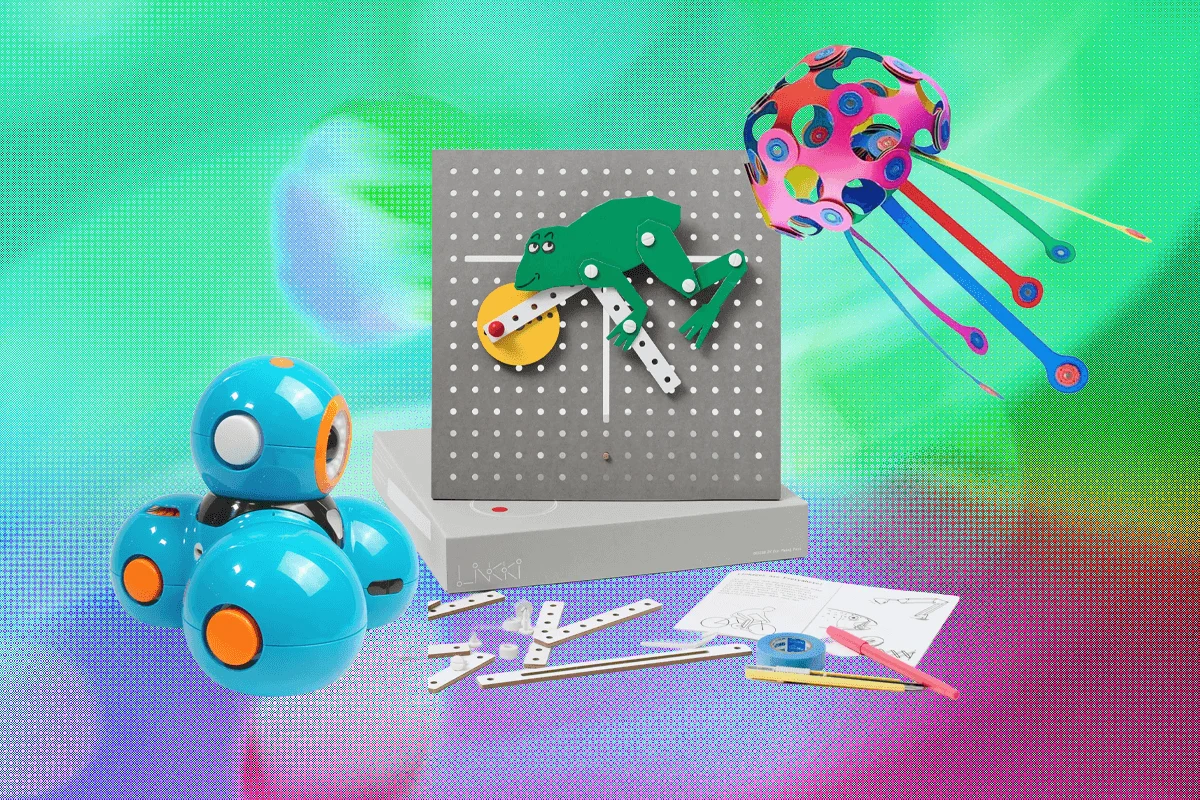
In the rapidly evolving landscape of childhood development, STEM (Science, Technology, Engineering, and Mathematics) toys—and their creative cousin, STEAM—have transitioned from niche educational tools to essential components of a modern upbringing. After rigorous testing conducted by the WIRED reviews team, alongside insights from classroom teachers and parents, we have curated a selection of the 28 best toys to challenge, entertain, and inspire the next generation of innovators.

The Philosophy of "Active Play"
The toys listed below are not designed to sit idly on a shelf. They are meant to be handled, analyzed, and occasionally "destroyed" so that they can be rebuilt into something entirely new.

Featured Innovation: Plus-Plus Building Blocks
At the heart of modern construction play are the Plus-Plus Mini Interlocking Building Blocks. Unlike traditional interlocking bricks, the Plus-Plus design uses a single, unique shape that can be connected in virtually any direction. This simplicity is its greatest strength, allowing children to move beyond rigid, instruction-led builds into the realm of free-form, three-dimensional sculpting. It is a masterclass in spatial reasoning disguised as a rainy-day activity.

The Auditory Experience: Qubs Qubitunes
Engineering isn’t limited to visual or structural logic; it also extends to the auditory and programmatic. Qubs Qubitunes offers a screen-free, interactive platform that teaches children the fundamentals of sequencing and rhythm. By placing blocks on an interactive board, children build musical arrangements. It provides a tangible connection between logical input and sensory output, bridging the gap between music theory and computer science.

Chronology of Development: From Blocks to Robotics
The trajectory of a child’s mechanical curiosity usually follows a predictable path. Understanding this allows parents to select the appropriate "level" of technology for their child’s current stage of development.

- The Exploratory Phase (Ages 2–4): Focus is on tactile feedback. Children learn cause-and-effect through simple stacking, pouring, and sensory play.
- The Construction Phase (Ages 5–8): Children begin to follow blueprints. Here, modular systems like Plus-Plus or simple circuitry kits allow them to see the manifestation of their own logic.
- The Systems-Thinking Phase (Ages 9–12): This is where complexity increases. Devices like the Ambessa DIY Kinetic Flashlight introduce real-world physics. By building their own light source from scratch, children learn about energy conversion, gear ratios, and the importance of precise assembly.
- The Advanced Strategic Phase (Ages 13+): At this stage, toys become tools for complex problem solving. The Particula GoChess Mini is a prime example. By integrating AI and robotics into a classic board game, it teaches children not only the game of chess but also the fundamentals of human-machine interaction.
Supporting Data: Why STEM Toys Matter
The pedagogical value of STEM toys is backed by decades of research into "manipulatives." Studies consistently show that children who engage in structured play involving geometry, physics, and programming develop stronger cognitive flexibility.

- Spatial Reasoning: Longitudinal studies suggest that early exposure to building sets correlates with higher achievement in advanced mathematics and architectural fields later in life.
- Resilience through Failure: Unlike video games, where a "game over" is often a digital reset, physical STEM toys force children to troubleshoot. When a bridge collapses or a gear slips, the child must analyze the structural failure and iterate. This is the cornerstone of the scientific method.
- The "STEAM" Advantage: By incorporating the "A" (Arts), we ensure that the focus remains on creative expression. A robot that moves is an engineering feat; a robot that moves and carries a drawing implement is a creative endeavor.
Official Perspectives: Educators and Industry Experts
We spoke with classroom instructors who emphasize that the best toys are those that do not require an app. While the tech industry pushes for "connected" toys, teachers argue that screen-free experiences foster deeper focus.

"The best learning happens when a child is fully immersed in the tactile resistance of the material," says a veteran elementary science educator. "When a child builds a circuit with real wires and components, they are learning about the physical limitations of our universe. They aren’t just clicking a button on a tablet; they are dealing with resistance, conductivity, and the physical reality of power flow."

The industry, however, is pivoting toward "hybrid" experiences. The Particula GoChess Mini, for instance, represents the intersection of the two worlds. By using physical pieces that move on an electronic board, it maintains the tactile satisfaction of a traditional game while leveraging software to provide real-time tutoring and tactical feedback.

Implications for the Future
As we look toward the 2026 school year and beyond, the trend in STEM toys is moving toward sustainability and modularity. The days of disposable, battery-heavy plastic toys are numbered. Consumers are increasingly demanding products that can be passed down between siblings or donated to classrooms.

A Note on Maintenance and Longevity
When investing in high-end STEM kits, consider the following:
-Reviewer-Photo-SOURCE-Adrienne-So.png)
- Storage: Most of these kits (like the 1,200-piece Plus-Plus set) come with specialized storage. Use it. A missing gear or a stray brick is the primary cause of abandonment for these toys.
- Community: Many of these platforms have online forums where children can share their designs. Encourage your child to participate in these communities to see how others have solved similar engineering challenges.
- Open-Endedness: Prioritize toys that can be repurposed. If a kit can only build one thing, its lifespan is short. If it can build a hundred things, it will remain a staple in your home for years.
Summary of Top Recommendations
While we have highlighted several leaders in the field, it is important to remember that the "best" toy is ultimately the one your child returns to repeatedly.

- Plus-Plus Building Blocks: For those who value open-ended creativity and unlimited expansion.
- Qubs Qubitunes: For the budding musician or programmer who learns best through sound and rhythm.
- Ambessa DIY Kinetic Flashlight: For the tinkerer who wants to understand the physics behind everyday objects.
- Particula GoChess Mini: For the strategist looking to sharpen their mind against both human and artificial intelligence.
As you explore our full guide, keep an eye on your child’s interests. If they are drawn to art, find the engineering kit that allows them to build a loom or a painting machine. If they are drawn to sports, look for the kits that teach the physics of motion and trajectory.

The goal of the STEM movement is not to turn every child into a software engineer or a mechanical architect. The goal is to produce adults who are not afraid of complex systems—people who see a broken object not as trash, but as a challenge to be understood and a problem to be solved.

Updated July 2026: This guide has been updated to include the latest iterations of Plus-Plus building systems and the Science Can Solar System kit. All pricing reflects current market data for Amazon US/UK and direct-to-consumer platforms. As always, ensure you check for age-appropriateness, as many kits contain small parts that may pose a choking hazard to younger children.