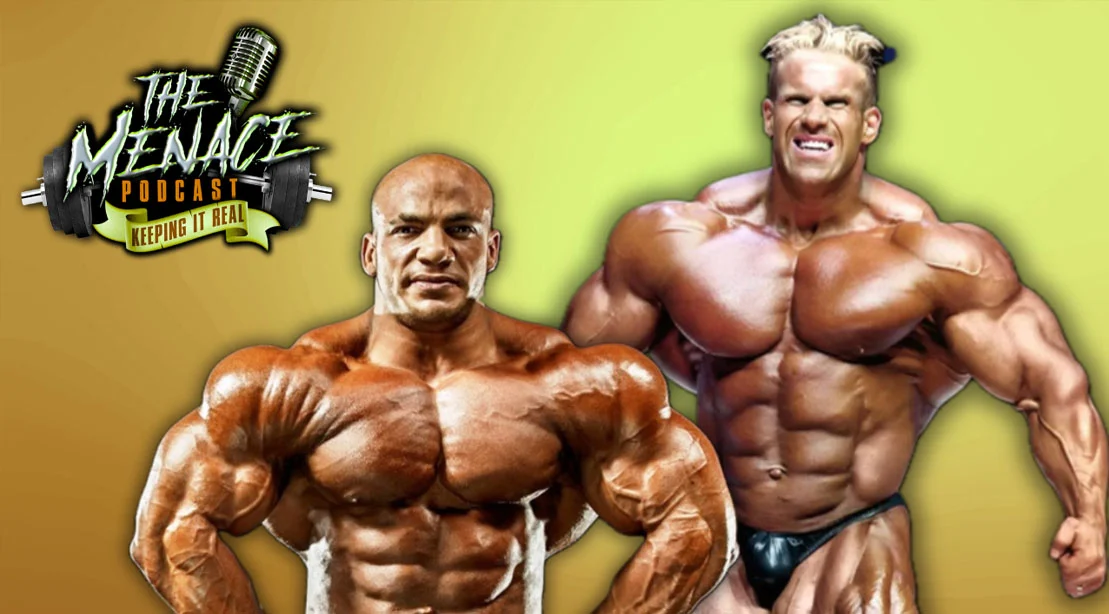
In the high-stakes world of professional bodybuilding, the debate over who reigns supreme—the "best" to ever grace the Olympia stage—is a conversation that transcends generations. It is a dialogue fueled by personal preference, subjective criteria, and the ever-shifting goalposts of what constitutes the "ideal" physique. On episode 295 of The Menace Podcast, host and bodybuilding legend Dennis James, joined by industry titans Milos Sarcev and Jose Raymond, reignited one of the most polarizing comparisons in modern fitness history: the legacy of four-time Mr. Olympia Jay Cutler versus the two-time champion, Mamdouh "Big Ramy" Elssbiay.
The Tale of Two Icons: Historical Context
To understand the gravity of this debate, one must first appreciate the distinct eras these two men defined. Jay Cutler, the Massachusetts-born "Quad Stomper," represents the pinnacle of professional discipline, strategic career management, and, arguably, the most iconic rivalry in the history of the sport against Ronnie Coleman. With four Sandow trophies (2006, 2007, 2009, 2010), Cutler redefined what a "mass monster" could look like, blending unprecedented leg development with a level of conditioning that kept him at the top of the food chain for nearly a decade.
Conversely, Big Ramy burst onto the scene with the force of a tectonic shift. After dominating the 2012 IFBB Amateur Mr. Olympia, the Egyptian powerhouse Mamdouh Elssbiay arrived in the professional ranks with a frame that challenged the boundaries of human physiology. His ascent was meteoric, culminating in back-to-back Mr. Olympia titles in 2020 and 2021. Ramy represented a new era of size—a physical anomaly whose width and muscular density seemed almost extraterrestrial.
Chronology of a Collision: The 2013 Mr. Olympia
The intersection of their careers occurred at the 2013 Mr. Olympia. By this point, Jay Cutler was a seasoned veteran, returning to the stage after a hiatus, while Big Ramy was the hungry, up-and-coming contender making his debut.
In that contest, history recorded a sixth-place finish for Cutler and an eighth-place finish for Ramy. However, hindsight has turned that specific ranking into a point of intense contention. As the panel on The Menace Podcast dissected the event, it became clear that the judges’ decision that night remains a sore spot for many experts. Jose Raymond, a former professional bodybuilder known for his no-nonsense analysis, did not mince words. He suggested that Cutler’s placement was more of a "gift" based on his legendary status rather than his actual physical presentation on that specific evening. According to Raymond, Ramy was "significantly bigger and in better shape," arguing that the torch should have been passed—or at least acknowledged—much earlier in the comparison.
Dissecting the Physique: Size, Symmetry, and Conditioning
The debate on The Menace Podcast moved beyond mere placings to the technical breakdown of their physiques. Dennis James, who has seen more physiques on the Olympia stage than perhaps any other analyst, provided a nuanced perspective on the disparity between the two men.
The "Cartoon" Factor: Ramy’s Freakish Anatomy
When asked if a prime Jay Cutler could have stood toe-to-toe with a peak Big Ramy, Dennis James was definitive. While acknowledging Cutler’s greatness, he argued that Ramy’s physical proportions in his prime defied logic. "Those two were the widest bodybuilders I’ve ever seen," James noted. "But the most impressive one, was Ramy, in my eyes. Just because the width, then the waist, and then the f***ing flare in the quads."
James famously described Ramy at his peak as looking like a "cartoon character." This descriptor is vital; in the bodybuilding lexicon, being compared to a "cartoon" implies that the athlete has reached a level of muscularity so exaggerated—a tiny waist contrasted with mountainous, flared quads and massive deltoids—that they no longer look like a standard human being.
The Cutler Standard: Reliability and Structure
While Ramy wins on the "wow" factor of sheer width, Cutler’s case remains anchored in his structure. Throughout his career, Cutler was lauded for his ability to maintain a dense, grainy, and hard look that many of the "freakier" bodybuilders struggled to achieve. His victory over Ronnie Coleman in 2006 proved that technical perfection and conditioning could topple sheer size. The panelists acknowledged that while Ramy might have had the "wow" factor, Cutler’s career longevity and ability to bring a complete package—time and time again—remain the gold standard for many coaches.
Official Responses and Industry Implications
The discussion on The Menace Podcast reflects a broader schism in the bodybuilding world: the "Classic vs. Modern" divide. The industry is currently wrestling with its own identity, balancing the aesthetic demands of the Classic Physique division against the massive expectations of the Men’s Open.
By comparing Cutler and Ramy, the panel is essentially asking: What is the ultimate goal of bodybuilding? Is it the symmetrical, conditioned, and balanced look that Cutler perfected, or is it the pursuit of the "unbeatable" silhouette—the massive, wide, and structurally dominant look that Ramy brought to the stage in 2020?
Milos Sarcev, a master of training methodology, has long championed the idea that size without the proper "flow" is insufficient. Yet, even he admits that when an athlete like Ramy arrives at the peak of his condition, the sheer physical intimidation factor is enough to change the trajectory of the sport. The implications of this debate are significant for current competitors. Athletes today are looking at these two archetypes to decide how to build their own frames. Do they emulate the "Cutler" model of granular detail and consistent improvement, or do they aim for the "Ramy" model of overwhelming, frame-distorting mass?
The Verdict: Subjectivity in a Data-Driven Sport
Ultimately, the debate on The Menace Podcast settles nothing, nor is it intended to. Bodybuilding is fundamentally a subjective sport. Unlike track and field, where a stopwatch determines the winner, or powerlifting, where the weight on the bar is the final arbiter, bodybuilding relies on the eyes of the beholder.
Jay Cutler’s four Sandow trophies and his ability to define the sport for an entire decade provide him with a legacy that is likely untouchable. He represents the "complete" bodybuilder. Big Ramy, however, represents the absolute limit of the human frame. He pushed the sport into a new territory of size that had never been seen before.
As Dennis James concluded, the comparison is one of the most fascinating exercises in the sport because it pits two different philosophies against one another. Whether one prefers the tactical excellence of Cutler or the "cartoonish" awe of Ramy, the consensus remains that both men fundamentally changed the trajectory of the IFBB Pro League.
Final Thoughts
The episode of The Menace Podcast serves as a reminder that the history of bodybuilding is not written in stone, but in the memories of those who watched the sport evolve. As fans continue to analyze the footage of the 2013 Olympia and compare it to the modern era, the debate will likely persist.
For those looking to dive deeper into the technicalities of the sport, the full discussion on the Muscle & Fitness YouTube channel provides a masterclass in professional analysis. Whether you side with the consistent excellence of Jay Cutler or the awe-inspiring dimensions of Big Ramy, one thing is certain: the sport of bodybuilding continues to thrive precisely because of these heated, passionate disagreements about what it means to be the "best."
To watch the full debate and see the latest industry updates, viewers are encouraged to visit the official Muscle & Fitness YouTube channel for the complete Episode 295 of The Menace Podcast.