Introduction: The Invisible Struggle Against Sweat
During periods of high physical exertion, the human body acts as a biological furnace. To maintain thermal equilibrium, the body engages its primary cooling mechanism: sweating. Under moderate conditions, sweat evaporates directly from the skin. However, during intense activity, the production of liquid sweat often outpaces the rate of evaporation. This surplus liquid accumulates on the skin, necessitating a sophisticated secondary defense system—the base layer.
For decades, the outdoor apparel industry has marketed "moisture management" as a binary virtue of synthetic versus natural fibers. Yet, many hikers, climbers, and backcountry athletes have experienced the cognitive dissonance of wearing a premium, moisture-wicking garment only to find it heavy, clammy, and saturated within minutes of high-output exertion. This discrepancy highlights a fundamental gap in our understanding of textile science.
To bridge this gap, I conducted an exhaustive study aimed at answering a single, previously unmeasured question: When skin is wet, where does the water actually go? By tracking liquid water as it migrates through a multi-layer clothing system, this research reveals that the battle against moisture is not merely about "wicking"—it is a complex struggle governed by the laws of capillary physics and pressure differentials.
Chronology: From Three Fabrics to a Comprehensive Dataset
The research began several months ago as a modest evaluation of three distinct base-layer garments. Initial results were inconsistent, suggesting that traditional metrics for moisture management—such as evaporation rates or fiber absorption—failed to account for the behavior of liquid water under pressure.
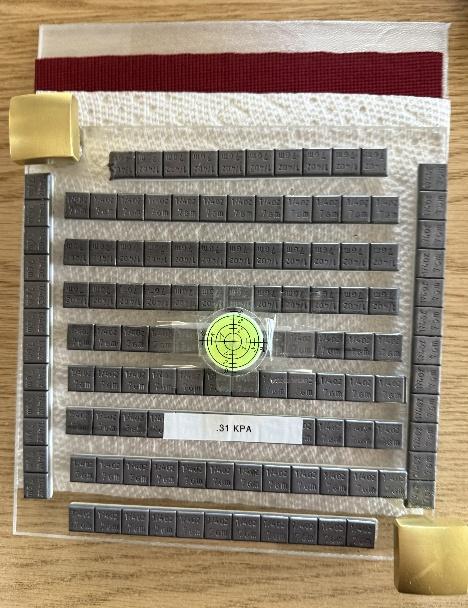
To rectify this, I developed a specialized "Liquid Transfer Test" device (Figure 1). The apparatus utilizes a grid of stacked metal plates to simulate the "skin," the base layer, and the subsequent outer layer. By measuring the mass of water retained in each layer after controlled cycles of exertion, I expanded the scope from three fabrics to eight.
This expanded sample set revealed consistent patterns. We observed that the transition of liquid water from skin to garment is not a passive process. Instead, it is a dynamic event influenced by the architecture of the weave, the chemistry of the fiber, and the mechanical pressures applied by the user’s movement and equipment.
The Mechanics of Moisture: Hydrophobic vs. Hydrophilic
The core of this study focuses on the dichotomy between hydrophobic and hydrophilic materials. The findings challenge the conventional wisdom that hydrophobic fabrics inherently "stay dry."
Hydrophobic Fabrics: The Paradox of Pore Space
Hydrophobic base layers—often constructed from polypropylene or treated polyester—are marketed on their inability to absorb moisture. While the fibers themselves repel water, the fabric structure is predominantly empty space.
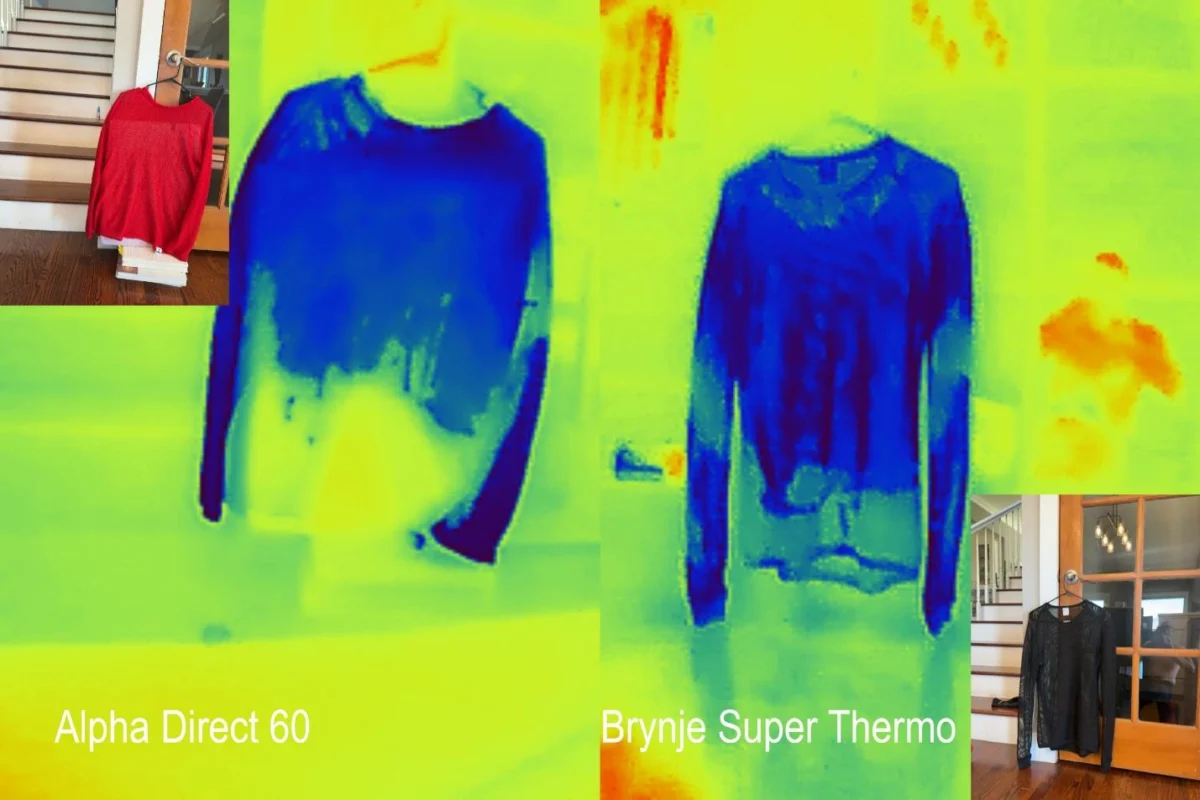
Testing confirmed that these fabrics can act as reservoirs for liquid sweat. In high-exertion scenarios, hydrophobic layers trapped significant amounts of moisture in their open pores. In one instance, a mesh-style shirt retained 87 grams of water—nearly 65% of its own dry weight.
Crucially, because these fibers lack hydrogen bonding sites, they do not "wick" water via capillary action. Instead, they require breakthrough pressure to move liquid. This pressure is generated by body movement, compression from backpack straps, or the sheer weight of accumulated fluid. Until that pressure threshold is met, the fabric acts as a barrier, causing water to pool against the skin.
Hydrophilic Fabrics: The Trap of Capillary Uptake
Conversely, hydrophilic fabrics—such as wool or nylon/polyester blends with wicking treatments—operate via capillary action. They excel at absorbing moisture from the skin, effectively "pulling" it into the fiber structure.
However, the strength of this mechanism is also its primary weakness. The same capillary forces that draw sweat away from the skin serve to anchor that water within the fabric. Once a hydrophilic base layer is saturated, it enters a state of equilibrium. It will not transfer liquid to an outer layer unless that layer exerts a higher "pulling" force. If the outer layer is already damp or lacks the capacity to draw moisture, the base layer remains saturated, resulting in the dreaded "clammy" sensation familiar to many outdoor enthusiasts.
Supporting Data: The Physics of Breakthrough
The performance of these fabrics is dictated by the principles established by Young and Laplace (1805) and formalized by Washburn (1921). My testing indicates that two variables are paramount: Pore Opening Size and Contact Angle.
- Breakthrough Pressure: This is the force required to move liquid through a fabric. My research confirms that larger pore openings generally reduce breakthrough pressure, allowing for easier fluid passage. However, this must be balanced against the fabric’s ability to prevent "back-flow."
- Contact Angle: This measures a fiber’s resistance to wetting. Hydrophobic base layers typically exhibit contact angles between 95° and 115°. My findings show that as the contact angle increases, the energy required to force water through the fabric increases, potentially creating a localized barrier that keeps the skin wet.
- Pathways: It is a misconception that "open-mesh" fabrics are always more efficient. The internal, three-dimensional pathways of a textile are often constricted where yarns cross. A fabric that appears breathable under a microscope may actually possess high internal resistance to liquid flow, forcing the user to rely on external mechanical pressure to move sweat.
Official Perspectives and Scientific Context
While industry manufacturers often focus on "moisture vapor transmission rates" (MVTR), this study highlights that liquid-state management is a distinct and often ignored performance metric.
The scientific literature underscores that textile performance is rarely about the fiber material alone; it is about the system integration. An effective layering strategy must pair a base layer with a secondary layer that possesses a higher affinity for moisture, effectively creating a "capillary bridge." When the receiving layer is dry, it can pull water from the base layer with ease. As the system reaches saturation, the transfer process stalls, regardless of the brand or price point of the base layer.
Implications for the Modern Adventurer
What does this mean for the person packing for a high-intensity expedition?
- The Saturated Reality: No fabric is immune to saturation. Even high-end hydrophobic base layers will hold water if the accumulation rate exceeds the transfer rate.
- The Importance of Pressure: Tight-fitting garments, while often praised for their wicking ability, may actually hinder liquid transfer by preventing the "breathing" of the fabric and altering the pressure dynamics required for moisture to migrate outward.
- Layer Selection: Hikers should consider the "pulling" capacity of their mid-layers. A hydrophilic base layer paired with a highly absorbent fleece is often more effective at moving liquid than a hydrophobic base layer paired with a non-absorbent shell.
Summary of Key Findings
- Hydrophobic fabrics are not "dry": They simply store water in their pores rather than in the fibers themselves.
- Pressure is a factor: Without mechanical pressure (body movement/straps), liquid sweat may remain trapped against the skin in hydrophobic garments.
- Capillary limits: Hydrophilic fabrics are excellent at initial wicking but reach a "saturation ceiling" where they stop transferring liquid, effectively holding the sweat against the body.
- The Transfer Competition: Moisture management is a game of competition. The outer layer must be "thirstier" than the base layer for consistent moisture transport to occur.
Conclusion
The "tug of water" is a constant in the backcountry. By understanding that base layers are not magic barriers but rather conduits governed by the physical laws of pressure and capillary flow, users can make more informed decisions. We have moved past the era of believing in "magic" synthetic fabrics; we are now in an era of engineering systems that account for the physical reality of liquid transport. Whether you choose hydrophobic or hydrophilic, remember: your base layer is only as good as the layer that follows it.