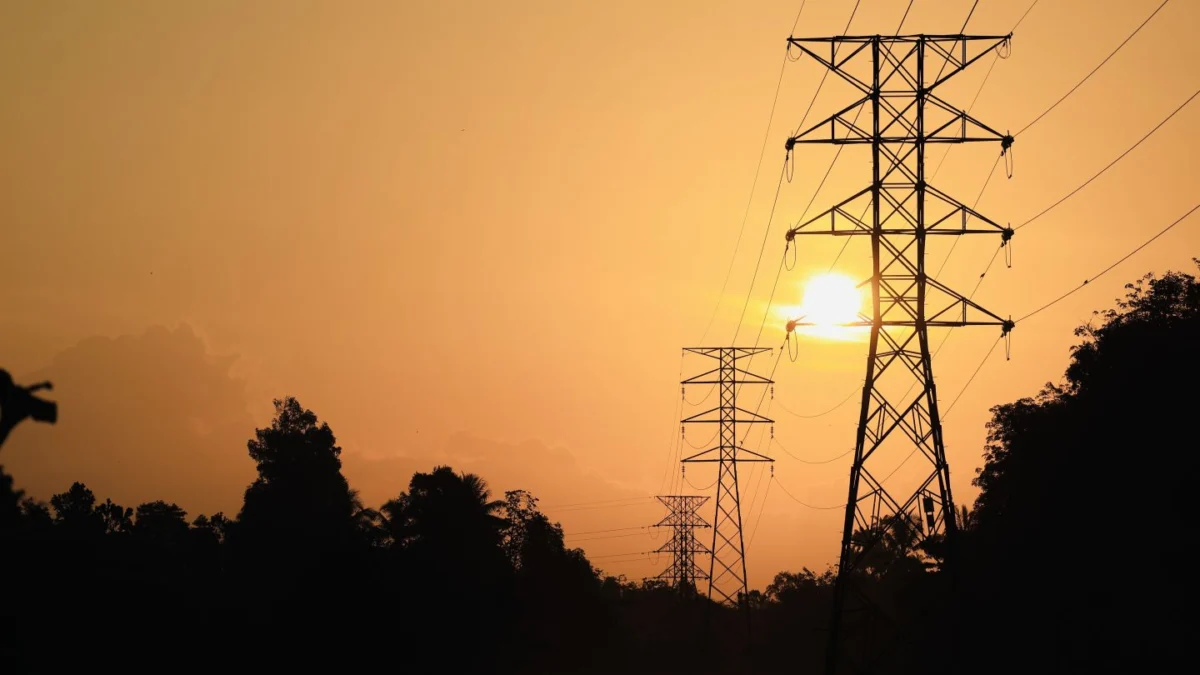
In a move that underscores India’s aggressive pivot toward sustainable industrialization, Adani Energy Solutions (AESL) has been awarded a major inter-state transmission project in Andhra Pradesh. Valued at approximately Rs85bn ($881m), the project is set to serve as the critical power backbone for the state’s burgeoning green hydrogen and green ammonia sectors, while simultaneously shoring up the grid to meet the surging demands of the digital economy.
The project, officially titled the “Transmission System for Proposed Green Hydrogen/Green Ammonia Projects in Vizag Area, Andhra Pradesh (Phase-I),” was secured through a transparent, tariff-based competitive bidding process overseen by the Government of India. This development not only bolsters AESL’s operational footprint but also marks a pivotal moment for the regional energy infrastructure of the Pendurthi-Vizag corridor.
Main Facts: A Strategic Infrastructure Expansion
The project represents a massive undertaking in electrical engineering and grid stability. Managed through a newly established special purpose vehicle (SPV) dubbed "Vizag Power Transmission," the initiative is designed to handle an additional power load of 4.5GW.
The technical scope of the project is expansive, necessitating the construction of two state-of-the-art gas-insulated switchgear (GIS) substations:
- Pendurthi (Visakhapatnam): A 4×1.5 GVA facility at 765/400kV.
- Khammam-II: A 3×1.5 GVA facility at 765/400kV.
These substations will be supported by a massive expansion of transmission lines. Upon completion, the project will add 1,582 circuit kilometres of transmission lines and 10.5GVA of transformation capacity to AESL’s already significant national portfolio. This brings the company’s total transmission network to an impressive 29,531 circuit kilometres and 133.68GVA of transformation capacity, cementing its position as a dominant player in India’s energy transition.
Chronology: From Bidding to Future Delivery
The roadmap for this project is tightly scheduled, reflecting the urgency of India’s green energy goals.
- Competitive Bidding Phase: The Government of India initiated a tariff-based competitive bidding process, attracting interest from major national infrastructure players. Adani Energy Solutions emerged as the successful bidder, demonstrating technical and financial capability.
- Project Award and SPV Formation: Following the tender success, AESL formalized the project through the Vizag Power Transmission SPV.
- Execution Timeline: The project is slated for completion within 30 months from the commencement date. This aggressive timeline is necessary to synchronize with the commissioning schedules of the green hydrogen and ammonia manufacturing plants currently in development in the Vizag region.
- Operational Integration: Post-completion, the grid will begin facilitating the high-voltage power transmission required to convert renewable energy into green hydrogen, a process that is famously energy-intensive and requires a stable, high-capacity electrical supply.
Supporting Data: Why Vizag Matters
The selection of the Vizag region for this infrastructure investment is not arbitrary. Vizag, or Visakhapatnam, is rapidly evolving into a dual-hub for industrial decarbonization and digital infrastructure.
The Green Hydrogen Imperative
Green hydrogen is widely considered the "fuel of the future" for heavy industries that are difficult to electrify, such as steel, cement, and chemical production. By producing hydrogen using renewable energy sources, India aims to reduce its reliance on imported fossil fuels. The Vizag region, with its strategic port access and industrial base, is positioned as a primary site for hydrogen electrolysis plants. These plants require a reliable, high-capacity, and low-latency power grid to ensure consistent production cycles—a requirement that the new AESL transmission network is specifically engineered to meet.
The Digital Explosion
Beyond green energy, the Pendurthi-Vizag region is experiencing a surge in demand from data centres and cloud service providers. As India’s data consumption grows, the need for massive, hyper-scale data centres has spiked. These facilities require immense power capacity and 99.999% grid reliability. By integrating the transmission needs of the green energy sector with the infrastructure requirements of the digital economy, AESL is creating a "future-ready" grid that serves as a force multiplier for Andhra Pradesh’s regional economy.
Official Responses and Strategic Vision
Kandarp Patel, CEO of Adani Energy Solutions, characterized the project as a foundational element of India’s economic trajectory. In an official statement, Patel emphasized that the investment transcends mere infrastructure—it is an investment in the nation’s industrial backbone.
"The Vizag transmission project is an important step in building the energy backbone for India’s next generation of industrial growth," Patel noted. "It will support the development of green hydrogen and green ammonia capacity in Andhra Pradesh, while also strengthening the grid for emerging digital infrastructure demand in the Pendurthi-Vizag region."
Patel further highlighted the broader organizational commitment of AESL: "As India advances towards a cleaner, more technology-driven economy, AESL remains committed to developing resilient, future-ready transmission networks that enable sustainable growth at scale."
The sentiment reflects a broader strategic alignment between the private sector and government initiatives to position India as a global leader in the green hydrogen export market. By providing the essential infrastructure, AESL is effectively lowering the barrier to entry for clean energy manufacturers.
Implications for the Energy Landscape
The awarding of this contract has several far-reaching implications for the Indian power sector and the broader energy market.
1. Scaling the "Energy Backbone"
The addition of 10.5GVA of transformation capacity and over 1,500 circuit kilometers of lines significantly reduces the risk of grid congestion. As more renewable energy projects come online, the bottleneck often lies not in generation, but in transmission. This project addresses that exact pain point, ensuring that power generated from remote wind or solar farms can reach industrial consumers in Vizag without degradation or loss.
2. Strengthening Grid Resilience
The inclusion of gas-insulated switchgear (GIS) technology is a deliberate choice for grid longevity. GIS technology is more compact, requires less maintenance, and is more resilient to environmental factors than traditional air-insulated switchgear. This ensures that the Vizag industrial cluster will experience fewer outages and more stable power flow, which is non-negotiable for sensitive digital infrastructure.
3. A Precedent for Future Projects
This project serves as a pilot for similar "Phase-I" developments across India. By bundling the needs of green manufacturing and digital infrastructure, the government is demonstrating a sophisticated approach to infrastructure planning. If successful, this model of integrated grid development will likely be replicated in other industrial corridors across Gujarat, Tamil Nadu, and Odisha.
4. Continued Growth of AESL
The successful bid continues the momentum for AESL. Earlier this year, the company demonstrated its capability in high-voltage infrastructure by initiating a 1GW high-voltage direct current (HVDC) transmission link in Mumbai. This track record of successfully executing complex, large-scale projects gives market analysts confidence that AESL is well-positioned to meet the 30-month deadline for the Vizag project.
Conclusion
As India strives to meet its "Net Zero" commitments by 2070, the importance of transmission infrastructure cannot be overstated. The Rs85bn investment by Adani Energy Solutions in Andhra Pradesh is a clear signal that the transition to green hydrogen is moving from the planning phase to the construction phase.
By bridging the gap between renewable power generation and industrial consumption, this project does more than just move electricity—it moves the needle on India’s transition to a sustainable, high-tech, and globally competitive economy. With 30 months to completion, all eyes will be on the progress of the Vizag Power Transmission SPV as it works to electrify the future of Indian industry.