While Crete is globally renowned for its sun-bleached archaeological treasures and the cerulean allure of its Mediterranean coastline, a more primal, rugged beauty lies at its heart. Towering above the Libyan Sea, the "Lefka Ori"—or White Mountains—form the island’s formidable backbone. Among these craggy limestone peaks, characterized by over 30 summits exceeding 2,000 meters, lies a geological marvel that has defined the Cretan spirit for centuries: the Samaria Gorge.

Spanning 16 kilometers (9.9 miles) from the high-altitude plateau of Omalos to the shimmering shores of the Libyan Sea, the Samaria Gorge is more than just a hiking destination; it is a sacred corridor of resistance, a sanctuary for endangered wildlife, and one of Europe’s most iconic natural cathedrals.

Main Facts: The Anatomy of a Wonder
The Samaria Gorge is, by any measure, a landscape of superlatives. Often cited as Europe’s second-longest canyon—trailing only the Verdon Gorge in France—it presents a dramatic cross-section of Mediterranean ecology.

- Distance: 14.5 km (8.9 miles) from the Xyloskalo entrance to the southern coast.
- Elevation Dynamics: A significant descent of 2,327 meters (7,635 ft) makes the traditional top-down hike a test of endurance for the knees, while the total elevation gain of 1,099 meters (4,285 ft) presents a formidable challenge for those attempting the reverse.
- Geological Significance: The canyon walls soar to heights of 300 meters (984 ft), closing in at the narrowest point—the "Iron Gates"—to a mere three meters wide.
- Biodiversity: The gorge serves as a protected National Park, providing a crucial refuge for the Kri-kri (Cretan Goat), an iconic, agile animal that has become a symbol of the island’s untamed interior.
Chronology: A Journey Through Time
The history of Samaria is inextricably linked to the history of the Cretan people. During the Byzantine era, the gorge became a permanent settlement. The village of Samaria, situated at the halfway point, served as a vital hub for local families who lived in harmony with the unforgiving terrain.

A Haven of Resistance
For centuries, the gorge acted as a natural fortress against foreign incursions. During the Ottoman occupation of Crete (1645–1898), the canyon’s inaccessibility and hidden water sources made it an ideal redoubt. The most legendary event in this timeline occurred in 1770, when approximately 4,000 Cretan women and children sought refuge within the gorge to escape Turkish forces. Local hero Giannis Bonatos, leading a small contingent of 200 fighters, successfully held the Iron Gates against the invaders, securing a victory that has since been etched into the bedrock of Cretan folklore.

The Transformation to National Park
In 1962, the region was officially designated as a National Park. This transition marked a turning point for the gorge’s ecology. The original residents of the village of Samaria were resettled, and the village’s stone structures were repurposed to support the park’s administrative, medical, and scientific research needs. This protection allowed the Kri-kri population, which had dwindled to a precarious 200 individuals, to rebound to an estimated 2,500 today.

Supporting Data: The Practicalities of Exploration
Navigating the Samaria Gorge requires careful planning, particularly due to the extreme topography and fluctuating weather conditions.

Trail Logistics
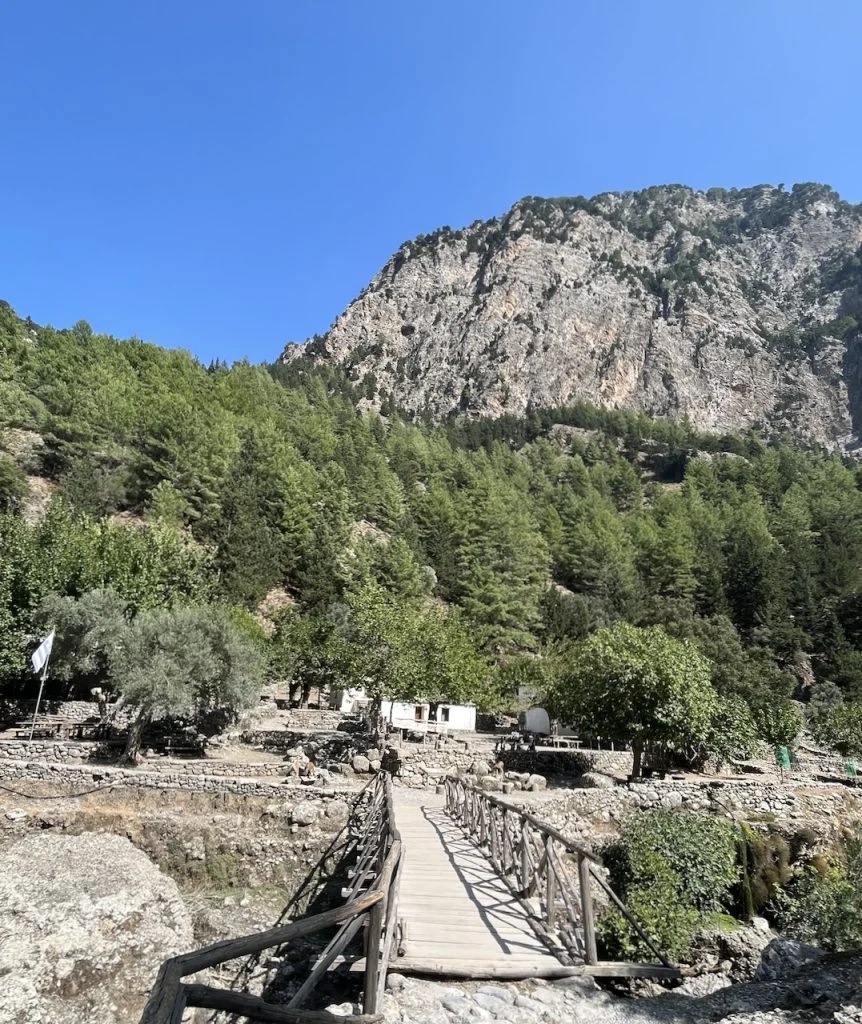
The standard route begins at Xyloskalo (the "Wooden Stair"), where the trail drops steeply through a series of switchbacks into the canyon floor. Water is readily available throughout the trail, a luxury in the arid Mediterranean summer.

Key Waypoints:

- Ayios Nikolaos (4 km): A rest area featuring a 1st-century B.C. temple to Apollo and a chapel nestled among ancient cypress trees.
- Samaria Village (7 km): The midpoint. A place to rest, rehydrate, and observe the remnants of Byzantine architecture.
- The Iron Gates (11 km): The climactic narrow passage where the sky is reduced to a sliver between massive vertical cliffs.
Official Responses and Modern-Day Encounters
While the gorge is a popular tourist destination, it remains a strictly managed National Park. Park officials are highly vigilant, particularly regarding the safety of hikers.

During an out-and-back expedition in the fall of 2023, the inherent risks of the gorge were highlighted through interactions with park staff. Because the trail is a physically demanding 32-kilometer round trip if performed in a single day, park authorities are wary of "over-ambitious" hikers.

In one notable instance, a park ranger at the southern entrance expressed deep skepticism toward two hikers attempting the return journey. The official’s reluctance was not rooted in malice, but in a mandate to ensure all visitors exit the park before the 6:00 p.m. closing time. These encounters serve as a reminder that the Samaria Gorge is not a municipal park; it is a wild, protected environment where natural hazards—such as falling rocks and flash floods—dictate the terms of engagement.

Implications: The Legacy of the Lefka Ori
The enduring appeal of the Samaria Gorge lies in its ability to offer a humbling experience in an increasingly digitized world. It is a place where human history is dwarfed by geological time, and where the struggle for survival—be it for the Cretan freedom fighters of the 18th century or the endangered Kri-kri—is visible in every crevice.

The Ecological Responsibility
The success of the Samaria Gorge National Park serves as a blueprint for conservation in the Mediterranean. By limiting human habitation and prioritizing the protection of endemic species, Crete has managed to turn a site of past conflict into a site of modern biological prosperity.

The Cultural Impact
For the hiker, traversing the Samaria Gorge is an act of communion with the island’s soul. Whether it is the morning light reflecting off the "White Mountains" (so named for their limestone peaks, which appear bleached in summer and snow-capped in winter) or the quiet solitude of the abandoned village, the experience leaves an indelible mark.

As travel becomes more accessible, the challenge for the Samaria Gorge is to balance the influx of global tourism with the preservation of its fragile ecosystem. It remains a "must-visit" for the serious hiker, but one that demands respect, preparation, and an understanding that when you enter the gorge, you are a guest in a realm that has seen empires rise and fall while the canyon walls remained unchanged.

For those seeking to explore this region further, the Samaria Gorge is featured as one of 25 premier hikes in the publication "Wanderlust Mediterranean" by Gestalten. The book offers in-depth insights into the geography, history, and logistical requirements of the most beautiful trails across the Mediterranean basin.