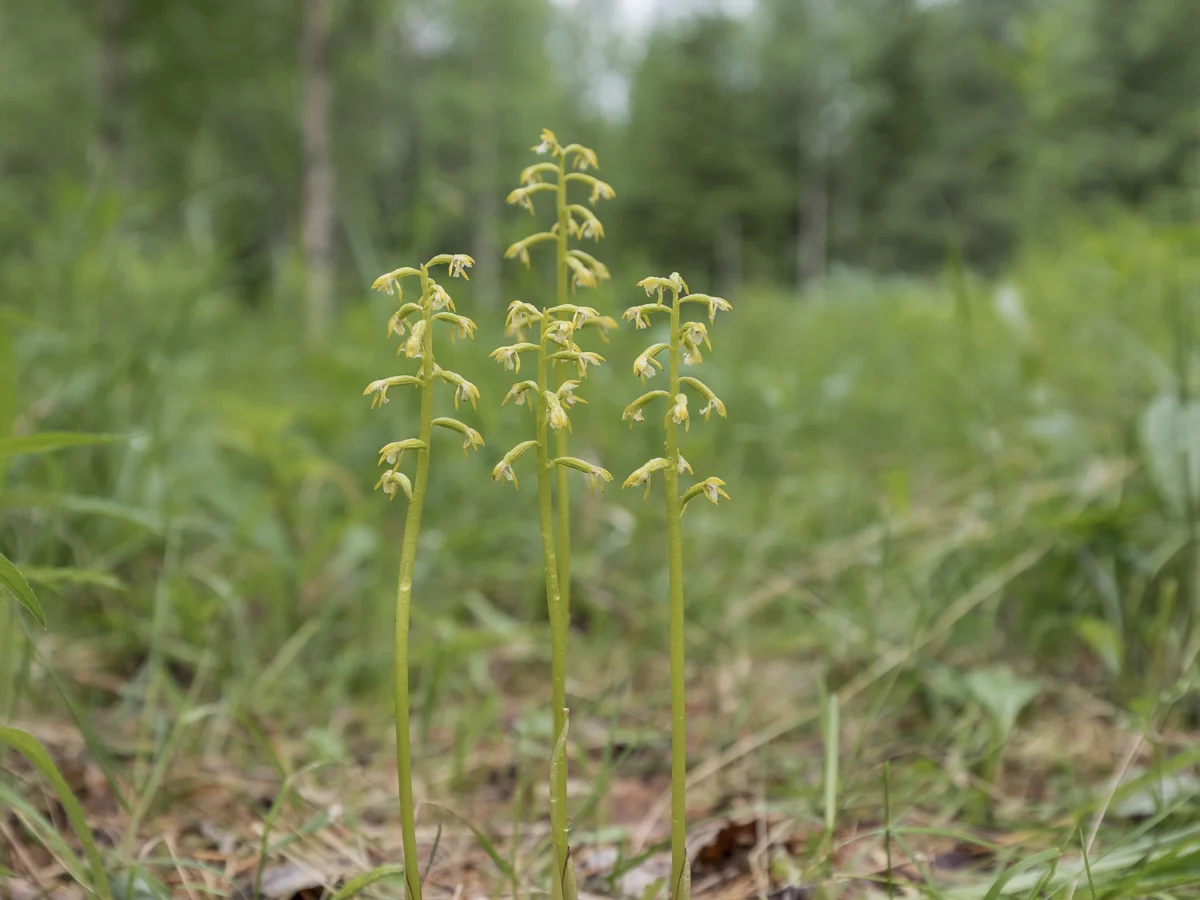
While the rugged forests and peatlands of Kainuu in Finland offer a sanctuary for modest, shade-dwelling orchids like the Lesser Twayblade (Neottia cordata) or the Coralroot Orchid (Corallorhiza trifida), true orchid enthusiasts often find themselves casting their gaze southward. Beyond the borders of northern Finland lies a landscape where orchids are not merely botanical curiosities but the stars of the ecosystem: the limestone-rich islands of the Baltic Sea.
In this exploration, we delve into the world of the "Baltic jewels"—the spectacular orchids of Estonia and the surrounding archipelagos—where rare species thrive in conditions that are all too fleeting in the north.
Main Facts: The Limestone Connection
The secret to the success of many Baltic orchids lies in the geology beneath them. Unlike the acidic soils common in many parts of Finland, the islands of Vormsi, Gotland, and Öland rest upon ancient, weathered limestone. This base creates a unique biotope known as an "alvar"—a thin-soiled, limestone-rich grassland that, while appearing barren to the untrained eye, serves as a nutrient-dense paradise for specialized flora.
These alvars, along with open coastal meadows and sheltered broad-leaved forests, provide the necessary conditions for orchids to bloom. However, their survival is rarely guaranteed. Orchids are notoriously "oikullinen" (fickle); they are dependent on specific mycorrhizal fungi to germinate their dust-like seeds, and many species only emerge to bloom when environmental conditions are perfectly aligned, often disappearing back underground for years at a time.
Chronology of Discovery and Decline
The history of these species in the region is a tapestry of sporadic sightings and unfortunate losses.
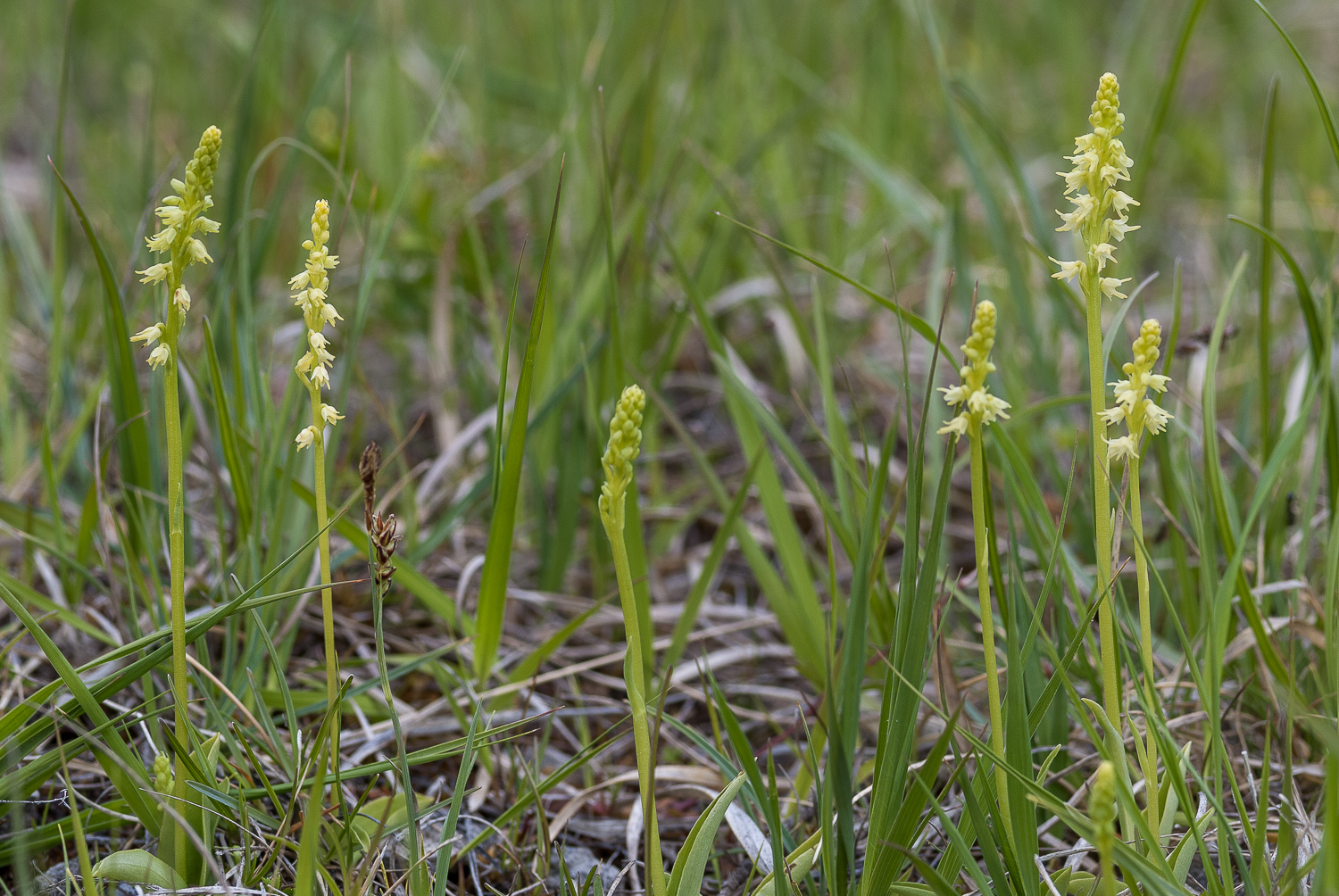
- The 1930s: The Mesic Orchid (Herminium monorchis), once a resident of southern Finland, was lost from its habitat in Tuulos, Hämeenlinna, primarily due to agricultural intensification.
- 1975: The final known population of the Mesic Orchid in Åland was destroyed during a road construction project, effectively ending its documented presence in the Finnish landscape.
- 1983: A landmark year for Finnish botany when the Broad-leaved Marsh Orchid (Dactylorhiza majalis—often referred to as the "Soikkokämmekkä") was formally identified in Pargas, though historical records suggest it may have been present in the region since the mid-19th century.
- The 2000s: A decade of intensive observation on the Estonian island of Vormsi provided a rare window into the lives of species that are either extinct in Finland or considered critically endangered.
The Elusive Giants: Species Profiles
The Red Helleborine (Cephalanthera rubra)
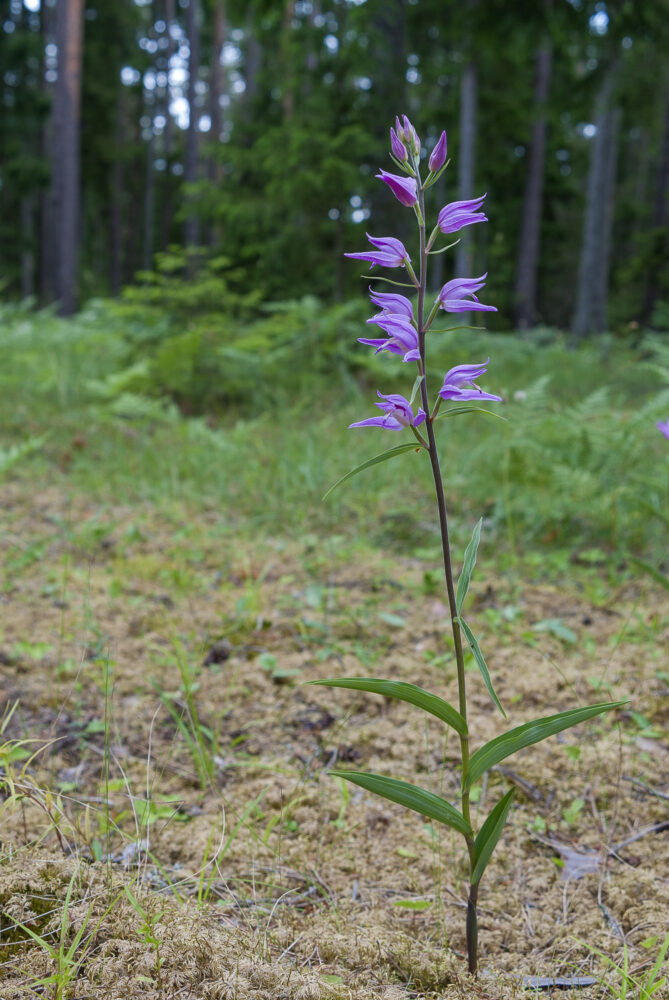
Perhaps the most enigmatic of the Baltic orchids is the Red Helleborine. Known for its striking violet-red flowers, it is a master of disguise and deception. Unlike many other species, it produces no nectar and no pollen rewards for its visitors. It relies entirely on its beauty to attract pollinators, a strategy that leaves it vulnerable. In Finland, it is found only in a handful of locations, primarily near Lake Lohjanjärvi. On Vormsi, however, it was a common sight along old, mossy forest trails where light filtered through the canopy in just the right proportions.
The Sword-leaved Helleborine (Cephalanthera longifolia)
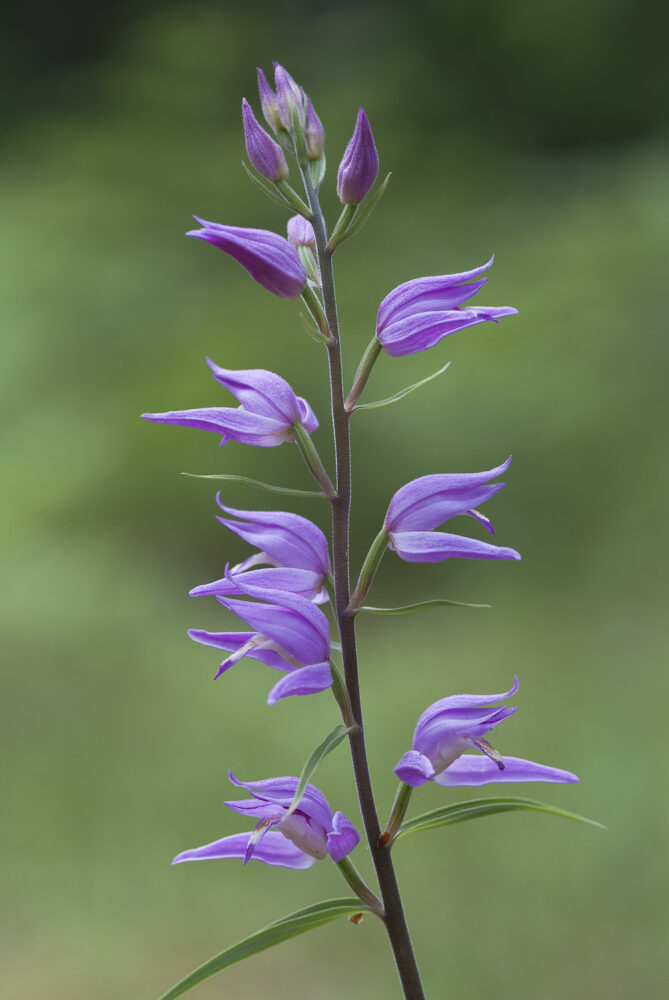
A tragic case of habitat loss, the Sword-leaved Helleborine is now restricted to a handful of sites in Åland. On Vormsi, the authors observed a single, lonely individual surviving in a dense patch of grass. Its decline is not only attributed to modern forestry and the overgrowth of abandoned meadows but also to the overgrazing by local fauna. The increase in Roe Deer populations has seen these animals treat the flowering stalks of these rare orchids as gourmet snacks, further complicating conservation efforts.
The Dark Red Helleborine (Epipactis atrorubens)
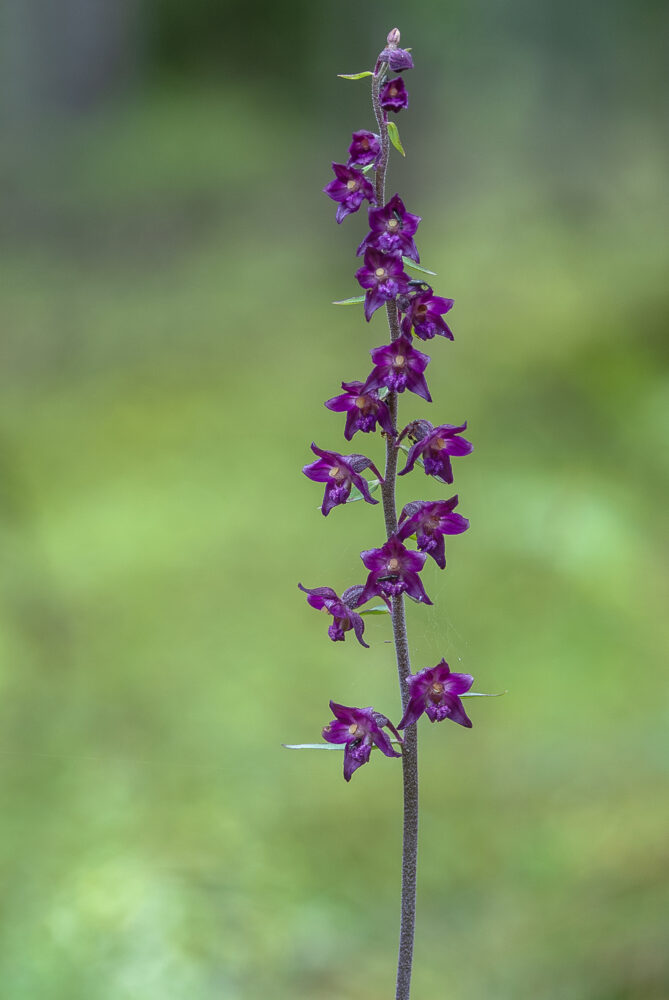
Found in the northern reaches of Finland and occasionally in the south, this species is a lover of limestone. It has been known to colonize areas near lime mines and industrial sites, proving that even man-made disturbances can sometimes provide the alkaline substrate these plants crave. Unlike the Red Helleborine, the Dark Red Helleborine offers nectar, making it a favorite for insects and, unfortunately, for deer, who often bite off the stems before the plant can set seed.
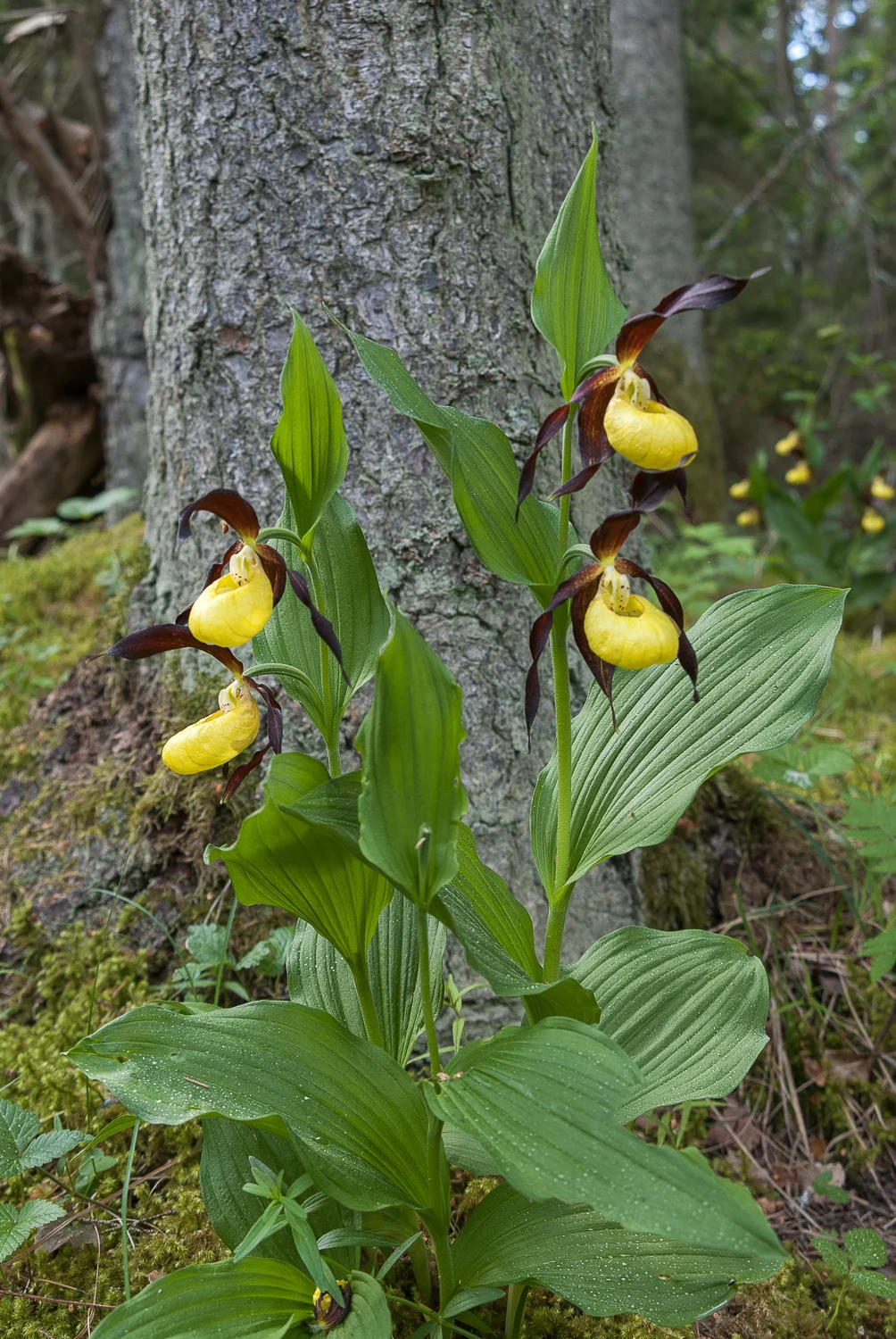
The Lady’s Slipper (Cypripedium calceolus)
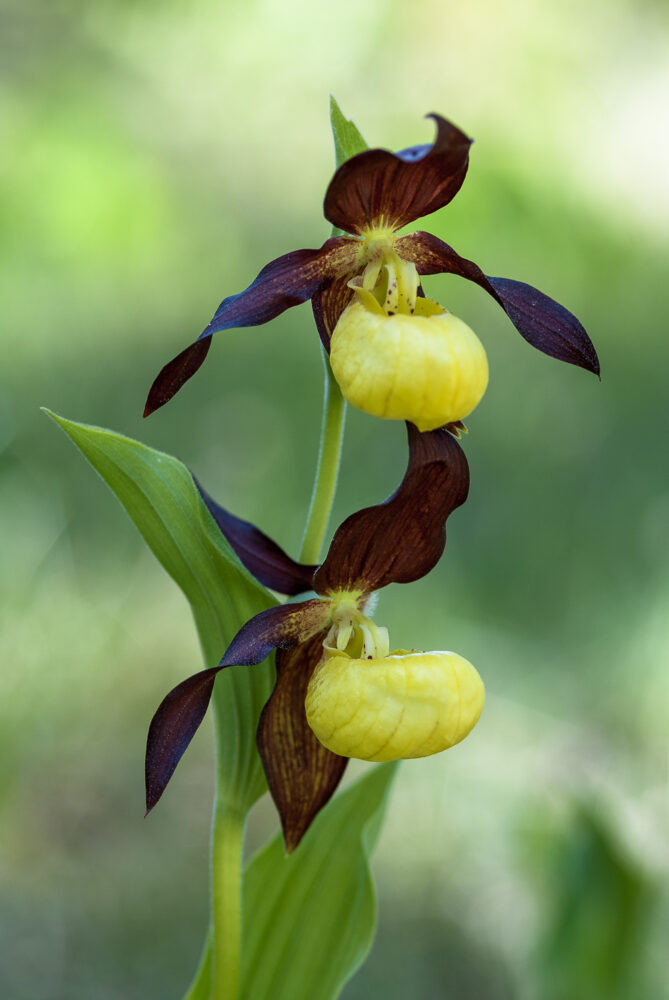
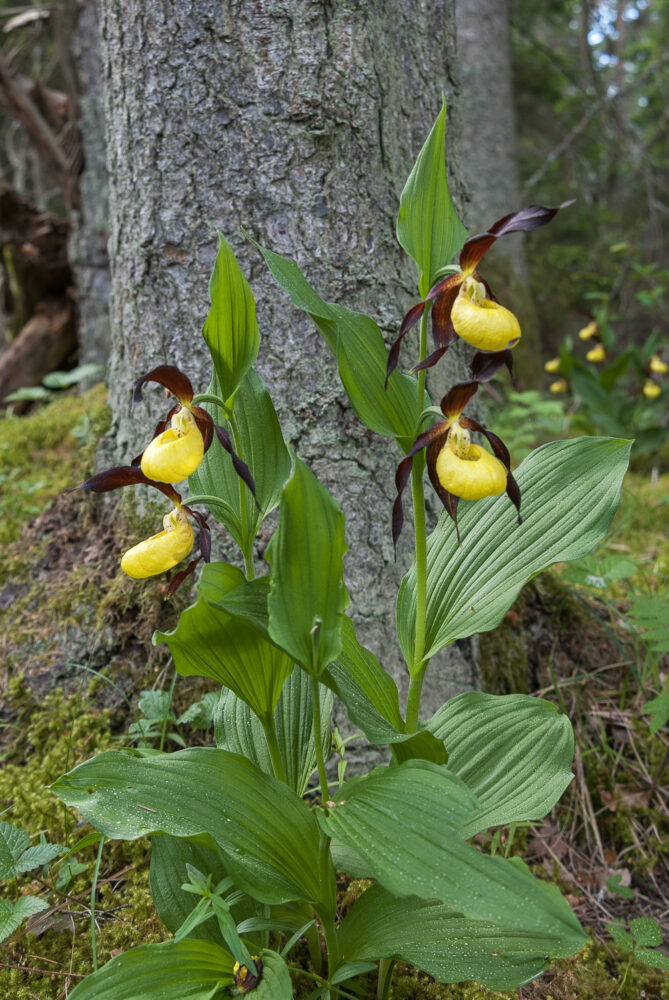
Often considered the "Queen of the North," the Lady’s Slipper is the most visually arresting orchid in the region. Its large, yellow "slipper" is an evolutionary trap. The plant lures insects—often small bees—into the pouch. The walls are slippery, preventing an easy exit. The only way out is a narrow, difficult passage that forces the insect to brush against the reproductive organs, effectively dusting it with pollen. Despite its beauty, it is highly sensitive to habitat degradation, requiring nutrient-rich fens or lush forests to thrive.
Supporting Data: Why They Vanish
The precarious nature of orchid populations is best explained by their reproductive strategy. A single orchid plant produces millions of seeds, each no larger than a grain of dust. These seeds contain no energy reserves. For a seed to germinate, it must land in a location where the specific mycorrhizal fungus it requires is already present. If the fungus isn’t there, the seed dies.
Furthermore, many of these species are "calciphiles," meaning they strictly require limestone-based soils. As meadows grow over due to a lack of traditional grazing, or as forest management techniques change, the open, sunny, and alkaline environments these orchids need disappear. When a habitat is lost, it is rarely replaced, as the specialized soil chemistry and fungal networks take decades, if not centuries, to establish.
Official Responses and Conservation Implications
Conservationists across the Baltic region are calling for more aggressive habitat management. This includes:
- Controlled Grazing: Reintroducing livestock to traditional meadows to prevent the encroachment of shrubs and trees.
- Protected Buffer Zones: Establishing strictly protected areas around known orchid sites to prevent accidental damage from forestry machinery.
- Public Awareness: Educating the public about the futility of "collecting" orchids. Many well-meaning nature lovers have attempted to transplant these orchids into private gardens, failing to realize that the plant cannot survive without its complex underground fungal partnership.
The case of the Mesic Orchid, which is technically extinct in Finland, serves as a poignant reminder. While it is possible that wind-blown seeds from Vormsi or other Baltic islands could land in a suitable location in Finland, the odds are astronomical. Without human intervention to protect the integrity of the soil and the balance of the ecosystem, the "Baltic jewels" may continue to fade from the map.
Conclusion: A Fragile Future
The story of the orchids on Vormsi and the surrounding islands is not just about a list of plants; it is a story about the fragility of our natural heritage. These orchids are the "canaries in the coal mine." Their presence indicates a healthy, undisturbed, and geologically diverse landscape.
As we look toward the future, the challenge lies in shifting our perspective. We must view these small, often hidden inhabitants of our forests and meadows not as mere decorative features of the landscape, but as critical components of a vanishing biological legacy. Whether through the preservation of the Estonian alvars or the restoration of Åland’s meadows, the goal remains the same: to ensure that the beauty of the Lady’s Slipper and the mystery of the Red Helleborine remain part of the Baltic identity for generations to come.
If you are inspired by the beauty of these rare blooms, consider supporting organizations that focus on habitat restoration and environmental journalism. The future of the wild is written in the soil, and it is up to us to ensure that the ink doesn’t run dry.