By Samuli Haapasalo
Published: July 21, 2026
In the remote, hushed landscapes of Martinselkonen, Suomussalmi, the Finnish wilderness offers a rare glimpse into a world governed not by human schedules, but by the ancient rhythms of nature. As July light paints the taiga forest in hues of molten gold, the brown bear—Ursus arctos—emerges from the shadows of the spruce trees, offering a poignant reminder of the fragile balance of our northern ecosystems.
The Scene: A Sanctuary in the Silence
The setting is a tranquil pond, its surface acting as a perfect mirror for the towering pines and the shifting evening light. On a recent mid-July evening, the air was still, heavy with the scent of damp earth and ripening berries. Hidden within the confines of a small photography blind, the outside world ceases to exist. There is only the rhythm of one’s own breath and the anticipation of the wild.
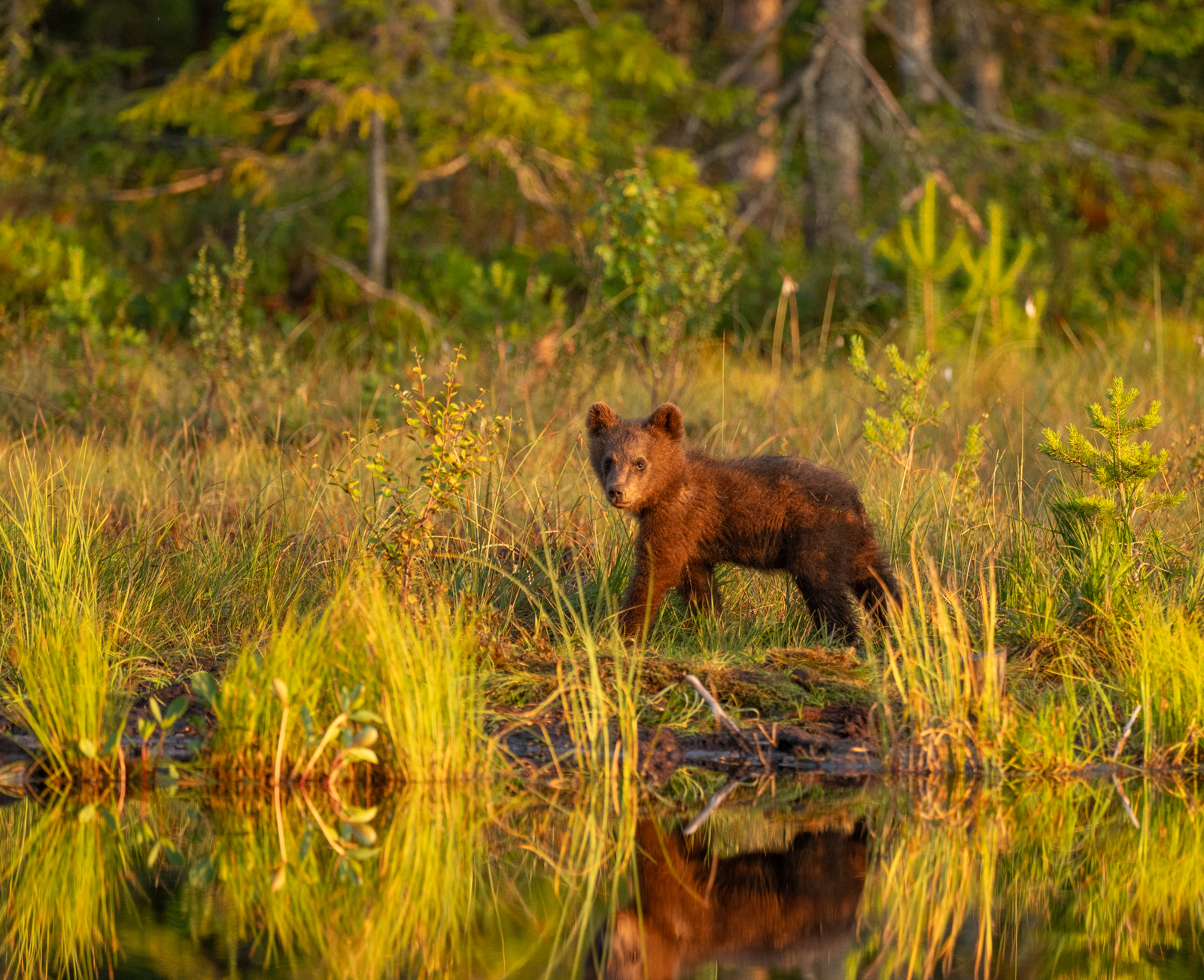
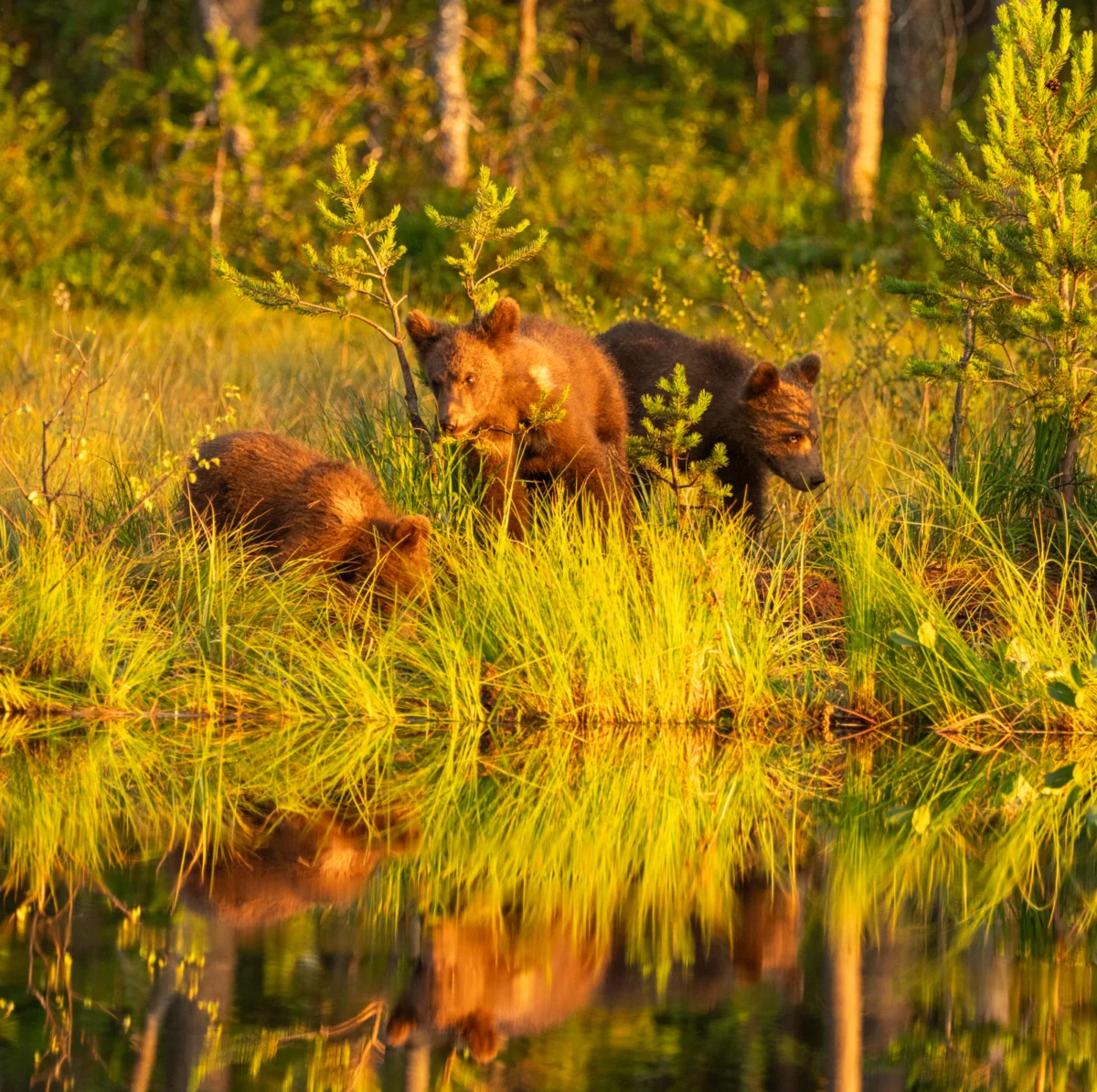
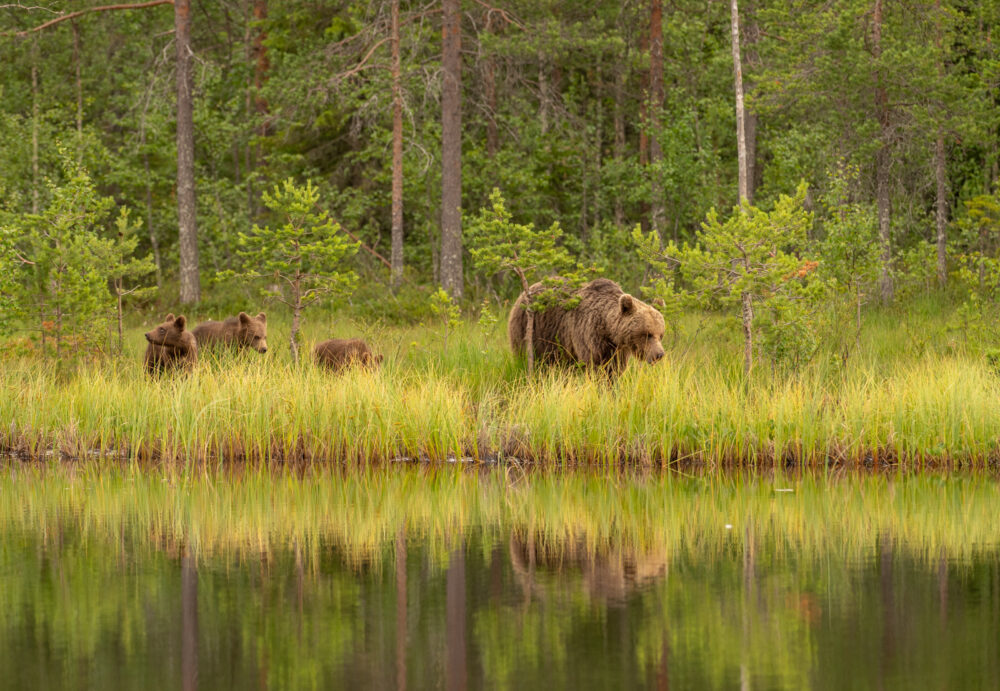
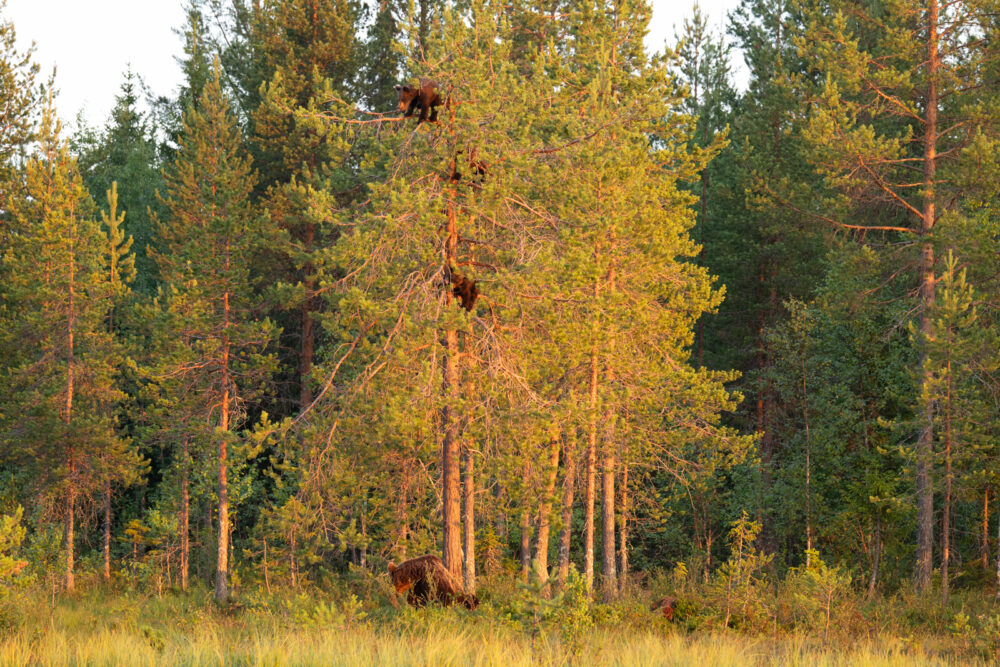
In this stillness, the behavior of the brown bear becomes theater. The cubs, likely no more than four months old, display an innocence that belies the formidable strength they will one day possess. Their fur, illuminated by the low-hanging sun, glows with a distinct, reddish-brown hue—a phenomenon often described by observers as "fairytale-like." As the mother leads her three cubs toward the water’s edge, the scene becomes one of intimate domesticity, far removed from the predatory reputation often ascribed to these apex mammals.
A Chronology of the Encounter
The observation, documented on July 10, 2026, serves as a masterclass in patience. The process of wildlife observation is not merely about the sight of the animal; it is about the transition of the human observer into a part of the landscape.
- 18:00 – The Vigil Begins: The initial hours are defined by silence. The observer must remain perfectly still. The greatest challenge is the suppression of sound; even the inadvertent clatter of a lens cap or the shifting of a tripod can shatter the illusion of solitude.
- 20:30 – The First Movement: A subtle rustle in the undergrowth marks the arrival of the family unit. The mother emerges first, her senses hyper-attuned to the environment, scanning the periphery for potential threats.
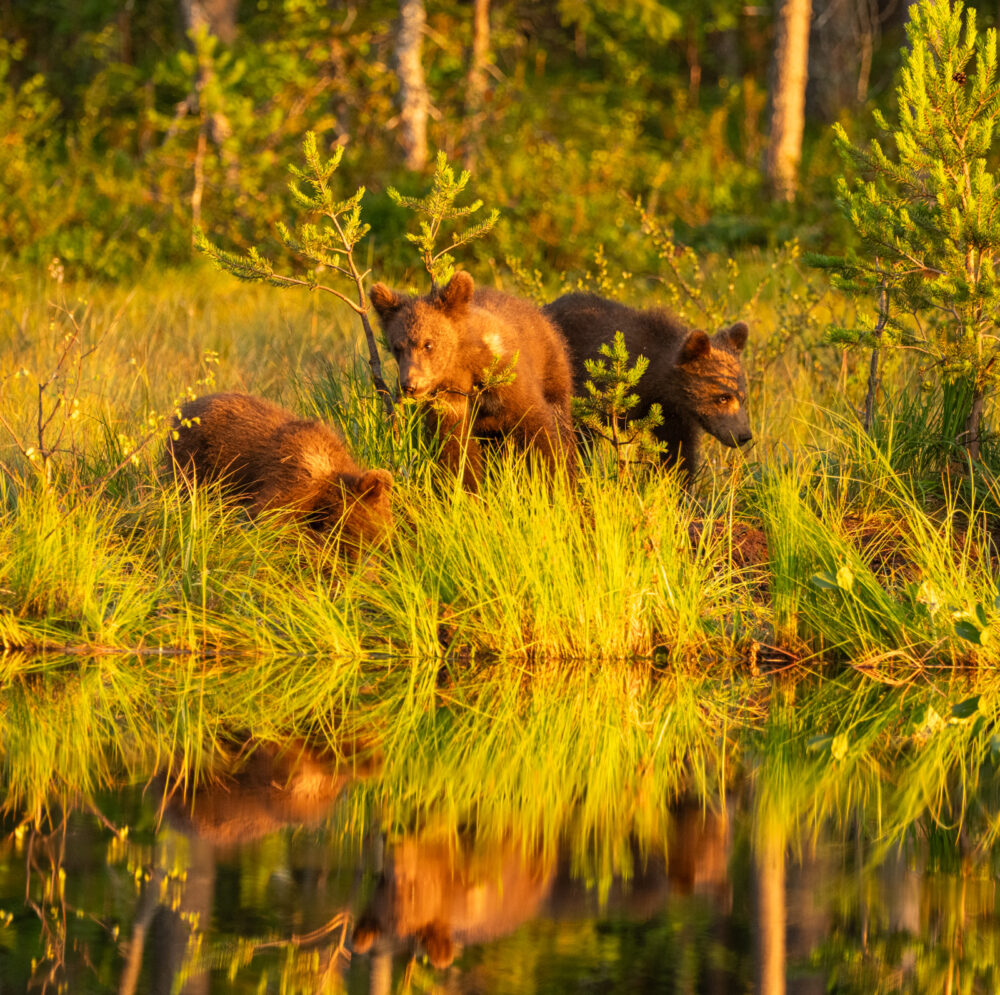
- 21:15 – Play and Exploration: Once the safety of the clearing is established, the cubs engage in a flurry of activity. They wrestle, climb pine saplings with effortless agility, and mimic their mother’s foraging techniques.
- 22:00 – The Golden Hour: As the sun dips toward the horizon, the backlighting intensifies. The cubs, now reflecting in the dark water of the pond, provide a visual spectacle of grace and curiosity.
- 23:00 – Withdrawal: As the light fades into the deep blue of the Finnish night, the family retreats into the thicket, leaving the pond once more to the silence of the forest.
Supporting Data: The Biological Imperative
While the playful nature of the cubs is captivating, their behavior is rooted in a critical survival cycle. July in Finland is a time of intense caloric intake. As the forest floor begins to offer up its harvest, the bear’s diet shifts significantly.
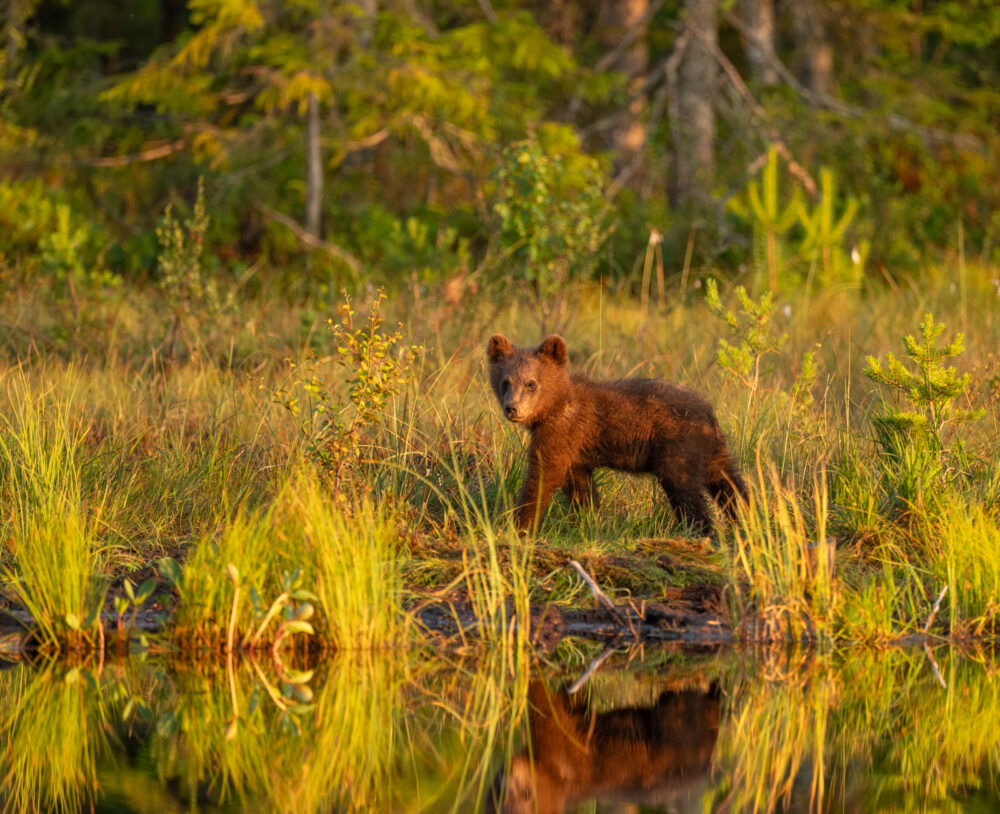
Blueberries (Vaccinium myrtillus) are currently the primary focus for the bears. These berries are not merely a snack; they are the fuel for the coming winter. A bear’s ability to successfully hibernate is directly proportional to its ability to pack on fat reserves during the short Nordic summer. Observations from the field indicate that even the cubs are learning to forage, mimicking the mother’s technique of stripping bushes.
Furthermore, the "social" interactions between the siblings—the play-fighting and tree-climbing—are essential developmental behaviors. These actions strengthen muscle coordination and establish the dominance hierarchies and social bonds that will define their lives in the coming years.
Implications for Regional Economy and Conservation
The presence of the brown bear in regions like Suomussalmi, Kuhmo, and Lieksa is more than a natural wonder; it is a pillar of the local economy. In an era where many rural areas in Eastern Finland struggle with depopulation and a lack of traditional industrial jobs, wildlife tourism has emerged as a sustainable, high-value alternative.
The "Economic Engine" of the Wild
Wildlife photography and observation tourism now sustain a network of local businesses. From expert wilderness guides who understand the nuances of bear behavior to local lodges and catering services, the "bear industry" provides stable employment.
Data suggests that approximately 50% of the visitors occupying these specialized photography blinds are international tourists. These travelers are drawn to Finland specifically for the "authentic" and "ethical" nature of its wildlife experiences. They are not looking for zoos or enclosures; they are looking for the raw, unpredictable, and majestic reality of the Finnish taiga.
The Ethics of Observation
The industry in Finland is noted for its high standards of professionalism. Operators are strictly regulated and committed to the "leave no trace" philosophy. The primary goal is to observe the animals without influencing their natural behaviors or endangering their welfare.
However, this delicate balance requires ongoing vigilance. As the popularity of wildlife tourism grows, so does the responsibility of the operators. The use of food lures, for example, must be carefully managed to ensure that animals do not become overly habituated to human presence, which could lead to human-wildlife conflicts. The current consensus among environmentalists is that if handled correctly, the economic benefit of these animals alive far outweighs the value of any traditional harvest, creating a powerful incentive for conservation.
Official Perspectives on Biodiversity
Environmental experts emphasize that the brown bear is an "umbrella species." By protecting the bear’s habitat, we are inherently protecting thousands of other species—from the insects and fungi that comprise the forest floor to the birds of prey that circle above.
The call to support professional journalism and environmental advocacy, such as through Suomen Luonto, remains more relevant than ever. When we document the lives of these creatures, we are not just telling stories; we are gathering the data and building the public support necessary to protect these vast, wild corridors.
Conclusion: A Moment of Reflection
Watching a mother bear command her cubs to safety in the branches of a pine tree is a humbling experience. It reminds us that we are guests in their home. The future of the Finnish bear population is tied to our ability to coexist with them—not just as observers in a blind, but as stewards of the vast, quiet wilderness that makes Finland unique.
As the season progresses and the berries turn from green to deep, ink-stained blue, the bears will continue their work. They are the architects of the forest, and as long as they have the space to roam, the Finnish wilderness will retain its soul. For those of us who have witnessed the golden light on a cub’s fur in the middle of a July night, the preservation of that landscape is not just a policy objective—it is a moral imperative.