
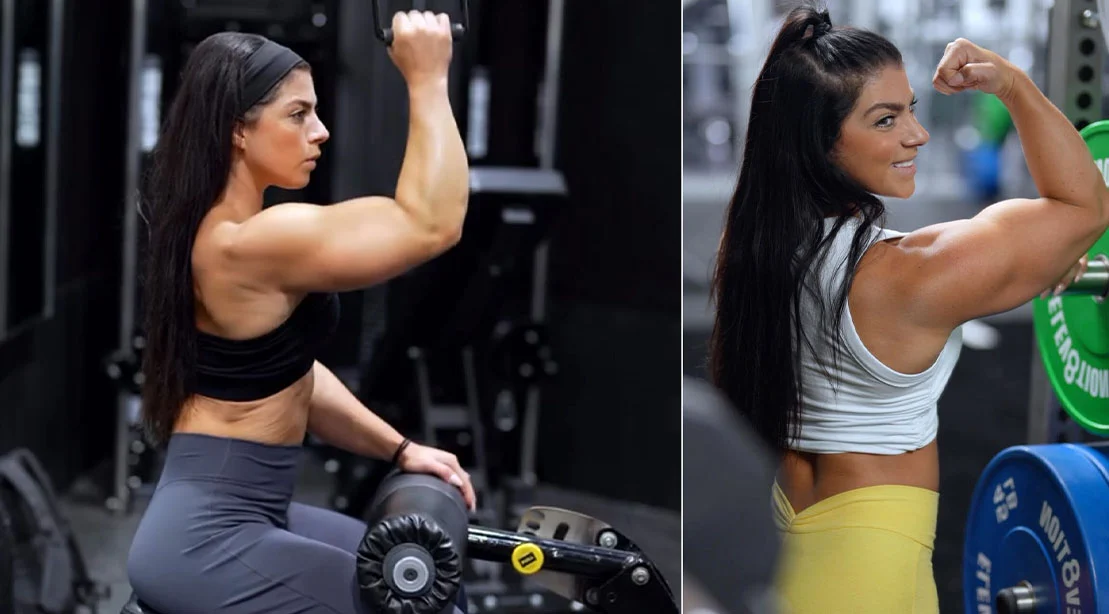
In the rapidly evolving world of digital fitness, few voices carry as much weight as Swedish body transformation expert Ida Bergfoth. With millions of followers looking to her for guidance on physique development, Bergfoth has carved out a niche not just by demonstrating exercises, but by meticulously dissecting the biomechanics behind them. Her philosophy is simple yet profound: fitness is not merely about the volume of work performed, but the precision with which it is executed.
For those looking to move beyond "junk volume" and stagnant progress, Bergfoth’s latest guidance offers a blueprint for an upper-body routine that prioritizes joint longevity and maximum muscular recruitment. By focusing on subtle anatomical adjustments, she argues that athletes can achieve superior results without the need for ego-lifting.
Main Facts: The Philosophy of Precision
The core tenet of Bergfoth’s training methodology is the "mind-muscle connection" facilitated by proper skeletal alignment. Many gym-goers approach the iron with the goal of moving weight from point A to point B, often ignoring the mechanical advantage of their own limbs.
Bergfoth’s protocol for an efficient upper-body session centers on four foundational movements: the single-arm cable lat pulldown, the flat bench dumbbell press, the seated overhead triceps extension, and the incline dumbbell press. Each movement, as detailed by the coach, requires a departure from common gym habits—habits that often lead to shoulder impingement and lackluster muscle growth.
Her recommendation for the routine is consistent across the board: 3 sets of 8 to 12 repetitions. This rep range is widely regarded in exercise physiology as the "hypertrophy sweet spot," balancing metabolic stress and mechanical tension, the two primary drivers of muscle growth.
Chronology of the Routine: A Step-by-Step Breakdown
1. The Single-Arm Cable Lat Pulldown
The routine begins with the lats, the largest muscles of the upper back. The common error here is a vertical posture, which Bergfoth notes shifts the burden onto the biceps and shoulders.
- The Adjustment: Lean back slightly, ensuring the chest remains lifted. This alignment creates a direct line of pull between the cable and the latissimus dorsi.
- The Execution: Instead of simply pulling down, visualize bringing the elbow toward the hip. This cue ensures that the lat is the primary mover, rather than the secondary muscles of the arm.
2. The Flat Bench Dumbbell Press
Transitioning to the chest, Bergfoth emphasizes the importance of protecting the rotator cuff.
- The Adjustment: Flare is the enemy of joint health. Bergfoth instructs athletes to keep their elbows tucked closer to the torso.
- The Execution: By keeping the elbows in, you minimize the torque on the shoulder joint while maintaining constant tension on the pectorals. This prevents the "shoulder-dominant" press that leaves many lifters with nagging injuries.
3. Seated Overhead Triceps Extension
Triceps training is often plagued by poor form, particularly when the elbows are allowed to flare outward during overhead movements.
- The Adjustment: Maintain a strict elbow position, facing forward throughout the movement.
- The Execution: By stabilizing the elbows, you isolate the long head of the triceps. This eliminates the "wild" movement that often draws the lats or shoulders into the equation, forcing the triceps to do the heavy lifting alone.
4. The Incline Dumbbell Press
The finale of the routine targets the clavicular head of the pectorals—the upper chest.
- The Adjustment: Because this angle targets a smaller portion of the muscle, Bergfoth advises using slightly lighter weights than on the flat bench.
- The Execution: The key cue here is "punching your knuckles toward the ceiling." Crucially, keep the wrists straight and solid. Bending the wrists backward can compromise stability and shift the weight onto the wrist joints rather than the chest muscles.
Supporting Data: Why Biomechanics Matter
To understand why Bergfoth’s advice is highly regarded, one must look at the science of muscle recruitment. Research consistently demonstrates that the angle of pull and the positioning of the joints dictate which motor units are activated.
For instance, studies on the lat pulldown have shown that excessive leaning or vertical pulling can shift activation away from the target muscle by as much as 20-30%. By adjusting the torso angle, Bergfoth is effectively "loading" the target muscle more efficiently. Similarly, the "tucked elbow" position for pressing movements is a widely accepted standard in modern physical therapy to prevent shoulder impingement—a condition caused by the compression of the tendons in the shoulder joint when the humerus is abducted too far away from the body.
The recommendation of 8-12 reps is also backed by extensive literature. This range allows for enough time under tension to induce micro-tears in the muscle fibers, which, when paired with adequate protein intake and rest, leads to the structural adaptation known as hypertrophy.
Official Responses and Industry Reception
While the fitness industry is often divided by conflicting ideologies, Bergfoth’s approach has been praised by both amateur lifters and seasoned personal trainers. The consensus is that her advice addresses the "missing link" for many: the bridge between effort and efficacy.
"Many people work hard, but they aren’t working smart," notes one sports science consultant. "Bergfoth’s cues, such as ‘punching the knuckles’ or ‘bringing the elbow to the hip,’ are classic examples of external cues that help athletes bypass the mental clutter and focus on the motor pattern. It’s effective, it’s safe, and it’s repeatable."
Her followers, who track her progress on social media, often report significant improvements in "mind-muscle connection" within just a few sessions of adopting her modified techniques.
Implications: Building a Sustainable Physique
The broader implication of Bergfoth’s routine is that longevity is the ultimate goal of any fitness journey. If an athlete is injured, they cannot train. If they cannot train, they cannot grow. By prioritizing joint health through tucked elbows and wrist stability, Bergfoth is teaching her followers how to train for decades, not just for the next few weeks.
Furthermore, her emphasis on "feeling the burn" through better form rather than heavier weight serves as a counter-narrative to the toxic "no pain, no gain" culture that often leads to burnout and injury. In the modern fitness era, the most successful athletes are those who treat their bodies with the same mechanical respect that an engineer treats a machine.
Final Takeaway
As you step into your next upper-body session, consider that the difference between an average physique and a high-performance one often lies in the details. By implementing Bergfoth’s cues—the slight lean in the pulldown, the tucked elbows in the press, and the wrist alignment in the incline movement—you are not just changing your workout; you are refining your craft.
For those looking to dive deeper into her methods, Ida Bergfoth continues to document her training and nutritional insights on her official Instagram channel. In an age of information overload, her simple, biomechanically sound advice remains a gold standard for those serious about their physical transformation.
Remember: the goal is to build a body that is as capable as it is aesthetic. Through the application of these four exercises, you are well on your way to achieving exactly that. Stay consistent, stay focused, and prioritize the mechanics that lead to long-term success.