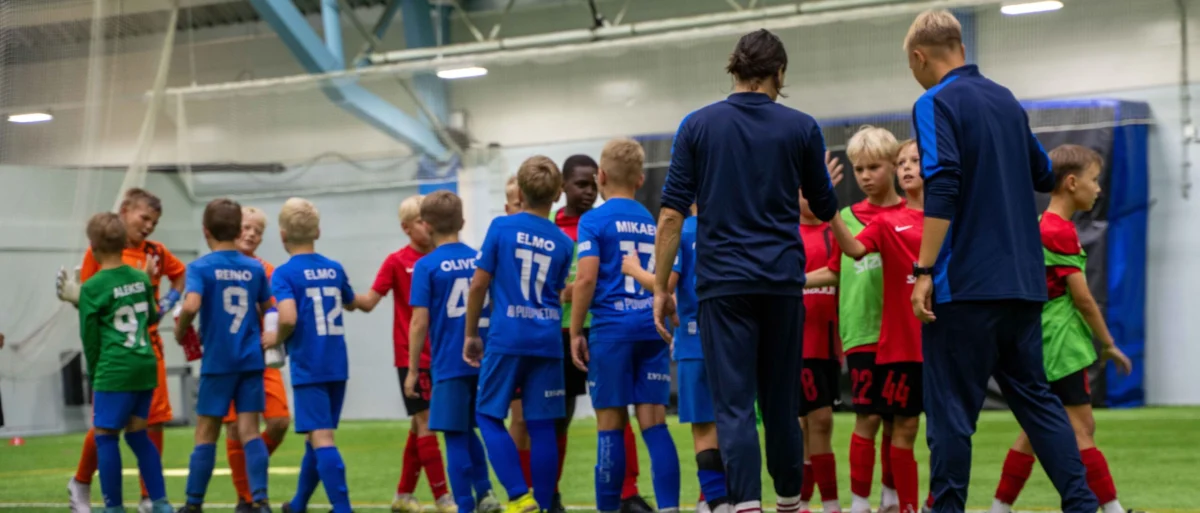
In a sporting landscape where early specialization and rigid structures often lead to burnout and declining participation, the Football Association of Finland (Palloliitto), in collaboration with the Eerikkilä Sport Institute, is spearheading a radical transformation. Now in its third year, the 10-year-olds’ development event—part of the broader "Huuhkaja- and Helmaripolku" (Eagle-Owl and Northern Star Path)—is proving that by removing the barriers of traditional match structures, children don’t just play better; they fall in love with the game.
The two-day event, which brings together 50 teams from across the nation, serves as a laboratory for the future of Finnish youth sports. By stripping away referees, varying pitch sizes, and focusing on player autonomy, the organizers are attempting to answer a critical question: How do we foster a lifelong passion for movement while simultaneously developing elite-level skills?
A Shift in Philosophy: Challenging the "Status Quo"
For decades, youth football has been defined by standardized rules: full-sized pitches, official referees, and a relentless focus on match outcomes. Antti Kekkonen, Head of Football Services at the Eerikkilä Sport Institute, admits that shifting this paradigm was initially met with skepticism.
"We are, as a culture, incredibly accustomed to certain frameworks and rules," Kekkonen explains. "Moving away from them can feel daunting at first. But when we look at 10-year-olds, while rules have their place, they must be adapted to fit the child’s world. We want to support the ‘players who throw themselves into the game’—a theme central to our mission. The experience must be insightful, inspiring, and designed to strengthen a child’s sense of self-efficacy."
This philosophy has led to a complete overhaul of the tournament environment. By modifying pitch dimensions and team sizes on the fly, the event forces players to constantly adapt, think critically, and take ownership of their environment.
The Chronology of Change: From Rigid Rules to Fluid Play
The evolution of the Huuhkaja and Helmaripolku initiative didn’t happen overnight. It is the culmination of a multi-year development process involving the Football Association, Eerikkilä, and local clubs.
- Year 1 (The Pilot Phase): Initial experiments with smaller, flexible pitch sizes were introduced to observe how children reacted to increased ball touches.
- Year 2 (Refinement): The removal of referees was introduced as a pilot study in specific regions, aiming to see if children could self-regulate game situations.
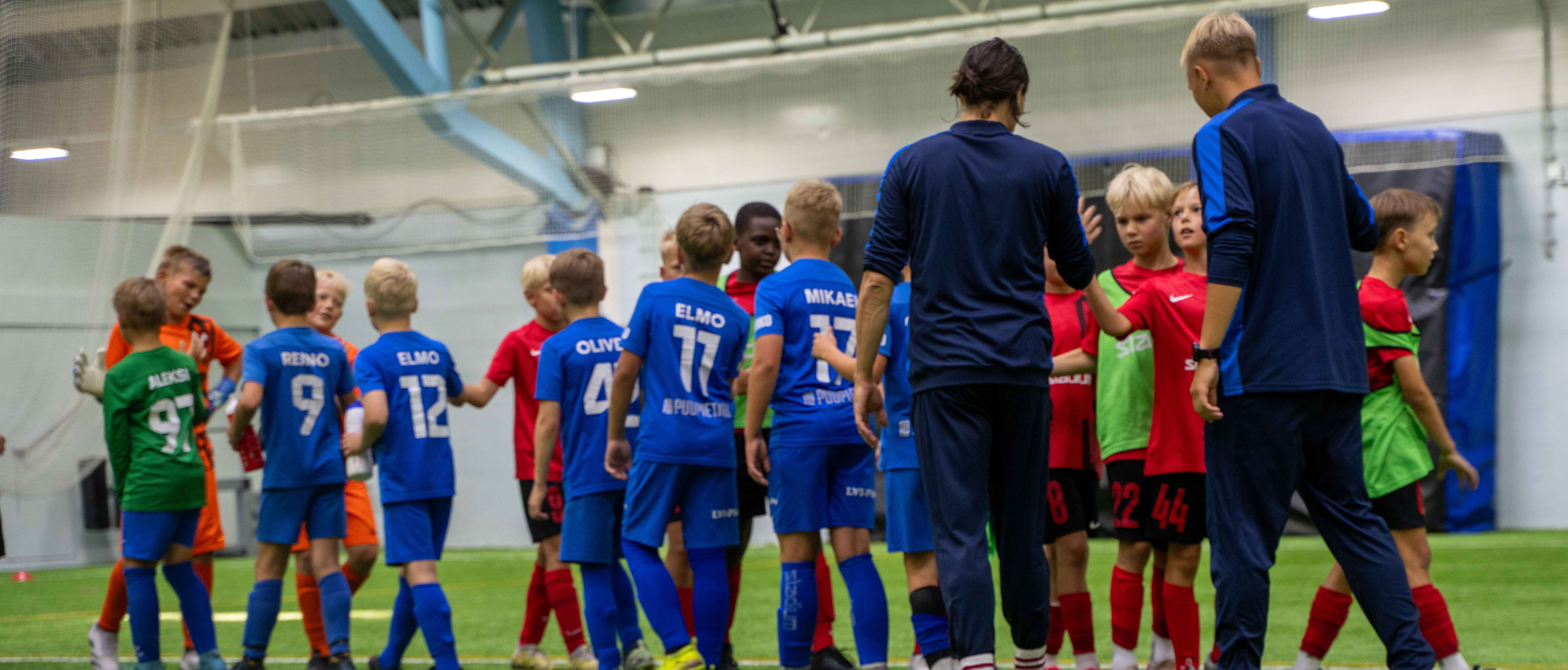
- Year 3 (The Current Standard): The 2026 iteration has fully integrated these "non-traditional" rules. The focus is now on high-volume activity, where even the substitutes are engaged in structured 1v1 drills rather than sitting on the sidelines.
The most striking change has been the absence of referees. What was initially viewed as a potential point of chaos has become the most praised aspect of the program. "Last year, we stopped hearing questions about why there was no referee," says Kekkonen. "The children resolve situations with remarkable intelligence and fairness. The games flow naturally because the players themselves are responsible for the integrity of the match."
Supporting Data: Why Varying Pitch Sizes Matter
The technical design of the tournament is grounded in developmental sports science. Jani Tulehmo, Head of Children’s Coaching at the Football Association, emphasizes that different environments create different cognitive and physical stimuli.
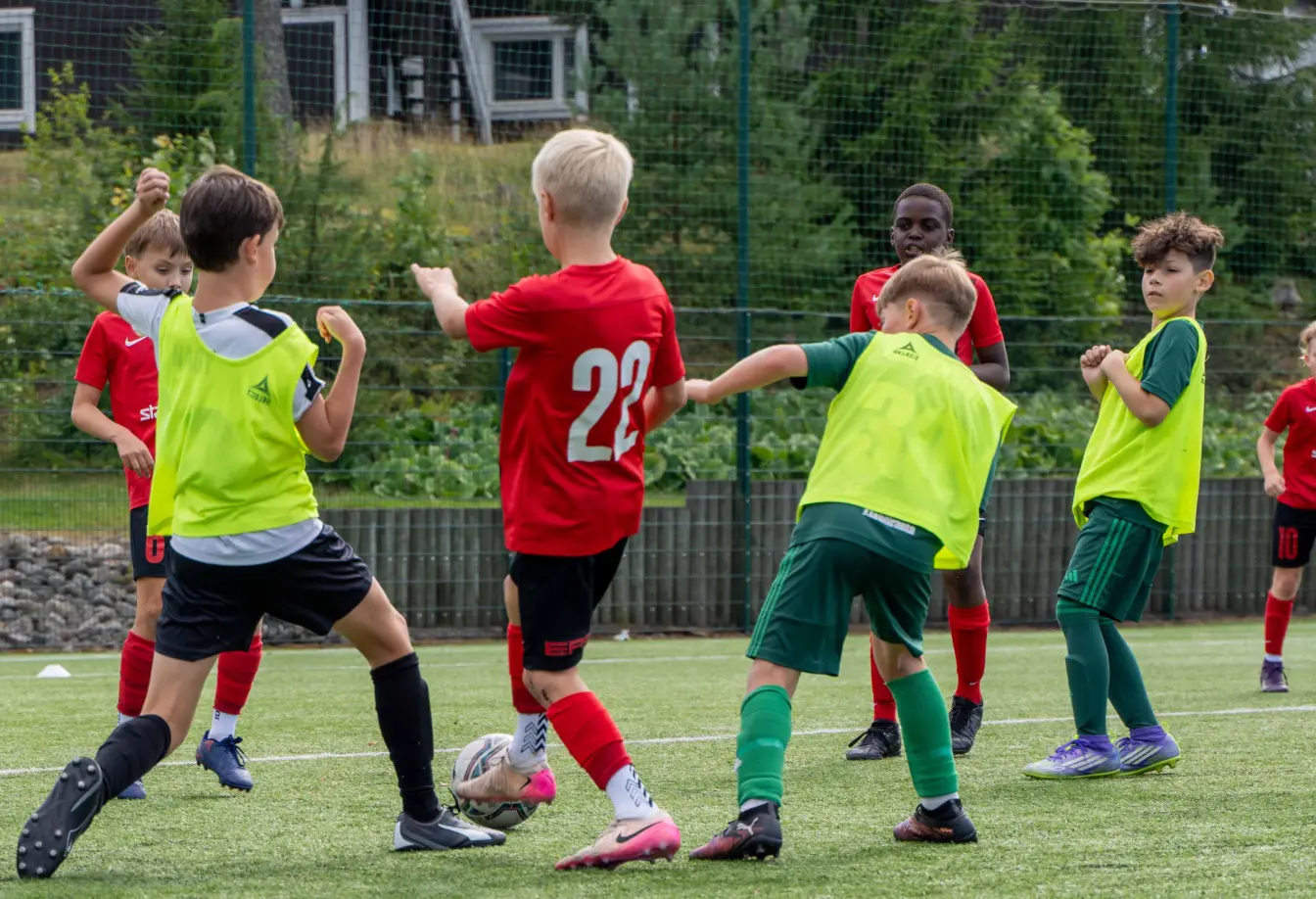
"If you play a 7v7 match, you are learning to cover large spaces, manage full-speed sprints, and handle long-distance ball carrying," Tulehmo notes. "In contrast, 4v4 matches on smaller fields force the player into high-frequency decision-making: quick shots, tight defensive turns, and rapid-fire goal attempts. By rotating these formats, we ensure the player is getting a holistic education."
The data supports this approach. Observations from the event suggest that when children are exposed to varying spatial constraints, their ability to "read" the game improves significantly. Furthermore, the mandatory activation of substitutes ensures that every child receives the same volume of technical development, preventing the "bench-warmer" syndrome that leads many young athletes to quit the sport prematurely.
Official Responses: Voices from the Pitch
The success of the program is best measured by those experiencing it firsthand. During the event, the atmosphere is electric, characterized by constant motion rather than the silence of a waiting bench.
"I expected the 4v4 games to be super fast and chaotic in a fun way," says Timofei, a young participant. "It’s about moving constantly and always being near the action."
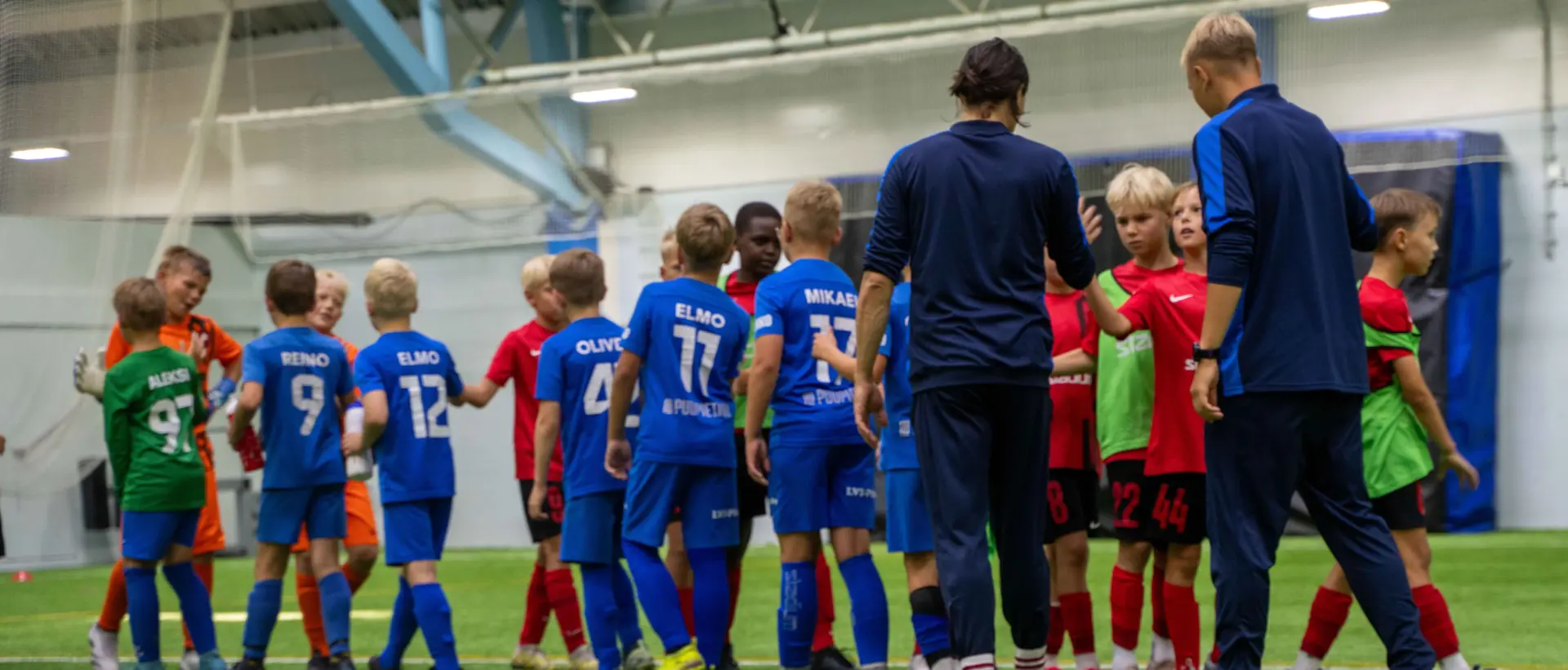
Aaro, another player, found the absence of referees liberating: "I haven’t seen a single free kick or stoppage. You just keep playing. It’s better that way."
For many, the variety is the highlight. Leo, Rasmus, and Eetu, a group of teammates, noted that they enjoy the tactical variety: "We feel more comfortable on the 7v7 pitch because we’ve practiced there, but the 4v4 games make us feel like we’re much better at dribbling in small spaces."
Beyond the Pitch: Engaging the Family Ecosystem
One of the most significant implications of this initiative is the recognition that the player does not exist in a vacuum. The Huuhkaja and Helmaripolku event includes mandatory workshops for parents. These sessions move beyond technical coaching to address the "hidden curriculum" of sports: the importance of unstructured play, the impact of daily habits on total physical activity, and how to support an athlete’s journey without adding the pressure of premature professionalization.
"We want to talk about what it means to grow into an athlete," Tulehmo explains. "It’s not just about the hours on the training field. It’s about the total volume of movement, the joy of free time, and the long-term perspective. When parents understand that their child’s development is a marathon, not a sprint, the environment becomes much healthier for everyone involved."
Implications: A New Direction for Finnish Sports
The initiative arrives at a critical juncture for Finnish society. Recent studies indicate that fewer children are moving enough, and the "drop-out" rate in organized sports is occurring earlier than ever before. As daily activity levels decrease, fundamental motor skills are suffering.
The Football Association and the Finnish Olympic Committee are using this 10-year-olds’ event as a blueprint for a national strategy. The goal is clear: to stem the tide of early specialization and create a culture where sports are accessible, inclusive, and fundamentally fun.
The Four Pillars of the New Strategy:
- Autonomy: Empowering children to manage their own game flow and resolve conflicts.
- Environment Variation: Using diverse pitch sizes to force tactical and technical adaptation.
- Holistic Education: Engaging parents to ensure the athlete is supported by a healthy, knowledgeable ecosystem.
- Prioritizing Development over Results: Removing league tables and focusing on individual growth, ensuring every child feels like an integral part of the team.
Looking to the Future
The success of the 2026 Huuhkaja and Helmaripolku event is not just a win for football; it is a proof-of-concept for the entire Finnish sporting sector. If a major, rule-bound sport like football can successfully shift its focus toward child-centric development, other sports are likely to follow suit.
"We have dared to experiment, and the results have validated our risks," says Kekkonen. "When you provide children with more playing time, more variety, and more agency, they don’t just stay in the sport—they thrive in it. That is the future of Finnish sports."
As the event concludes and 50 teams head back to their respective home clubs across Finland, the ripple effect of these changes will be felt in training sessions and match days for years to come. By putting the child at the center of the pitch, Finland is not just teaching its youth how to play football; it is teaching them how to enjoy movement, how to cooperate, and how to dream—all while keeping the game as it was always meant to be: a source of pure, unadulterated joy.