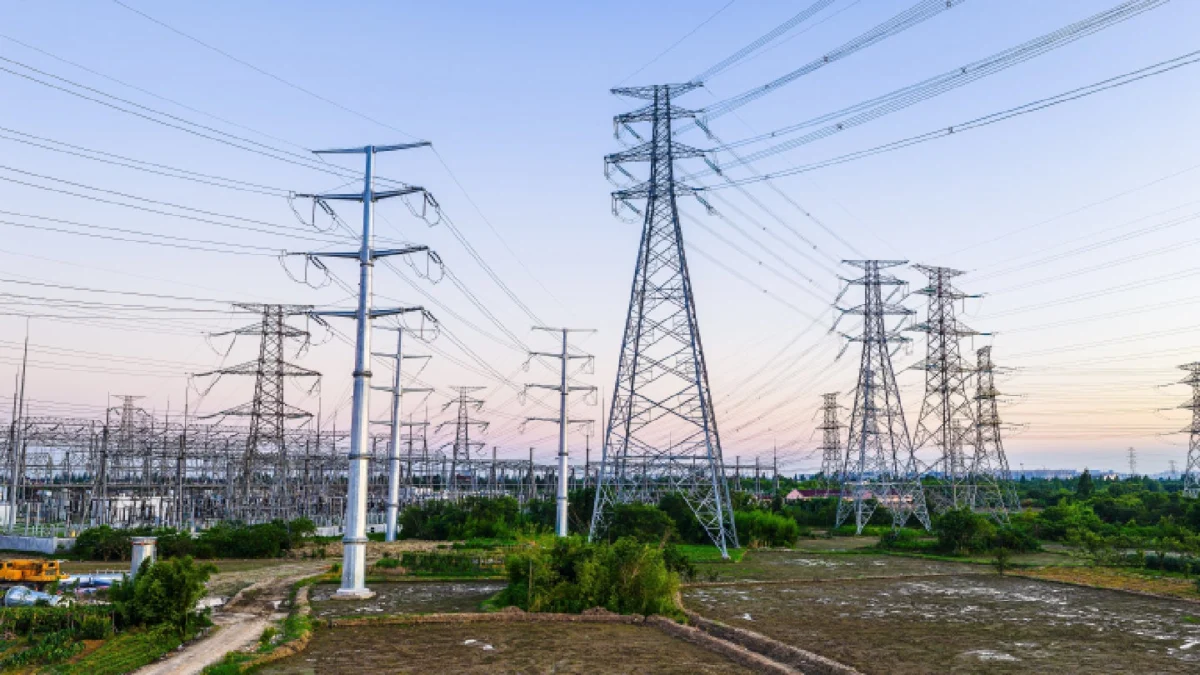
In a significant move to address the mounting pressures on the United States’ aging energy infrastructure, ArcLight Capital Partners has announced the formation of Anchor Point Transmission. Backed by a $1bn commitment from ArcLight’s funds, this new independent entity is purpose-built to accelerate the development of high-voltage transmission assets, a critical bottleneck in the nation’s transition toward a more electrified and data-intensive economy.
The establishment of Anchor Point comes at a time when the convergence of rapid AI-driven data center expansion, industrial re-shoring, and the broad-scale electrification of the transport and heating sectors is creating an unprecedented demand for grid capacity.
The Genesis of Anchor Point: Addressing the Infrastructure Gap
The American power grid is currently facing a "perfect storm" of challenges. Regulatory hurdles, complex land-use permitting, and the sheer scale of investment required to upgrade legacy systems have historically slowed the pace of transmission development.
ArcLight Capital Partners, a firm with a storied history in the energy sector since its inception in 2001, is leveraging its extensive experience to bridge this gap. Having managed over 70GW of energy assets and overseen 48,000 miles of electric and gas transmission infrastructure, ArcLight is well-positioned to navigate the technical and commercial intricacies of the grid.
Strategic Leadership
To spearhead this initiative, ArcLight has appointed industry veterans to the helm of Anchor Point:
- Justin Campbell, President: A veteran with nearly two decades of experience, Campbell has previously held leadership roles at Tallgrass Energy, GridLiance, and Edison Transmission.
- Michael Deggendorf, Executive Chairman: A seasoned executive with a pedigree spanning AEP, Transource Energy, Great Plains Energy, and Grid Assurance.
Together, the leadership team brings a proven track record, having collectively participated in the origination and development of transmission projects valued at more than $4bn, encompassing over 1,500 miles of transmission lines across diverse US power markets.
Chronology and Context: A Strategic Evolution
ArcLight’s foray into the transmission space is not an isolated event but rather the latest chapter in a broader strategy to solidify its footprint in the North American energy landscape.
- 2001: ArcLight Capital Partners is established, focusing on infrastructure and energy investments.
- 2020–2025: The firm continues to expand its portfolio, reaching over $90bn in enterprise value across private power generation and thermal development.
- March 2026: ArcLight reaches a definitive agreement to acquire InfraBridge’s 50% interest in Invenergy AMPCI Thermal Power, securing a 5.4GW North American power generation portfolio.
- August 2026: ArcLight officially launches Anchor Point Transmission, signaling a strategic pivot from generation-heavy investment toward the critical "middle mile" of the energy value chain: high-voltage transmission.
Supporting Data: Why Transmission is the New Frontier
The impetus for this $1bn investment is rooted in a fundamental supply-demand imbalance. According to recent industry analysis, the United States must double its transmission capacity by 2035 to meet climate goals and satisfy the explosive growth in demand from the technology sector.
The AI Catalyst
The rise of generative AI has fundamentally altered load growth projections. Data centers are energy-intensive, requiring high-reliability power connections that can only be facilitated by robust high-voltage infrastructure. With manufacturing shifting back to the US—often referred to as the "industrial renaissance"—utilities are struggling to integrate new loads into existing grids that were designed for lower, more predictable demand cycles.
The Financial Landscape
Anchor Point’s $1bn commitment is designed to provide the necessary "dry powder" to pursue long-term projects. Unlike traditional utilities that may be constrained by public utility commission (PUC) rate cases and public market scrutiny, Anchor Point functions as an independent, flexible partner. This allows for:

- Risk Sharing: Co-developing assets with incumbent utilities to alleviate capital expenditure burdens.
- Regulatory Expertise: Navigating the complex jurisdictional overlaps of RTOs (Regional Transmission Organizations) and ISOs (Independent System Operators).
- Speed to Market: Implementing private-sector discipline to expedite the construction phase of infrastructure development.
Official Responses and Strategic Vision
The leadership at both the parent firm and the new subsidiary have emphasized that Anchor Point is not intended to compete with existing utilities, but rather to act as a value-added partner.
Angelo Acconcia, Managing Partner at ArcLight
"Between ArcLight’s in-house operating, technical and commercial resources, our large-scale operating and development platforms in Advanced Power and AlphaGen, and Anchor Point’s capabilities and resources in transmission, we believe we are well positioned to help address the critical need for new infrastructure and be a value-added partner to utilities to help enable their growth and success."
Justin Campbell, President of Anchor Point
"Utilities face a record need for transmission investment while managing affordability, reliability, and increasingly complex planning needs. Anchor Point was built to be a flexible, value-added long-term partner, bringing development, deep planning and regulatory expertise, and disciplined execution to help utilities meet their customers’ evolving needs."
Implications for the Energy Sector
The creation of Anchor Point Transmission carries significant implications for the US energy market.
1. The Rise of Independent Transmission Companies (ITCs)
Anchor Point joins a growing cohort of independent players attempting to solve the grid bottleneck. By focusing specifically on transmission, these entities can isolate the development risks that often distract traditional, vertically integrated utilities.
2. Streamlining Regulatory Pathways
The partnership model is particularly salient. By aligning with local utilities, Anchor Point can leverage existing land rights and regulatory relationships, effectively reducing the "NIMBY" (Not In My Backyard) friction that frequently stalls high-voltage projects. This collaborative approach is expected to be a blueprint for future infrastructure deployment.
3. Reliability and Grid Resilience
As the grid integrates a higher percentage of variable renewable energy (wind and solar), transmission becomes the "backbone" that balances supply across regions. Anchor Point’s focus on high-voltage development will likely be directed toward creating the inter-regional connectivity necessary to prevent curtailment and ensure that power is available where it is most needed—particularly during extreme weather events.
4. Capital Allocation Shifts
The $1bn commitment is a testament to the fact that institutional investors are increasingly viewing transmission as a "core" infrastructure asset. With stable, regulated, or contract-based returns, transmission offers a hedge against the volatility often found in power generation markets.
Conclusion: A New Era of Grid Development
As the United States stands on the precipice of a massive transformation in its energy consumption patterns, the role of independent, well-capitalized firms like Anchor Point Transmission cannot be overstated. By marrying ArcLight’s deep institutional knowledge and $90bn portfolio of experience with a specialized management team, Anchor Point is poised to become a vital architect of the future grid.
The success of this venture will depend on the firm’s ability to foster genuine collaboration with utility partners and navigate the labyrinthine regulatory environment of US power markets. However, with $1bn in initial capital and a clear mission to enhance reliability and affordability, Anchor Point is entering the field at a moment when the demand for its services has never been higher. As we look toward the 2030s, the projects developed by this team will likely serve as the essential conduits for a cleaner, faster, and more robust American energy economy.