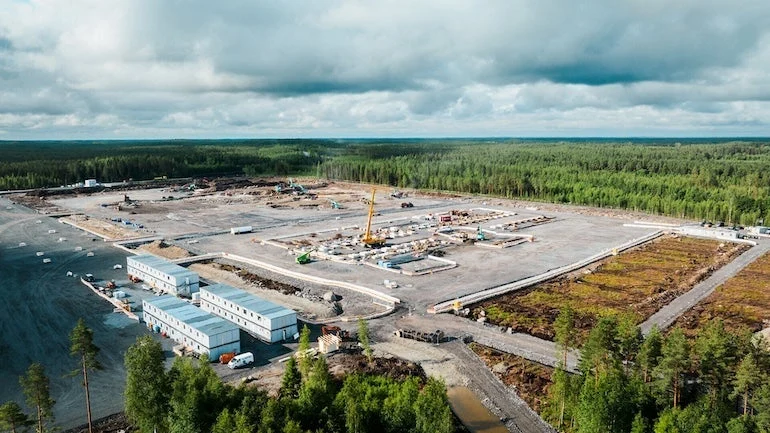
The Georgia Public Service Commission (PSC) has officially granted regulatory approval for a groundbreaking electricity supply agreement between Georgia Power and OpenAI. This strategic partnership, centered on a massive, forthcoming infrastructure project in Effingham County, Georgia, represents one of the most significant energy load-management agreements in United States history. By balancing the insatiable power demands of artificial intelligence with the economic interests of residential consumers, this deal signals a new era in how utilities and tech giants navigate the burgeoning AI energy revolution.
The Core Agreement: 3.2 Gigawatts of Innovation
Under the terms of the contract, first filed with the PSC in July, OpenAI has committed to a substantial 3.2-gigawatt (GW) capacity allocation to fuel its new facility. This level of power is comparable to the output of several large nuclear or coal-fired power plants, highlighting the extreme energy requirements inherent in modern, large-scale AI data centers.
Crucially, the contract mandates that OpenAI assumes full financial responsibility for the infrastructure upgrades required to service its facility. This "cost-causer pays" model is designed to shield existing ratepayers from the capital expenditures associated with grid expansion. Furthermore, the agreement includes a flexible demand response component, where OpenAI has committed to providing up to 1GW of "curtailable" load. This allows Georgia Power to dial back energy delivery to the facility during periods of peak demand, effectively turning the massive data center into a grid-balancing asset rather than a liability.
Chronology of the Regulatory Journey
The approval of this contract is the culmination of a multi-year effort by Georgia Power to modernize its grid and accommodate the rapid industrialization of the state’s economy.
- December 2024: Georgia Power publicly announces a target of $102 in annual savings for the typical residential customer, setting a baseline for future industrial growth.
- May 2026: The PSC approves a comprehensive plan to lower overall electricity rates, signaling a shift toward more competitive pricing models.
- July 2026: Georgia Power files the landmark contract with the PSC, detailing the 3.2GW capacity allocation for OpenAI’s Effingham County project.
- Late July 2026: The PSC moves to freeze base rates, providing a stable regulatory environment for the negotiations that followed.
- August 2026: The PSC grants final regulatory approval for the OpenAI-Georgia Power agreement, solidifying the framework for the project’s energy future.
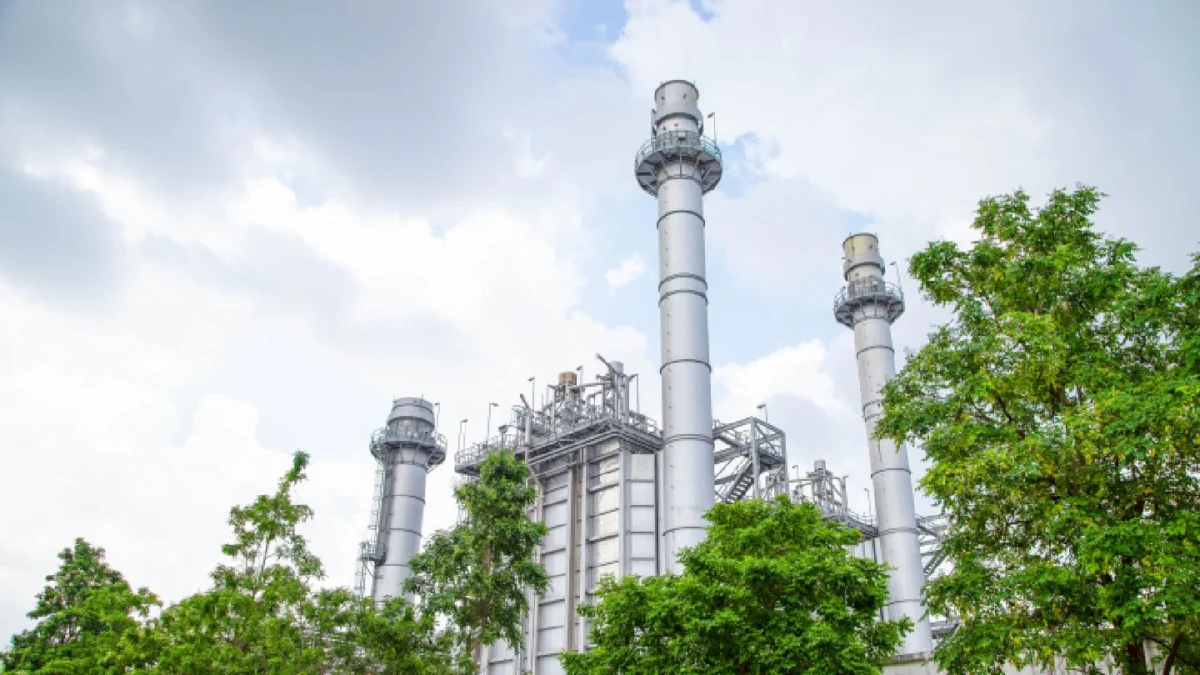
- August 2026 (Ongoing): Concurrent with the agreement, Georgia Power accelerates its physical infrastructure projects, including the construction of two new combined-cycle natural gas units at Plant Bowen in Bartow County to bolster overall system reliability.
Supporting Data: The Economics of Scale
The financial projections associated with this partnership are among the most ambitious ever presented to the Georgia PSC. Georgia Power estimates that the influx of large-load industrial customers—led by the OpenAI contract—will generate approximately $950 million in annual savings for the general customer base, starting in 2029.
Projected Customer Benefits (2029–2031)
The cumulative impact is projected to reach $2.85 billion over the initial three-year implementation period. For a typical residential customer consuming 1,000 kilowatt-hours (kWh) per month, the financial outlook has improved significantly. Initially, the utility targeted annual savings of $102 per year. Following the finalization of the OpenAI contract and the PSC’s regulatory oversight, that projection has been revised upward to $180 per year—a 76% increase in expected benefit for the average household.
Georgia Power’s track record provides a degree of confidence for these forecasts; the utility has consistently maintained rates approximately 15% lower than the national average since 1990, serving a customer base of 2.8 million residents and businesses.
Official Responses and Strategic Vision
The approval has been met with positive reception from both the utility and state regulators, who view the deal as a model for "smart growth."
Kim Greene, Chairman, President, and CEO of Georgia Power, emphasized that the goal of the partnership is to ensure that industrial growth acts as a tide that lifts all boats. "In December, we committed to $102 a year in savings for the typical family, beginning in 2029. Today, that number is expected to be $180," Greene stated. "We appreciate the continued diligence of the Commission and its staff in helping us deliver these savings for customers and ensuring the right protections are in place for the millions of Georgians we are privileged to serve."
The Commission’s decision to approve the contract reflects a broader regulatory strategy: allowing massive energy consumers into the market only when they can demonstrably reduce the per-unit cost for residential users through economies of scale and sophisticated demand-side management. By requiring OpenAI to provide 1GW of flexible load, the PSC has effectively forced the tech giant to serve as a voluntary "safety valve" for the grid.
Implications: A New Paradigm for Energy Utilities
The OpenAI-Georgia Power deal has far-reaching implications for the utility sector, the AI industry, and the future of climate policy.
1. The Rise of the "Grid-Responsive" Data Center
Historically, data centers were treated as "base-load" customers—their power consumption was constant and unyielding. The OpenAI contract changes this dynamic. By building in a 1GW demand response capability, the facility becomes a "prosumer" of energy policy. If the grid faces a shortage during a heatwave, the utility can trigger a reduction in power to the facility, potentially avoiding the need for expensive, rarely used "peaker" plants that rely on fossil fuels.
2. Infrastructure Costs and Ratepayer Protection
A primary concern for regulators across the US is whether residential customers will bear the cost of the massive grid upgrades needed for AI. This contract establishes a clear precedent: the tech firm pays for the infrastructure. By front-loading these costs onto the industrial user, Georgia Power ensures that the system is expanded without a concurrent rate hike for local families.
3. Energy Mix and Reliability
While the project is a massive consumer, the concurrent development of natural gas units at Plant Bowen suggests that Georgia Power is pursuing a "balanced portfolio" strategy. The utility is not relying solely on the OpenAI contract to fund the future; it is actively expanding its generation capacity to ensure that the increased load does not compromise the reliability of service for the state’s 2.8 million customers.
4. Competitive Advantage for Georgia
By securing this partnership, Georgia is positioning itself as the premier hub for the next generation of AI development. As other states struggle to balance the power needs of tech giants with the political fallout of rising energy prices, Georgia’s model offers a pathway for industrial development that explicitly promises lower costs for the average citizen.
Conclusion
The approval of the OpenAI energy supply agreement marks a turning point in the relationship between technology and infrastructure. By treating the energy needs of the AI revolution as a collaborative project rather than a competitive drain, Georgia Power and the PSC have created a framework that maximizes grid efficiency, protects residential rates, and supports the technological infrastructure of the future.
As the Effingham County project breaks ground, all eyes will be on the efficacy of the 1GW demand response mechanism. If successful, this partnership could serve as the primary blueprint for utilities worldwide, proving that the high-voltage demands of the artificial intelligence era can be managed to the benefit of both the innovator and the public. In an age of energy uncertainty, Georgia Power has signaled that the future of the grid is not just about producing more power—it is about managing that power with unprecedented precision.