Greenvolt Power Secures €218 Million Financing for Landmark Polish Battery Storage Projects
Posted on by
In a significant milestone for the Central and Eastern European (CEE) energy transition, Greenvolt Power has successfully secured a €218 million financing package from UniCredit. This capital injection is earmarked for two of Poland’s most ambitious Battery Energy Storage System (BESS) initiatives: the Ełk and Turośń Kościelna projects. As Poland continues to grapple with the complexities of grid modernization and the integration of intermittent renewable energy sources, these projects represent a critical leap forward in stabilizing the national power infrastructure.
The financing structure, which includes €153 million in bridge facilities and a €65 million guarantee facility, underscores the maturing nature of energy storage as a bankable asset class. With a combined capacity of 400MW/1.6GWh, these facilities are set to become pillars of Poland’s decarbonization strategy.
Main Facts: The Anatomy of the Investment
The €218 million funding agreement marks a strategic alignment between Greenvolt Power and UniCredit, leveraging the latter’s expertise in infrastructure and export finance within the CEE region. The financial package is divided into two distinct components:
Bridge Financing (€153 million): Designed to cover immediate capital requirements during the final phases of construction and the transition to full commercial operations.
Guarantee Facility (€65 million): Provided to manage project-related costs, ensuring liquidity and risk mitigation throughout the project lifecycle.
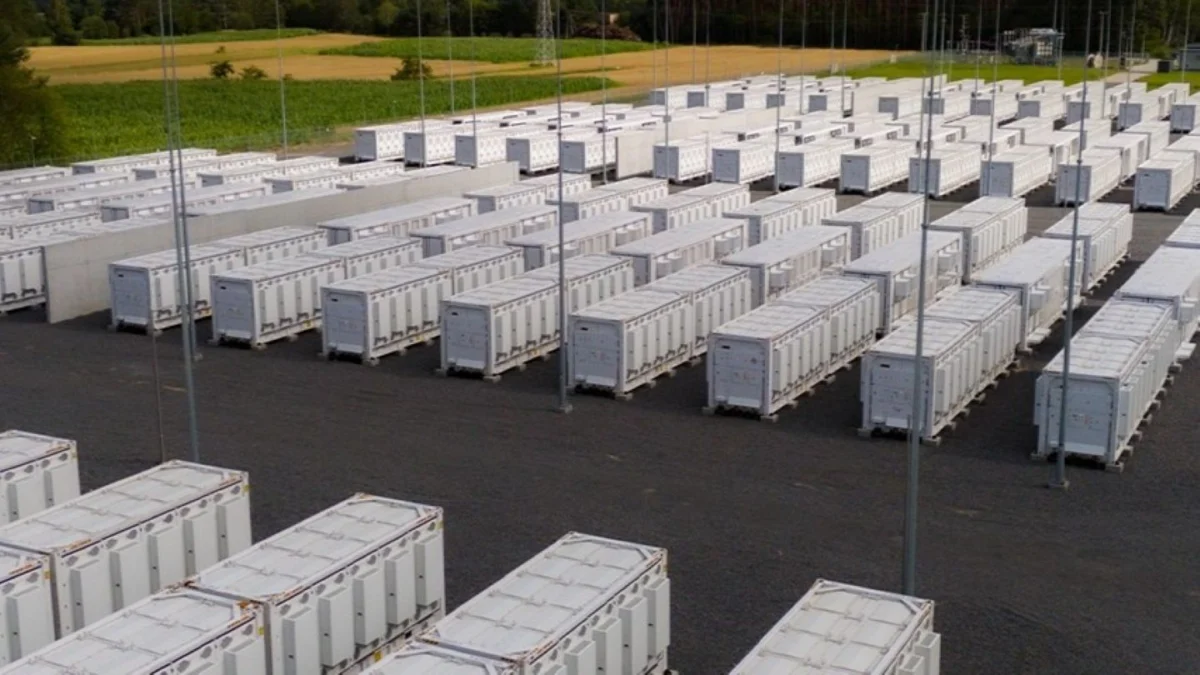
The projects themselves, located in north-eastern Poland, are split equally in capacity. Each site—Ełk and Turośń Kościelna—boasts 200MW of power capacity and 800MWh of storage duration. By providing a combined 400MW/1.6GWh, these installations will rank among the largest of their kind in Poland, serving as essential buffers that allow the grid to absorb excess solar and wind generation and release it during peak demand hours.
Chronology: A Path to Grid Stability
The journey toward the completion of the Ełk and Turośń Kościelna sites has been characterized by rapid development and strategic execution.
Project Inception and Development: Greenvolt Power identified the north-eastern region of Poland as a prime location for storage infrastructure due to its proximity to emerging renewable energy clusters and identified grid bottlenecks.
July 2026: A major milestone was achieved with the official inauguration of the Turośń Kościelna facility. This marked the transition from construction to the initial stages of operational testing and grid synchronization.
Q4 2026 (Upcoming): The Ełk facility is scheduled to reach full commercial operation. Once synchronized, it will finalize the 400MW portfolio, allowing for large-scale participation in Poland’s capacity market and ancillary service tenders.
Ongoing Financial Synergy: This agreement follows a history of collaboration between the two entities. Earlier in 2026, Greenvolt also demonstrated its project finance capabilities by securing €348 million for a 253.1MW wind project in Romania, signaling a robust pipeline of renewable investments across the CEE region.
Supporting Data: The Scale of the Polish Energy Shift
To understand the significance of the 400MW/1.6GWh capacity, one must look at the current Polish energy landscape. Poland remains heavily reliant on legacy coal-fired generation, but the nation has seen a meteoric rise in photovoltaic (PV) and wind installations over the past five years. This "dash for renewables" has placed unprecedented stress on the transmission network.
The Role of Storage
Grid Flexibility: The 1.6GWh of storage capacity allows for the shifting of energy from mid-day peaks (when solar production is highest) to evening peaks (when domestic and industrial demand spikes).
Ancillary Services: Beyond simple load shifting, these BESS units will provide critical grid-balancing services, including frequency regulation, which is vital for maintaining the stability of the European Continental Synchronous Area.
Energy Security: By reducing reliance on imported fuels and minimizing the curtailment of renewable energy, these projects directly bolster Poland’s energy independence.
The scale of the investment—€218 million for a single storage cluster—is indicative of a broader trend: the transition from "pilot" BESS projects to "utility-scale" infrastructure that requires the heavy-duty project finance structures usually reserved for thermal or large-scale wind plants.
Official Responses: Aligning Strategy and Vision
The partnership has drawn praise from both the developer and the financier, highlighting the shift in how the banking sector views battery technology.
Adrian Góralski, M&A and Project Finance Director at Greenvolt Power, stated:
"UniCredit has been a valued financing partner across different Greenvolt projects and markets, and this agreement builds on that relationship. It also reflects the growing confidence that lenders place in battery storage as a mature and bankable infrastructure asset, supporting the financing of increasingly large and complex projects."
Lazar Nikolic, Managing Director and Head of Infrastructure & Export Finance for CEE at UniCredit, added:
"Developing approximately 400MW of BESS capacity in Poland is a landmark achievement. This transaction, which highlights our partnership with Greenvolt across Europe, reinforces our strategic commitment to funding critical green infrastructure and accelerating the green transition, not only in Poland but across CEE."
The involvement of KKR, as referenced by Nikolic, also provides an important context: the backing of large institutional investors alongside specialized debt financing is creating a template for the rapid deployment of storage across the European market.
Implications: The Future of CEE Energy Markets
The completion of the Ełk and Turośń Kościelna projects carries several profound implications for the future of the regional energy market.
1. Proof of Concept for BESS Bankability
For years, the "bankability" of battery storage was questioned by traditional lenders due to the complexity of revenue stacks (e.g., combining capacity market payments with merchant trading). This €218 million package serves as a market signal that lenders are now comfortable with the risk-return profiles of BESS, provided there is a strong sponsor and a clear regulatory framework.
2. The "Greenvolt Effect" in Central Europe
Greenvolt’s ability to secure financing for both wind (in Romania) and storage (in Poland) within the same calendar year positions the company as a leader in the CEE energy transition. It suggests a diversified strategy that balances variable renewable generation with the storage necessary to make that generation reliable.
3. Regulatory Encouragement
Poland’s government has been working to improve its capacity market mechanisms to specifically incentivize BESS. The success of this financing suggests that current policy signals are correctly calibrated to attract the billions of Euros in private capital required to modernize the grid.
4. A Template for Future Projects
As Europe moves toward its 2030 and 2050 climate targets, the model established here—a combination of bridge facilities for construction and long-term guarantee facilities—will likely be replicated. We can expect to see an increase in similar portfolios across the Baltic states, Romania, and Hungary, as the integration of decentralized renewables becomes the central challenge for grid operators.
Conclusion
The €218 million financing of the Ełk and Turośń Kościelna BESS projects is more than just a capital transaction; it is a vote of confidence in the viability of the Polish green energy sector. By bridging the gap between renewable energy production and demand, these 400MW facilities are laying the physical and financial groundwork for a more resilient, sustainable, and secure energy future in Central and Eastern Europe. As Greenvolt Power moves toward the final commissioning of Ełk in the coming months, the industry will be watching closely to see how these assets perform in the real-world conditions of the Polish power grid.
In a significant stride toward India’s ambitious clean energy transition, Tata Power Renewable Energy Limited (TPREL), a subsidiary of the energy conglomerate Tata Power, has […]
In a pivotal moment for Germany’s energy transition, Skyborn Renewables has officially reached financial close on the Gennaker offshore wind farm, a massive 976.5MW project […]
Introduction: The Dual Challenge of Energy Security and Radioactive Legacy Japan stands at a critical juncture in its energy policy. More than a decade after […]