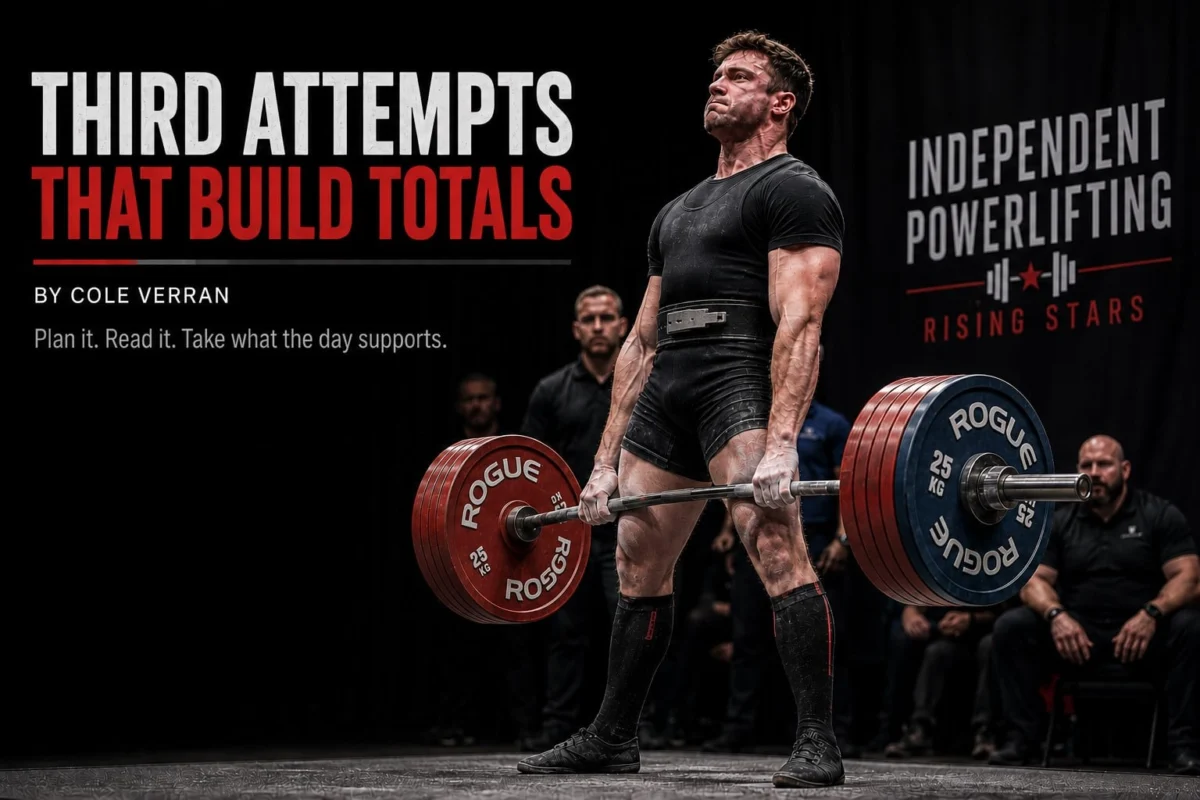
In the high-stakes environment of a powerlifting meet, the difference between a podium finish and a disappointing "no-total" often comes down to a single, critical decision: the selection of the third attempt. While the first attempt is designed to establish a foundation and the second is intended to secure a personal record or a competitive baseline, the third attempt is the ultimate test of a lifter’s judgment. It is the juncture where raw strength meets tactical intelligence.
To consistently build a massive total, athletes must move beyond mere physical preparation and embrace the nuanced art of real-time attempt selection. This guide explores the strategic framework required to navigate the platform effectively, turning training data into championship performance.
The Strategic Framework: Planning Before Meet Day
The foundation of a successful third attempt is laid long before the lifter steps onto the platform. It begins in the gym, months out from the competition, through the rigorous collection and analysis of training data.
Leveraging Training Data
Elite powerlifters do not pick their third attempts based on ego or "what they want to hit." Instead, they rely on a objective baseline. Recent best lifts, the velocity of the bar during top sets, and technical consistency under fatigue serve as the primary metrics for determining a ceiling.
A well-planned third attempt should represent a "stretch goal"—a weight that sits just beyond the lifter’s routine work but remains repeatable on a peak day. By framing expectations based on empirical data, athletes avoid the common trap of overshooting, which often leads to missed lifts and stagnant totals.
Execution: The Bridge Between Training and Competition
Confidence is not a feeling; it is an earned state of mind. It is cultivated through thousands of repetitions in the gym, ensuring that when the pressure of a meet environment sets in, the body defaults to its training patterns.
The Psychology of Execution
On the platform, the transition from warm-up room to the stage requires a calm, methodical setup. The goal is to direct intensity into the specific movement patterns refined during the training block. When a lifter is confident, they do not "hope" the weight goes up; they execute the lift with a pre-programmed technical precision. This calm exterior allows for better sensory feedback, enabling the lifter to make micro-adjustments to their bracing and bar path as the weight moves.
Real-Time Adaptation: The "Second Attempt" Rule
One of the most critical tenets of professional powerlifting is the mandate to treat the second attempt as the primary indicator of the day’s potential. The plan you wrote on your notepad at home is a draft; the second attempt is the reality.
Reading the Bar Speed
If a second attempt moves with high bar speed and textbook technique, it provides the "green light" to push for a more aggressive third attempt. Conversely, if a second attempt results in a significant "grind" or reveals technical drift—such as hips rising too early in the deadlift or a shaky lockout in the bench press—it is a signal to pivot.
Adaptation is not a sign of weakness; it is a defensive measure to protect the total. Pushing for a weight that the day does not support is the fastest way to leave a meet without a successful lift. By remaining flexible, the lifter ensures that even on a "bad day," they walk away with a result that contributes to their overall progress.
Balancing Risk and Reward: The Tactical Choice
The selection of a third attempt is a high-stakes calculation of risk versus reward. Lifters must ask themselves: "What is the goal of this meet?"
- Securing a Placing: If the objective is to win a medal, the third attempt must be chosen based on the scoreboard. Sometimes, the goal is not a PR, but a strategic weight that forces opponents into a difficult position.
- Extending a Personal Best: If the goal is personal development, the third attempt should be a calculated jump that challenges the lifter without risking a complete failure.
Numbers outside of current capacity cost more than they give. A missed third attempt not only results in a lower total but also carries a significant mental tax that can derail the remainder of the meet. Strategic decisions prioritize the long-term trajectory of the athlete, ensuring that progress is maintained across an entire career rather than a single session.
Training the Decision: Simulation and Familiarity
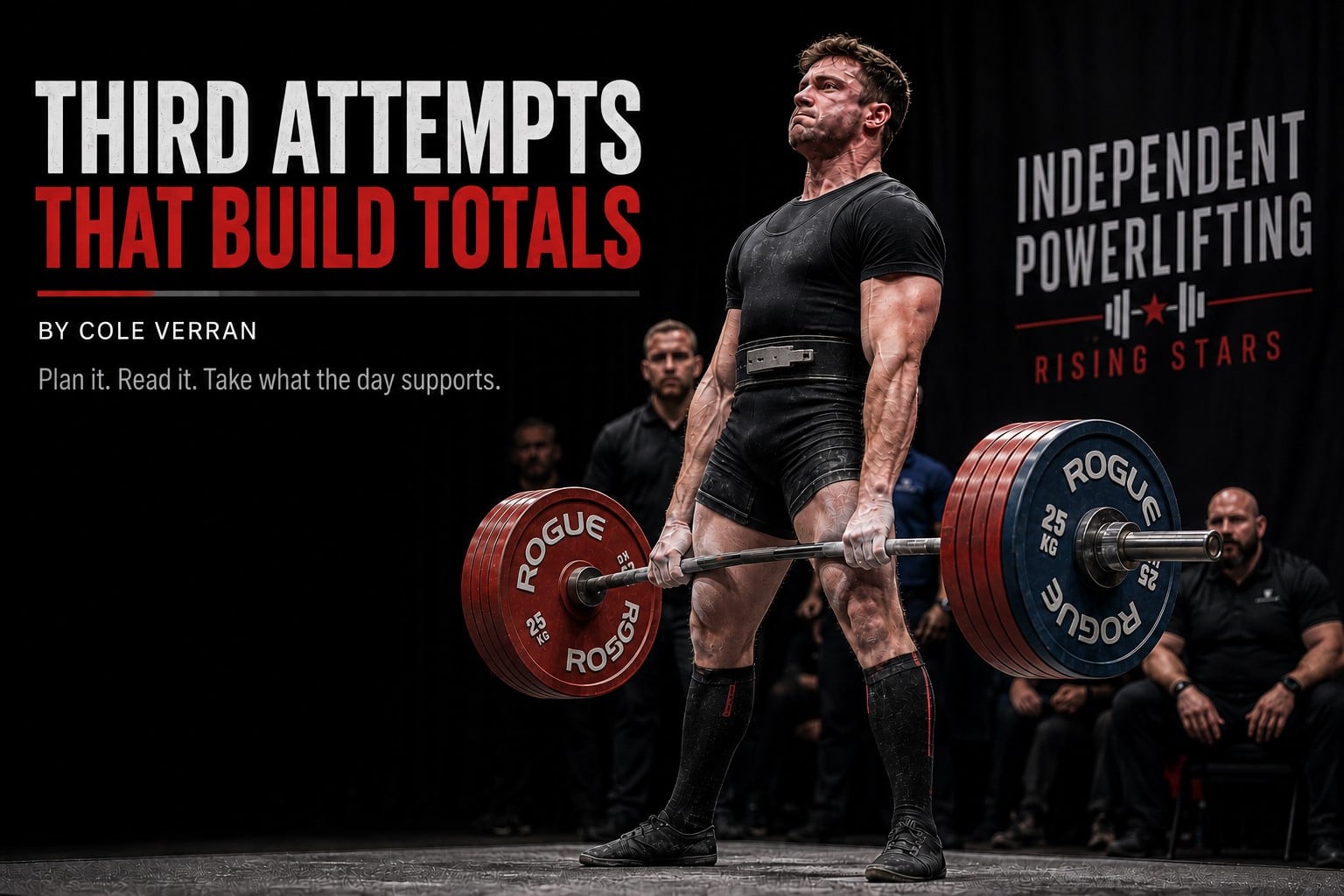
Decision-making is a skill, and like any other skill in powerlifting, it must be trained. Athletes who never practice the process of choosing attempts often find themselves paralyzed by indecision when the clock is ticking and the crowd is roaring.
Bridging the Gap
Athletes should regularly incorporate heavy singles into their training, utilizing official commands and realistic jumps between sets. This builds a familiarity with the "feel" of a heavy attempt. By simulating the meet day environment, lifters learn to recognize their own physical limits in real-time.
When a lifter knows exactly how their body reacts to 90% versus 95% of their 1RM, they are better equipped to make the final call on the platform. This carries over into the meet, where the clock is running and the pressure is at its peak.
Supporting Data: Why Strategy Outperforms Raw Strength
Research into competitive powerlifting indicates that the most successful athletes are those with the lowest "miss rate." While a lifter with a massive raw PR might seem superior, if they miss two out of three attempts due to poor planning, their total will consistently be eclipsed by the "tactical lifter" who hits nine-for-nine.
Industry experts emphasize that the "total" is a composite of three separate disciplines. The ability to successfully navigate the fatigue of the squat and the bench press to arrive at the deadlift with enough "gas in the tank" for a massive third attempt is a hallmark of elite programming.
Official Perspectives and Industry Best Practices
The consensus among elite coaches is clear: Plan it, read it, and take what the day supports.
While individual coaching philosophies may vary—some favoring a more conservative approach to preserve health, others favoring a more aggressive, podium-chasing strategy—the universal truth remains: the platform does not lie. If the bar speed is slow on the second attempt, the third attempt must be adjusted accordingly.
Implications for the Future of the Sport
As the sport of powerlifting continues to grow, the standard for technical execution and tactical awareness is rising. The "days of ego-lifting" are being replaced by data-driven, strategic competition. Athletes who invest in the mental side of the sport, treating attempt selection as an essential part of their training regime, will inevitably lead the way in total growth.
Conclusion: Owning Your Performance
The third attempt is the final opportunity to define your day. It is the reward for months of diligent training, precise nutrition, and mental conditioning. However, it is also a moment that requires total emotional detachment from the result.
By combining the discipline of preparation with the wisdom of real-time judgment, powerlifters can move beyond the unpredictability of competition. Whether your goal is to secure a national title or simply to eclipse your previous personal best, remember that the most successful lifters are those who respect the platform. They plan for the best, prepare for the reality, and always, always take what the day supports.
Disclaimer: This article provides a strategic framework based on industry expertise. Every lifter’s physiological response to competition is unique; consult with your coach or training professional to develop an attempt-selection strategy tailored to your specific performance profile.