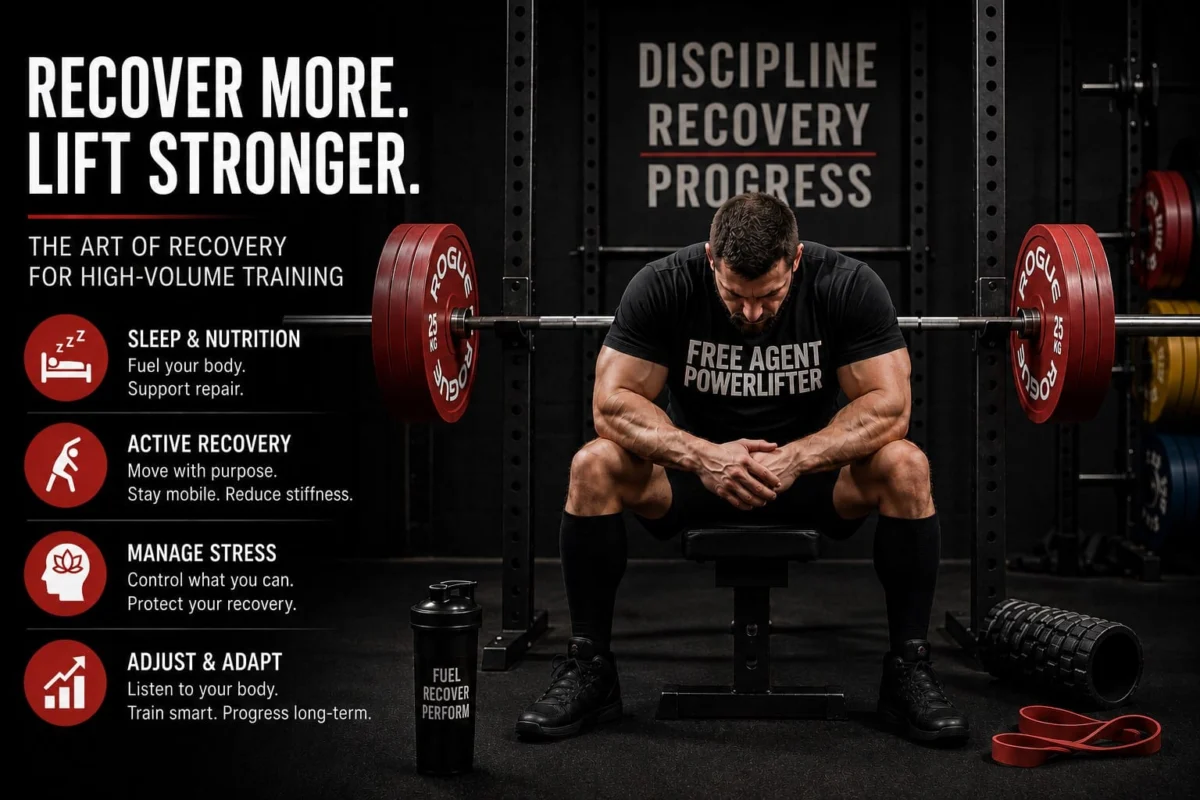
In the world of competitive powerlifting, the mantra is often "more is better." Athletes frequently equate progress with the sheer tonnage moved in a week, obsessing over sets, reps, and total volume. While high-volume training is undeniably the engine of physiological adaptation, it is not the sole determinant of success. The true differentiator between a lifter who plateaus and one who reaches the podium is not just the work performed, but the efficiency of the recovery that follows.
High-volume training builds the raw capacity for force production, but recovery determines how much of that work is converted into tangible strength. This article explores the symbiotic relationship between intensive training loads and the recovery modalities necessary to sustain long-term performance.
The Core Philosophy: Managing the Stimulus-Recovery Cycle
At its fundamental level, powerlifting is a process of systematic stress followed by adaptation. When you subject the body to high-volume training, you create micro-trauma in muscle fibers and tax the central nervous system (CNS). If the body is given adequate resources to repair, it emerges stronger—a process known as supercompensation.
However, many athletes fall into the trap of "chronic fatigue accumulation." This occurs when the training stimulus is consistently higher than the body’s recovery capacity. The result is not growth, but stagnation, regression, or injury. Elite strength coaching focuses on the art of balancing volume and intensity to prevent this.
Balancing Volume and Intensity
The most successful strength programs are cyclical by nature. High-volume blocks—typically characterized by higher rep ranges and moderate-to-heavy loads—build the necessary work capacity and structural integrity. These are followed by intensity blocks, where the focus shifts toward heavier, lower-rep sets that bridge the gap between "trained capacity" and "peak performance."
The key is the deliberate oscillation of these variables. By manipulating volume and intensity, coaches ensure that the athlete is never pushing the "gas pedal" to the floor for an indefinite period. This management of fatigue is what keeps progress linear over years, rather than weeks.
Pillars of Physiological Repair
Recovery is not merely the absence of training; it is an active physiological process. Without the proper building blocks, even the most scientifically sound program will fail to yield results.
Sleep: The Non-Negotiable Foundation
Sleep remains the most potent recovery tool in any athlete’s arsenal. During deep REM and slow-wave sleep, the body undergoes critical processes:
- Hormonal Regulation: The release of Growth Hormone (GH) and the suppression of cortisol are maximized during sleep cycles.
- Tissue Repair: Protein synthesis is upregulated, allowing for the repair of muscle fibers damaged during heavy squats, benches, and deadlifts.
- Cognitive Function: High-intensity lifting requires significant CNS engagement. Sleep ensures that motor unit recruitment and technical focus remain sharp for the next training session.
For the serious powerlifter, consistency is paramount. A single "catch-up" night of 10 hours of sleep cannot compensate for a week of four-hour nights. Building a consistent sleep hygiene routine is as important as building a squat routine.
Nutrition: Fueling the Adaptation
Nutrition must be viewed as the substrate for recovery. If training is the stimulus, nutrition is the fuel that powers the resulting change.
- Protein Intake: Ensuring a consistent supply of essential amino acids is critical for muscle protein synthesis.
- Glycogen Replenishment: High-volume training depletes glycogen stores. Adequate carbohydrate intake post-training is essential to prevent catabolic states where the body begins breaking down muscle tissue for energy.
- Micronutrient Density: Beyond macros, electrolytes and vitamins play a role in joint health and systemic inflammation management, which are critical for athletes handling heavy loads.
The Role of Active Recovery and Mobility
Many lifters make the mistake of assuming that "recovery" means total sedentary behavior. While rest days are necessary, "active recovery" can often accelerate the process by promoting blood flow and reducing systemic tension.
Movement with Purpose
Low-intensity movement, such as walking, light cycling, or targeted mobility work, serves to increase circulation. Increased blood flow delivers oxygen and nutrients to damaged tissues while facilitating the removal of metabolic waste products.
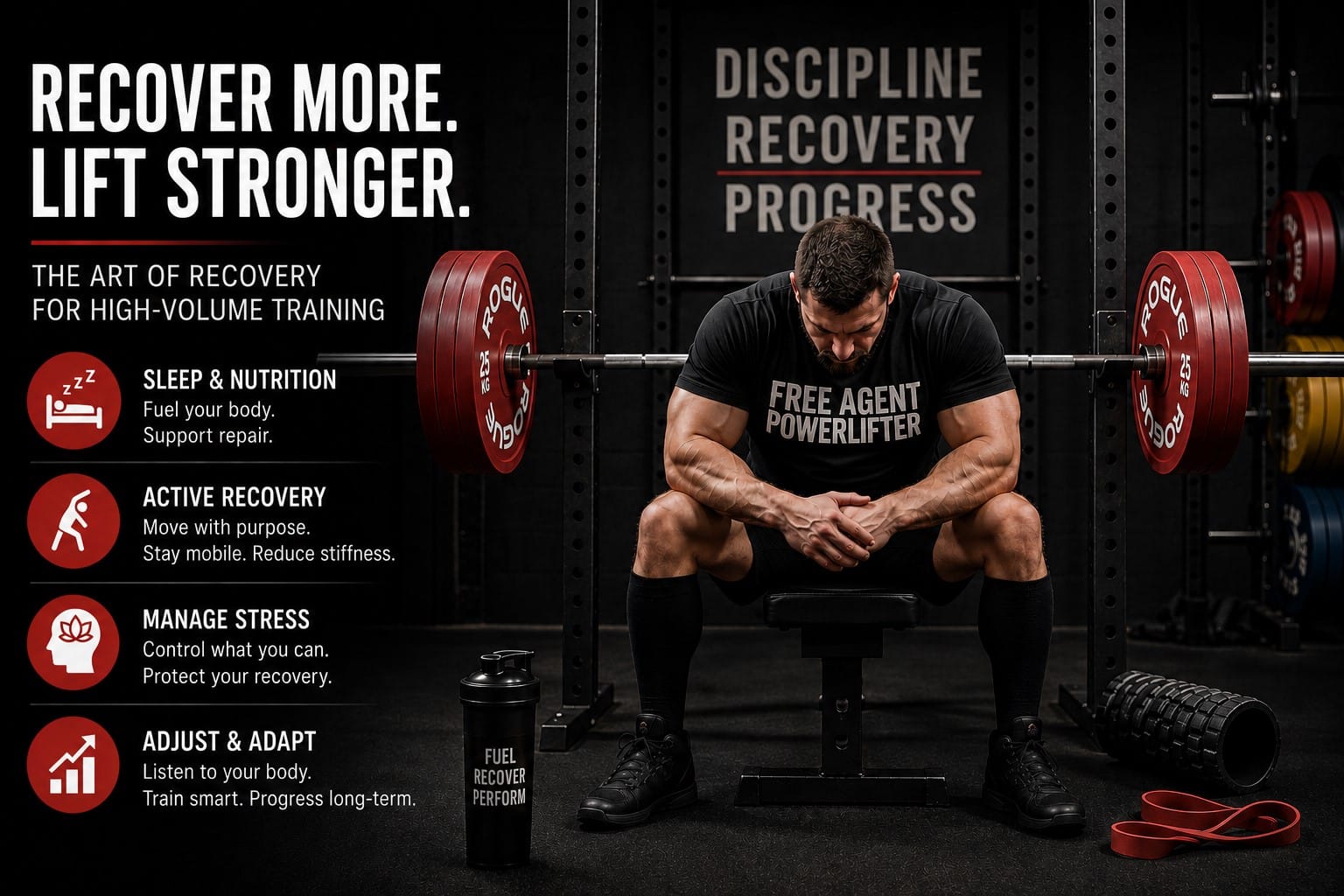
Furthermore, intentional mobility work—focused on the hips, thoracic spine, and shoulders—addresses the postural adaptations often caused by heavy lifting. By maintaining joint integrity and range of motion, the athlete ensures that their movement patterns remain efficient, preventing the "stiffening" that often precedes overuse injuries.
The External Stressor: The Silent Performance Killer
One of the most overlooked aspects of recovery is the impact of external stress. The body does not distinguish between stress originating from a failed heavy set and stress originating from a high-pressure work environment or personal conflict. Both trigger the same sympathetic nervous system response.
When life stress is high, the "recovery budget" for training is effectively reduced. Elite powerlifters who stay in the game for the long haul are those who manage their external life with the same intensity they bring to the gym. This might mean:
- Setting boundaries: Protecting downtime as if it were a scheduled training block.
- Psychological regulation: Incorporating breathing exercises or meditation to down-regulate the nervous system after a stressful day.
- Realistic expectation setting: Adjusting training goals during periods of high life stress rather than stubbornly pushing through.
Chronology of Fatigue Management
To understand how to manage fatigue, one must track it. Elite athletes often utilize a structured approach to prevent the "overtraining" tipping point:
- The Accumulation Phase (Weeks 1–4): Volume is high. Fatigue will naturally build. The athlete should monitor indicators like bar speed, heart rate variability (HRV), and perceived exertion (RPE).
- The Consolidation Phase (Week 5): The "deload" or "taper." Volume is dropped by 30–50%. This is not a "day off," but a calculated reduction in stress to allow supercompensation to occur.
- The Realization Phase (Weeks 6–8): Intensity peaks. The athlete utilizes the strength gained in the accumulation phase to hit new PRs.
By following this chronology, the lifter avoids the accumulation of "residual fatigue," which is the primary cause of sudden performance drops or injury.
Adjusting Before the Wall is Hit
The mark of a seasoned lifter is the ability to adjust the training plan before fatigue becomes debilitating. This requires a level of honesty that many athletes lack. If the bar speed on your primary lift is consistently dropping, or if technical breakdown is occurring at sub-maximal weights, it is time to pivot.
This might involve:
- Reducing Load: Dropping the weight by 5-10% for a session to allow the CNS to recover.
- Exercise Selection: Switching from a high-stress movement (like a competition-style squat) to a variation (like a high-bar squat or safety bar squat) that provides a similar stimulus with less technical and structural demand.
- Planned Deloads: Scheduling a week of reduced volume every 4-6 weeks, regardless of how you "feel." Proactive deloading is always superior to reactive rest necessitated by injury.
Implications for the Future of Strength Training
As the science of sport becomes more accessible, the culture of powerlifting is shifting. We are moving away from the "no pain, no gain" mentality of the past and toward a more nuanced, "intelligent" approach.
The implication is clear: the lifter who treats recovery as a disciplined practice will almost always outperform the lifter who views it as an afterthought. Recovery is not the opposite of training; it is the final step of the training process.
By integrating sleep, nutrition, stress management, and tactical load reduction, athletes can push the boundaries of their physical potential. In the pursuit of elite strength, remember that the barbell is only half the equation. The other half is what you do when you step off the platform.
High-volume training provides the potential for greatness, but your recovery is what makes that potential a reality.
Disclaimer: This article is intended for informational purposes and draws on current sports science research. Individual responses to training and recovery vary. Consult with a qualified coach or medical professional before making significant changes to your training regimen.