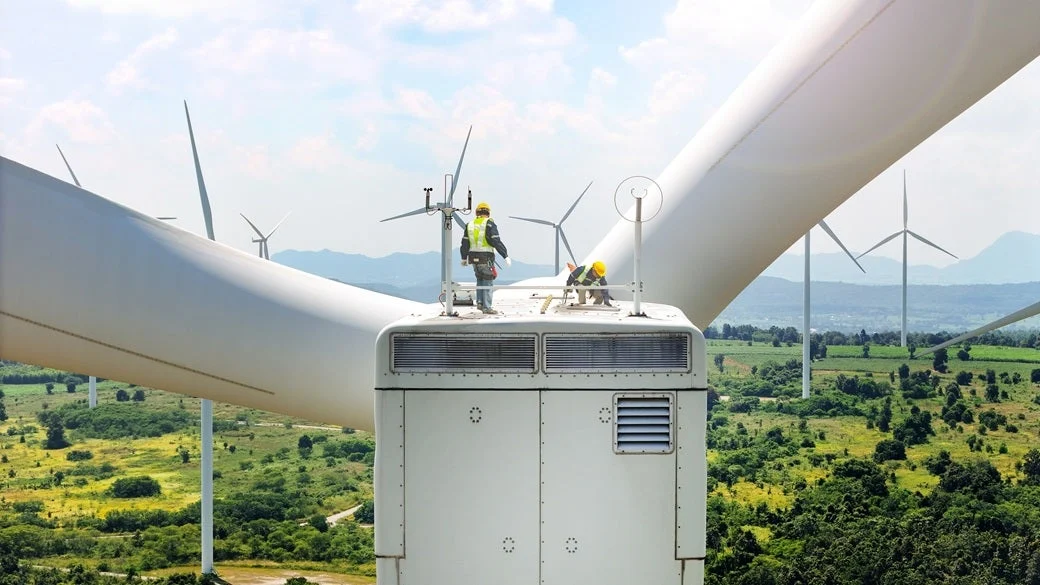
In the rapidly maturing wind energy sector, the focus is shifting from initial deployment to long-term asset optimization. As wind farms globally begin to age, operators are confronting the harsh reality of "mid-life" mechanical challenges. Wind turbines are engineered to endure extreme environmental stressors—ranging from erratic thermal cycling and moisture ingress to the punishing mechanical loads of variable-speed operation. At the heart of this resilience lies a frequently overlooked but mission-critical component: the lubricant.
A forthcoming industry webinar, “Extreme Conditions, Maximum Reliability: Navigating Wind Turbine Lifespan Management,” scheduled for 30 July 2026, aims to redefine how the industry views oil. Rather than treating lubricants as mere consumables or secondary maintenance costs, the session will advocate for a shift toward viewing high-performance lubrication as a strategic asset capable of extending the operational life of multi-million-dollar gearboxes.
The Main Facts: Lubricants as the Lifeblood of Wind Assets
The primary challenge for wind operators today is the convergence of supply chain volatility, a persistent shortage of skilled labor, and the rising cost of Operations and Maintenance (O&M). When a gearbox fails, the financial impact extends far beyond the cost of parts; it encompasses the logistical nightmare of crane mobilization, lost production revenue, and potential grid penalties.
The webinar will posit that proactive lubricant management is the most effective lever for mitigating these risks. By treating oil condition as a high-fidelity performance indicator, operators can move away from reactive "break-fix" cycles. Instead, the industry is moving toward a model where lubricant analysis acts as an early-warning system, identifying microscopic wear signals and chemical degradation long before they manifest as catastrophic mechanical failure.
Chronology of Asset Health: From Installation to Life-Extension
The lifecycle of a turbine is a journey of increasing mechanical strain. Understanding this chronology is vital for reliability engineers:
- Commissioning Phase: The initial period where lubricant selection is dictated by OEM specifications and environmental certifications. The focus here is on establishing a baseline.
- Operational Maturity (Years 1–7): The period of variable loading where additive depletion begins. Without rigorous monitoring, oxidative stress can begin to degrade the oil’s protective film.
- Life-Extension Phase (Year 10+): As turbines reach their original design lifespan, the focus shifts to extending operational viability. This is where advanced lubricant formulation—tailored to specific site conditions—becomes the difference between decommissioning and profitable continued operation.
The webinar will emphasize that this timeline is not fixed. A disciplined, data-driven lubrication strategy can effectively "reset" the clock on certain wear-related issues, allowing owners to sweat their assets for an additional five to ten years with confidence.
Supporting Data: The Science of Formulations
Lubricants are complex chemical cocktails, typically consisting of 90% to 99.5% base stock and a critical 0.5% to 10% additive package. Each additive—be it an anti-wear agent, a rust inhibitor, or a viscosity index improver—performs a precise, essential function. However, the performance of these chemicals is not static; it is governed by the laws of chemistry under extreme heat and pressure.
The Role of Standards
Because it is prohibitively expensive to conduct full-scale field testing for every possible operating scenario, the industry relies on standardized testing frameworks. The upcoming discussion will highlight the importance of:
- AGMA (American Gear Manufacturers Association) standards: Crucial for assessing gear health.
- ISO and DIN standards: These provide the international language for testing, ensuring that data gathered in a North Sea wind farm is comparable to data from a desert facility in the Middle East.
Without these standardized benchmarks, operators risk generating "noisy" data—information that appears significant but fails to support actionable conclusions. The webinar will provide a roadmap for moving from raw sensor data to a coherent, actionable reliability plan.
Official Perspectives: Shifting the O&M Paradigm
Industry experts often highlight a persistent cultural hurdle: the tendency to minimize oil costs during the procurement phase. By selecting "cheaper" lubricants, operators may save pennies on the liter but incur thousands of dollars in hidden costs through accelerated bearing wear and increased filter consumption.
"The goal," according to proponents of advanced lubrication, "is to align technical decisions with commercial targets." This means viewing the oil change not as a routine chore to be done as cheaply as possible, but as a critical intervention. By investing in higher-grade synthetic formulations and proactive monitoring, operators can achieve:
- Fewer Unplanned Stoppages: Reducing the need for emergency crane rentals.
- Predictable Service Intervals: Moving from time-based maintenance to condition-based maintenance.
- Enhanced Residual Value: A turbine with a documented, clean, and well-maintained gearbox is a significantly more valuable asset on the secondary market.
Oil Cleanliness: The Silent Enemy of Performance
One of the most significant segments of the webinar will focus on solid particle contamination. Even sub-micron particles, when trapped between moving surfaces in a high-torque gearbox, act as an abrasive paste. This accelerates material fatigue, lowers output efficiency, and drastically increases the consumption rate of spare parts.
For O&M teams, the integration of advanced sensors and standardized oil sampling is the bridge to true predictive maintenance. Modern sensors can now monitor moisture, viscosity, and particle count in real-time. When this data is integrated into a fleet-wide management system, it allows central engineering teams to prioritize site visits based on actual health, rather than arbitrary calendar dates.
Implications for the Future of Wind Energy
The implications of this shift are profound. As the global push for renewable energy continues to accelerate, the "low-hanging fruit" of new installations is being supplemented by the urgent need to keep existing farms running at peak efficiency.
The industry is currently at a turning point. As turbines grow larger and are placed in more demanding offshore environments, the margin for error is shrinking. A lubricant is no longer just a fluid; it is a vital mechanical component. The ability to monitor, analyze, and optimize this component will determine which operators lead the market in the coming decade and which ones are hampered by the spiraling costs of unplanned downtime.
How to Participate
For asset managers, reliability engineers, and O&M leaders, the webinar serves as a comprehensive primer on the latest technologies and methodologies in lubrication. By attending, participants will gain:
- Insight into formulation science: Understanding how to select lubricants that match the specific speed, load, and temperature profiles of their fleet.
- Data-driven strategy: Learning how to design a field trial that yields statistically significant results.
- Economic justification: Gaining the language needed to convince stakeholders that lubricant management is a capital-preserving strategy, not just an operational expense.
The path to maximizing the lifespan of wind turbines is paved with details—and few details are as significant as the quality and management of the lubricant within the gearbox.
Register for the webinar, Extreme conditions, maximum reliability: Navigating wind turbine lifespan management, and join the conversation on the future of wind energy reliability. Register here.