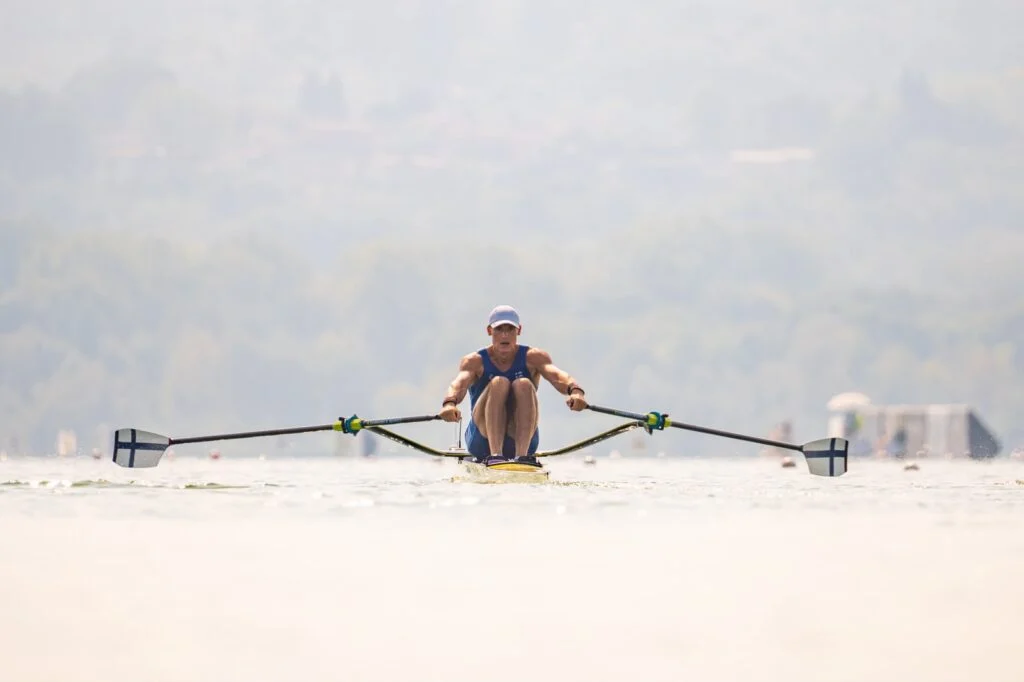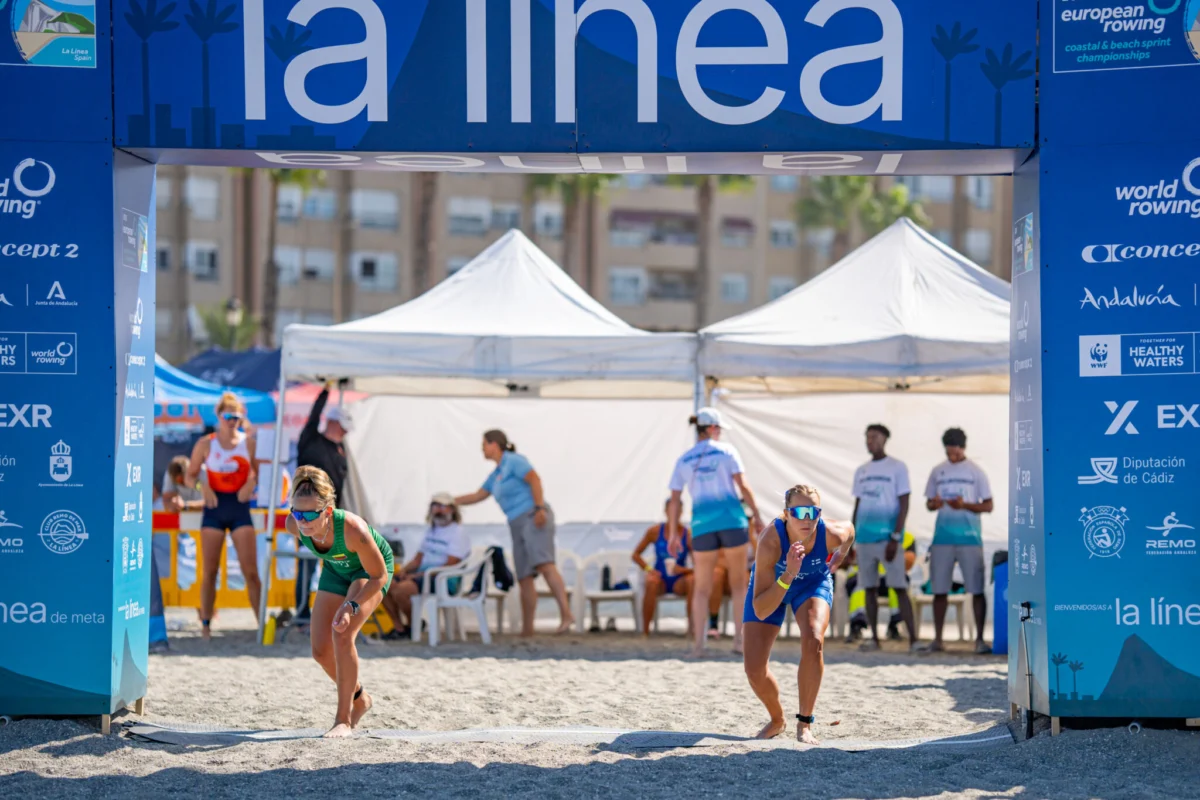
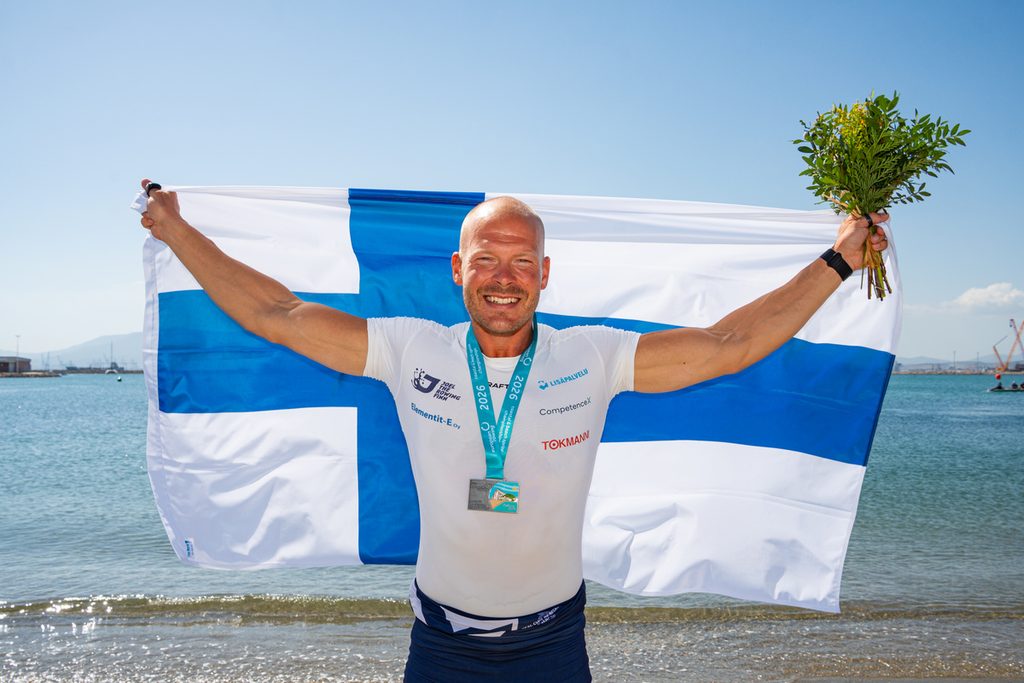
La Línea, Spain – September 17, 2026 – Finnish rowing achieved a monumental breakthrough on Thursday at the European Coastal Rowing Beach Sprint Championships in La Línea, Spain, as Joel Naukkarinen powered his way to a silver medal in the men’s solo event. This historic achievement marks Finland’s first-ever European Championship medal in the burgeoning discipline of coastal rowing beach sprint, firmly placing the nation on the continental map of this dynamic sport.
Naukkarinen’s stellar performance was the highlight of a strong showing by the Finnish contingent, which also saw Tiia-Maria Rauttola advance to the top eight in the women’s solo, and the mixed double crew of Eeva Karppinen and Naukkarinen similarly reach the quarter-final stage, securing a commendable top-eight finish. The success underscores Finland’s growing prowess in coastal rowing, a discipline poised for its Olympic debut at the Los Angeles 2028 Games.
A New Era for Finnish Rowing: Main Facts
The European Coastal Rowing Beach Sprint Championships, held against the picturesque backdrop of La Línea’s coastline, proved to be a landmark event for Finnish athletes. The format, a thrilling combination of a beach sprint start, a challenging row around buoys, and a final sprint back to the finish line on the sand, demands a unique blend of athleticism, technical skill, and strategic acumen.
Joel Naukkarinen, a name now etched in Finnish rowing history, demonstrated an exceptional command of these elements. His silver medal in the men’s solo (CM1x) event is not merely a personal triumph but a significant milestone for the Finnish Rowing Federation. It signals a dramatic ascent for Naukkarinen, who just last year placed 12th at the same championships, and highlights the rapid development within the Finnish coastal rowing program.
Beyond Naukkarinen’s individual brilliance, the overall performance of the Finnish team was robust. Tiia-Maria Rauttola’s journey to the top eight in the women’s solo (CW1x) showcased her competitive spirit and skill in navigating the unpredictable coastal conditions. The partnership of Eeva Karppinen and Joel Naukkarinen in the mixed double (CMix2x) also proved formidable, battling through tough elimination rounds to secure a top-eight position, reinforcing the depth of talent emerging from Finland.
The championships also featured junior categories, where Kasper Salmi and Saaga Hakala gained invaluable international experience in their respective solo events and as a mixed double, laying the groundwork for future Finnish success.
Naukkarinen’s Chronological Ascent to European Silver
Joel Naukkarinen’s path to the podium was a masterclass in progressive performance and tactical execution, unfolding across two intense days of competition. His journey began on Wednesday with the time trial phase, where raw speed and clean technique against the clock were paramount.
Wednesday’s Time Trials and Elimination:
Naukkarinen started his campaign with a solid seventh-place finish in the initial time trial, clocking in at 2 minutes and 31.43 seconds. While a respectable start, it was clear he had more to unleash. The time trials are crucial for seeding, and Naukkarinen’s position put him in good stead for the direct elimination rounds that followed.
In the subsequent elimination round, Naukkarinen truly found his rhythm. Facing Croatia’s Mihael Girotto in a head-to-head sprint, the Finn displayed superior power and boat handling. He decisively won the heat with a time of 2 minutes and 47.44 seconds, against Girotto’s 2 minutes and 49.49 seconds. Crucially, Naukkarinen’s time in this heat was the fastest of the entire elimination round, a powerful statement of intent and a clear indication that he was a serious contender for the medals. This early dominance demonstrated his ability to adapt to the variable conditions and execute under pressure, a critical attribute in coastal rowing.
Thursday’s Knockout Rounds and the Grand Final:
The momentum carried into Thursday, the day of the decisive knockout rounds. The stakes were higher, with each race being a do-or-die battle for progression.
Quarter-Final: Naukkarinen was drawn against Zygimantas Galisanskis of Lithuania. In a commanding display, Naukkarinen left no doubt about his intent, winning convincingly with a time of 2 minutes and 24.34 seconds, significantly ahead of Galisanskis’s 2 minutes and 33.21 seconds. This victory secured his spot in the semi-finals, bringing him closer to a historic medal.
Semi-Final: The semi-final pitted Naukkarinen against Poland’s Fabian Baranski. Again, Naukkarinen demonstrated his class, navigating the challenging course with precision and power. He secured his place in the grand final with a comfortable victory, finishing in 2 minutes and 47.04 seconds, while Baranski recorded 3 minutes and 5.81 seconds. This win guaranteed Naukkarinen at least a silver medal, an unprecedented achievement for Finnish coastal rowing. The relief and elation of securing a medal were palpable, but the focus quickly shifted to the ultimate prize.
The Grand Final: The pinnacle of the competition saw Joel Naukkarinen face the home favourite, Ander Martin of Spain. The atmosphere was electric, with the Spanish crowd roaring for their national hero. The final was a fierce contest, pushing both athletes to their absolute limits. Martin, fueled by the home advantage and an exceptional performance, ultimately claimed the European Championship title with a time of 2 minutes and 33.34 seconds. Naukkarinen, despite a valiant effort, crossed the line in 2 minutes and 43.97 seconds, securing a magnificent and well-deserved silver medal. While the gold eluded him this time, the silver was a historic feat, solidifying his position among Europe’s elite.
It is important to note, as the original report rightly highlights, that direct comparisons of times between different rounds in coastal rowing beach sprint can be misleading. The dynamic nature of the marine environment – including shifting wave patterns, fluctuating wind speeds, and tidal currents – means that conditions can vary significantly from one heat to another, even within a short timeframe. This inherent variability adds another layer of challenge and excitement to the sport, demanding constant adaptation from the athletes.
Supporting Data and the Demands of Coastal Rowing
Naukkarinen’s incredible leap from 12th to 2nd within a single year speaks volumes about his dedication, improved training regimen, and refined technique. The raw data of his race times, even with the caveats of environmental variability, illustrates a consistent ability to perform at the highest level:
- Time Trial (Wednesday): 2:31.43 (7th)
- Elimination vs. Mihael Girotto (CRO): 2:47.44 (fastest of the round)
- Quarter-Final vs. Zygimantas Galisanskis (LTU): 2:24.34
- Semi-Final vs. Fabian Baranski (POL): 2:47.04
- Final vs. Ander Martin (ESP): 2:43.97 (Silver)
These figures, combined with the context of his opponents’ nationalities (Croatia, Lithuania, Poland, Spain), underscore the pan-European competition faced and overcome by Naukkarinen. The margins in these races, sometimes mere seconds, highlight the intensity and the fine line between victory and defeat.
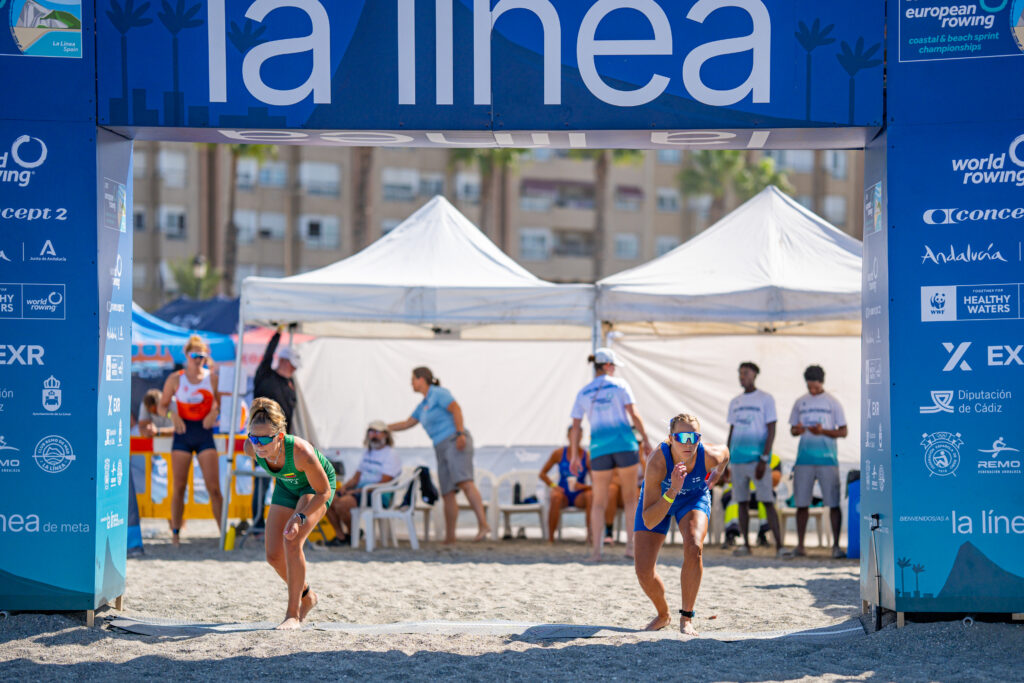
Coastal rowing, particularly the beach sprint format, is a physically gruelling and technically demanding discipline. It commences with a land sprint by the rower from a starting line to their boat, which is positioned on the sand at the water’s edge. After launching the boat into the waves, the rower navigates a course marked by buoys, typically involving a short out-and-back sprint, a turn around a buoy, and a return to the beach. The final segment requires the rower to exit the boat and sprint back across the sand to the finish line. This multi-faceted challenge tests endurance, explosive power, boat handling skills in rough water, and rapid transitions between land and water. The ever-changing conditions of the sea add an element of unpredictability, requiring rowers to be exceptionally adaptable and resilient.
Other Finnish Successes: Rauttola and the Mixed Double
While Naukkarinen’s silver shone brightest, the performances of other Finnish rowers were equally commendable, showcasing the breadth of talent within the national team.
Tiia-Maria Rauttola in Women’s Solo:
Tiia-Maria Rauttola demonstrated her capabilities by reaching the top eight in the women’s solo (CW1x) event. Her journey culminated in a hard-fought quarter-final race against Raminta Morkunaite of Lithuania. In a closely contested battle, Morkunaite ultimately prevailed with a time of 2 minutes and 44.70 seconds, while Rauttola finished in 2 minutes and 54.48 seconds. Despite the loss, reaching the quarter-finals at a European Championship is a significant achievement and a testament to Rauttola’s dedication and skill in a highly competitive field. Her performance contributes valuable points and experience to the Finnish team, reinforcing their presence at the elite level.
Karppinen and Naukkarinen in Mixed Double:
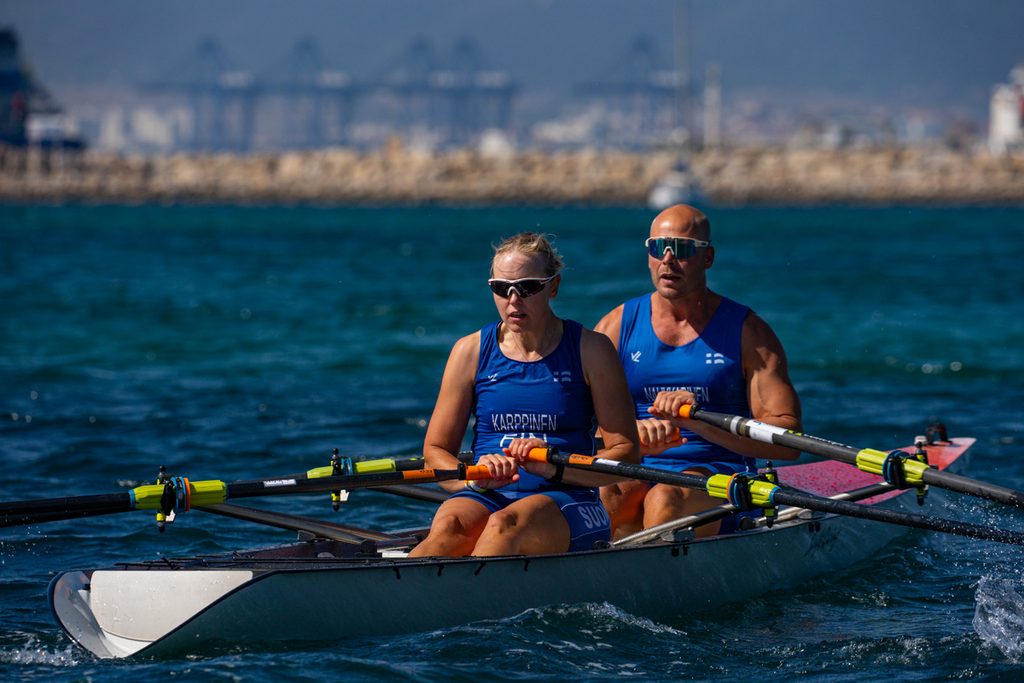
The mixed double crew of Eeva Karppinen and Joel Naukkarinen also delivered a strong performance, navigating their way into the top eight. Their campaign on Thursday morning began with a thrilling elimination heat against the Italian duo of Federica Cesari and Federico Ceccarino. In a nail-biting finish, the Finnish pair edged out their Italian rivals with a time of 2 minutes and 17.79 seconds, just ahead of Italy’s 2 minutes and 18.27 seconds. This narrow victory propelled them into the quarter-finals, demonstrating their ability to perform under extreme pressure.
In the quarter-finals, Karppinen and Naukkarinen faced another formidable Lithuanian team, Martyna Kazlauskaite and Dominykas Jancionis. The Lithuanians proved too strong on the day, winning with a time of 2 minutes and 18.61 seconds against the Finnish pair’s 2 minutes and 20.61 seconds. Their journey ended at this stage, but a top-eight finish in a European Championship mixed double event is a highly respectable result, especially considering the intense competition and the demanding nature of the mixed boat class. Naukkarinen’s ability to perform at such a high level across multiple boat classes within the same championship is particularly noteworthy, highlighting his exceptional versatility and endurance.
Junior Development: The Future of Finnish Coastal Rowing
The presence of Finnish junior athletes at the European Championships underscores the national federation’s commitment to long-term development in coastal rowing. Kasper Salmi competed in the boys’ solo (CJ M1x), and Saaga Hakala in the girls’ solo (CJ W1x), with both also teaming up for the junior mixed double (CJ Mix2x).
While the junior competitions concluded for the Finnish athletes in the time trial phase, their participation is crucial for gaining international exposure and experience. Salmi’s time trial rankings of 19th and 10th, and Hakala’s 17th and 11th in their respective solo events, show glimpses of potential. As a mixed double, they placed 18th and 11th in their time trials. These initial steps on the international stage are vital for their development, allowing them to benchmark themselves against their European peers and understand the level required for future success. The lessons learned from competing in challenging coastal conditions at such a high-profile event will undoubtedly serve as a powerful motivator and foundation for their future careers in the sport.
Official Responses and Implications for Finnish Rowing
While direct quotes from Finnish Rowing Federation officials were not available in the initial report, the sentiment surrounding Joel Naukkarinen’s silver medal and the team’s overall performance is undoubtedly one of immense pride and optimism.
Implications:
- Historic Milestone: Naukkarinen’s silver medal is a watershed moment for Finnish rowing. It provides tangible proof of the nation’s capacity to compete at the highest European level in coastal rowing. This achievement will likely galvanize interest in the sport within Finland, both among potential athletes and the wider sporting public.
- Increased Visibility and Support: Such a high-profile medal is invaluable for raising the profile of coastal rowing within Finland. It could lead to increased media coverage, greater public awareness, and potentially more funding from sports bodies and sponsors. This financial and popular support is crucial for developing infrastructure, acquiring specialized coastal rowing equipment, and supporting athlete pathways.
- Pathway to Los Angeles 2028: With beach sprint rowing confirmed for the 2028 Los Angeles Olympics, Naukkarinen’s medal positions Finland as a serious contender for Olympic qualification and future medals. This success provides a clear roadmap and motivation for athletes and coaches alike, focusing efforts towards the ultimate sporting prize. The experience gained at these European Championships, particularly in adapting to varied conditions, will be invaluable in preparing for the diverse coastal environments that future Olympic venues might present.
- Inspiration for Future Generations: Naukkarinen, Rauttola, Karppinen, and the junior athletes serve as powerful role models. Their success demonstrates that Finnish rowers can achieve international acclaim in this exciting new discipline, inspiring a new generation to take up coastal rowing. The junior participation at these championships is a testament to the federation’s foresight in cultivating future talent.
- Strategic Development: The detailed analysis of performances, both successes and areas for improvement, will inform the Finnish Rowing Federation’s strategic planning for coastal rowing. This will involve refining coaching methodologies, optimizing training camps, and potentially expanding the network of coastal rowing clubs across Finland. The challenging conditions of La Línea also offer crucial data points for how Finnish athletes cope with high winds and waves, essential for tailoring future training.
The European Championships are not just about immediate results; they are also about gathering intelligence and building experience. The strong showing in La Línea provides a solid foundation upon which the Finnish Rowing Federation can build, fostering a robust and competitive coastal rowing program for years to come.
The Championships Continue: Endurance Races Ahead
Following the exhilarating beach sprint events, the European Coastal Rowing Championships in La Línea are set to continue with the endurance races. These longer-distance events will test the athletes’ stamina and tactical prowess over extended periods on the open water, presenting a different set of challenges compared to the explosive nature of beach sprints. The championships will conclude on Sunday, September 20th, with hopes high for further strong performances from the Finnish team in these demanding races.
The success in La Línea marks a pivotal moment for Finnish rowing. Joel Naukkarinen’s silver medal is not just a personal achievement but a beacon of progress, illuminating a promising future for Finland in the dynamic and rapidly evolving world of coastal rowing. The dedication of athletes, coaches, and the Finnish Rowing Federation is clearly paying dividends, setting the stage for even greater accomplishments on the international stage.
Photos: Balint Czucz