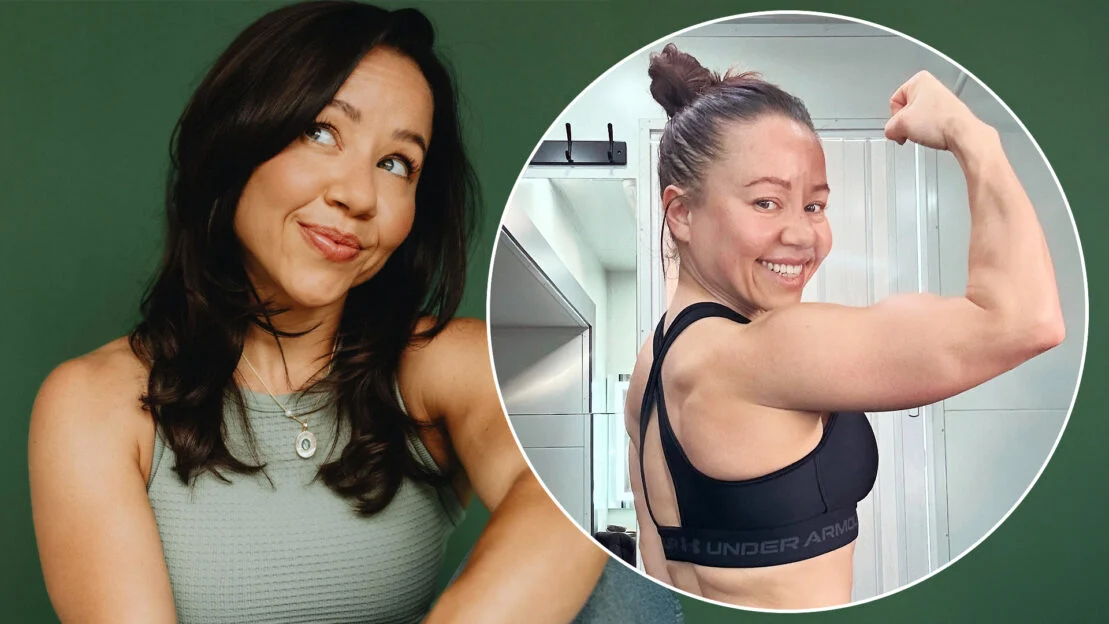
In the sprawling, cinematic landscape of The Odyssey, the line between fiction and reality is often blurred by digital wizardry and high-budget production design. Yet, when audiences watched the epic battle scenes unfold on the big screen, the chiseled, battle-hardened arms of the film’s protagonist, Odysseus, were not merely a product of post-production CGI. They belonged to Canadian stunt performer Devyn Dalton.
So impressive was her physique during the filming of the project that even Oscar-winning actor Matt Damon—the face of the character—was reportedly left in awe. Damon famously dubbed Dalton’s arms "the greatest he’d ever seen," a testament to the rigorous, high-performance training regimen required to inhabit a lead role in one of cinema’s most physically demanding genres. As the world turns its gaze toward the woman behind the stunt double, the question arises: How does a 4-foot-6-inch powerhouse forge a physique that defies expectations and earns the praise of A-list royalty?
The Anatomy of an Athlete: Redefining Limits
For Devyn Dalton, fitness is not about vanity; it is a fundamental requirement of her profession. As a performer who specializes in stunt work and motion capture, Dalton’s body is her primary instrument. Speaking with M&F Hers, she explains that her relationship with exercise shifted early in her career.
"When I started getting into stunt work and performance capture, training became less about simply ‘working out’ and more about what my body was capable of doing," Dalton reveals. "I needed to be strong, explosive, mobile, and resilient."
Dalton’s philosophy is rooted in the defiance of stereotypes. Standing at 4’6", she has spent her career challenging the assumptions that often accompany a smaller stature. For Dalton, being small does not equate to being weak; rather, it provides an opportunity to showcase what a compact, high-efficiency body can achieve when trained with precision and intensity. Her training protocol is as diverse as the roles she plays, incorporating strength training, long-distance running, Muay Thai, jiujitsu, calisthenics, and dedicated mobility work.
Chronology of a Physical Transformation
Dalton’s journey toward her current level of conditioning did not happen overnight. It was a gradual, intentional process of building physical literacy.
- The Foundation: Early in her career, Dalton focused on the basics of movement. By mastering bodyweight exercises, she built the structural integrity necessary to handle the repetitive impact of stunt work.
- Skill Acquisition: Recognizing that stunts require more than just raw strength, she integrated martial arts—specifically the striking discipline of Muay Thai and the grappling complexities of jiujitsu—to improve her timing, coordination, and spatial awareness.
- The Odyssey Prep: When she took on the role of stunt double for The Odyssey, the training reached a fever pitch. The focus shifted toward hypertrophy and functional endurance, ensuring that her arms could withstand the strain of swordplay and combat choreography while maintaining a look that matched the aesthetic requirements of the film’s lead.
- Current Maintenance: Today, Dalton follows a twice-weekly upper-body regimen designed to maintain her strength while allowing for the recovery necessary to keep performing at the highest level of the stunt industry.
Supporting Data: The "Odyssey" Workout Blueprint
Dalton’s "Odyssey" workout is a masterclass in functional strength. It avoids the monotony of traditional weightlifting, opting instead for a blend of high-intensity calisthenics and cable-based resistance. This approach builds "real-world" muscle—the kind that looks impressive on a movie poster but performs even better in a combat scenario.
The Core Workout Protocol
- Pull-ups: Dalton emphasizes a strict, controlled range of motion. By engaging the lats and driving the elbows down, she builds the back width and bicep strength necessary for a powerful frame.
- Chin-ups: Utilizing an underhanded grip, she shifts the tension toward the biceps. This move is crucial for the "sculpted" look that captured the attention of her colleagues on set.
- Dips: To round out the triceps and chest, dips are the gold standard. Dalton advises focusing on depth that respects shoulder health, prioritizing form over ego.
- Explosive Clapping Push-Ups: These are the centerpiece for explosiveness. By launching the body off the ground, she trains her fast-twitch muscle fibers, which are essential for the rapid movements required in stunt work.
- Arnold Press: A classic shoulder-builder that targets multiple heads of the deltoid, providing the rounded, capped shoulder aesthetic that defines a high-performance physique.
- Battle Ropes: These serve as the ultimate conditioning tool. By integrating the core, shoulders, and arms, they simulate the fatigue of a long battle scene, forcing the athlete to maintain intensity even under stress.
Official Responses and Industry Impact
The reaction to Dalton’s physique has been overwhelmingly positive within the stunt community. Stunt coordinators and physical trainers alike have pointed to her as a model for how smaller athletes can succeed in a field dominated by tall, muscular archetypes.
Matt Damon’s public praise was more than just a compliment; it was an acknowledgment of the invisible labor that goes into big-budget filmmaking. In an era where visual effects often replace practical stunts, seeing a human performer exhibit such high-level physical capability resonates with audiences who crave authenticity.
Furthermore, Dalton’s own social media platforms have become a hub for aspiring stunt performers. She uses her influence to promote a message of "functional positivity," encouraging her followers to view their bodies as tools for adventure rather than objects to be critiqued.
Implications: The Future of "Functional" Fitness
Dalton’s rise to prominence signals a broader shift in the fitness industry. The "aesthetic-only" era of bodybuilding is increasingly being challenged by a movement toward performance-based training. People are no longer content with just looking fit; they want to know what their bodies can do.
Her advice to those looking to emulate her success is strikingly simple: "Stop comparing your body or your numbers to anyone else’s. Start where you are, learn good technique, get a little stronger over time, and find a way of training that you genuinely enjoy. Fitness should add to your life, not punish you."
The implications of this philosophy are profound. By focusing on longevity, mobility, and skill-based movement, practitioners are less likely to experience burnout and injury. Dalton’s ability to perform as a stunt double for a global star like Matt Damon proves that when an athlete focuses on the "how" rather than just the "what," the physical results—the arms, the definition, the strength—follow naturally.
Conclusion: The Road Ahead
Devyn Dalton stands as a testament to the idea that greatness is not defined by height or background, but by the relentless pursuit of one’s own potential. As she continues to choreograph and perform, her influence will undoubtedly shape how the next generation of stunt performers approaches their craft.
For those inspired to try her "Odyssey" routine, the journey begins with the first pull-up or the first set of battle rope waves. It is not about reaching the standard set by a Hollywood film; it is about reaching the standard set by your own capabilities. Whether you are looking to build the arm definition of a hero or simply seeking a more functional, powerful body, Dalton’s roadmap provides the perfect balance of discipline, science, and the sheer, infectious joy of movement.
As Dalton herself reminds us: "Fitness is about competing with yourself." And in that competition, there is no greater reward than the realization that you are capable of far more than you once believed.