In a landmark recognition of the Finnish "dual career" model, elite orienteer and medical student Akseli Ruohola has been awarded the prestigious title of Student-Athlete of the Academic Year 2025–26. The announcement, made during the European Athlete as Student (EAS) conference in Oulu, highlights the remarkable synergy between high-performance sports and rigorous academic pursuits.
Ruohola’s recognition serves as a testament to the Finnish sporting infrastructure, which supports athletes in navigating the challenging path of professional competition alongside higher education. The award, which includes a €1,500 scholarship, is presented annually by a panel representing the Finnish Olympic Committee, the Paralympic Committee, and the Athletes’ Career Foundation.
A Year of Sporting Breakthroughs
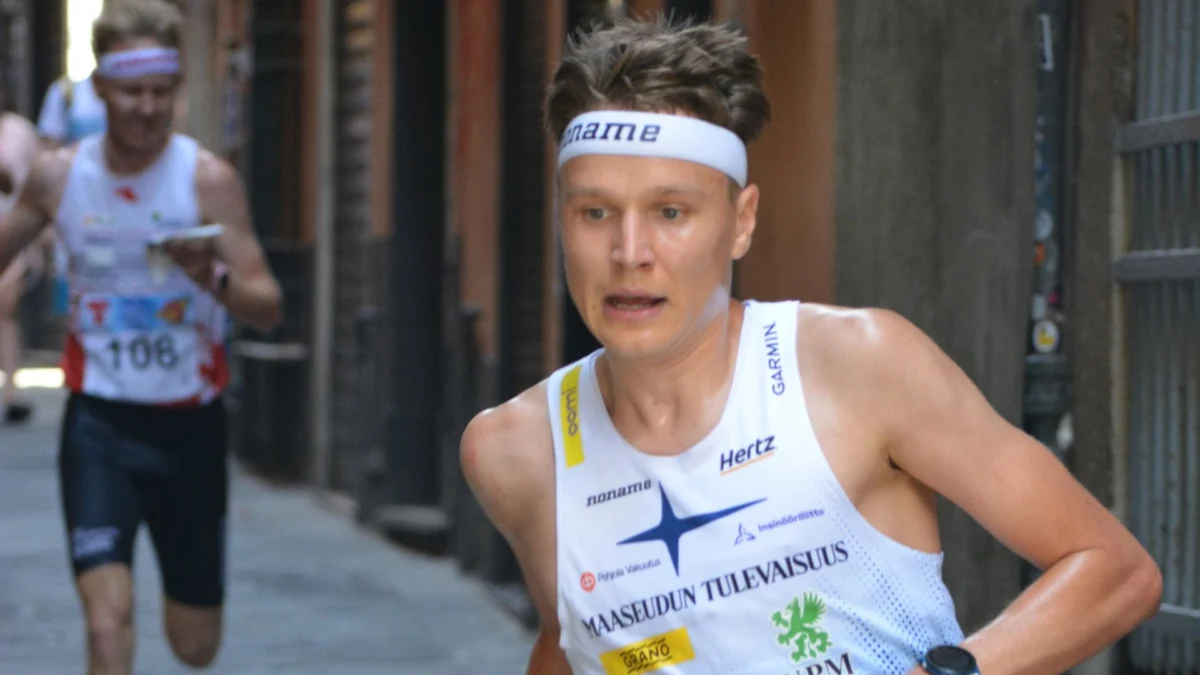
Ruohola’s selection comes on the back of an exceptional 2025 season. In July, he secured a silver medal at the World Orienteering Championships (WOC), a historic achievement that ended a 13-year drought for Finnish male sprinters in individual events. His performance, alongside teammate Tuomas Heikkilä, who claimed bronze in the same competition, signaled a resurgence in Finnish orienteering.
Ruohola did not stop there. In August 2025, he further cemented his status as a world-class athlete by clinching a bronze medal at the European Orienteering Championships. These achievements are particularly noteworthy given that they were attained while Ruohola was balancing the intense academic demands of the University of Turku’s Faculty of Medicine.
Chronology of a Dual-Career Success
The path to becoming the Student-Athlete of the Year was not paved overnight. Ruohola’s journey is a case study in meticulous time management and institutional support:
- Foundation Years: Early in his university career, Ruohola integrated himself into the Turku Region Sports Academy, which provided the structural flexibility necessary for a medical student to maintain a training volume suitable for elite-level competition.
- The Strategic Gap Year: Recognizing that both medical school and professional orienteering required 100% commitment, Ruohola opted to take a "gap year" from his studies. This strategic decision allowed him to focus entirely on his physical conditioning and mental preparation for the 2025 championship season.
- Summer 2025 (WOC Success): The culmination of his efforts arrived in July, where his silver medal in the sprint distance proved that his training strategy had paid off.
- August 2025 (European Championship): Continuing his momentum, Ruohola successfully transitioned from the WOC to the European championships, proving his consistency at the highest level.
- October 2026 (Award Recognition): Following the completion of the academic year, the selection committee formally honored Ruohola for his ability to maintain academic progression while achieving elite athletic results.
Supporting Data: The Selection Criteria
The selection panel—comprised of leaders from the Finnish Olympic Committee, the Paralympic Committee, and the Athletes’ Career Foundation—evaluated candidates based on more than just medal counts. The criteria for the award include:
- Academic Progression: Evidence of steady advancement toward a degree, despite the fluctuations of a competitive sports calendar.
- Athletic Excellence: Achievement of significant milestones at national or international championship levels.
- Integration of Skills: The ability to apply lessons learned in sports—such as discipline, spatial awareness, and pressure management—to academic life, and vice versa.
- Role Modeling: The athlete’s commitment to promoting the dual-career concept to the next generation of students.
Ruohola was specifically lauded for his transparency regarding his studies. He has frequently spoken about the importance of maintaining an identity outside of sport, arguing that the cognitive demands of medical school provide a necessary mental outlet that prevents burnout in his athletic life.
Official Responses and Reflections
Upon receiving the award, Akseli Ruohola emphasized that his success was a collaborative effort rather than a solitary achievement.
"It is a great honor to receive this recognition," Ruohola said. "Throughout my studies, I have discovered how many skills translate across domains. The focus and stress management I practice in orienteering have become assets in my medical training. I want to extend my deepest gratitude to the University of Turku and the Turku Region Sports Academy. Without their flexibility, this dual career would have been impossible."
Ruohola also offered words of encouragement to his peers: "I hope that through my example, I can show younger athletes that they do not have to choose between their education and their dreams. It is possible to pursue both with excellence."
Risto Keskitalo Honored for Lifetime Contributions
The 2025 ceremony also served as a moment to honor the architects of the Finnish support system. Risto Keskitalo, a lecturer at the Kastelli Sports High School, was presented with a special commendation for his lifelong dedication to promoting the "dual career" model.
Keskitalo is widely recognized as a pioneer in the field. He founded the Oulu Region Sports Academy, the first of its kind in Finland, and has spent decades refining the system that allows student-athletes to pursue academic excellence without sacrificing their sporting potential.
His influence has transcended national borders. Keskitalo was a founding member and coordinator of the European Athlete as Student (EAS) network, a platform that facilitates the sharing of best practices in athlete education across Europe. In 2008, he was named an honorary member of the EAS, a recognition of his role in shaping the modern European approach to athlete development.
Implications: The Future of Dual Careers
The ceremony, held in Oulu, was part of a larger EAS conference that drew over 200 experts from 17 European countries, as well as delegates from South Africa and Brazil. The event served as a global forum for discussing the evolving needs of elite athletes in an increasingly complex professional landscape.
The Holistic Athlete Model
The implications of Ruohola’s award and Keskitalo’s recognition are significant for the future of sports policy. The "Finnish Model" suggests that athletes who engage in intellectual pursuits are often more resilient, more adaptable to injury or retirement, and possess higher levels of mental well-being than those who focus exclusively on sport.
For universities and sports federations, the message is clear: the support of a dual career is not merely a service to the individual athlete, but a strategic investment in the future of human capital. By providing the structural framework—such as flexible exam scheduling, remote study options, and academic mentorship—institutions can ensure that the next generation of champions is as prepared for life after sports as they are for the competition itself.
Global Scaling
The presence of international delegates at the Oulu conference underscores that the challenges Ruohola faces are universal. Athletes worldwide are grappling with the pressure to professionalize early, which often comes at the expense of long-term career prospects. The success of the Finnish system, championed by figures like Keskitalo and embodied by athletes like Ruohola, provides a scalable blueprint.
As sports science continues to advance, the focus is shifting toward the "holistic athlete." This approach posits that the cognitive load of academic study can complement, rather than detract from, the physical training of an elite athlete. When an athlete like Ruohola can stand on a podium in July and pass a demanding medical examination in the same calendar year, it provides undeniable proof that the traditional dichotomy between "brain" and "brawn" is a relic of the past.
Conclusion
Akseli Ruohola’s recognition as the Student-Athlete of the Year is more than just a celebration of a medal-winning season. It is a validation of a lifestyle—one that demands extreme sacrifice, profound discipline, and a forward-thinking approach to life. As he continues his medical studies and prepares for future seasons, Ruohola stands as a beacon for the next generation of athletes. He proves that the pursuit of a gold medal and the pursuit of a professional career are not competing interests, but parallel paths that, when navigated correctly, can lead to a more fulfilling and sustainable life.
With the continued advocacy of mentors like Risto Keskitalo and the support of institutions like the University of Turku, the dual-career model remains one of Finland’s most valuable contributions to the global sporting community.