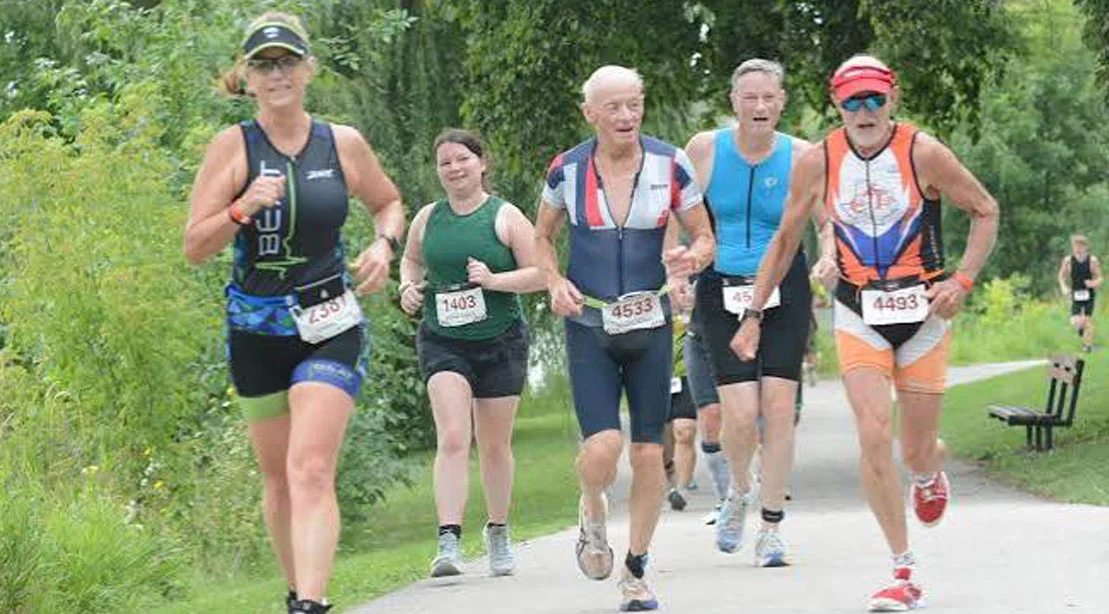
For 83-year-old Bob Plant, the Ironman World Championship in Kona is not merely a race; it is a recurring dialogue with his own mortality and resilience. A veteran of the endurance circuit with over four decades of competition under his belt, Plant has stood on the Kona start line more times than most athletes do in a lifetime. Yet, the 2026 edition of the race served as a stark, humbling reminder that even the most seasoned competitors are subject to the caprices of biology and the unforgiving nature of the clock.
In a career defined by seven Ironman age-group podium finishes and 20 USA Triathlon national titles, Plant has achieved a status that few in the sport ever reach. He is a Hall of Famer, a man whose body has been a vessel for endurance for over forty years. However, when he arrived in Hawaii this year, he discovered that experience, while valuable, does not grant immunity to the unpredictable variables of long-distance racing.
The Unthinkable Cutoff: A Race Stopped Short
The 2026 Ironman World Championship began as a familiar test for Plant, but the environment quickly turned adversarial. During the grueling bike leg, what should have been a manageable performance began to unravel. Severe cramping in his quads and hamstrings—which Plant attributes to a critical imbalance in sodium intake—began to compromise his rhythm.
Compounding the physiological distress were mechanical failures. A temperamental chain that refused to stay seated cost him precious minutes at the side of the road. In a race where every second is accounted for, these stops acted as a slow-motion dismantling of his race day. It wasn’t until he reached the second transition area that the gravity of the situation became clear. He was met with news he had never encountered in his decades of racing: he had missed the bike cutoff by a mere three minutes.
For most, this would be a catastrophic psychological blow. To have your race terminated by such a narrow margin is a bitter pill to swallow. Yet, for Plant, the reaction was not one of despair or self-flagellation. “I just turn the page,” Plant told Muscle & Fitness. “I’ve learned something, and I’m ready to get going again.” There was no post-race melodrama, no desperate grasping for excuses. There was only the calm, clinical acceptance of an athlete who understands that, occasionally, the clock simply wins.
The Philosophy of the Minimalist Athlete
What makes Plant’s longevity truly remarkable is his approach to training. He characterizes himself as a "minimalist trainer," a term that seems paradoxical for an Ironman athlete. In a sport often obsessed with "more is better"—more miles, more hours, more intensity—Plant advocates for a more sustainable, calculated path.
His training regimen is stripped of the excess that leads many endurance athletes to burnout or injury. A typical week involves two workouts for each of the three disciplines—swimming, cycling, and running—but the cornerstone of his routine is the non-negotiable rest day.
“I take one day completely off, whether I need it or not,” Plant explains. “Because if I don’t take that day off, two days later, I wish I did.” This is the wisdom of age. Plant recognizes that at 83, the primary challenge isn’t building the engine; it’s maintaining the chassis. He has abandoned speed work entirely, viewing the potential injury risk as a debt he is no longer willing to pay.
The Biological Toll: Why Strength Still Matters
Despite his success in endurance, Plant is candid about the physical declines he has observed, particularly in the years following the pandemic. The closure of gyms and the subsequent shift in his routine resulted in a noticeable loss of muscle mass—roughly seven pounds—which he feels acutely in his daily life and performance.
“I think I’ve lost about seven pounds of muscle mass because I’ve not been in the gym much,” he notes. While his endurance remains high, the loss of explosive power and raw strength has been a point of reflection. For an 83-year-old, this is not about vanity or hitting a personal best on a bench press; it is about functional independence and athletic longevity.
Plant intends to reintegrate structured resistance training into his winter cycle. His goal is clear: to reclaim the power in his legs that serves as the foundation for his mobility. As he puts it, “If you don’t have strong legs, that’s the key to life, isn’t it?”
The Intersection of Career and Capacity
Plant’s life is not defined solely by his athletic pursuits. He maintains a rigorous full-time career as a dentist, a profession he has practiced for 55 years. His typical work week involves long hours—often from 7:00 a.m. to 5:00 p.m., four days a week—followed by evening training sessions.
This balancing act serves a dual purpose. While his professional responsibilities limit his training time, they also act as a buffer against the dangers of overtraining. He cannot afford to be exhausted at the dental chair, nor can he afford to be "average" in his performance as a doctor. This standard of excellence in his professional life bleeds into his sport, and vice versa.
The psychological benefit of this lifestyle is profound. Plant argues that training provides him with the mental fortitude to handle the demands of his career, while his career provides him with the discipline to stick to a training schedule that might otherwise be abandoned on a difficult day.
Implications: The Power of Movement
Perhaps the most significant takeaway from Plant’s journey is his desire to demystify athleticism for the general public. He does not suggest that everyone should aim for an Ironman; rather, he advocates for the universal necessity of movement.
“Whether you’re walking or you’re doing some activity, just get out there and get your body moving,” he urges. He has seen the ripple effect of his example, noting that people often share their own small victories with him—a 5k run, a new lifting routine, or simply a consistent walking schedule. These moments, he claims, are more rewarding than any podium finish.
The confidence gained through physical activity acts as a shield against life’s broader stressors. When one has learned to endure the discomfort of a long-distance triathlon, the hurdles of everyday life appear significantly smaller. "You can handle an Ironman or whatever, you can handle other things in your life that may have seemed big before, but now they’re not," he says.
The Path Forward: Lessons from Kona
The 2026 Kona race was a masterclass in perspective. Plant went to the island expecting to compete, but he left with a new piece of data. The cramps and the mechanical issues were not signs that he should retire; they were simply variables in a complex equation.
For an athlete who has spent decades refining his craft, the DNF (Did Not Finish) is not a failure of character, but a temporary disruption in a lifelong pursuit. Plant’s commitment to his sport remains unshaken. He continues to view himself as a work in progress, an 83-year-old student of his own body.
“I’ll continue as long as I can,” he says, his voice reflecting a contentment that only comes from knowing exactly who you are. “As long as it’s fun.”
Appendix: The Bob Plant-Inspired Longevity Routine
For those looking to adopt a similar philosophy—prioritizing longevity, functional strength, and aerobic health—Plant’s recommended routine offers a balanced approach that avoids the pitfalls of over-exertion.
Warmup (5 Minutes)
Focus: Priming the joints and increasing core temperature.
- Easy Cycling or Brisk Walking: 3 minutes.
- Dynamic Stretches: Arm circles, leg swings, and torso rotations. 2 minutes.
Strength and Stability (15 Minutes)
Goal: Maintain muscle mass and joint integrity. Complete 3 rounds, resting 60 seconds between sets.
- Bodyweight Squats: 15 repetitions.
- Dumbbell Rows (or light resistance): 12 repetitions per side.
- Plank: Hold for 45–60 seconds.
- Step-Ups (using a low box): 10 repetitions per leg.
Sustainable Endurance (10–15 Minutes)
Goal: Aerobic capacity without high-intensity stress.
- Choose a steady-state activity: Rowing, cycling, or an elliptical.
- Intensity: Maintain a "conversational pace"—you should be able to speak in full sentences while moving.
Core and Mobility (5 Minutes)
Goal: Flexibility and spinal health.
- Cat-Cow Stretch: 10 repetitions.
- Bird-Dog: 10 repetitions per side.
- Glute Bridges: 15 repetitions.
Note: As with all exercise programs, consult with a physician before beginning, especially if you are returning to activity after a long hiatus. Listen to your body—if a movement causes pain, modify or omit it.