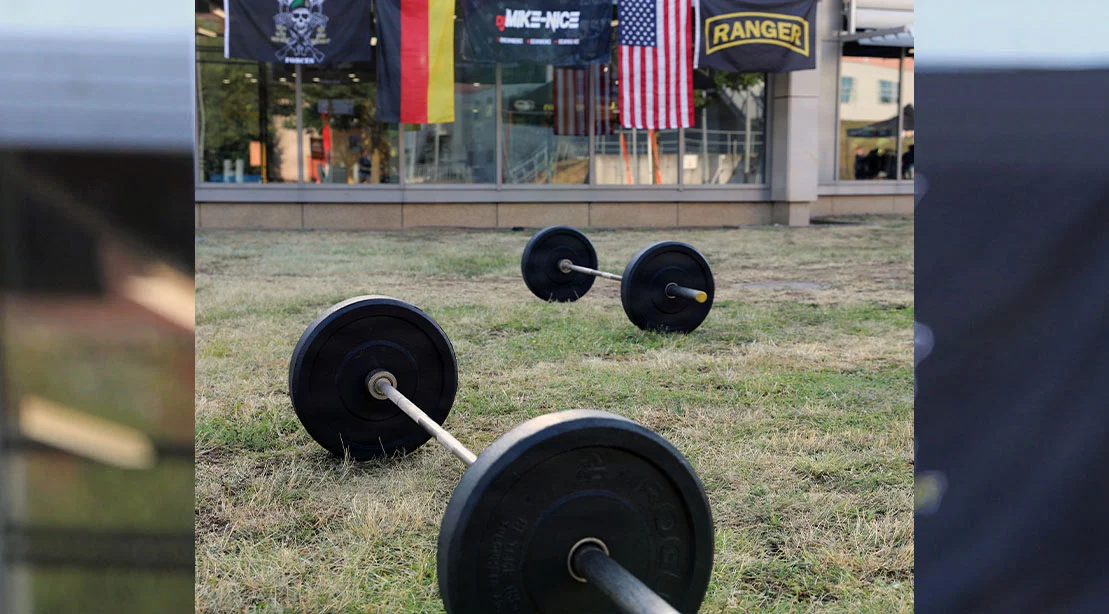
The basic premise of weight training has remained remarkably consistent for over a century: pick up something heavy, put it back down, and repeat. This uncomplicated formula forged the most formidable physiques in human history, from the sand-covered arenas of ancient strongmen to the golden-era bodybuilding legends who graced the stages of the 1970s. Long before the era of social media influencers, LED ring lights, Bosu balls, and the performative vanity of filming lunges in a crowded squat rack, the pioneers of the iron game identified a fundamental truth: human muscle responds to progressive tension.
Yet, as we navigate the third decade of the 21st century, the fitness landscape has shifted from a pursuit of strength into a labyrinth of "systems," "protocols," and "revolutionary" methodologies. In this transition, the industry has often obscured the path to progress behind a veil of unnecessary complexity.
The Evolution of the Iron Game: A Chronology of Complexity
To understand where the modern fitness industry went wrong, one must look at the historical trajectory of physical culture.
The Era of Foundation (1900–1980)
For the better part of the 20th century, gyms were "dungeon" environments. These spaces were characterized by the smell of iron, chalk, and sweat. The training methodology was centered exclusively on compound movements: the squat, the deadlift, the bench press, the overhead press, the pull-up, and the dip. Athletes understood that the body is a biological machine governed by the principle of progressive overload—the process of incrementally increasing the intensity, frequency, or duration of exercise to force physiological adaptation.
The Commercial Pivot (1980–2010)
The mid-80s and 90s saw the democratization of fitness. As gym memberships moved from the fringes to the mainstream, the industry recognized a lucrative opportunity in the suburban market. To justify higher fees and maintain a unique selling proposition in a saturated market, personal trainers began to differentiate themselves through "specialized" methods. The industry shifted its focus from the "what" (the exercise) to the "how" (the gimmick).
The Social Media Explosion (2010–Present)
The rise of platforms like Instagram and TikTok accelerated this trend. The fitness industry transformed into a visual medium where the complexity of an exercise—such as balancing on a medicine ball while juggling kettlebells—often garners more engagement than the steady, boring, and highly effective practice of linear progression on a barbell. The "circus" had arrived, and with it, a widespread dilution of training efficacy.
Supporting Data: The Case for Simplicity
Scientific literature regarding hypertrophy and strength consistently points toward a few immutable laws of physics and physiology. A meta-analysis of resistance training protocols suggests that the primary driver of muscle growth is not the novelty of the movement, but the total volume of tension applied to the muscle fiber over time.
The Principle of Mechanical Tension
Mechanical tension remains the most critical factor in stimulating muscle protein synthesis. When an individual performs a controlled squat, they place the quadriceps, glutes, and core under significant, sustained load. Conversely, exercises that prioritize balance or instability—such as performing overhead presses while standing on a Bosu ball—force the nervous system to prioritize stability over force production. Consequently, the trainee is forced to reduce the total load, thereby reducing the mechanical tension applied to the primary muscle group.
The Injury Calculus
Data from sports medicine clinics suggest that the "over-complication" of lifting has led to a rise in avoidable injuries. When trainers introduce unnecessary instability or extreme explosive movements to untrained clients, they often bypass the foundational strength required to stabilize the joints. By focusing on the "flashy" instead of the "functional," the industry has shifted the risk-to-reward ratio in an unfavorable direction for the average gym-goer.
Official Perspectives: The Industry vs. The Iron Traditionalists
The disconnect between modern "fitness influencers" and strength coaches is profound. We reached out to several veteran strength and conditioning experts who have been in the field for over thirty years. Their consensus is unanimous: the industry has prioritized customer retention through "gamification" rather than results through "discipline."
"The goal of a coach should be to make the client better, not to keep them perpetually confused so they feel they need a guide to navigate a simple movement," says one anonymous strength coach. "When you turn a squat into a complex dance routine, you aren’t training the body; you’re performing a skit. The body doesn’t know ‘methods.’ It knows stress and recovery."
Conversely, many corporate gym chains argue that these complex movements are necessary to keep fitness "engaging" and "fun" for the general population. They posit that if a client finds traditional barbell training "boring," they are less likely to maintain a consistent routine.
Practical Implications: Reclaiming Your Training
To cut through the noise, it is essential to reset your approach. The following guidelines provide a roadmap for those looking to strip away the vanity and return to results-oriented training.
The "Do" List: Building the Foundation
- Go to the Gym: The most significant barrier to progress is apathy. Consistency is the primary variable in the success equation. If you are waiting for the perfect program, you are losing progress. Start today.
- Hire a Trainer—Temporarily: A qualified trainer is an investment in your biomechanics. Use their expertise to learn the nuances of form, breathing, and safety. Once you have established a self-sufficient, high-quality movement pattern, you have outgrown the need for a rep-counter.
- Control Every Rep: Momentum is the enemy of growth. If you are swinging the weight, you are cheating your muscles out of the tension required for adaptation. Lift with intention; lower with control.
- Warm Up Properly: Prepare the joints and increase core temperature before attempting heavy loads. This is not just a suggestion; it is a prerequisite for longevity.
The "Don’t" List: Avoiding the Circus
- Don’t Walk in Blindly: Treating the gym like a playground is a recipe for injury. Study movement patterns—the hinge, the squat, the push, the pull—before applying significant resistance.
- Don’t Chase the One-Rep Max: Ego is the silent killer of gains. Training for a 1-rep maximum is a skill in itself and is largely unnecessary for the average person seeking general health or hypertrophy. Build the technique, and the strength will follow.
- Don’t Train Explosively Without Purpose: While powerlifting and Olympic lifting require explosive speed, the average trainee should prioritize controlled tension. Jerking weights around increases the shear force on your joints, leading to long-term wear and tear.
- Don’t Overcomplicate: If a trainer suggests a movement that requires three pieces of equipment, a balance board, and a leap of faith, ask yourself: "How does this make me stronger?" If the answer isn’t clear, skip it.
The Verdict: Back to Basics
The history of strength training is not one of invention, but of refinement. We have not "discovered" better ways to build muscle in the last decade; we have simply rebranded the same movements with marketing buzzwords to sell memberships, supplements, and digital courses.
Building a world-class physique is, and has always been, brutally simple. It requires a commitment to challenging the body against resistance, providing the nutrients to recover, and returning to the gym to repeat the cycle. It is the antithesis of the "quick fix" culture. It is the steady, unglamorous, and deeply rewarding process of progressive overload.
The next time you walk into a gym, ignore the bells, the whistles, and the people performing acrobatics in the squat rack. Find a barbell, load it with weight you can handle with perfect form, and get to work. The iron doesn’t care about your "system." It only cares about the work you put in. Pick up the heavy thing. Put it back down. Repeat. That worked a hundred years ago, and it remains the most effective formula in existence today.