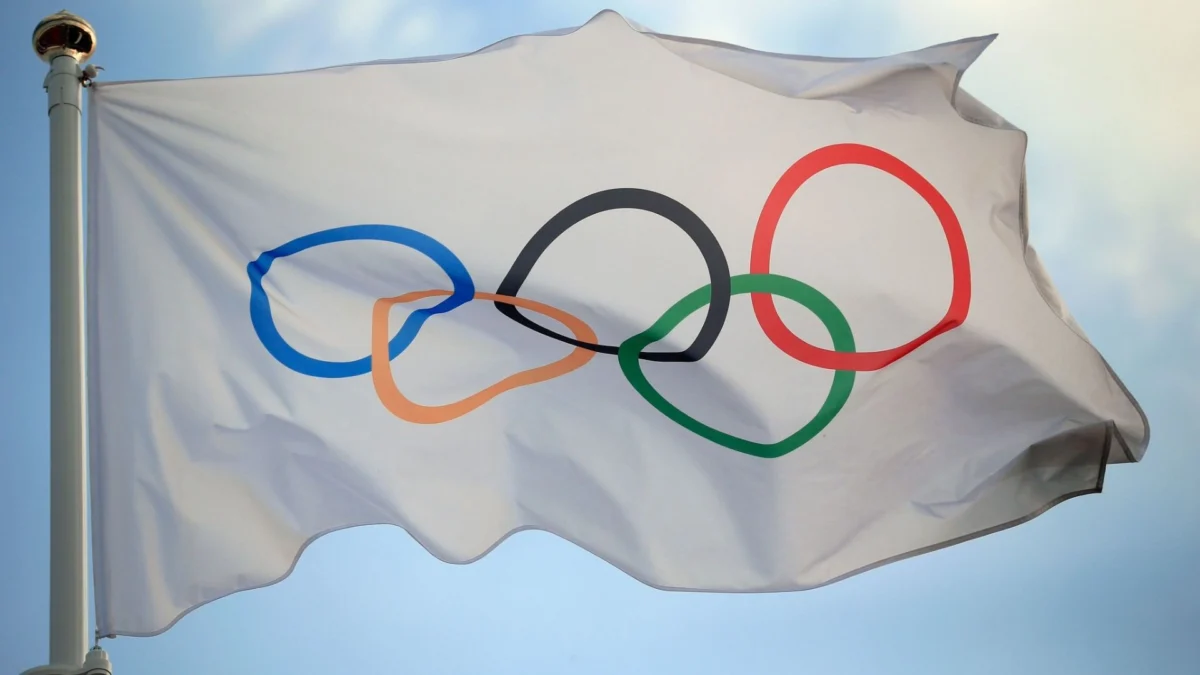
In a move that has sent shockwaves through the global sporting community, the International Olympic Committee (IOC) Executive Board announced on July 7th the provisional lifting of the suspension placed on the Russian Olympic Committee (ROC). The decision, which marks a significant shift in the IOC’s stance toward Russian involvement in international sport, has been met with immediate backlash from national governing bodies, including the Finnish Olympic Committee.
For over a year, the global sports landscape has been defined by the tension between the Olympic Charter’s promise of universal participation and the reality of an ongoing, devastating conflict in Ukraine. With the IOC’s latest announcement, the status quo has been dismantled, leaving the responsibility of athlete eligibility firmly in the hands of individual international sports federations.
Main Facts: A Shift in Governance
The IOC’s decision to lift the suspension of the ROC, which had been in effect since October 2023, is not a blanket invitation for Russian athletes to return to the world stage. Instead, it serves as a structural change in how the Olympic movement interacts with Russia.
Crucially, the IOC has rescinded its previous recommendations to international federations regarding the exclusion or strict limitation of Russian and Belarusian athletes. This shift effectively passes the baton to individual sports governing bodies, such as World Athletics, FINA (World Aquatics), and others, to determine whether and under what conditions Russian athletes may participate in their respective circuits.
The IOC clarified that while the suspension is lifted, this does not equate to an automatic reinstatement for the 2028 Los Angeles Summer Games. The committee maintains that it will issue separate, specific rulings regarding the use of national symbols—such as the Russian flag and anthem—closer to the start of the 2028 Olympic cycle.
Chronological Context: The Path to Reinstatement
To understand the gravity of the July 7th decision, one must look at the timeline of events that have defined the Olympic movement since the invasion of Ukraine in early 2022.
- February 2022: Following the full-scale invasion of Ukraine, the IOC recommended that international federations exclude Russian and Belarusian athletes from all competitions to protect the integrity of the games and ensure the safety of participants.
- October 2023: The IOC officially suspended the Russian Olympic Committee for incorporating regional sports organizations from occupied Ukrainian territories, a move the IOC deemed a breach of the Olympic Charter.
- June 25, 2025: The IOC General Assembly adopted a pivotal amendment to the Olympic Charter. This amendment emphasized "political neutrality" as a core tenet of the Olympic movement, suggesting that sports organizations must remain impartial regardless of the geopolitical environment.
- July 7, 2026: The IOC Executive Board acted upon the new Charter guidelines, formally lifting the ROC’s suspension, citing that the ROC no longer holds jurisdiction over the disputed Ukrainian territories.
The Role of the Olympic Charter
At the heart of the IOC’s justification for this move is the recently amended Olympic Charter. The amendment, ratified in June 2025, posits that the Olympic movement must function as a neutral platform.
The IOC’s legal argument rests on the principle that excluding athletes based on their nationality—or the actions of their home government—violates the fundamental human rights of the individual athlete. By removing the ROC’s suspension, the IOC is attempting to insulate the Olympic movement from the pressures of global power politics. They argue that as long as the ROC is not actively violating the sovereignty of other National Olympic Committees (NOCs) through territorial overreach, there is no technical ground to bar them from the movement.
Furthermore, the IOC has emphasized the "integrity of the qualification process." With the road to the Los Angeles 2028 Games already underway, the committee contends that a fair qualification process requires all eligible athletes to have the opportunity to compete, regardless of the political climate of their home nations.
Official Responses: Criticism from Finland
The response from the Finnish Olympic Committee has been swift and deeply critical. Riku Tapio, the Chief Executive Officer of the Finnish Olympic Committee, expressed his disappointment while acknowledging that the decision was not entirely unexpected.
"The IOC had already lowered the barriers for Belarus, and the charter amendment in June created a clear trajectory for this decision," Tapio noted. "While it did not surprise us, we consider it a regrettable step."
Tapio emphasized that for Finland, the issue is not merely about rules and regulations, but about the moral standing of sport. "The war in Ukraine continues, and its impact on the sporting world cannot be swept under the rug. The international Olympic movement and individual federations must ensure that in implementing these decisions, the independence of sport and the values of Olympism are not compromised."
He further underscored that the Finnish commitment to their Ukrainian counterparts remains ironclad. "Our support for Ukrainian athletes and the entire Ukrainian sports community remains unwavering. Sport should build peace, mutual respect, and fair competition—not act as a tool for political influence or state-sponsored propaganda."
Supporting Data: Antidoping and Compliance
One of the most persistent concerns regarding the return of Russian athletes is the issue of anti-doping compliance. Given the history of systemic doping allegations involving the Russian state, the IOC has stated that the return of these athletes will be subject to the most rigorous testing protocols.
All Russian athletes seeking to return to international competition must:
- Be fully integrated into the testing pool managed by the International Testing Agency (ITA).
- Provide a clean history of tests over a specific, extended period prior to any international appearance.
- Comply with any additional oversight mechanisms requested by the specific International Federations governing their sport.
The IOC maintains that these measures are sufficient to protect the integrity of the Games, though critics argue that state-sponsored systems are notoriously difficult to monitor from the outside, and that the lifting of the suspension may provide a platform for entities that have not adequately atoned for past infractions.
Implications for the Future
The decision to lift the ROC’s suspension has significant implications for the future of international sport. It suggests a move toward a "pragmatic" model of sports diplomacy, where the IOC prioritizes the autonomy of international federations over a unified political stance.
1. Fragmentation of the Sporting World
The immediate consequence is likely to be a fragmented international sporting landscape. Some federations may choose to continue banning Russian athletes, citing the safety of their participants and the moral weight of the conflict, while others may opt for a "neutral athlete" model. This inconsistency could lead to legal challenges, internal friction within federations, and a public relations crisis for the Olympic movement.
2. The Question of Neutrality
The IOC’s insistence on "political neutrality" is being tested as never before. By trying to stay out of politics, the IOC is, in effect, making a highly political decision. Critics argue that in a time of active warfare, "neutrality" is indistinguishable from complicity. This will continue to be a point of contention as the world approaches the 2028 Los Angeles Games.
3. The 2028 Los Angeles Factor
As the 2028 Games approach, the pressure on the IOC will only increase. Will the presence of Russian athletes under a neutral flag be enough to satisfy host nation organizers, sponsors, and the global viewing public? The "separate decision" promised by the IOC regarding national symbols will be the next major flashpoint.
Conclusion: A Delicate Balance
The lifting of the suspension on the Russian Olympic Committee is a watershed moment for the modern Olympic movement. It represents a pivot back to the traditional ideal of universal, apolitical sport—an ideal that many believe is increasingly incompatible with the realities of 21st-century global conflict.
As Riku Tapio and other leaders in the Olympic community have pointed out, the challenge moving forward is to ensure that the pursuit of inclusivity does not come at the cost of moral integrity. Whether the international federations can navigate this tightrope remains to be seen. For now, the sporting world remains deeply divided, watching closely as the Olympic movement attempts to reconcile its charter with a world that refuses to be ignored.
For more information on the official stance of the International Olympic Committee, you can visit their official press release here.
For further inquiries, contact Riku Tapio, CEO of the Finnish Olympic Committee, at +358 50 340 5550.