In the realm of physique transformation, the difference between a good chest and a world-class, stage-ready chest often lies in the nuance of biomechanics. While many gym-goers focus on the sheer volume of their pressing movements, the true secret to sculpting a balanced, aesthetic upper body lies in the deliberate application of isolation movements—specifically, the cable fly.
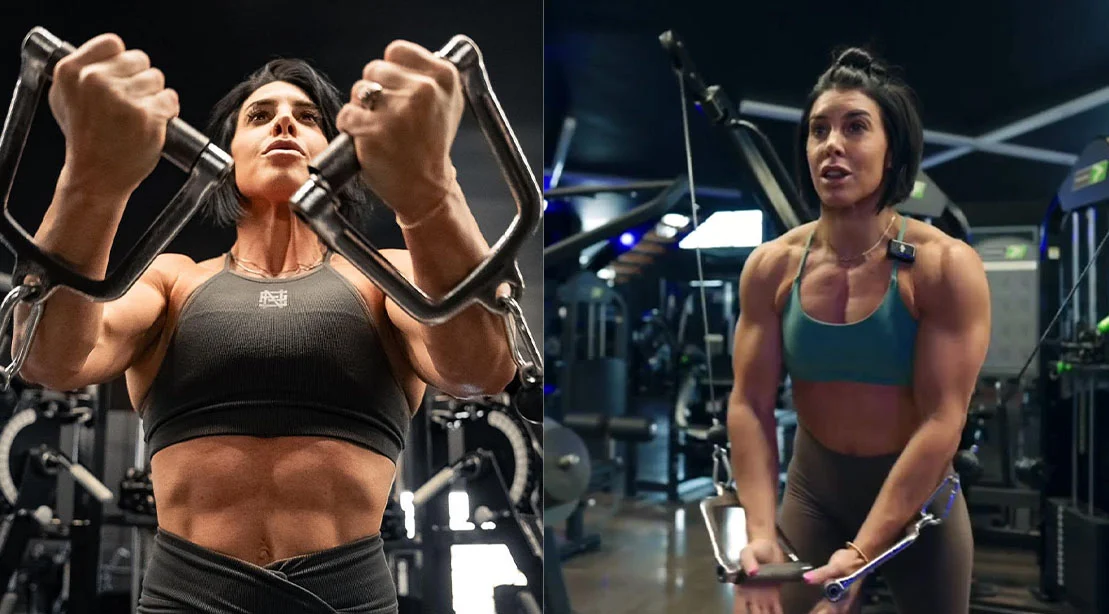
For those navigating the complexities of bodybuilding, understanding how to manipulate cable height to target specific muscle fibers is essential. To shed light on this, we turn to the expertise of Dana Linn Bailey, the inaugural winner of the 2013 IFBB Women’s Physique Olympia. With a career defined by granular attention to detail and a legendary work ethic, Bailey provides the blueprint for using the cable fly to refine and develop the pectoralis major with surgical precision.
The Main Facts: Why Cable Flyes Reign Supreme
The cable fly is a staple of chest training because of its unique tension profile. Unlike the barbell bench press, which relies on gravity and can lead to "dead spots" in the range of motion where the tension is lost, cables provide constant resistance throughout the entire eccentric and concentric phases of the movement.
When performed correctly, the cable fly allows for maximum pectoral contraction, facilitating a "squeeze" at the point of adduction—where the hands meet in the center of the body—that is difficult to replicate with free weights. As Bailey highlights, the versatility of the cable machine allows a lifter to transition from a general chest builder to a specialized tool for targeting upper, lower, or mid-pectoral fibers simply by adjusting the pulley height.
A Chronological Evolution of Chest Training
To understand why the cable fly is such a pivotal exercise, one must look at the evolution of bodybuilding methodology. In the early days of the Golden Era, chest development was largely synonymous with the flat bench press. While effective for overall mass, this approach often led to imbalances—specifically, an underdeveloped upper chest or a lack of definition in the lower "shelf" of the pectorals.
As the sport progressed into the 1980s and 90s, coaches began emphasizing the "anatomical approach." This shift recognized that the pectoralis major is not a singular, uniform slab of muscle. It consists of two distinct heads: the clavicular (upper) head and the sternocostal (lower) head.
By the time Dana Linn Bailey rose to prominence in the early 2010s, the training philosophy had shifted toward complete symmetry. Bailey’s approach represents the modern gold standard: treating the chest like a mosaic that requires specific, angled strokes to complete the picture. She advocates for the "cable-first" mindset, where the pulley system is used as a tool to bridge the gap between heavy compound pressing and refined, aesthetic finishing.
Supporting Data: Biomechanics of the Pecs
The pectoralis major’s primary function is the adduction and internal rotation of the humerus. However, the orientation of these muscle fibers changes significantly from the collarbone to the rib cage.
- The Clavicular Head (Upper Chest): These fibers run at a downward angle. To stimulate them most effectively, the arm must move from a low position to a high position (adduction at an upward angle).
- The Sternocostal Head (Lower/Mid Chest): These fibers run horizontally and upward. To hit the lower portion specifically, the arm must move from a high position to a low position.
According to exercise physiology principles, "angling" your flyes is not merely a stylistic choice; it is a biomechanical necessity. When you perform a "low-to-high" cable fly, you are aligned with the fiber orientation of the clavicular head. Conversely, a "high-to-low" fly aligns with the sternocostal head, specifically emphasizing the lower portion of the pectorals that creates the coveted "separated" look between the chest and the abdomen.
Official Insights: The Bailey Perspective
Dana Linn Bailey’s coaching philosophy is rooted in simplicity and direct application. During her breakdown of the movement, she strips away the complexity that often intimidates beginners.
The Decline Fly (High-to-Low)
"A decline fly is when the cable is at the highest position, and you’re pulling to the lowest position," Bailey explains. "When you do that, you’re targeting that lower chest, just like you would if you were doing a decline bench press. You are creating a trajectory that forces the lower pecs to do the heavy lifting during the adduction phase."
The Incline Fly (Low-to-High)
"The incline fly, or a low-to-high movement, is going to target the upper chest," she adds. "Just like we switch benches—we do flat, we do incline, we do decline—you have to do the same thing with cable flyes. If you want that ‘shelf’ appearance at the top of the chest, you have to move your hands in an upward trajectory."
Bailey’s advice is simple: If your chest is lacking in a particular area, look at your cable setup. If your upper chest is lagging, stop performing mid-height flyes and start pulling from the bottom up. If your lower chest lacks definition, start pulling from the top down.
The Implications: Why Mid-Height Flyes Aren’t Enough
A common question among gym-goers is: Why not just stick to the mid-height fly?
While the mid-height fly is an excellent movement for general fatigue and overall pectoralis recruitment, it is a "jack-of-all-trades" exercise. By keeping the pulleys at chest height, you are training the mid-pecs, but you are effectively "missing" the maximal recruitment potential for the upper and lower regions.
The implications for bodybuilders are clear:
- Aesthetic Balance: If you only train the mid-chest, you risk a "rounded" or "flat" look. Target-specific flyes create the architectural lines that define a professional physique.
- Injury Prevention: By varying the angles, you ensure that no single set of muscle fibers is perpetually overworked, while also allowing for different ranges of motion that can help alleviate strain on the shoulder joint.
- Progressive Overload: Knowing how to manipulate the cables allows you to continue making progress long after you have hit a plateau with standard pressing movements.
Integrating Cable Flyes into Your Routine
To put Bailey’s advice into practice, consider the following structural changes to your next "Chest Day":
- The Warm-up: Start with two sets of light, mid-height cable flyes to prime the joints and achieve a full range of motion.
- The Priority Work: If you are focusing on the upper chest, move your cables to the bottom position. Perform 3–4 sets of 12–15 reps, focusing on the "squeeze" at the top. Ensure your torso is slightly leaned forward to maintain the correct angle.
- The Finishing Work: To target the lower chest, move the pulleys to the top position. Perform 3 sets of 10–12 reps. Focus on driving your hands toward your hips rather than just inward.
- Tempo and Control: As Bailey often emphasizes in her training videos, the tempo is just as important as the angle. Avoid "swinging" the weight. Use a 2-second eccentric (opening the arms) and a 1-second concentric (squeezing the handles together).
Conclusion: The Path to Precision
Bodybuilding is often described as "sculpting," and the analogy is apt. Just as a sculptor would not use a chisel to carve every detail of a statue, a bodybuilder should not rely on a single exercise to develop the entire chest.
Dana Linn Bailey’s mastery of the cable fly serves as a reminder that the best results often come from the most fundamental adjustments. By respecting the biomechanical angles of the pectoralis major and utilizing the cable machine as an instrument of precision, you can move beyond general hypertrophy and into the realm of true physical refinement.
Whether you are a novice looking to build a foundation or a seasoned competitor aiming to bring up a lagging area, the key is consistency in your angles. As Bailey suggests, treat your cables with the same intentionality you treat your heavy compound lifts, and the results will speak for themselves.
For more daily tips on training, nutrition, and the mindset required for a championship physique, follow Dana Linn Bailey’s journey on Instagram.