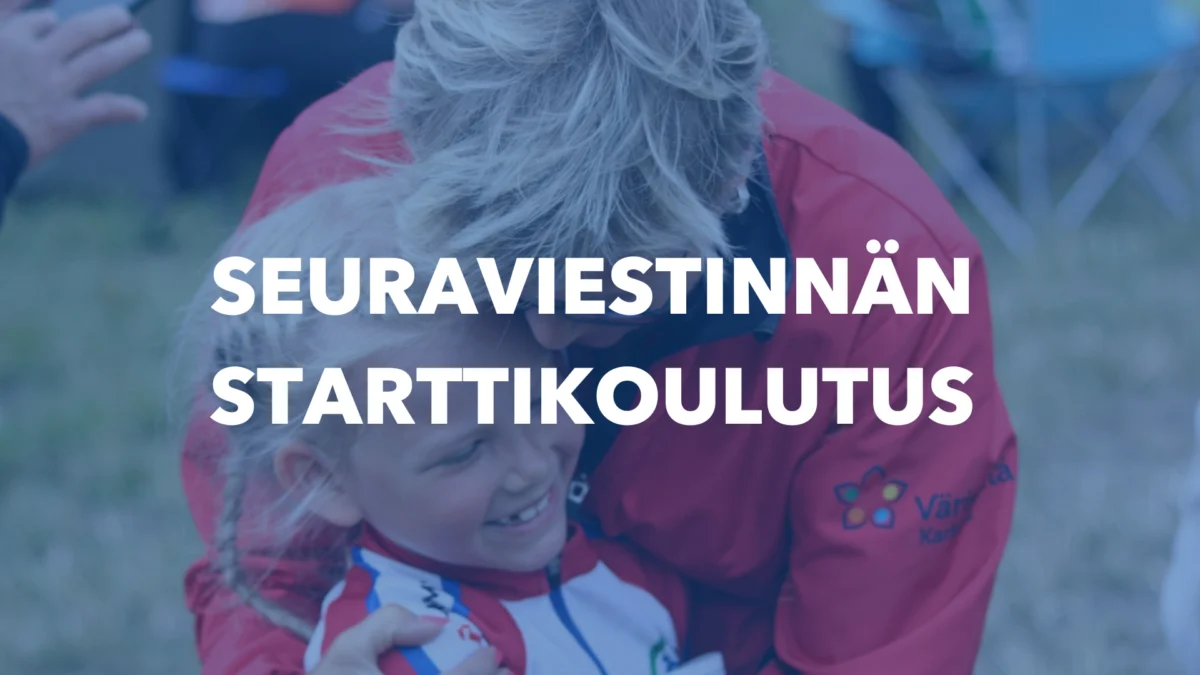
In the rapidly evolving landscape of modern sports management, the ability to communicate effectively has become as vital as athletic performance itself. Recognizing that many sports clubs struggle to navigate the complex digital ecosystem, the Finnish Olympic Committee (Olympiakomitea) has launched a robust, free-to-access initiative: the "Sports Club Communication Starter Training."
Designed to demystify the "jungle" of communication channels, this educational program aims to provide volunteers, coaches, and club administrators with the tools necessary to amplify their message, engage their communities, and protect their organizational reputation.
Main Facts: Empowering Grassroots Communication
The initiative is a response to a clear identified need within the Finnish sports community: a lack of specialized, accessible resources for club-level communications. The training program is built on the philosophy that professional communication is not the exclusive domain of large corporate entities; rather, it is a fundamental skill set that every local sports club can master with the right guidance.
Key features of the program include:
- Zero-Cost Access: The training is entirely free, removing financial barriers for smaller clubs.
- Modular Learning: Participants are not forced into a rigid curriculum; they can select specific modules based on their current gaps in knowledge.
- Practical Application: The training moves beyond theory, offering actionable templates and strategies for daily use.
- Legal Literacy: A newly added module addresses the critical, often misunderstood area of copyright law.
The initiative is not merely a top-down directive; it is a collaborative product developed in partnership with national sports federations and regional sports organizations, ensuring the content is grounded in the reality of day-to-day club operations.
Chronology of Development: From Concept to Implementation
The journey toward this comprehensive training program began with a series of feedback loops between the Olympic Committee and various stakeholders in the sports sector.
Phase 1: Needs Assessment
Throughout 2023, the Committee conducted surveys and workshops with representatives from grassroots clubs. A recurring theme emerged: clubs felt overwhelmed by the sheer volume of platforms—Facebook, Instagram, TikTok, newsletters, and websites—and lacked a cohesive strategy to manage them.
Phase 2: Collaborative Drafting
In early 2024, the Committee initiated a cross-sector task force. By bringing together professional communicators from various sport-specific federations and regional organizations, they ensured that the training would address the specific nuances of different sports—from ice hockey to gymnastics.
Phase 3: Launch and Expansion
The program launched in mid-2024 with core modules focusing on writing, social media management, and crisis communication. Following the initial rollout, user feedback prompted the immediate addition of a dedicated module on intellectual property and copyright, acknowledging the risks involved in sharing visual media in a digital-first environment.
Supporting Data: Why Club Communication Matters
The necessity of this training is underscored by the current state of digital sports engagement in Finland. Research suggests that clubs with consistent, high-quality communication enjoy several measurable advantages:
- Retention Rates: Clubs that maintain active, positive channels see higher athlete retention. Communication is the "glue" that binds a member to their club.
- Volunteer Recruitment: Effective communication makes the "behind-the-scenes" of a club visible, making it easier to attract volunteers who might otherwise feel intimidated by the club’s inner workings.
- Crisis Mitigation: In the era of instant social media, a single misunderstanding can damage a club’s reputation. The Committee’s emphasis on crisis communication provides a buffer against reputational risk.
Official Responses: The Philosophy Behind the Initiative
Representatives from the Finnish Olympic Committee emphasize that this program is part of a broader mission to professionalize the volunteer sector.
"Our goal is to lower the threshold for participation," said a spokesperson for the project. "When a parent or a coach is tasked with running a club’s Instagram page, they shouldn’t feel like they are starting from scratch. By providing a framework—from writing catchy headlines to understanding who owns the rights to a team photo—we allow them to focus on what really matters: the athletes."
The collaboration with regional organizations has also been lauded as a success. By pooling resources, the Olympic Committee has created a "national standard" of communication that ensures consistency across the Finnish sports landscape.
Deep Dive: The New Copyright Module
One of the most significant additions to the training is the module on Intellectual Property (IP) and Copyright. In the social media age, the line between personal sharing and institutional publishing has blurred. Many clubs inadvertently violate copyright laws by using unlicensed music in promotional videos or posting photos taken by professionals without proper clearance.
The new module covers:
- Image Rights: Understanding consent forms for minors in sports.
- Media Licensing: How to source royalty-free music and imagery.
- Attribution: Proper practices for crediting photographers and videographers.
- Legal Safeguards: How to avoid copyright strikes on major platforms like YouTube and Instagram.
By integrating this module, the Olympic Committee is not just teaching communication; they are providing essential risk management training that protects the club from potential legal disputes.
Implications: The Future of Sports Club Management
The rollout of this training represents a shift in how sports organizations view themselves. No longer are they just venues for physical activity; they are now digital content creators.
Long-term impacts include:
- Increased Professionalism: As more volunteers complete the training, the standard of communication across Finnish sports will rise, creating a more professional environment that attracts sponsors and partners.
- Community Building: By teaching clubs how to tell their own stories effectively, the Committee is fostering a deeper sense of identity and belonging within the Finnish sports culture.
- Data-Driven Decision Making: The training encourages clubs to track engagement, leading to a more analytical approach to growth.
A Flexible Approach for Diverse Needs
The modular design of the training is a stroke of genius in terms of accessibility. A club administrator with five minutes of spare time can watch a short video on "Writing for the Web," while a team lead preparing for a tournament can dive into "Crisis Communication" to create a plan for handling potential public relations issues.
The platform is designed to be a living resource. As social media algorithms change and new platforms emerge, the content is expected to evolve, ensuring that Finnish sports clubs remain at the cutting edge of digital communication.
Conclusion: How to Get Started
For clubs interested in participating, the path is straightforward. The training is hosted on the official Finnish Olympic Committee educational portal. Whether you are a small neighborhood football club looking to improve your match-day updates, or a regional organization coordinating hundreds of volunteers, the tools provided are designed to scale.
Effective communication is the lifeblood of a healthy sports club. It is the bridge between the club and the community, the athlete and the fan, and the volunteer and the mission. By taking advantage of this free training, clubs are not just improving their social media feeds—they are strengthening the very foundation of their organization.
The "Sports Club Communication Starter Training" is a testament to the fact that with the right guidance, any club can transform its communication strategy from a chore into a core strength. The tools are there, the training is free, and the potential for impact is significant. It is time for Finnish sports clubs to step into the digital arena with confidence.
Summary Checklist for Club Administrators:
- Audit your current channels: Which are active? Which are dormant?
- Identify your communication team: Who is responsible for content?
- Enroll in the training: Use the Olympic Committee’s portal to assign specific modules to team members based on their roles.
- Review your copyright policy: Use the new module to ensure all your past and future content is legally compliant.
- Plan your calendar: Use the training’s planning tips to create a consistent, year-round content strategy.
By investing time in these training modules, your club is investing in its own future. In a world where attention is the most valuable currency, knowing how to tell your club’s story effectively is no longer optional—it is essential.