The landscape of the North Sea’s renewable energy sector is set for a significant transformation as Belgian marine engineering giant DEME has officially secured a substantial contract for the first phase of the Zeevonk offshore wind project. This partnership, which involves the transport and installation of complex foundation structures, represents a critical step in the Netherlands’ ambitious transition toward a decarbonized energy grid.
The Zeevonk project, a joint venture between energy powerhouse Vattenfall and Copenhagen Infrastructure Partners (CIP) via its Energy Investment Fund I, is poised to become a cornerstone of the Dutch offshore wind portfolio. Located between 63 and 84 kilometers off the coast near Bergen aan Zee, the project is designed to deliver a massive 1GW of installed capacity, providing clean electricity to hundreds of thousands of Dutch households and industrial facilities.
The Scope of the Contract: Engineering Precision at Scale
DEME has categorized this agreement as a "substantial" contract, placing its valuation firmly between €150m ($171.5m) and €300m. This financial commitment reflects the sheer scale and technical complexity of the work required to stabilize wind turbines in the challenging environment of the North Sea.
Under the terms of the agreement, DEME will oversee a comprehensive logistical and installation strategy. The scope of work is extensive:
- Intermediate Transport and Marshalling: DEME will manage the complex logistical chain involving the intermediate transport of massive monopiles, as well as providing critical marshalling services for both primary and secondary steel components.
- Foundation Installation: The company is tasked with the transport and installation of 69 individual monopile foundations.
- Scour Protection: To ensure the long-term structural integrity of the foundations against the harsh North Sea currents, DEME will install a specialized filter layer for scour protection.
Technical Execution: A Fleet-Wide Effort
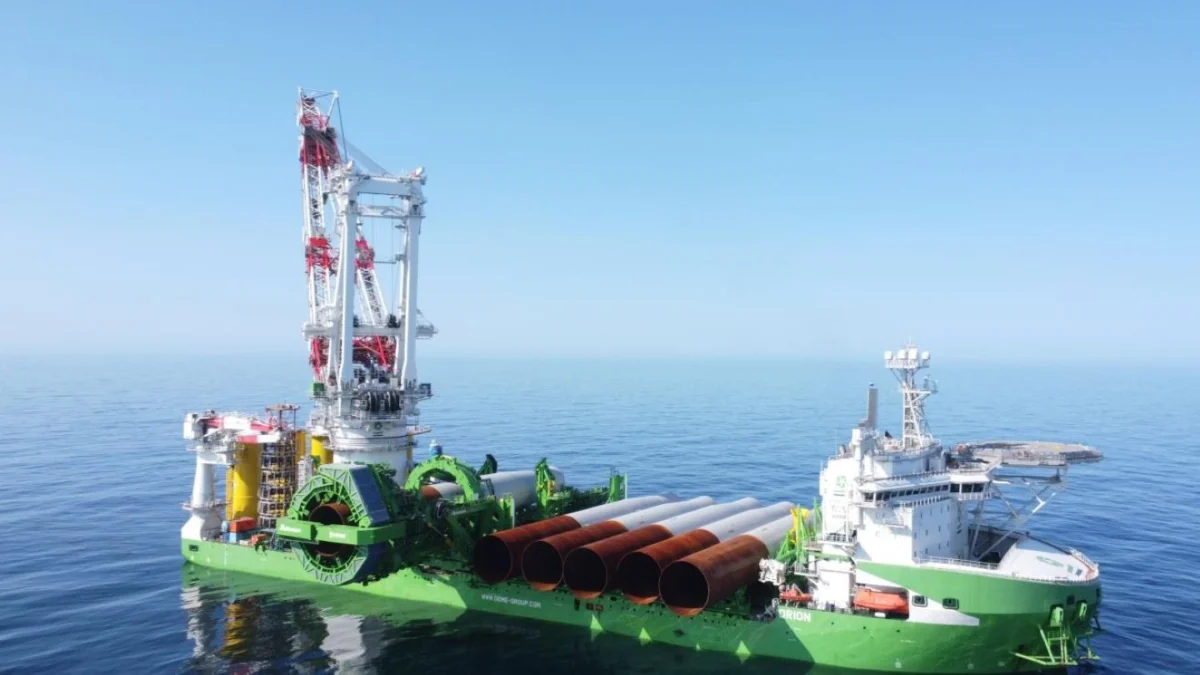
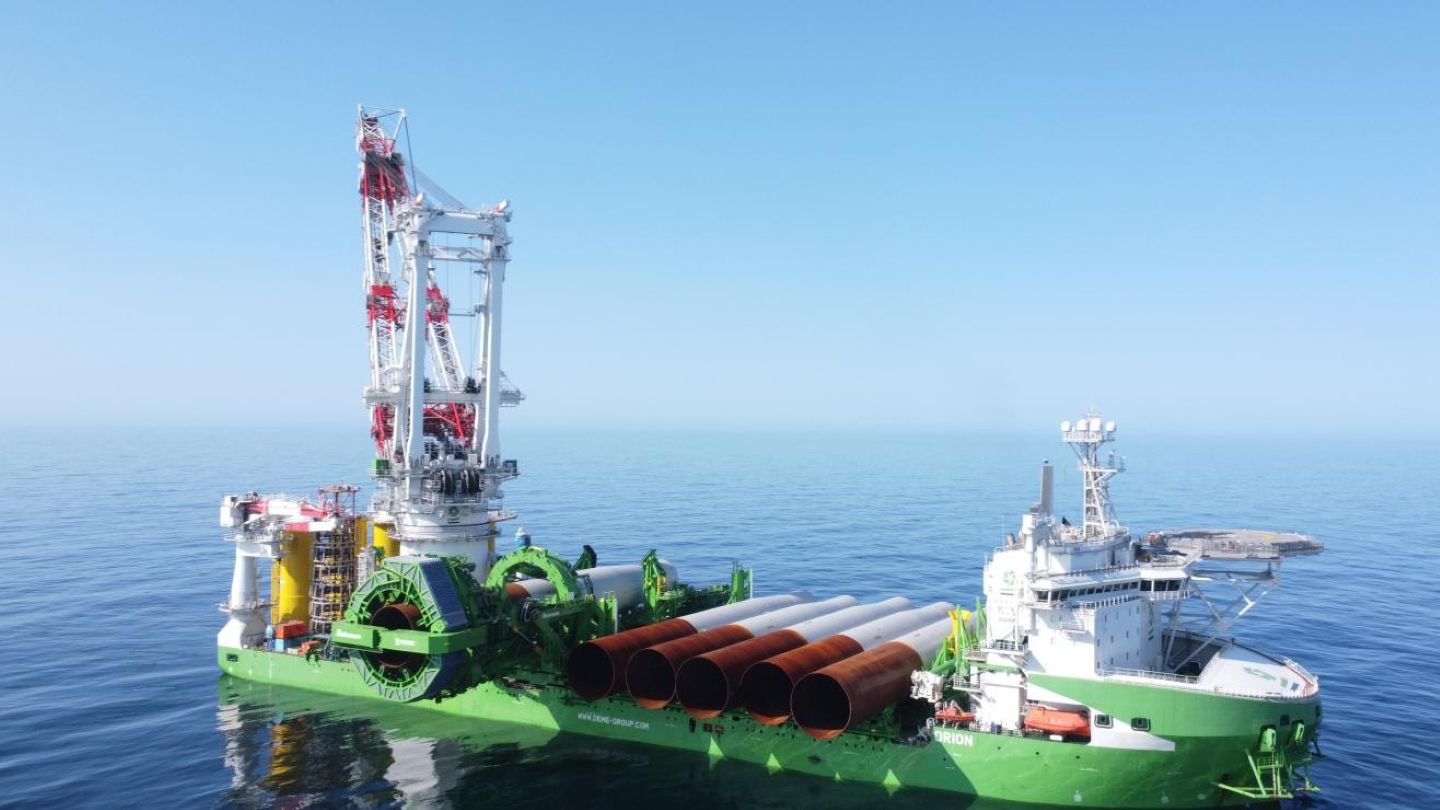
The execution of the Zeevonk project will leverage the full breadth of DEME’s high-tech offshore fleet. At the center of the monopile installation phase will be the Orion, DEME’s flagship floating offshore transport and installation vessel. Known for its high-capacity crane and DP3 (Dynamic Positioning) capabilities, the Orion is specifically engineered to handle the next generation of massive wind turbine foundations.
The project will also utilize a specialized jack-up offshore transport and installation vessel to manage secondary steel components, ensuring precision during the assembly process. Additionally, a fallpipe rock transport and installation vessel will be deployed to lay the foundation’s scour protection, a critical task that mitigates seabed erosion and secures the project’s multi-decade operational lifespan.
Chronology of Development
The path to the Zeevonk project’s current status has been one of rigorous planning and strategic collaboration.
- Project Inception: The Zeevonk development was conceived to address the growing demand for large-scale renewable energy in the Netherlands, aligning with national targets to expand offshore wind capacity significantly by 2030.
- Partnership Formation: The collaboration between Vattenfall and Copenhagen Infrastructure Partners brought together deep utility-scale experience and specialized renewable energy investment expertise.
- May 2026: DEME continued to expand its international footprint, including its successful bid for engineering and installation services in Japan’s Oga-Katagami-Akita project, setting the stage for its subsequent success with Zeevonk.
- July 2026: The formal announcement of the contract between Zeevonk and DEME confirmed the participation of one of the world’s most experienced marine contractors in the Dutch North Sea.
- 2028: The current projected timeline for the commencement of construction at sea, pending the final investment decision (FID).
Official Responses and Strategic Vision
The leadership involved in the Zeevonk project has emphasized the importance of high-caliber partnerships in executing large-scale infrastructure.
Felix Würtenberger, CEO of Zeevonk, expressed confidence in the selection of DEME. "Developing a project of this scale requires strong partnerships and deep offshore expertise. DEME has a proven track record in offshore wind, and we are pleased to welcome them to Zeevonk," Würtenberger stated. He further noted that the contract represents a "milestone" in the project’s development cycle, marking a transition from planning and procurement to active operational preparation.
For DEME, the project is a testament to their long-standing presence in the industry. Having been active in offshore foundation installation since the early 2000s, the company has played a central role in the evolution of the offshore wind sector, moving from smaller, near-shore installations to the gargantuan, deep-sea projects that define the current energy transition.
Implications for the Dutch Energy Market
The Zeevonk project is not merely an engineering feat; it is a vital component of the Netherlands’ "Energy Transition Strategy." By adding 1GW of capacity, the project directly contributes to the country’s goal of reducing carbon emissions and achieving energy independence.
1. Scaling the Supply Chain
The marshalling and transport requirements of the Zeevonk project will stimulate the local maritime supply chain. The need for specialized steel handling and logistical coordination will likely boost the role of Dutch ports and support facilities, reinforcing the region’s position as a global hub for offshore wind expertise.
2. Technological Advancement
The use of the Orion and other advanced vessels highlights a shift toward more efficient, faster, and safer installation methods. As turbines grow larger and foundations become more complex, the ability of firms like DEME to innovate becomes a key factor in reducing the Levelized Cost of Electricity (LCOE) for offshore wind.
3. Investor Confidence
The joint venture between Vattenfall and CIP highlights the attractiveness of the Dutch offshore wind market for institutional investors. By securing a contract with a tier-one contractor like DEME well in advance of the construction date, the project reduces technical and logistical risk, providing a clearer path toward the Final Investment Decision (FID).
Looking Toward the Future
As the energy industry watches the progress of Zeevonk, the focus remains on the 2028 start date. Between now and then, the project will navigate the final stages of regulatory approval, supply chain integration, and financial structuring.
The success of the Zeevonk project will have ripple effects across the European energy market. It demonstrates that even as projects move further offshore into deeper waters, the combination of advanced marine technology and experienced project management can overcome the inherent challenges of the North Sea.
For DEME, the contract is a clear validation of their strategy to invest in a versatile, high-capacity fleet. As they prepare to deploy the Orion to the Zeevonk site, the company reinforces its role not just as a contractor, but as a critical enabler of the global transition to sustainable energy.
The integration of 1GW of wind capacity is a significant win for the Dutch grid, promising a cleaner, more resilient power supply for the coming decades. With the foundation phase now firmly in the hands of one of the industry’s most capable players, the Zeevonk project stands as a beacon of progress in the global race toward Net Zero.
Disclaimer: This article provides a comprehensive overview based on current industry developments. Final project timelines and specific technical parameters remain subject to the final investment decision and ongoing regulatory review.