Mushroom foraging is often romanticized as the ultimate woodland treasure hunt—a peaceful communion with nature that rewards the patient observer with gourmet delicacies. However, the reality of foraging is fraught with hazards: the looming threat of misidentification, the fierce competition from slugs and fellow mycophiles, and the frustrating unpredictability of the harvest. For many, the desire to bypass the forest floor and bring the fungi into the home or garden is growing. Yet, as any amateur mycologist will tell you, cultivating mushrooms is not as simple as tossing a few seeds into a window box.
Fungi are finicky organisms. To thrive, they require a precise triad of elements: viable spores, a suitable nutritional food source, and a consistently humid environment. Unlike traditional vegetable gardening, which relies heavily on light and soil quality, mushroom cultivation is a delicate balancing act of managing moisture while staving off invasive molds and bacteria. Furthermore, many of the most coveted species—like porcinis or chanterelles—exist in complex, subterranean symbiotic relationships with tree roots, a biological dance that is nearly impossible to replicate in an artificial indoor setting.
Over the past year, I embarked on a rigorous, albeit amateur, exploration into the world of home mycology. As a full-time working parent, I sought to determine which methods were actually viable for the average hobbyist. I tested five distinct approaches, ranging from simple logs to high-tech automated environments. What followed was a journey of trial and error, laughter, and an embarrassing amount of chopped straw scattered across my bathroom floor. Only two of these five methods produced a successful harvest, offering a sobering lesson in the realities of home cultivation.
The Biological Constraints: Why Mushrooms Are Not Just Another Plant
Before diving into the methods, it is essential to understand the biological barriers. Fungi are not plants; they do not photosynthesize. They are decomposers, and their "roots"—the mycelium—are a sprawling, intelligent network that consumes organic matter. When you "grow" a mushroom, you are essentially providing a buffet for this mycelium and creating the right climate to trigger the "fruiting" phase, where the mushroom itself emerges.
This process is incredibly sensitive to environmental fluctuations. Contamination is the primary adversary of the home cultivator. Because mushrooms thrive in the same warm, damp environments that promote aggressive, non-edible molds, even a minor lapse in hygiene can ruin weeks of work. Balancing oxygen levels with CO2 levels, managing heat, and maintaining a high humidity without creating a stagnant, bacteria-prone environment is the "holy grail" of the hobby.

Chronology of the Trial: Five Methods Tested
My experiment spanned twelve months, testing different techniques and equipment to determine the efficacy of various "kits" and DIY methods currently on the market.
1. The Mushroom Log (The Traditionalist Approach)
The mushroom log is the most aesthetic, "natural" way to grow fungi. I utilized a kit from Williams Sonoma, consisting of a pre-inoculated log with wax-sealed ends.
- The Process: After a 24-hour soak, the log is kept in a humid area.
- The Result: I opted for a shiitake log, which requires a long colonization period. Despite following the instructions to the letter—soaking the log in May and again in July—I faced significant challenges. Green mold began to overtake the wood surface. As of my final assessment, I am still waiting for the first "pin" to emerge.
- Verdict: Highly temperamental. Unless you have a perfectly climate-controlled outdoor space, logs can be more decorative than productive.
2. The Spray-and-Grow Box (The Beginner’s Gateway)
If you are a novice looking for instant gratification, this is the gold standard. I tested kits from both Back to the Roots and North Spore.
- The Process: These kits arrive as a block of colonized substrate. You simply open the box, mist the block with water, and wait.
- The Result: The oyster mushrooms grew with incredible speed. Within a week, I had a harvestable cluster.
- Verdict: This is the most reliable method for beginners. The only downside is the potential for fungus gnats, which are attracted to the moisture. A pro-tip for future growers: treat the block with a mosquito dunk (a natural, bacterial control) immediately upon opening to prevent an infestation.
3. Garden Bed Inoculation (The "Permaculture" Path)
Inspired by the desire to integrate fungi into my landscape, I used sawdust spawn from North Spore to inoculate wood chips in my garden beds.
- The Process: You crumble the spawn into the substrate (wood chips or straw) and let the mycelium expand.
- The Result: This ended in disaster. My suburban backyard is a high-traffic zone for squirrels. The rodents quickly identified the spawn as a snack, digging up the patches before the mycelium could establish a foothold.
- Verdict: Only recommended if you have a way to protect your garden from local wildlife. Without a secure barrier, you are essentially planting a buffet for the local squirrel population.
4. The Monotub Setup (The High-Yield Winner)
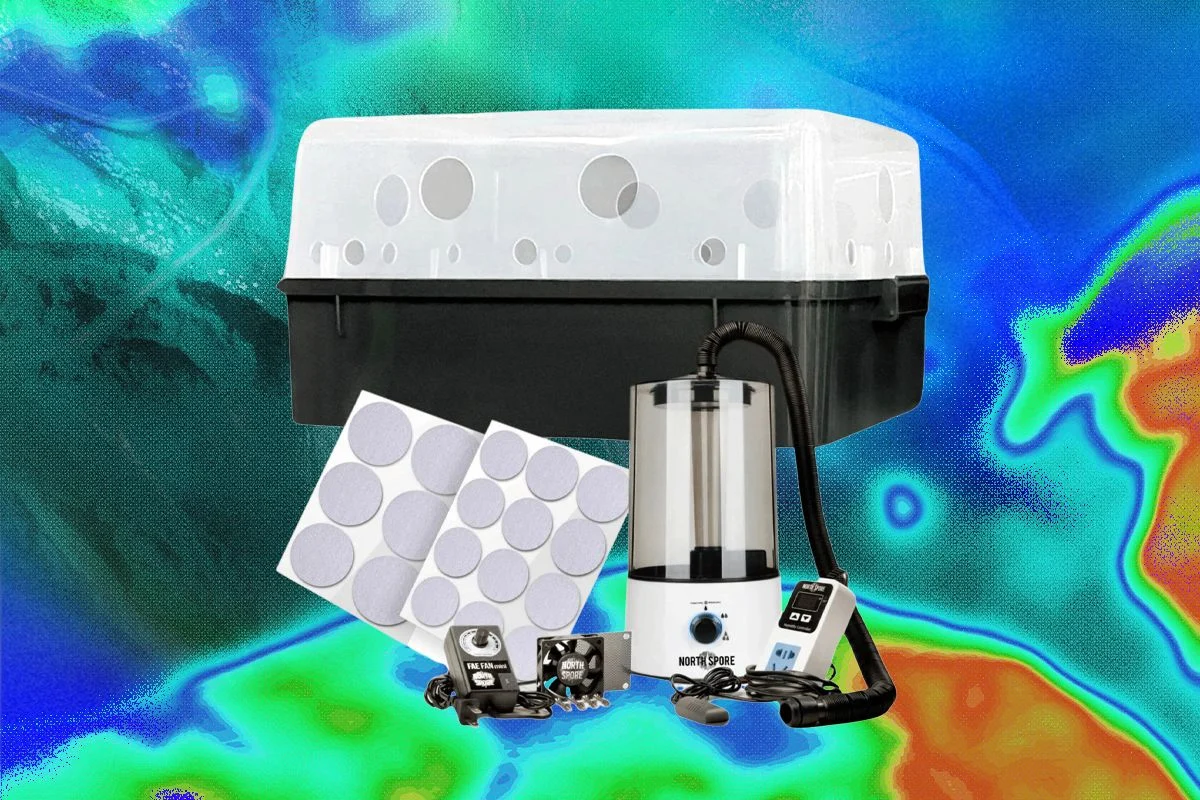
The Boomr Bin by North Spore was, without question, the most successful method in my trial.

- The Process: This is a semi-automated fruiting chamber. It manages the humidity and airflow, which are the most difficult variables to control manually.
- The Result: I successfully harvested four distinct "flushes" of oyster mushrooms and three flushes of lion’s mane. The yields were so high that I had more mushrooms than my family could consume.
- Verdict: If you are serious about growing at volume, this is the only way to go. It requires an initial investment, but the consistency is unmatched.
5. The "Bucket Tek" (The Commercial Standard)
I attempted the "MushBucket" kit, a method popular among commercial growers.
- The Process: This involves layering straw and spawn inside a bucket with pre-drilled holes.
- The Result: My attempt failed due to contamination. The straw, which requires careful pasteurization, was likely compromised during the prep phase.
- Verdict: This method has a steep learning curve regarding sanitation. It is highly effective when done correctly, but it is not for the faint of heart.
Supporting Data and Technical Considerations
The difference between the success of the Monotub and the failure of the "Bucket Tek" comes down to environmental control. Mushrooms respirate; they consume oxygen and release CO2. In a bucket or a small box, the CO2 can build up, leading to "leggy" mushrooms or total failure to fruit.
In my trials, I found that humidity control was the most critical factor. Mushrooms are roughly 90% water. If the relative humidity drops below 80%, the pins (baby mushrooms) will dry out and die before they can mature. The Monotub succeeded because it utilized a dedicated humidifier, keeping the air consistently saturated while allowing for controlled gas exchange.
Official Recommendations and Expert Guidance
Industry experts, including the team at North Spore, emphasize that failure is part of the process. For those looking to replicate these results, the key is matching the species to the method.
- Oysters are the "weeds" of the mushroom world—they are aggressive and will grow on almost anything, making them perfect for beginners.
- Shiitakes prefer hardwood logs and require patience measured in months, not days.
- Lion’s Mane requires a very high-humidity environment and is best suited for the controlled conditions of a fruiting chamber.
When dealing with contamination, experts suggest that "cleanliness is next to godliness." Always wash your hands, sanitize your workspace with 70% isopropyl alcohol, and ensure your spawn is purchased from a reputable, certified lab to avoid introducing pathogens into your home.

Implications for the Home Cultivator
The move toward home-grown fungi has broader implications than just saving money at the grocery store. It is a lesson in biology and waste management. Many of the substrates used—straw, cardboard, and wood chips—are agricultural byproducts. By transforming these materials into food, home growers are participating in a circular economy.
However, the "mushroom-curious" should be warned: this is not a "set it and forget it" activity. It requires a commitment to monitoring environmental conditions. For the busy parent or professional, the automated route (the Monotub) is the most logical choice. It provides the necessary automation to allow the grower to focus on the harvest rather than the maintenance.
Final Thoughts
My year-long experiment proved that while the forest remains a mysterious and unpredictable place for the forager, the home environment can be tamed—provided you have the right equipment and a healthy dose of patience. Start small with a spray-and-grow kit, learn the basics of humidity, and only once you have mastered the rhythm of the fungi should you move toward larger, more complex systems. The reward—fresh, home-grown, gourmet mushrooms—is well worth the mess.