As summer temperatures reach record-breaking highs, the demand for reliable home climate control has never been more pressing. While mainstream favorites—like the Midea U-shaped AC or the Zafro portable units—often dominate the headlines, the broader market is filled with specialized, high-performance, and budget-friendly alternatives that deserve a closer look. From TCL’s aggressive entry into the appliance space to the niche world of portable units designed for off-grid adventure, selecting the right air conditioner requires balancing power, efficiency, and installation constraints.
The Evolution of the Market: Main Facts
The air conditioner landscape has undergone a significant shift over the last half-decade. Historically, window units were viewed as noisy, inefficient boxes. Today, the focus has pivoted toward "smart" integration, whisper-quiet inverter technology, and refined aesthetic designs that minimize the visual impact on a home’s exterior.
Key players are no longer just traditional legacy brands. Companies like TCL, which conquered the television market through sheer value, are now aggressively applying that same strategy to climate control. Simultaneously, the rise of the "portable" AC—despite the inherent bulky nature of hoses—has provided a vital cooling solution for renters, residents of older buildings with non-standard window frames, and those living in apartments where exterior mounting is prohibited or dangerous.
A Chronology of Cooling Innovation
- The Early 2000s: The market was dominated by basic, high-noise, single-speed compressor units. Efficiency ratings were stagnant.
- 2019–2021: The introduction of inverter technology began to change the game. By allowing the compressor to modulate speed rather than just cycling on and off, units became significantly quieter and more energy-efficient.
- 2022–2023: The "Smart" boom. Wi-Fi connectivity, app-based scheduling, and integration with ecosystems like Apple Home and Alexa became standard features, even if the implementation often lagged behind the hardware’s physical capabilities.
- 2024 and Beyond: The current era focuses on "lifestyle" units. Companies are now segmenting the market between high-end, heavy-duty industrial models (like the Friedrich Kuhl) and portable, battery-compatible units (like the EcoFlow Wave series) aimed at the outdoor and "van-life" demographic.
Evaluating the Contenders: Expert Testing Insights
TCL Q-Series (10,000 BTU)
TCL has been in the AC game for only five years, yet their trajectory mirrors their rise in the TV industry. The 10,000-BTU Q-Series is a testament to this, offering a high-value proposition. In testing environments—specifically a 120-square-foot bedroom with poor central air circulation—the unit effectively dropped the temperature by 10 degrees within three hours. While it operates at a reasonable 60 decibels, it remains slightly louder than the industry-leading Midea U-shaped models. Its primary drawback is its smart connectivity; Matter support is included, but pairing with Apple Home remains a recurring pain point for many users. However, with an impressive CEER rating of 15.0, it is a powerhouse for the price.
Dreo Portable AC 740S (10,000 BTU)
Portable ACs are often misunderstood. While they aren’t truly "portable" due to their weight and bulk, they are indispensable for difficult window configurations. The Dreo 740S stands out because of its dual-hose design, which is essential to prevent depressurization—a common issue in cheap, single-hose models that actually pulls hot air into the room from other parts of the house. With a 12 CEER rating and instant cooling capabilities, it is a high-performance choice for home offices.
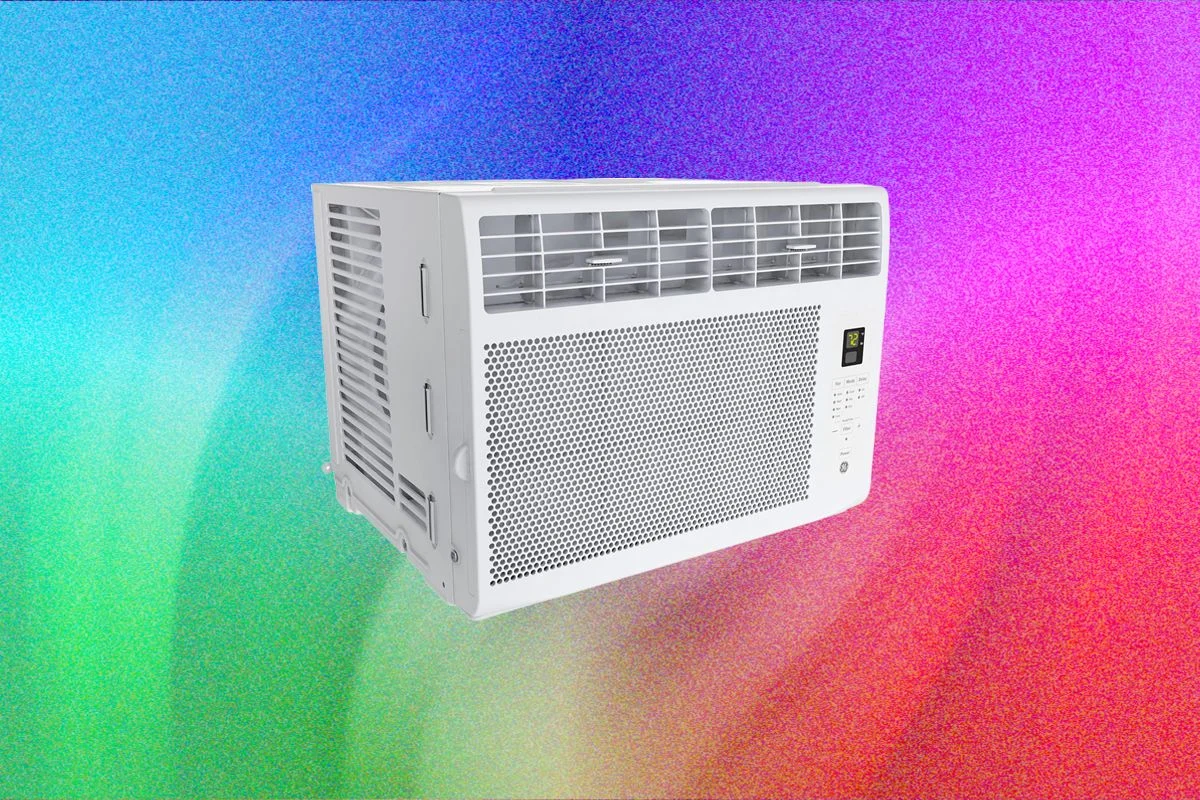
GE AWAS05BBA (5,000 BTU)
For those on a strict budget, the GE 5,000-BTU model is a standout. While it lacks the bells and whistles of smart apps or remote controls, it excels in its primary function: quiet, efficient cooling for small spaces. It is currently one of the most accessible entry-level options that doesn’t sacrifice build quality.

Premium & Specialty Units
At the top end of the spectrum, the Friedrich Kuhl ($1,228) serves as a professional-grade solution. Its heavy metal chassis is designed for durability and security, making it a favorite for first-floor apartments. Conversely, the EcoFlow Wave 2 ($1,299) and the Zero Breeze Mark III ($1,399) represent the frontier of portable, battery-powered cooling. These units are designed for campers, RVers, and those in emergency situations where grid power is unreliable. While pricey, their ability to run on solar or add-on battery packs makes them a unique category of climate control.
Supporting Data: Understanding Efficiency and Sizing
Selecting an air conditioner is an exercise in mathematics. The most critical metric for the consumer is the CEER (Combined Energy Efficiency Ratio).
- The CEER Rating: This measures how much cooling the unit provides per watt of electricity. Ratings typically fall between 9 and 15. A higher rating directly translates to lower monthly utility bills.
- BTU Calculations: The British Thermal Unit (BTU) is the standard measurement for cooling capacity. The Department of Energy recommends approximately 20 BTUs per square foot. However, environmental factors such as ceiling height, sun exposure, and insulation quality mean that a 150-square-foot room might require a 5,000-BTU unit on paper, but a 6,000-BTU unit in practice if the room is south-facing and poorly insulated.
Official Guidelines and Safety Responses
Industry experts and the Department of Energy emphasize that "bigger is not better." A unit that is too powerful for a room will cool the space too quickly, causing it to cycle off before it has had the chance to adequately dehumidify the air. This leads to a cold but "clammy" environment, which can eventually foster mold growth within the room and the internal components of the AC itself.
Furthermore, installation safety is paramount. In dense urban environments like New York City, local ordinances mandate the use of support brackets. Installing a heavy window unit without a properly secured bracket is not only a property risk but a significant safety hazard to pedestrians below. Always ensure your window frame is structurally sound and utilize provided foam insulation to prevent air leakage, which drastically degrades efficiency.
Implications for the Consumer
The modern air conditioner market is no longer a "one size fits all" commodity space. The implications for the buyer are clear:
- Define your constraints first: If you cannot mount a unit in a window, you must look at dual-hose portable systems to avoid efficiency loss.
- Prioritize the CEER rating over price: A unit that costs $100 less but has a low CEER rating will cost you significantly more in electricity over a three-year period.
- Manage smart-home expectations: While manufacturers advertise app connectivity, software stability is often the weakest link. Relying on physical remotes or on-unit controls remains the most reliable method of operation.
- Maintenance is key: Regardless of the model, cleaning or replacing filters is the single most important action a user can take to maintain efficiency.
In conclusion, whether you are cooling a small bedroom on a budget or looking for a professional-grade system that can handle severe heatwaves, the market currently offers better technology than ever before. By focusing on the BTU-to-square-footage ratio and prioritizing high-efficiency ratings, you can ensure that your home remains a sanctuary during the hottest months of the year.