By Samuli Haapasalo | July 28, 2026
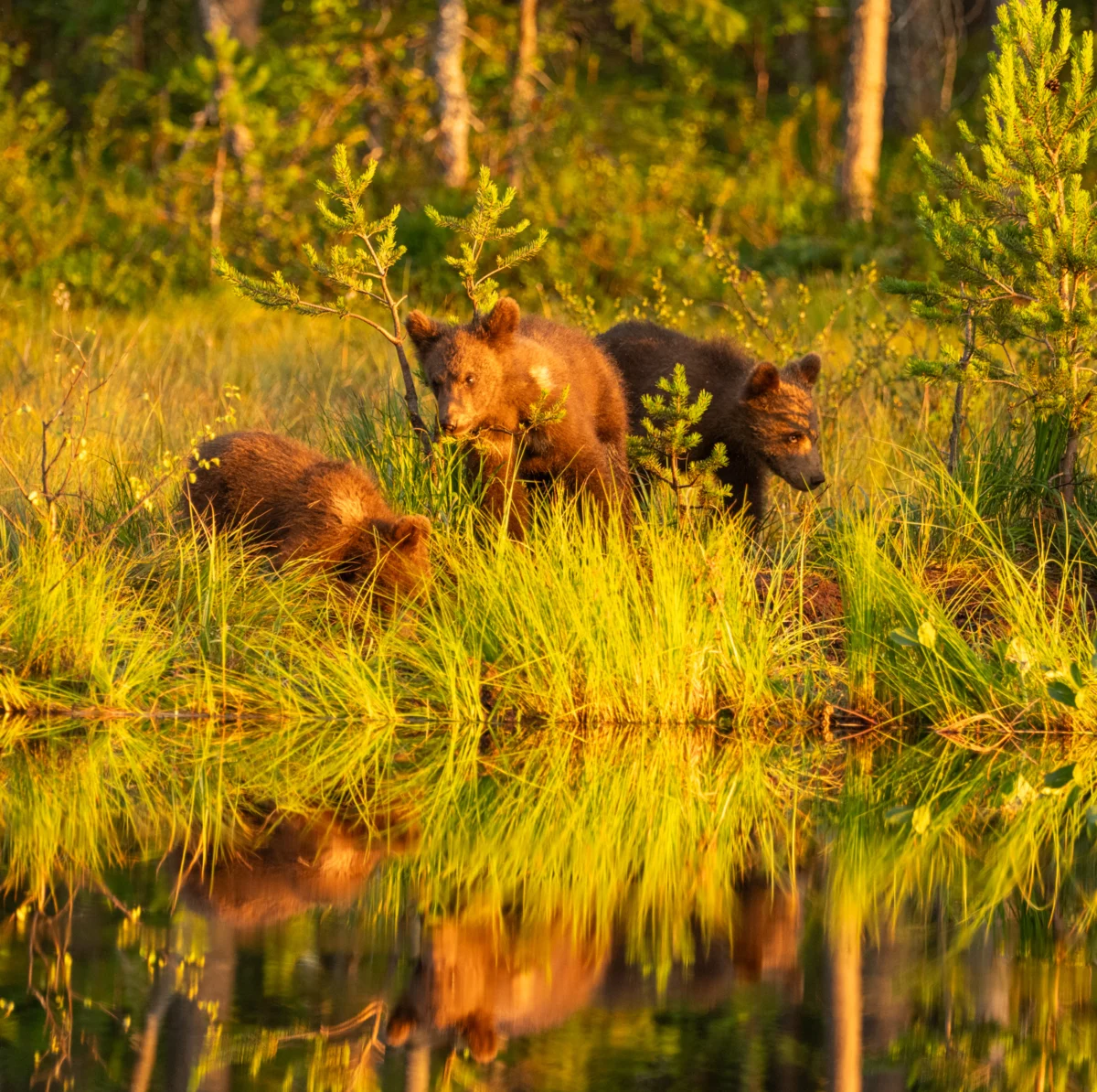
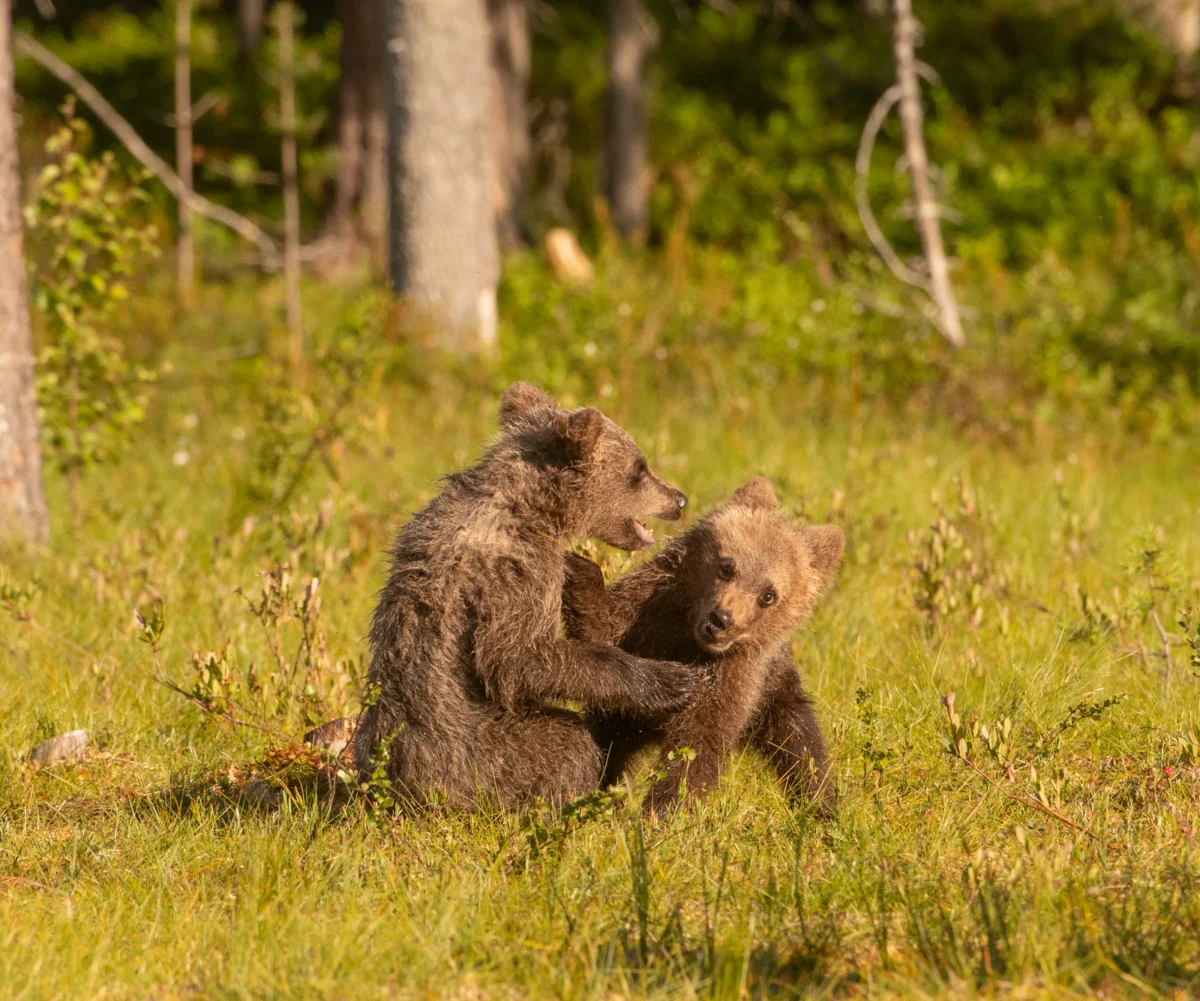
Deep within the pristine wilderness of the Martinselkonen border region, the stillness of the summer evening is broken by the playful grunts and rhythmic thuds of two unlikely athletes. A mother brown bear (Ursus arctos) has emerged from the dense forest to the edge of an open mire, her two cubs trailing closely behind. What follows is not a struggle for survival, but a display of pure, unadulterated joy: a wrestling match that would make any professional athlete envious.
The Dance of the Wild: A Chronology of the Encounter
The observation began in the soft, golden light of late July, a time when the Finnish taiga is at its most lush. The Martinselkonen area, known for its sprawling mires and ancient spruce and pine forests, provides an ideal habitat for the apex predator of the north.
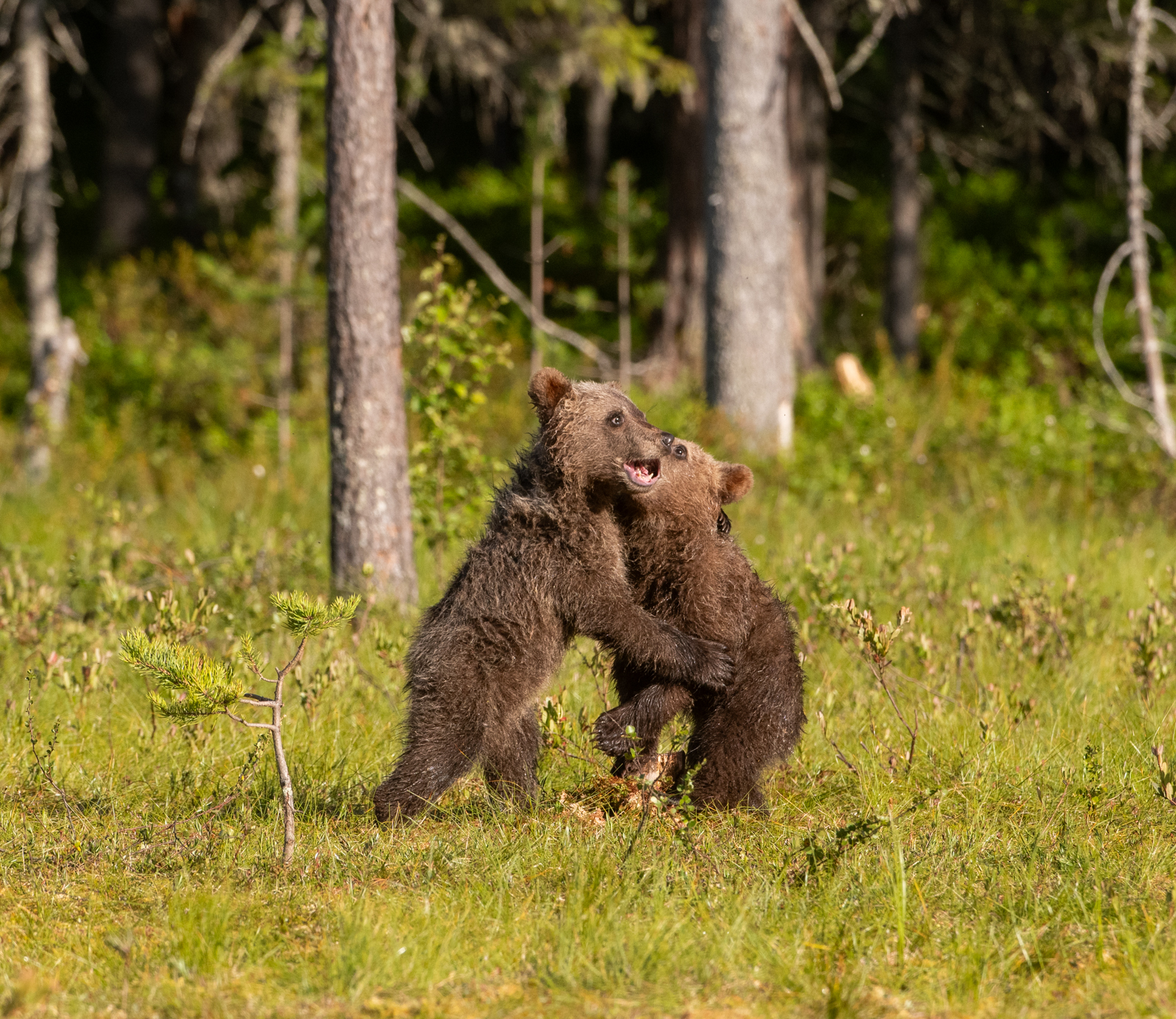
18:00 – The Emergence: The mother bear, experienced and cautious, scouted the perimeter of the mire before allowing her two cubs to venture into the open. The background was quintessential Finnish wilderness: towering, centuries-old pines and spruce trees, with long, ethereal curtains of Usnea (old man’s beard) lichen draping from the branches.
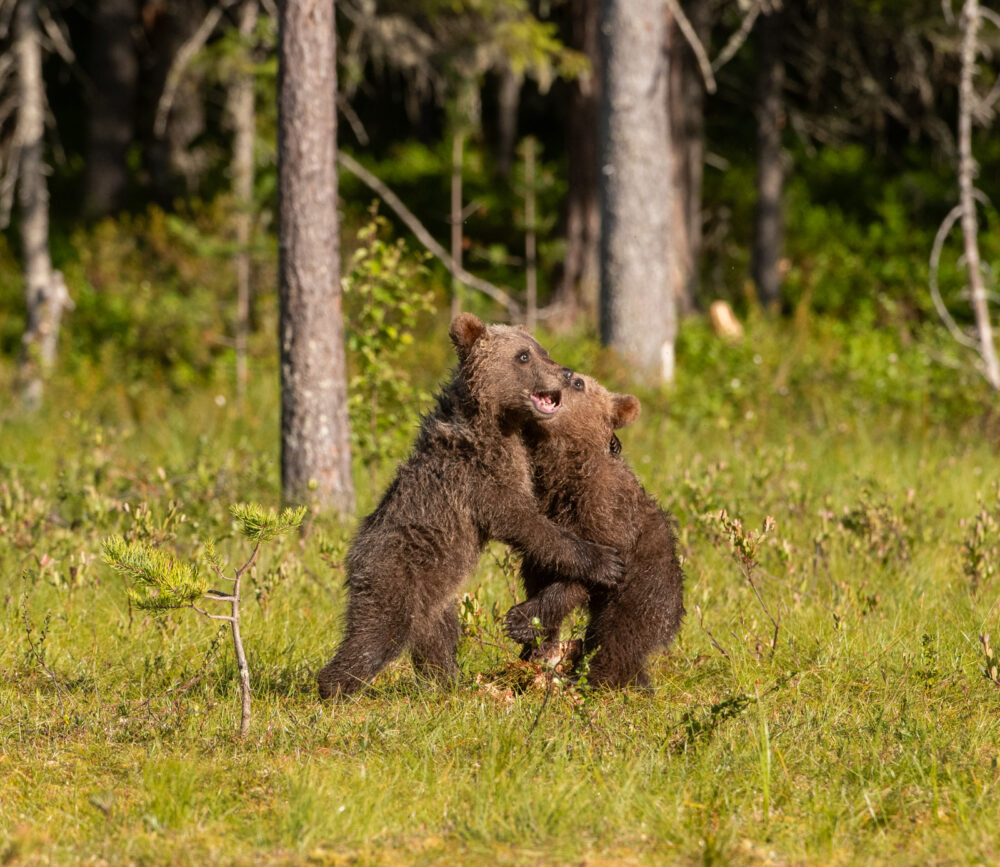
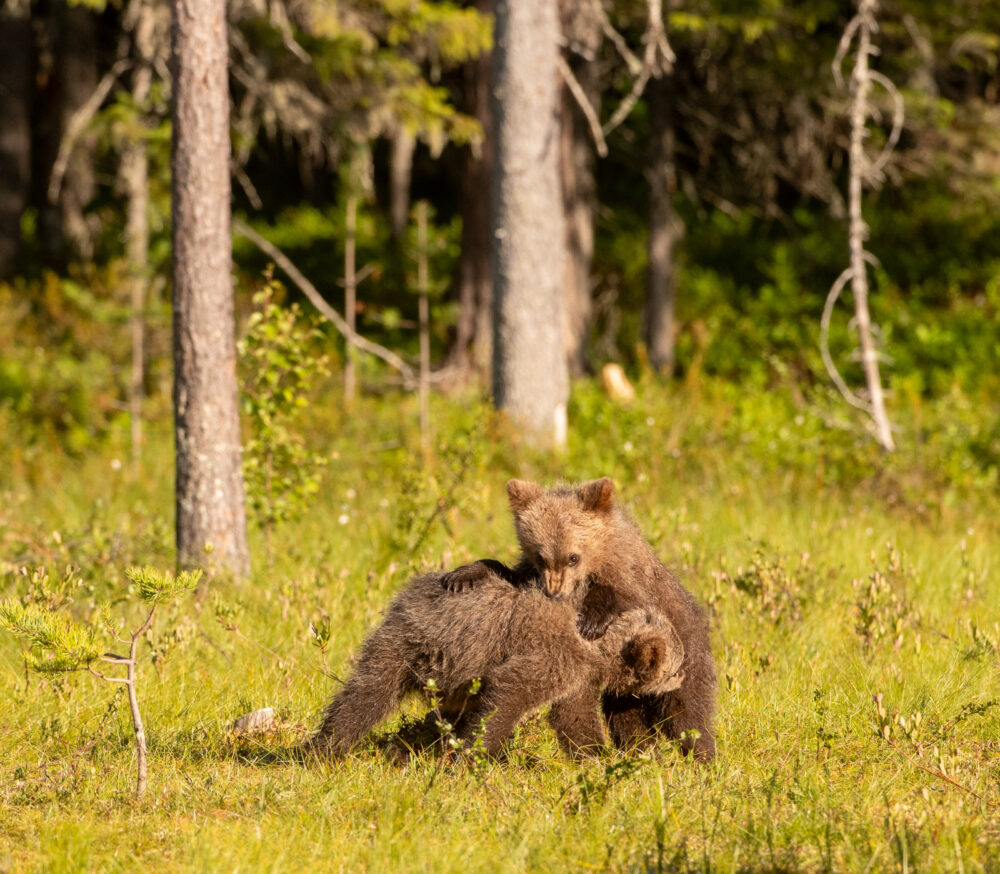
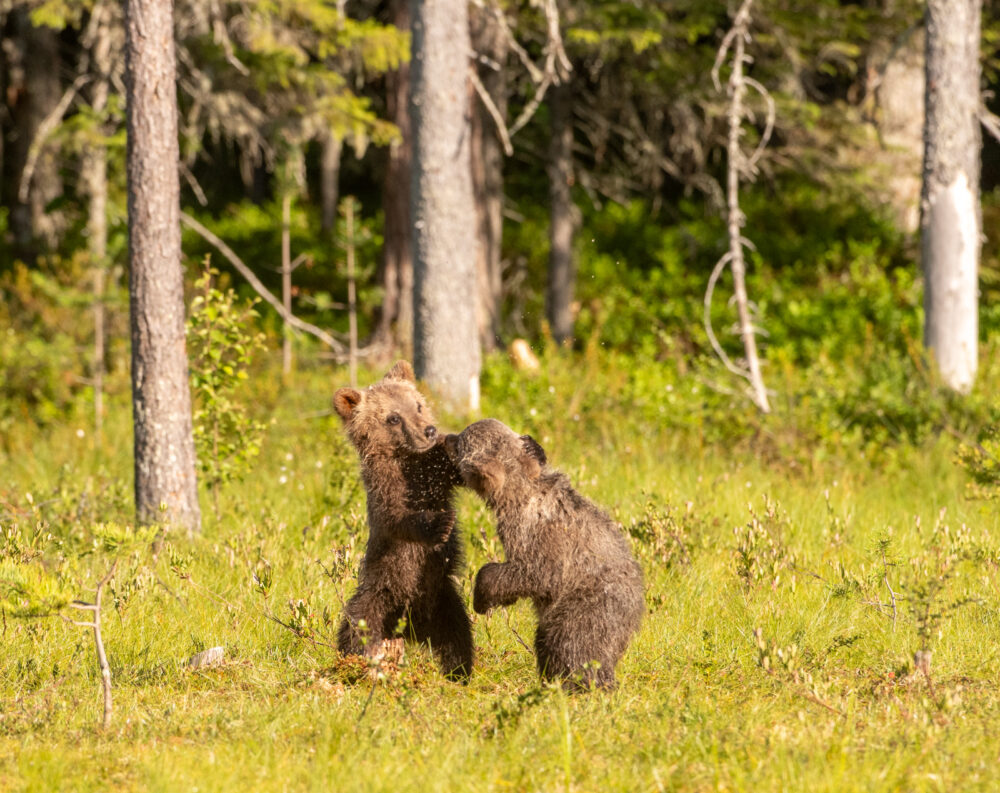
18:30 – The "Ristipaini" Begins: As the mother began to forage, the two cubs initiated what can only be described as a high-energy wrestling bout. In Finnish literature, this style of play is historically referred to as "ristipaini" (cross-wrestling), a term famously immortalized by Aleksis Kivi in his classic novel Seven Brothers. The cubs engaged in a whirlwind of maneuvers: neck locks, tactical throws, rolling tackles, and pinning attempts. Despite the intensity, the play was strictly non-aggressive—a vital learning tool for their future lives as solitary forest dwellers.
20:00 – The Rest Period: Exhausted from their spirited sparring, the cubs eventually retreated to the side of their mother. The energy they displayed was boundless, yet it was balanced by the watchful, protective nature of the matriarch, who maintained a constant, subtle awareness of her surroundings.
Biological Realities: Understanding Bear Demographics
While the spectacle of two cubs is a delight to witness, it is a snapshot of a complex life cycle. The number of cubs in a litter can range from one to four, though two or three is the standard. In the history of Finnish wildlife documentation, litters of five have been recorded, though they remain an extreme rarity.
Key Data Points on Brown Bear Reproduction
- Reproductive Cycle: A female bear typically produces a litter every two to four years. This interval allows the female to invest significant energy into the rearing of her current offspring.
- The Winter Cradle: One of the most fascinating aspects of bear biology is their reproductive timeline. Cubs are born during the winter hibernation period while the mother is still in a semi-dormant state. They spend their first months nursing in the dark, warm safety of the den.
- Survival Rates: The path to adulthood is fraught with peril. It is statistically rare for an entire litter to reach full maturity. Environmental stressors, food availability, and competition with other adult males are significant factors that influence the survival rate of these young bears.
- Social Development: The cubs typically remain with their mother for their first two winters, sharing the same hibernation den. This prolonged period of maternal care is essential for teaching the cubs how to forage, avoid danger, and navigate the vast northern landscape.
The Human-Bear Interface: Expert Perspectives
The presence of a mother bear with cubs is a powerful reminder of the need for responsible wildlife management and human conduct. While the bear is the "King of the Forest," it is also a species that requires space and respect.
Biologists emphasize that encounters between humans and bears are rarely aggressive, provided that fundamental safety protocols are followed. The most critical rule is simple: Never get between a mother and her cubs. A mother bear’s protective instinct is the strongest force in the forest, and she will defend her young with immense ferocity if she perceives a threat.
"The best way to avoid a confrontation is to make your presence known," notes local wildlife experts. "When hiking in bear country, it is advisable to make small, natural sounds. This gives the bear ample time to move away from your path, which is exactly what the animal prefers to do."
Furthermore, it is strictly forbidden and ethically reprehensible to disturb a bear during its hibernation. The winter sleep is a physiological miracle that allows the species to survive the harsh northern climate; any human intrusion at this time can cause the animal to abandon the den, leading to catastrophic consequences for both the mother and the cubs.
The Broader Implications: Conservation and Coexistence
The brown bear is more than just an animal; it is an indicator species. Its presence in the Martinselkonen region signals a healthy, functioning ecosystem. As we look toward the future of the Finnish wilderness, the protection of these animals remains a cornerstone of environmental policy.
Why Preservation Matters:
- Ecological Integrity: As an apex predator, the bear helps maintain the balance of the forest ecosystem.
- Cultural Heritage: The bear has a deep, almost sacred place in Finnish folklore and national identity. It is viewed not as a nuisance, but as a "ruler of the forest," deserving of reverence and peaceful coexistence.
- The Value of Silence: The preservation of large, undisturbed tracts of forest allows these animals to thrive. The "ristipaini" observed on the mire is a reminder that when we protect the land, we protect the intimate, private lives of our fellow inhabitants.
Looking Ahead: The Future of the Cubs
As the sun sets on the Martinselkonen mire, the future of these two cubs remains uncertain, yet filled with potential. They are currently in the most vulnerable stage of their lives. Over the next year, they will continue to learn the geography of their home range, the timing of the berry harvests, and the secrets of the ancient forest.
Their play is their training. Every roll, every "five-point throw," and every mock-pin builds the muscle and coordination necessary to survive the winters to come. As observers, we are privileged to witness these moments. However, this privilege comes with a responsibility: to ensure that the forests remain wild, that the mires remain undisturbed, and that the "King of the Forest" can continue to raise the next generation in peace.
The bear is a symbol of the wild, untamed heart of Finland. By respecting their boundaries and advocating for the protection of their natural habitats, we ensure that the legacy of the forest endures for generations. Whether it is through supporting national conservation efforts or simply practicing responsible outdoor ethics, every individual plays a role in the story of these cubs.
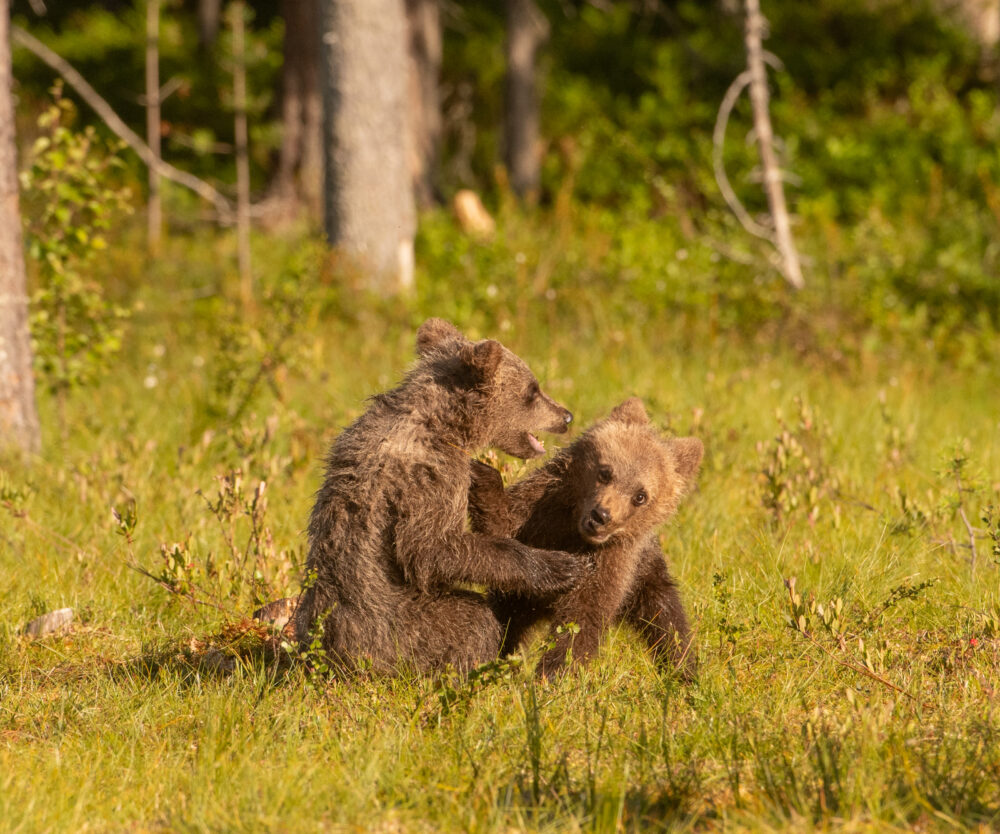
As we leave the observation area, the image of the two small bears tumbling in the grass remains—a testament to the enduring, beautiful, and sometimes playful nature of the wild. They are the future of the forest, and in their wrestling, we see the echoes of a thousand years of Finnish wilderness history.
For those interested in supporting continued research and conservation of Finland’s large carnivores, consider subscribing to journals like ‘Suomen Luonto,’ which provide in-depth reporting on the state of our environment and the creatures that share it with us.