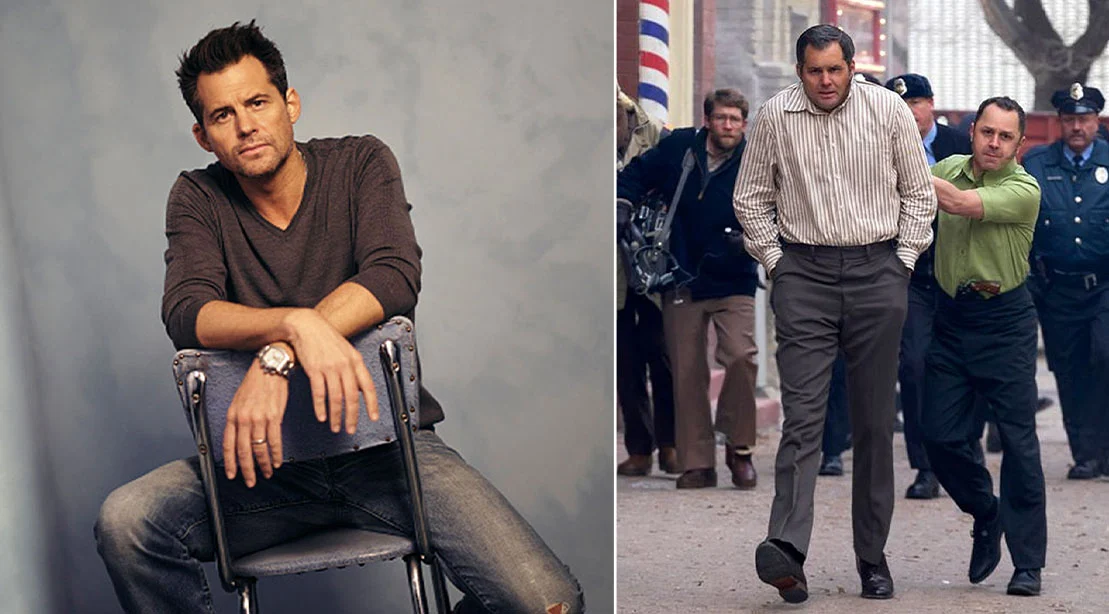
In the demanding world of Hollywood, actors are frequently called upon to mold their bodies to fit the silhouettes of their characters. While the “method” approach to acting often focuses on internal psychology, for Kristoffer “Kris” Polaha, his latest project, American Hostage, required a radical physical overhaul. To step into the shoes of Dick Hall—a man defined by his despondency and total abandonment of self-care—Polaha had to undergo a deliberate, 25-pound weight gain. What began as a liberating exercise in culinary indulgence quickly evolved into a sobering lesson on the impact of lifestyle on human biology and mental well-being.
The Character Study: Why Dick Hall Required a Physical Shift
American Hostage, the gripping true-crime dramatization, chronicles the harrowing 1977 abduction of mortgage broker Dick Hall by his disgruntled client, Tony Kiritsis. The standoff lasted a grueling 63 hours, capturing the nation’s attention as the captor engaged in a macabre dance with the media, broadcasting his demands via local radio while keeping a weapon trained on his victim.
For Polaha, the physical transformation was not a vanity project or a personal crisis; it was a narrative necessity. "Dick Hall was a guy who’d reached a point in his life where he’d given up," Polaha explains. "He stopped caring about what he looked like, and he stopped caring about being in shape and fit." To portray a man who had effectively checked out of his own life, Polaha realized he couldn’t rely on prosthetics alone; he needed to inhabit a body that felt sluggish, heavy, and burdened.
The Chronology of Transformation: From Lean to 211 Pounds
The preparation for the role was an exercise in systematic indulgence. Polaha was granted a 12-week window to achieve the desired physique. Having spent the majority of his career as a lean, athletic performer, the shift was drastic.
Phase I: The Surplus (October 2025 – Production Wrap)
In early October, Polaha discarded his usual regimen of morning fasting and intermittent caloric restriction. He adopted a "see-food" diet—eating whatever he desired, whenever he desired. The result was a steady climb to 211 pounds, the heaviest the actor has ever weighed.
The filming process itself acted as a catalyst for the weight gain. Because the character of Dick Hall was shackled to a chair for the duration of the ordeal, Polaha’s filming days were entirely sedentary. "I would get to work, and I would just sit in that chair for hours on end," he recalls. "It was scarily easy to pack on the pounds."
Phase II: The Peak of Indulgence
At the height of the production, the actor’s routine became a study in late-night excess. Following long, draining shoots, Polaha frequently visited a local diner in Winnipeg. His ritual included a burger paired with a pint of Guinness at 11:30 p.m., often rounded out with a serving of ice cream. While he initially found a sense of "freedom" in abandoning his dietary discipline, the physiological reality of the weight gain soon set in.
Supporting Data: The Biological Toll of the ‘Method’
While the transformation was successful on screen, the off-screen implications for Polaha were immediate and uncomfortable. The actor notes that the experience served as an involuntary study of how a sedentary, calorie-dense lifestyle alters one’s quality of life.
The Physical and Psychological Side Effects
Polaha describes the sensation of his new body as "walking around in a different skin." He reported a significant loss of flexibility, noting that simple movements, like bending over, became difficult as his midsection impeded his range of motion. Perhaps most tellingly, the weight gain impacted his sleep, with his wife noting an onset of snoring—a common symptom associated with increased body mass and potential airway obstruction.
Beyond the physical limitations, there was a psychological weight. Seeing himself in the mirror, combined with the makeup required for the role, provided a stark, potentially depressing glimpse into a possible future. It served as a "wake-up call" regarding the long-term consequences of neglecting one’s health.
The Rebound: Polaha’s Strategic Return to Fitness
With the project wrapped, the focus shifted from gain to loss. In February, Polaha began the systematic process of shedding the 25 pounds, a journey he found significantly more challenging than the initial gain.
The Philosophy of Agility
"I think it really raises the question of, ‘how do you want to move through the world?’" Polaha posits. "Do you want to be agile, flexible, strong, lean?" This philosophical shift provided the motivation needed to return to his roots.
The Regimen
- Morning Fasting: Polaha reinstated his practice of skipping breakfast, effectively shrinking his daily feeding window.
- Exercise Integration: He returned to a consistent regimen of cardio and strength training.
- Hot Yoga: A cornerstone of his recovery, hot yoga served two purposes: it offered a meditative mental space and assisted in the physical detoxification process.
- Strategic Snacking: Rather than eliminating treats entirely, Polaha implemented "smart swaps." By replacing calorie-dense ice cream with long-lasting, lower-calorie options like Good & Plenty, he satisfied his cravings without sabotaging his caloric deficit.
Implications for Modern Acting and Health
Polaha’s experience highlights the growing conversation within Hollywood regarding the safety and sustainability of extreme physical transformations. While the industry often praises "method" weight fluctuations, stars like Polaha are becoming more transparent about the hidden costs of these changes.
The Balance of Moderation
Polaha is quick to dispel the myth that staying lean requires a life of monastic deprivation. His current approach is rooted in moderation rather than restriction. "I don’t have a crazy health regimen," he notes. "I still eat what I want, it’s just a question of how much."
This balanced perspective is likely what allowed him to transition so effectively into his subsequent roles. With his health restored, Polaha has already pivoted to his next set of challenges, including the Buried in Barstow film series on Lifetime and the Hallmark Christmas production Mistletoe and Mimosas.
Conclusion: A Lesson in Resilience
The story of Kris Polaha’s transformation for American Hostage is more than a footnote in an actor’s resume; it is a testament to the discipline required to manipulate one’s biology and the wisdom required to reclaim it. By documenting both the ease of his decline into a sedentary state and the rigor of his return to fitness, Polaha offers a relatable narrative for anyone struggling with their own health journey.
As American Hostage finds its audience on streaming platforms, the critical acclaim for Polaha’s performance serves as validation for his commitment. However, the actor’s true victory may lie in his successful return to form—a reminder that while we can play many characters, we only have one body to live in.
American Hostage is currently available for streaming on Prime Video. For more updates on Kristoffer Polaha’s upcoming projects and his continued fitness journey, follow him on Instagram.