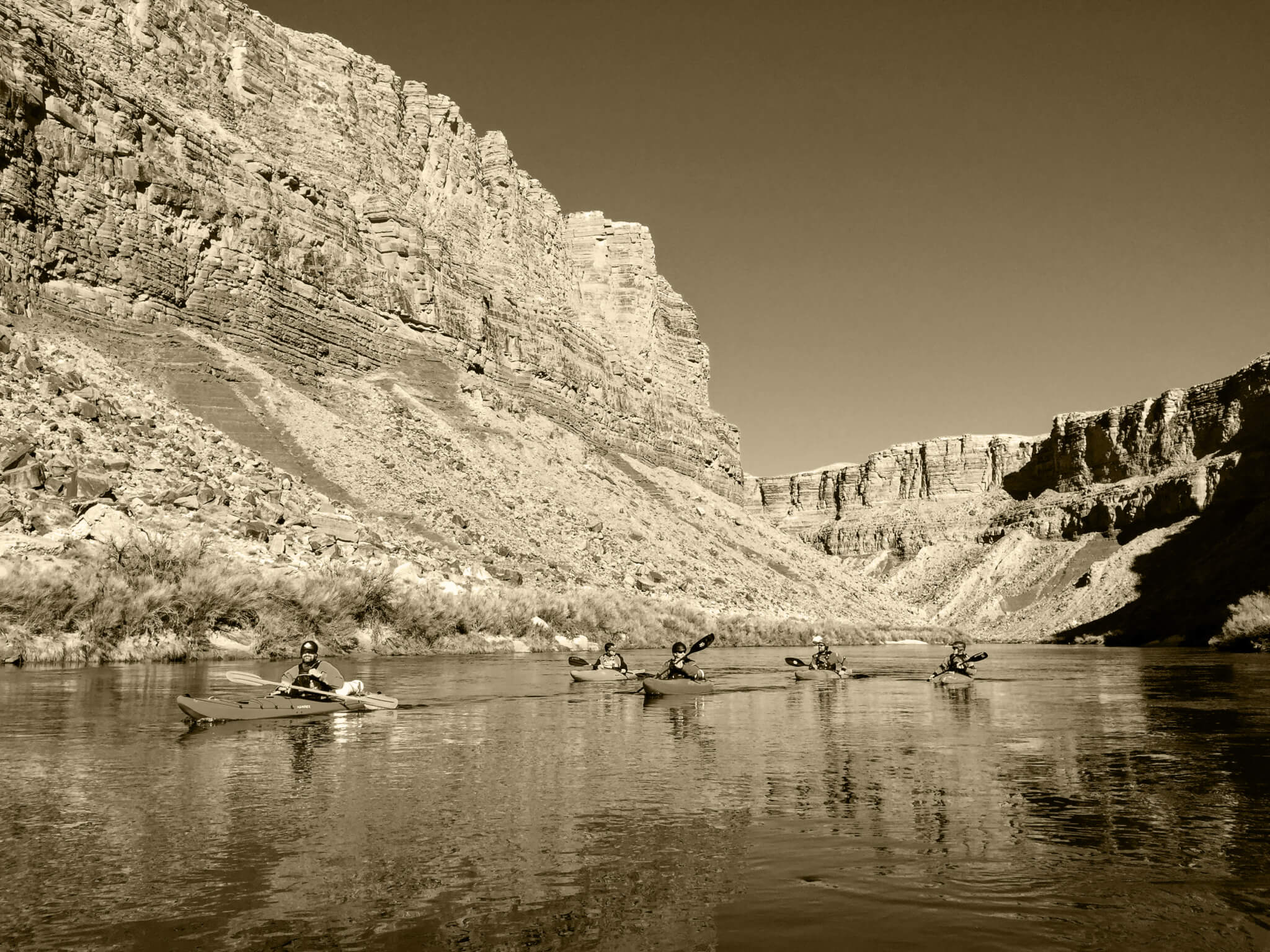
On January 26, a group of four seasoned instructors from the Whitewater Rescue Institute (WRI)—Paul Heffernan, Matt O’Reilly, Frank Preston, and Cody Harris—embarked on an ambitious 10-day self-supported kayaking expedition down the Grand Canyon of the Colorado River. Accompanied by a larger team totaling 10 paddlers, the group navigated the iconic stretch from Lees Ferry to Pearce Ferry, traversing 280 miles of geological history and world-class whitewater.
What makes this expedition notable is not just the feat of endurance, but the discovery of a raw, intimate, and anonymous journal recovered from a drybag at the end of the trip. These letters, written by one of the participants under the pseudonym "Little Spoon," offer a rare, unfiltered look into the logistics, psychological strain, and profound beauty of a self-supported canyon run. For the paddling community, these notes serve as an invaluable case study on the realities of long-range river navigation.
The Logistical Challenge: Self-Support in the Grand Canyon
The expedition was defined by a commitment to total self-sufficiency. Unlike commercial trips that rely on large motor-powered rafts, this crew operated on a "self-support" basis, where each of the 10 paddlers carried their own supplies, kitchen kits, and camping gear in their individual kayaks.
The Weight of Autonomy
The logistical burden was immediate. Upon launching at Lees Ferry, the paddlers faced the daunting reality of kayaks weighing between 175 and 200 pounds. The anonymous diarist noted the initial struggle: "There were many groans and sighs as each paddler took the first strokes in their loaded boat. My guess is that the boats responded about as well as a hungry burro in sight of a barn."
Gear and Provisions
The decision to remain self-contained meant that every paddler acted as their own supply ship. While this increased the physical burden, it allowed for a decentralized structure. The only shared group gear included a collapsible fire pan, a primary first-aid kit, and a small repair kit. Dietary strategies varied wildly among the group, ranging from ultra-light freeze-dried meals—favored by the diarist to minimize waste—to vacuum-sealed pre-made food and fresh vegetables. This variety highlighted the personal nature of self-support logistics, where every ounce and every cubic inch of storage space becomes a matter of strategic planning.
Chronology of the Descent
Days 1–3: The Roaring 20s and the Inner Gorge
The trip began with a 21-mile push to North Canyon, testing the crew’s boat-handling skills in rapids like House Rock. The pace was relentless, with an average target of 27 miles per day. As the team moved through the "Roaring 20s," the contrast between the adrenaline of the whitewater and the meditative stillness of the canyon became a recurring theme. The journal entries paint a vivid picture of the transition from the relatively open canyon walls to the intimidating, dark schist and granite of the Inner Gorge.

Days 4–7: The Crucible of the River
By day four, the intensity escalated. Navigating iconic rapids such as Hance, Sockdolager, Horn Creek, and Crystal required not just technical skill, but profound mental fortitude. The diarist frequently cited the leadership of the WRI instructors as the "glue" that held the group together during moments of doubt.
"I skirt the meat of the rapid while [the leader] charges through the largest waves undeterred," the diarist wrote. "I can only hope to paddle as he does one day."
The journey also featured significant exploration, including hikes to the famed Phantom Ranch, Elves Chasm, and the subterranean marvel of Thunder River. These excursions served as a necessary physical and mental break from the repetitive, taxing motion of paddling a heavy boat.

Days 8–10: Reflection and Rebirth
As the expedition neared its end, the focus shifted from technical navigation to historical and environmental reflection. The crew reached the infamous Separation Canyon, the site where three members of the 1869 John Wesley Powell expedition famously chose to hike out of the canyon rather than face the unknown rapids ahead.
The diarist’s reflection on this moment is poignant: "The rapid now is gone. Drowned by the Hoover dam. But in my mind’s eye, I can see its boiling eddies and turbulent waters and I understand their choice."
The final 40 miles, from Separation to Pearce Ferry, offered a stark lesson in the intersection of human engineering and geological time. With the waters of Lake Mead having receded due to long-term drought, the river has begun to reclaim its natural path, carving through silt deposits and re-establishing its own rhythm.

Supporting Data: The Reality of the Trip
To provide context for the expedition, we have compiled key statistics based on the diary’s accounts and standard Grand Canyon logistics:
- Total Distance: 280 miles.
- Duration: 10 days.
- Average Daily Mileage: ~28 miles.
- Boat Weight: 175–200 lbs (initial load).
- Group Size: 10 paddlers.
- Primary Environmental Challenges: Fluctuating water levels, heavy load management, and the mental fatigue of long-distance, self-supported travel.
Official Perspectives and Expert Insight
While the WRI instructors have remained characteristically humble about the expedition, the insights provided by "Little Spoon" have been hailed as a masterclass in risk management and team dynamics.
Experts in whitewater safety emphasize that the success of such an expedition relies on three pillars:

- Preparation: The meticulous, if initially clumsy, packing of boats proved that there is no substitute for a solid system.
- Mentorship: The presence of senior instructors provided a buffer against the natural anxiety that accompanies high-consequence environments.
- Adaptability: The ability to pivot—whether that meant dealing with broken gear, managing physical exhaustion, or adjusting dietary plans—was the ultimate determinant of success.
The WRI team noted that these letters highlight the human side of rescue training. "It isn’t just about the technical rescue skills," a spokesperson noted. "It’s about the mental game, the appreciation of the environment, and the ability to maintain composure when the river demands everything you have."
Implications: The Future of Canyon Travel
The "Little Spoon" journal serves as more than just a trip report; it is a document of the evolving relationship between humans and the Colorado River. The observations regarding the receding Lake Mead and the "reborn" river demonstrate that the Grand Canyon is a living, breathing entity that constantly defies human attempts at containment.
For future paddlers, the lessons are clear:

- Self-sufficiency is a skill: Mastering the weight and balance of a loaded boat is as important as the ability to roll or read a rapid.
- The Canyon requires humility: Regardless of one’s experience level, the scale of the landscape and the power of the river demand a constant state of awareness.
- Documentation matters: Sharing these personal experiences—even anonymously—helps demystify the logistics of large-scale expeditions and encourages the next generation of river explorers to pursue their own challenges safely.
As the crew departed at Pearce Ferry, the feeling was not one of conquest, but of profound gratitude. The river, in all its complexity, remains a teacher. As the diarist observed, "It will always carry-on; we and our concrete dreams are merely a temporary distraction."
This expedition stands as a testament to the enduring spirit of the WRI and the timeless, irresistible pull of the Colorado River. Whether through the lens of a rescue instructor or the humble perspective of an anonymous diarist, the Grand Canyon continues to offer a transformative experience for those brave enough to pack a boat and face the current.