
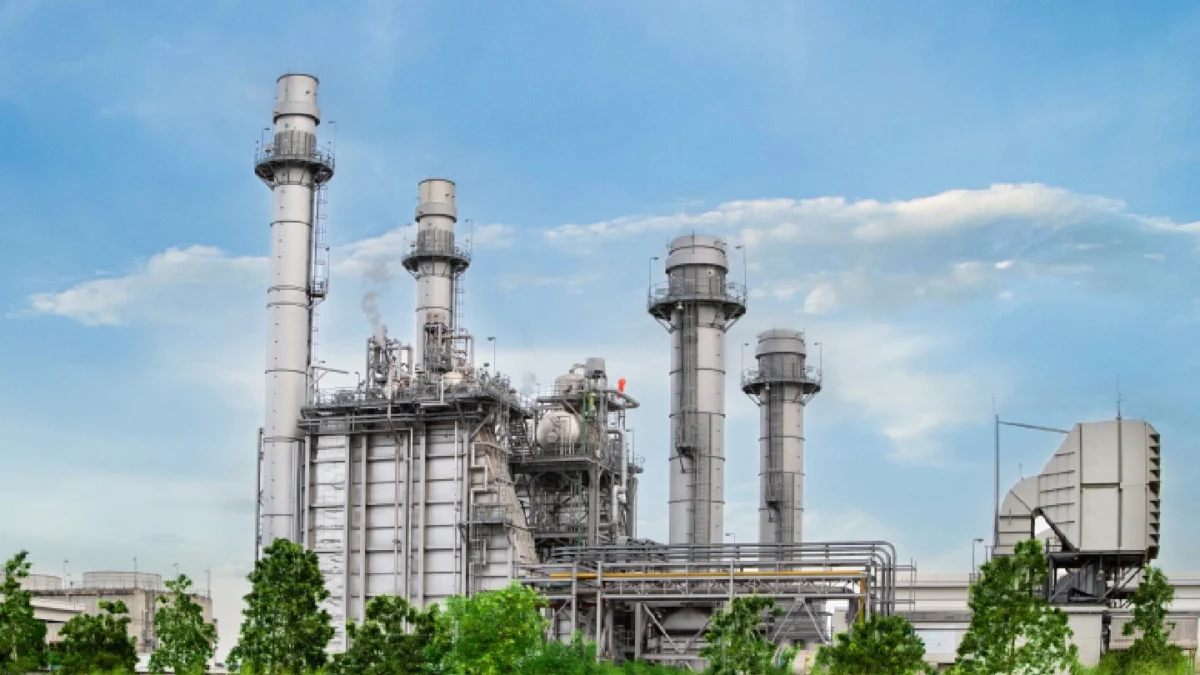
In a landmark development for the Texas energy landscape, Fermi (operating as Fermi America) has formalized a strategic framework agreement with Hillcore Energy Capital to construct a massive 2.6GW power complex. Located at the burgeoning Project Matador campus in Carson County, Texas, the facility—to be branded the "Hillcore Power Center"—represents a significant leap in the state’s industrial power capacity, specifically tailored to support the energy-intensive demands of artificial intelligence and large-scale computing infrastructure.
The project, which utilizes a Build-Own-Operate-Transfer (BOOT) financial model, is set to drastically accelerate Fermi’s operational footprint in the Texas Panhandle. By offloading capital expenditure to Hillcore, Fermi is positioning itself to scale rapidly, effectively doubling its available power-to-market capacity within the next 30 months.
Core Project Specifications and Technical Scope
The Hillcore Power Center is not merely a single power plant; it is a multi-faceted energy ecosystem designed to provide reliable, scalable, and "behind-the-meter" power. The planned 2.6GW complex is characterized by a hybrid energy approach:
- Natural Gas-Fired Generation: The backbone of the complex will consist of approximately 2.5GW of natural gas-fired capacity. This will be developed in strategic phases to ensure that power delivery aligns precisely with the commissioning of tenant leases at the Matador campus.
- Renewable Integration: To augment the thermal generation, the complex will incorporate 100MW of solar photovoltaic (PV) generation.
- Battery Energy Storage Systems (BESS): Complementing the solar array, the integration of BESS will provide grid stability, peak shaving, and reliability, ensuring that the campus can withstand fluctuations in demand or supply.
The deployment of the first power block—approximately 350MW—is slated to commence immediately following the execution of definitive agreements. From the moment the "notice to proceed" is issued, the project timeline targets first power within 24 months, a remarkably aggressive schedule given the scale of the infrastructure.
Financial Architecture: The BOOT Model Advantage
A standout feature of this partnership is the financial structure. By utilizing a BOOT arrangement, Hillcore and its capital partners take on the full burden of financing, construction, ownership, and operation.
For Fermi, this provides a "capital-light" entry into massive power expansion. Fermi does not incur upfront capital expenditure (CAPEX). Instead, the company operates on a model where it purchases power only as customer leases are signed, ensuring that fuel costs and operational overhead are matched to revenue-generating tenants.
Furthermore, the structure provides a clear long-term path for asset ownership. Fermi holds an option to purchase the entire facility at fair market value after ten years, allowing the company to transition from a tenant of its own power utility to an owner once the project has matured and proven its profitability. Hillcore, conversely, retains construction, operating, and performance risk, insulating Fermi from the volatility of project delivery.
Chronology and Development Roadmap
Project Matador is no stranger to large-scale investment. Situated in the Texas Panhandle, the site has already attracted over $1.5 billion in initial investment, cementing its reputation as a premier destination for AI-driven industrial operations.
Historical Context
- Initial Development: Fermi America secured the site, either through direct ownership or long-term lease agreements, laying the groundwork for a massive energy hub.
- Strategic Alliance: The recent signing of the framework agreement with Hillcore Energy Capital marks the transition from planning to execution for the 2.6GW phase.
- Future Scaling: The project is part of a larger vision. Fermi has projected that Project Matador could eventually scale to as much as 17GW of capacity, contingent on binding customer agreements and commercial demand.
Upcoming Milestones
- Definitive Agreements: The immediate focus for both parties is finalizing outstanding contractual details and securing the necessary regulatory approvals for the 2.6GW expansion.
- Phase I Execution: Once finalized, work will commence on the initial 350MW power block.
- The 30-Month Horizon: Within 30 months, Fermi expects to have fully integrated this new capacity, effectively doubling its market presence and on-site capacity to roughly 4.8GW across the entire Matador campus.
Official Perspectives: Aligning Vision with Execution
The leadership teams behind the project have emphasized the symbiotic nature of this alliance.
Jacobo Ortiz, Co-President and COO of Fermi, highlighted the strategic flexibility afforded by the deal: "Hillcore finances, builds, and operates the plant; Fermi delivers dedicated, behind-the-meter power matched to every tenant lease, with our balance sheet intact and a clear path to owning the asset."
For his part, Russell Negus, President of Hillcore, emphasized the technical and financial stability of the project: "Backed by Hillcore and our partners’ capital platform, and JV Driver’s execution capabilities, we intend to deliver first power within 24 months of notice to proceed and to stand behind this plant for decades. Fermi’s customer demand and the strategic alliance structure make the Hillcore Power Center immediately financeable."
Implications for the Texas Energy Market and AI Sector
The significance of the Hillcore Power Center extends far beyond the borders of Carson County.
1. The Energy-AI Nexus
The rise of artificial intelligence has created an unprecedented demand for data center capacity, which in turn requires a consistent, massive supply of electricity. By creating a dedicated 2.6GW complex, Fermi and Hillcore are solving the "power bottleneck" that currently hinders many large-scale AI infrastructure projects. The "behind-the-meter" delivery model is particularly attractive to hyperscalers who require high reliability and immunity from broader grid congestion.
2. Economic Impact on the Texas Panhandle
The project represents a substantial economic stimulus for the region. Beyond the $1.5 billion already invested, the construction and subsequent operation of a 2.6GW facility will necessitate a robust local workforce, supply chain development, and long-term infrastructure maintenance, reinforcing Texas’s status as the global leader in energy production and technology infrastructure.
3. Grid Stability and Innovation
The integration of solar and BESS alongside natural gas generation demonstrates an evolving approach to energy portfolios. By balancing traditional, dispatchable thermal power with renewable and storage assets, the Hillcore Power Center provides a model for how industrial campuses can integrate clean energy while maintaining the 24/7 reliability required for modern digital infrastructure.
Conclusion: A New Standard for Infrastructure Development
The collaboration between Fermi and Hillcore serves as a blueprint for the next generation of energy development in the United States. By decoupling the financing and construction risks from the operational delivery, the project allows for unprecedented speed in scaling infrastructure. As Project Matador continues to grow toward its 17GW target, the Hillcore Power Center stands as the foundational pillar of a site that is rapidly becoming one of the most critical energy and technology hubs in the world.
The market now awaits the finalization of the definitive agreements. Should the project maintain its 24-month delivery timeline, it will set a new industry benchmark for the deployment of large-scale energy assets, providing a vital lifeline to the AI companies and industrial tenants that will call the Texas Panhandle home in the years to come.