The Bolivian Altiplano is a landscape of extremes. It is a high-altitude desert where the air is thin, the light is blindingly sharp, and the horizon stretches toward infinity, broken only by the jagged, snow-dusted silhouettes of ancient volcanoes. While many adventurers flock to the region for the famous 600 km Altiplano Traverse or the daunting climb of Volcan Licancabur, there exists a quieter, more intimate experience for the intrepid hiker: the Five Lakes Loop.

Straddling the border between Bolivia and Chile, this overnighter is a masterclass in high-altitude solitude. It is a journey through a world of geological wonders, ancient flora, and cultural resilience, centered around the village of Sajama, one of the highest permanently inhabited settlements on Earth.

Main Facts: The Anatomy of a High-Altitude Trek
The Five Lakes Loop is not a journey for the faint of heart, but for those who have acclimatized, it offers a rare glimpse into the raw, unvarnished beauty of the Andes.

- Total Distance: 47 km (29 miles)
- Duration: 10 hours to two days
- Difficulty: Moderate (due to altitude, not terrain)
- Elevation Range: 4,230 m (13,879 ft) to 5,130 m (16,831 ft)
- Total Elevation Gain: 946 m (3,104 ft)
- Best Season: June to September (Winter/Dry season)
- Starting Point: Sajama Village, Bolivia
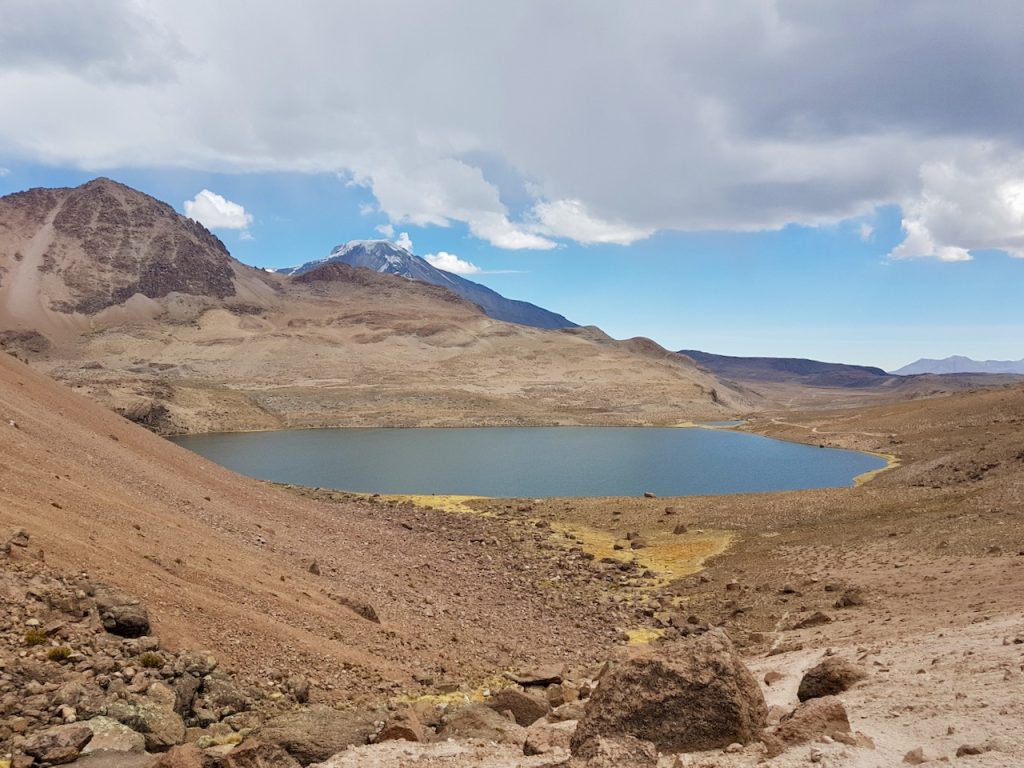
The route is characterized by its wide-open, treeless terrain. While approximately 40% of the journey is off-trail, the landscape is so expansive that navigation is largely intuitive. The "Five Lakes" themselves are a collection of high-altitude glacial pools, two of which are located across the international border in Chile, adding an element of trans-boundary exploration to the trek.

Chronology: A Two-Day Odyssey
Day One: Into the High Desert
The journey commences in the village of Sajama, sitting at an elevation of 4,230 meters. The initial ascent takes the hiker away from the village’s rustic charm and into the heart of the Sajama National Park. The trail winds through terrain punctuated by llareta (Azorella compacta), a fascinating, slow-growing plant that looks like moss-covered boulders but is actually a dense, woody shrub adapted to survive the extreme temperatures and UV exposure of the high Andes.

As the sun begins to dip, the visual spectacle truly begins. The Nevado Sajama, a dormant stratovolcano, catches the last of the light, turning from white to shades of violet and burning orange. Setting up camp at 4,928 meters (16,168 ft) is a test of endurance. At these heights, temperatures can easily plummet to -12°C (10°F). It is a place where the moon feels within reach and the silence is absolute—a sharp contrast to the bustling, wind-swept life below.

Day Two: The Lakes and the Descent
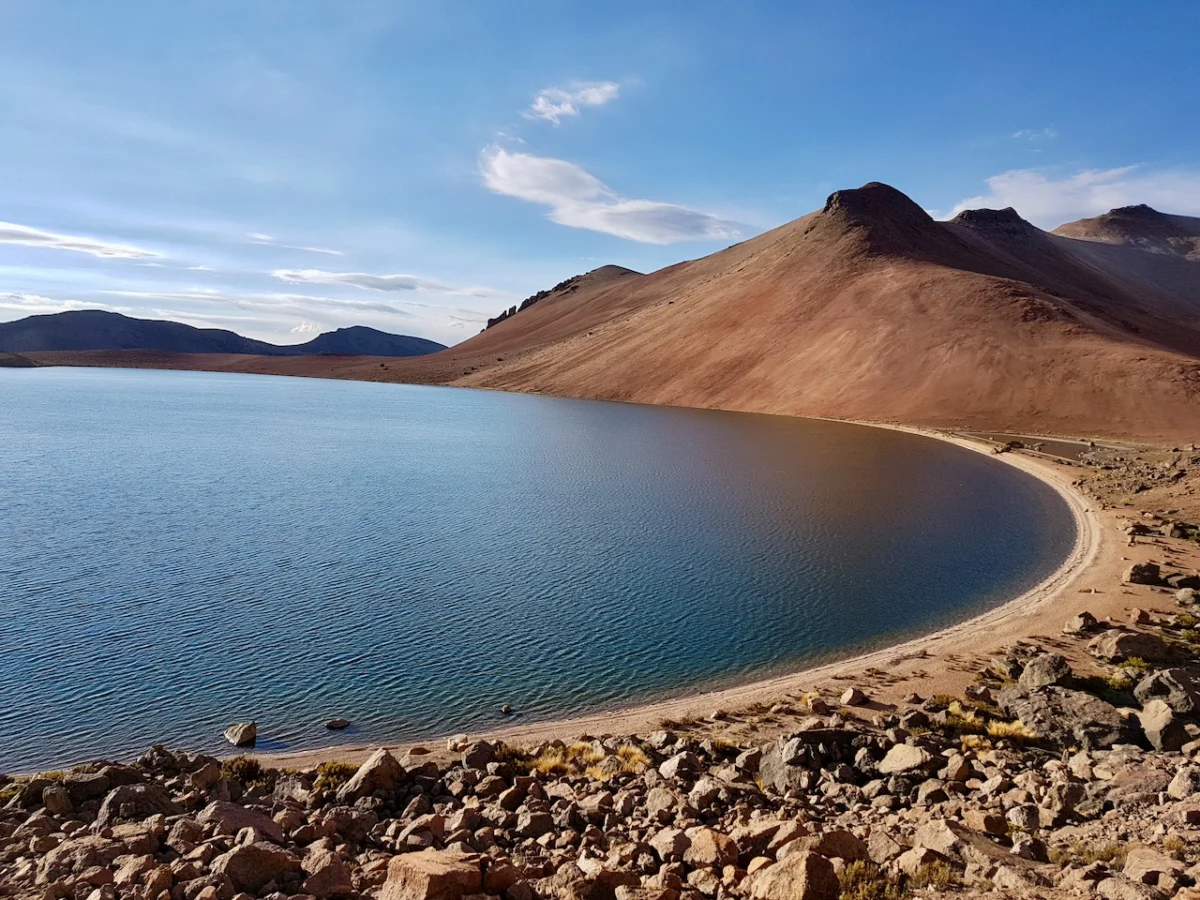
The second day is defined by the water. The route hits a sequence of glacial lakes, including the striking Laguna Casiri Macho and the expansive Laguna Chiar Khota. There is a sense of ancient permanence here; the water, fed by melting glaciers, remains clear and icy.

While a planned ascent of Jisk’a Kunturini (5,475 m) was bypassed due to a passing storm front, the journey continues through the Quebrada Condoriri. This descent is a transition from the ethereal, frozen peaks back toward the pastoral life of the Altiplano. The final kilometers are marked by the sound of distant bells—llamas and alpacas grazing on the resilient grasses—leading back to the familiar, comforting sight of Sajama Village. The trek concludes with a cultural immersion: watching the local community, resilient and bundled against the biting afternoon wind, engage in a spirited game of football.

Supporting Data: Managing the Altitude
The primary obstacle for any visitor to the Altiplano is not the mileage, but the oxygen pressure. At an average elevation of nearly 5,000 meters, the oxygen level is roughly half of what it is at sea level.

- Acclimatization: It is strongly recommended that travelers spend at least three to four days in or around Sajama before attempting the loop.
- Hydration: The dry air of the high desert causes rapid dehydration. Hikers should aim for a minimum of 3-4 liters of water per day.
- Equipment: The gear list for this trek is non-negotiable. A four-season sleeping bag rated for -15°C or lower is essential. Furthermore, high-SPF sun protection and polarized sunglasses are mandatory; the reflection off the salt flats and high-altitude water creates an intense UV environment that can lead to rapid snow blindness or severe sunburn.
- GPS/Navigation: While the terrain is open, the weather can change in minutes. Carrying a reliable GPS unit with offline maps is standard practice for the Altiplano.
Official Perspectives and Local Context
Sajama is not merely a tourist stop; it is a community of approximately 1,700 people who have thrived in one of the most inhospitable environments on the planet. The village is the gateway to the Sajama National Park, Bolivia’s oldest, established in 1939 to protect the queñua forests and the unique wildlife of the region.
Local authorities and park rangers emphasize that while the region is becoming more accessible, it remains a wilderness. There are no marked trails in the traditional sense, and travelers are expected to practice "Leave No Trace" principles. The delicate ecosystem, particularly the llareta plants—which can live for over 3,000 years—is highly susceptible to human interference. Respecting the local grazing lands and the privacy of the indigenous Aymara communities is paramount.

Implications for Future Exploration
The Five Lakes Loop serves as a microcosm for the broader allure of the Altiplano. It highlights the shift in modern trekking: a move away from "summit fever" and toward an appreciation of the vast, high-altitude landscape itself.

The success of such a trek implies a growing demand for "slow adventure." As the world becomes increasingly connected, the value of the "silence of the Altiplano" only increases. For the modern traveler, the Five Lakes Loop is more than just a hike; it is an exercise in perspective. Standing at 5,000 meters, with the twin peaks of Parinacota and Pomerape looming in the distance, one cannot help but feel the weight of geological time.

Furthermore, the loop demonstrates the feasibility of combining independent, remote-area hiking with cultural immersion. By starting and ending in a living village rather than a commercial base camp, hikers gain an appreciation for the symbiotic relationship between the Andean people and their environment.

Final Thoughts
For those seeking to follow in the footsteps of this traverse, the key is preparation and humility. The Altiplano is not a place to conquer, but a place to endure and witness. Whether you are drinking warm coca tea on the shores of a mountain lake as the wind dies down, or watching the sunset illuminate the snow-capped flanks of a volcano, the experience is transformative. The Five Lakes Loop is a reminder that in the most desolate, high-altitude corners of the world, life persists, beauty thrives, and the spirit of adventure remains as pure as the mountain air.

Are you planning your own expedition to the Andes? The Hiking Life provides comprehensive GPS data, seasonal updates, and logistical support for all major routes in the Altiplano. Ensure you check local weather conditions and speak with the park authorities in Sajama before departing. Subscribe to our newsletter for more technical guides and trip reports from the world’s most remote mountain ranges.