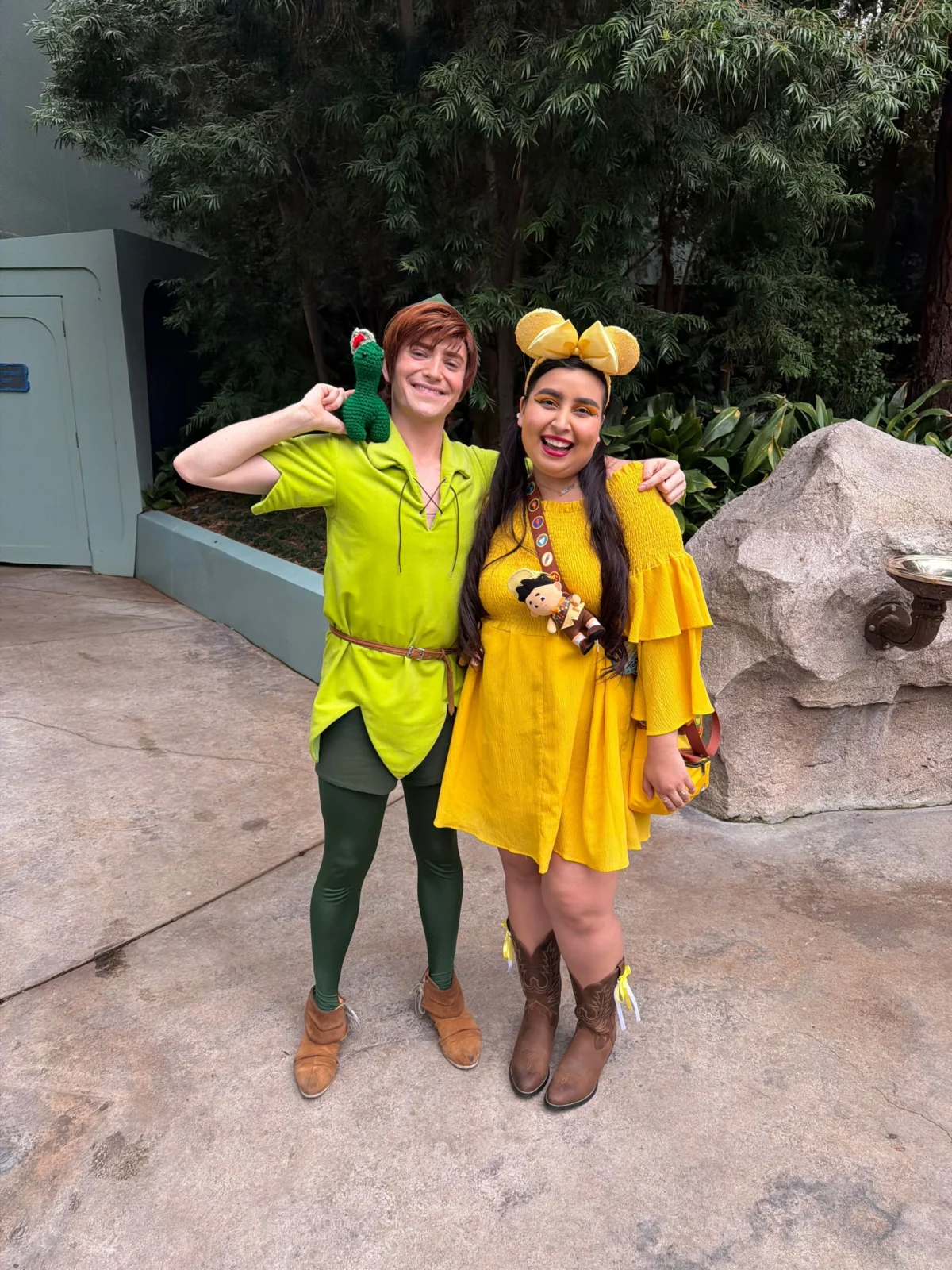
In the high-stakes world of Disney influencer culture, where weekly park visits and character meet-and-greets are the bedrock of content creation, 27-year-old Toni Kulusich was, until recently, a successful hobbyist. With a burgeoning social media presence and a weekly pilgrimage to Disneyland, Kulusich cultivated a niche following centered on her playful, spirited interactions with one of the park’s most beloved “face characters”: Peter Pan.
However, in August 2024, that digital hobby spiraled into a cautionary tale of internet toxicity. A viral video featuring Kulusich gifting a handmade keychain to a performer portraying the Boy Who Wouldn’t Grow Up ignited a firestorm of speculation, harassment, and, eventually, real-world danger. Today, Kulusich stands at the center of a volatile debate regarding the boundaries of fandom, the ethics of social media “armchair analysis,” and the increasingly precarious reality of being a “Disney Adult” in the age of viral dogpiling.
A Viral Spark and the Descent into Chaos
For years, Kulusich—who uses her middle name to maintain a degree of privacy—has treated her Disneyland trips as a creative outlet. A full-time manager at a big-box retail store and a married woman with a stable life outside the gates, Kulusich viewed her content as a harmless way to embrace the nostalgia and spontaneity that Peter Pan represents.
The shift occurred on August 2, when she posted a seemingly innocuous video of herself gifting a crocheted duck keychain to the character. As the algorithm pushed the content from 10,000 views to over a million, the tone of the comment section shifted from playful to vitriolic.
“Slice that duck open and make sure there’s no AirTag inside,” one commenter wrote, setting the tone for a wave of accusations. Others labeled her a “creep” and a “stalker,” fixating on her frequency of visits. As the controversy gained traction, her TikTok following swelled from 50,000 to 125,000—a growth fueled by negative attention that quickly escalated from online mockery to organized harassment.
Chronology of a Digital Witch Hunt
The campaign against Kulusich was swift and systematic. Critics began “archiving” her history, unearthing videos from a decade prior to build a narrative of obsession. The discourse moved from TikTok to Reddit and X, where users performed granular analysis of the performer’s body language, claiming to detect discomfort, and scrutinized Kulusich’s personal life, including her wedding videos.
- August 2: A video of Kulusich gifting a crocheted duck to Peter Pan goes viral, triggering a wave of negative commentary.
- Early August: The narrative shifts from criticism of the video to allegations of long-term stalking. A Change.org petition is launched, demanding that Disneyland ban her from the premises.
- Mid-August: The harassment spills into the real world. Someone identifies Kulusich’s place of employment and posts her work address online.
- Late August: Fearing for her safety, Kulusich’s manager adjusts her shifts. Kulusich withdraws from the park entirely, citing a significant toll on her mental health.
- September: After a period of isolation, Kulusich returns to Disneyland, attempting to navigate the park under the shadow of her new, unwanted reputation as the “Peter Pan Girl.”
The Anatomy of the “Disney Adult” Stigma
The vitriol directed at Kulusich is rooted in a broader, long-standing internet animosity toward “Disney Adults”—a demographic often caricatured as self-indulgent or emotionally stunted. Critics argue that these fans blur the lines between reality and the manufactured magic of the parks.
Kulusich, however, refutes this characterization. “It’s not like I’m going to the store or to my job and thinking about Peter Pan,” she says. “It’s just that when I’m inside Disney, I’m able to release my inner child. That’s what [Peter Pan] stands for.”
Her defense is supported by her data: she keeps meticulous track of her visits, noting that she only encountered the Peter Pan character in seven out of her last 30 trips. She maintains that the performers—whom she refers to as “friends of Peter” in accordance with Disney-approved terminology—recognize her because they are trained to build rapport with frequent guests, not because she is encroaching on their personal space.
Supporting Data and Industry Context
The “Peter Pan Girl” incident is not an isolated event. It reflects a growing tension within the “face character” ecosystem. Since the mid-2010s, performers like the infamous “Spieling Peter” have garnered obsessive followings on platforms like Tumblr, where fans cataloged their performances with a fervor that often bordered on surveillance.
As influencer culture has expanded, the pressure on park performers has intensified. There have been numerous reports of guests, particularly influencers, pushing boundaries to elicit “viral” reactions, sometimes asking inappropriate questions or attempting to force characters to break their carefully maintained personas. This has created a heightened level of scrutiny, where any fan seen with a character is now viewed through a lens of suspicion.
However, industry experts note that the performers themselves are highly trained in managing interactions. If a guest were truly stalking or making a performer uncomfortable, internal security and management protocols at Disney are notoriously strict. The fact that Kulusich remains permitted on the property suggests that park management has not identified her behavior as a violation of their policies.
Official Responses and Institutional Silence
When contacted for comment regarding the harassment of guests and the broader issue of influencer-character interactions, The Walt Disney Company declined to comment. This silence is typical for the corporation, which prefers to handle park conduct issues internally.
Without an official statement from Disney, the vacuum of information is filled by social media users who assume the role of judge and jury. The lack of a clear boundary from the company regarding how much interaction is "too much" leaves both creators and performers in a state of ambiguity, where a single viral video can determine the public perception of an individual’s character.
Implications: The High Cost of Viral Fame
The most alarming aspect of Kulusich’s ordeal is the move from online criticism to real-world harm. The doxing of her workplace and the subsequent threat to her employment represents a dangerous escalation in internet culture. This is the “Baby Reindeer” effect—where a public figure, however minor, is stripped of their humanity and reduced to a caricature for the sake of entertainment or moral signaling.
“It’s definitely taken a toll on my mental health,” Kulusich admits. “Imagine waking up to thousands of comments saying you’re a crazy stalker lady every single day.”
The implications for the creator economy are significant. When content creators can be targeted for their hobbies, and when that targeting includes doxing and harassment, it signals a systemic failure in how social media platforms moderate dogpiling.
A Quiet Return to Neverland
After weeks of fearing for her safety, Kulusich made a cautious return to Disneyland. The experience was bittersweet; she was recognized, and she felt the weight of her digital reputation. Yet, the interaction that defined her return was with the source of her controversy: Peter Pan himself.
During a visit to the carousel, the performer acknowledged her, beckoning her to ride on the horse beside him. He reportedly told her, “Never stop visiting Neverland.”
For Kulusich, that moment was a validation of her intent. While she has engaged in deep introspection—questioning her own motivations and the nature of her fandom—she has ultimately decided that the happiness she finds in the park outweighs the cruelty of the digital mob.
The “Peter Pan Girl” saga serves as a stark reminder of the volatility of the internet age. It highlights the ease with which a life can be upended by a five-second clip stripped of its context, and the terrifying speed at which curiosity can devolve into cruelty. As Kulusich continues to navigate her life in and out of the park, she remains a test case for a generation struggling to balance public performance with the basic human right to a private life.