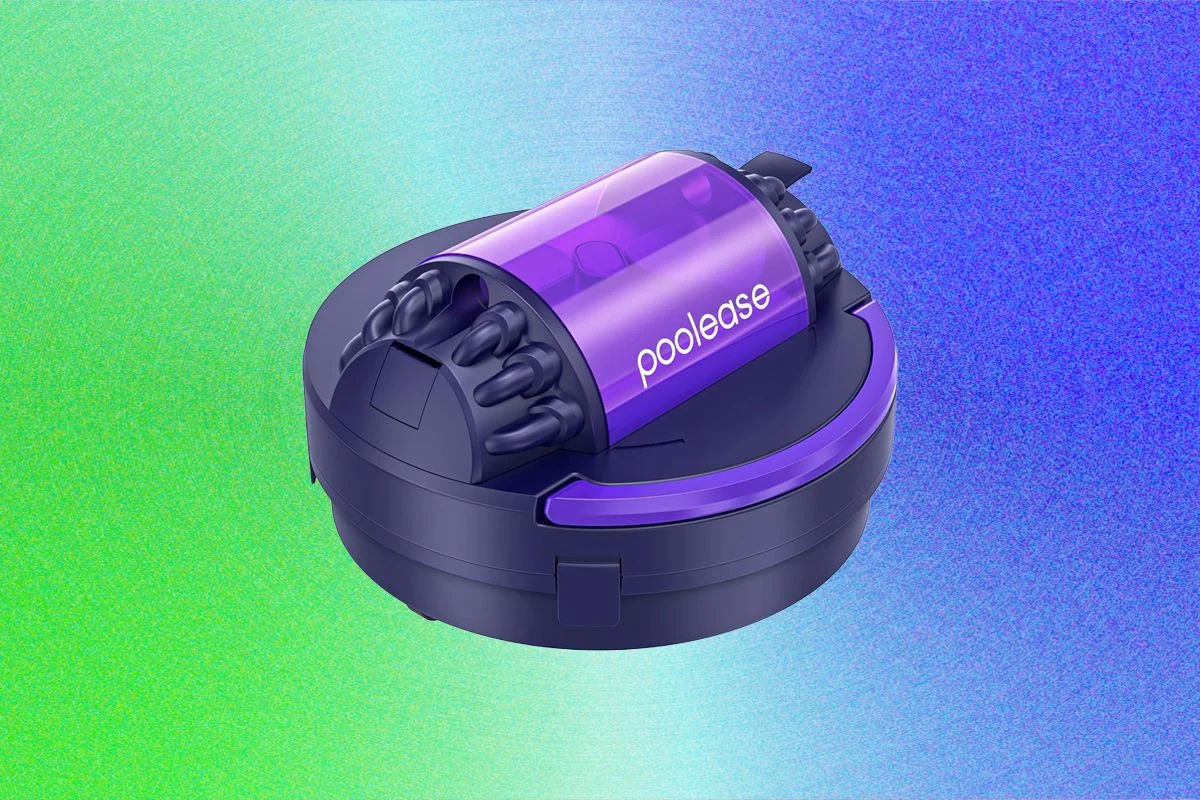
In the burgeoning market of smart home appliances, robotic pool cleaners have long been promised as the ultimate labor-saving device. The allure is undeniable: a set-it-and-forget-it solution that keeps your backyard oasis pristine without the back-breaking labor of manual skimming and vacuuming. However, the latest entry into the budget-friendly tier, the Poolease X1, serves as a sobering reminder that in the world of consumer robotics, the gap between "functional" and "effective" is often vast.
Priced at an aggressive $110, the Poolease X1 arrives with promises of efficiency and convenience. Yet, after rigorous testing, it becomes clear that this device occupies a strange, liminal space in the market. It is not quite a paperweight, but it is certainly not the diligent underwater custodian that homeowners desire.
The Core Performance: A Statistical Disappointment
When evaluating a robotic pool cleaner, the primary metric for success is simple: how much debris does it remove, and how much does it leave behind? In our testing, the results provided by the Poolease X1 were, at best, lackluster.
Over a series of controlled trials, the X1 consistently struggled to achieve a comprehensive clean. Whether navigating organic matter—such as leaves, twigs, and flower petals—or synthetic debris designed to simulate common pool contaminants, the robot managed a collection rate of only 70 to 80 percent. While an 80 percent efficiency rate might sound acceptable in a classroom setting, it is functionally inadequate for pool maintenance.
To put this into perspective, consider the analogy of a landscaping service. If a professional gardener arrived at your home and left 20 percent of your lawn unmowed, the work would be considered incomplete, if not negligent. In a pool, that remaining 20 percent of debris does not simply vanish; it settles into corners, creates unsightly streaks across the pool floor, and continues to decay, potentially affecting water chemistry. The X1’s performance is better than having no robot at all, but it is significantly worse than the "set-it-and-forget-it" experience the marketing copy suggests.
The Physicality of the Pool: Obstacles and Geometry
Beyond its inability to capture all debris, the X1 faces significant mechanical hurdles when navigating the topography of a standard residential pool. The robot is designed with a very low clearance between its chassis and the floor, a feature that sounds like a benefit for suction power but proves to be a fatal flaw in practice.
The most common point of failure was the standard circular floor drain. With a rise of less than an inch above the floor surface, these drains proved to be insurmountable mountains for the X1. The robot frequently found itself "beached" atop these drains, its wheels spinning uselessly in the air, just millimeters from the surface.
While the device was eventually capable of freeing itself through a series of automated maneuvers, these "rescue" operations often took several minutes. During this time, the machine is not cleaning; it is merely consuming battery life and stalling the filtration process. This repetitive cycle of entrapment suggests a lack of sophisticated navigation software or a physical design that failed to account for the most basic architectural realities of modern pool construction.
Chronology of the Cleaning Cycle
To understand the user experience, one must look at the lifecycle of a single cleaning session. The process begins with the deployment of the robot into the water, followed by an automated cycle.

- Deployment: The user must manually place the unit into the water.
- The Active Cycle: The X1 moves across the floor, collecting debris. During this phase, it exhibits a randomized pathing logic that leaves large swaths of the pool floor untouched.
- The Entrapment Phase: As noted, the unit frequently strikes obstacles, leading to periods of inactivity.
- Retrieval: Once the cycle concludes, the X1 does not return to a home dock. Instead, the user must fish the unit out of the pool using a provided pole and hook. This is a manual, often messy task.
- The Cleanout: This is where the X1 truly reveals its budget-tier origins. The internal chassis contains several tight, narrow crannies that act as magnets for debris. Simply opening the tray is rarely enough.
In our testing, we frequently found ourselves forced to either pick out stubborn debris by hand—an unpleasant, slimy chore—or resort to the high-pressure jet mode on a garden hose. The latter often resulted in the user getting soaked, effectively negating the "convenience" of having a robot do the work in the first place. Furthermore, the X1 proved entirely ineffective against fine dirt and silt. It appears that the motor’s suction strength is insufficient to pull in anything beyond larger, lightweight matter, rendering the machine useless for deep cleaning.
Data and Technical Implications
The technical specifications of the Poolease X1 imply a level of performance that simply does not manifest in the field. With a low-power motor and a chassis design that invites clogging, the unit is hampered by fundamental engineering trade-offs.
While manufacturers of budget robotics often argue that their devices are "meant for small pools," the X1 struggles even in those environments. The lack of active scrubbing brushes means that the robot relies entirely on passive suction. In the world of pool maintenance, suction alone is rarely sufficient to dislodge algae or heavy silt.
From an investment standpoint, the $110 price point presents a "value conundrum." Is a device that does 75 percent of the work worth $110? For a homeowner who spends hours a week cleaning, perhaps. However, one must factor in the "hidden costs": the time spent retrieving the unit, the manual labor of cleaning the machine’s internal traps, and the fact that the pool owner will still need to purchase a manual vacuum for the 25 percent of debris the robot misses.
Industry Response and Market Positioning
As of the date of this report, the manufacturer has maintained that the Poolease X1 is intended as an entry-level solution for "light maintenance" rather than a total replacement for manual labor. In official documentation, they emphasize the ease of use and the low barrier to entry.
However, industry analysts point out that this is a common trend in the "disposable tech" era. By positioning products at an extremely low price point, companies can capture market share from consumers who are wary of spending $800 to $1,500 on a high-end robotic cleaner. The implication, however, is a high rate of product turnover. If the X1 breaks or fails to perform, the consumer is less likely to be outraged than they would be with a premium product, yet the cumulative environmental and financial impact of these "disposable" robots is significant.
Conclusion: The "Child in the Room" Paradox
The most accurate comparison for the Poolease X1 is a well-meaning child tasked with cleaning their room. They will move things around, they will pick up the obvious items, and they will certainly make a show of being busy. But when the task is done, the room is not truly clean. You will still find clothes under the bed, dust on the shelves, and clutter in the corners.
If you are looking for a device that offers true, hands-off maintenance for a residential pool, the Poolease X1 is not the answer. It is a curiosity—a low-risk experiment for those who want to see what $110 buys in the world of robotics. It is perfectly suited for a very small, above-ground tank pool where the debris is minimal and the terrain is perfectly flat. For the average inground pool owner, however, the X1 is likely to end up as a forgotten piece of plastic in the garage, relegated to emergency use only.
Ultimately, the X1 serves as a reminder of an immutable law of consumer goods: you get what you pay for. While the price tag is tempting, the labor required to compensate for the robot’s shortcomings is simply too high. True automation is not just about the device running on its own; it’s about the device doing the job well enough that you never have to think about it again. On that front, the X1 has a long way to go.